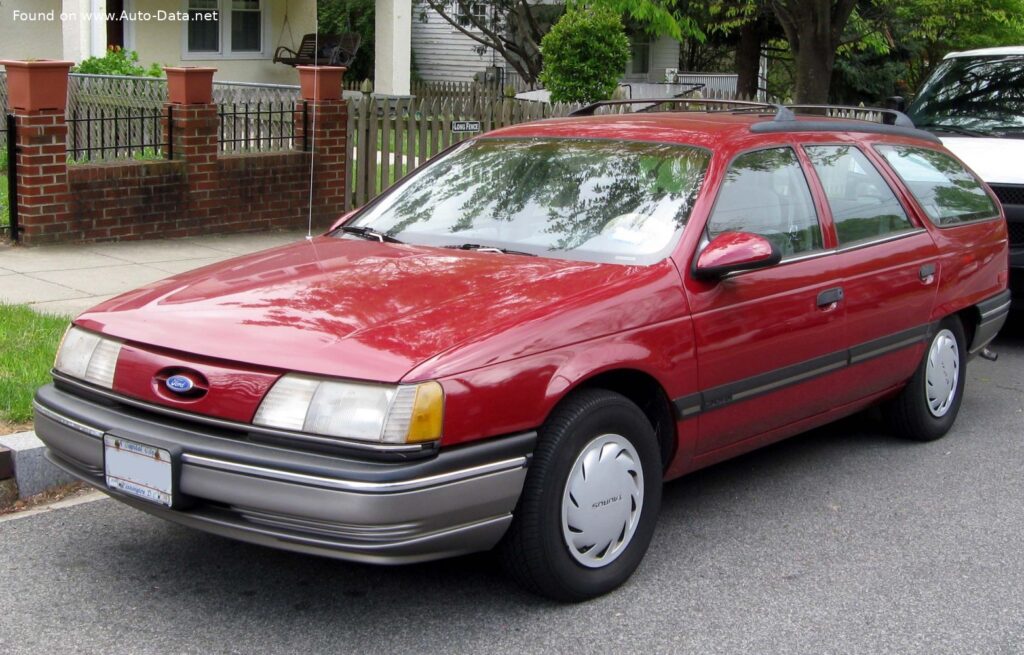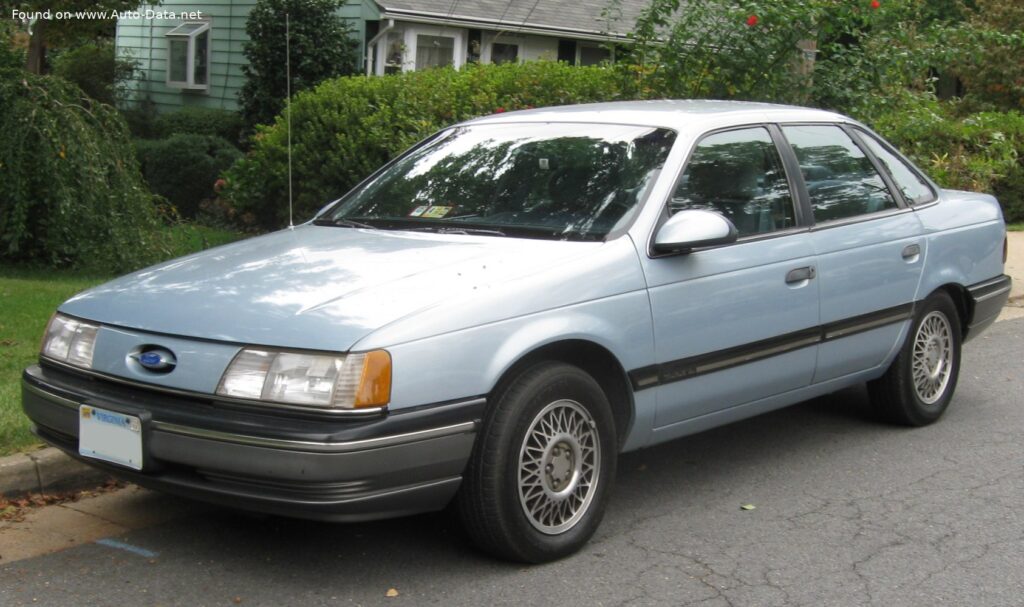
The Ford Taurus I 3.0 V6, produced between 1986 and 1991, represents the initial generation of what would become one of Ford’s most iconic and successful full-size sedans. Introduced as a replacement for the aging Ford LTD and Granada, the Taurus was a pivotal model for the company, marking a significant departure from traditional American sedan designs. It was a key player in the mid-size/full-size segment, competing with vehicles like the Chevrolet Lumina and Dodge Dynasty. The Taurus I was notable for its aerodynamic styling, spacious interior, and focus on modern features, setting a new standard for family sedans in the United States.
Ford Taurus I: A New Era for Ford
The first-generation Ford Taurus was a landmark vehicle for the automaker. It was the first mass-produced car to be developed using computer-aided design (CAD) and was a showcase for Ford’s commitment to innovation. The Taurus’s design prioritized interior space and comfort, offering a more modern and refined experience compared to its predecessors. The 3.0 V6 engine option provided a balance of performance and fuel efficiency, making it a popular choice for families and commuters. The Taurus I laid the foundation for a model line that would continue for over three decades, undergoing several significant redesigns and remaining a mainstay in Ford’s lineup.
Engine & Performance
The Ford Taurus I 3.0 V6 was powered by a 2.986-liter (182.22 cubic inch) V6 engine, producing 142 horsepower at 4800 rpm and 217 Nm (160.05 lb.-ft.) of torque at 3000 rpm. This engine, while not exceptionally powerful by modern standards, provided adequate performance for everyday driving. The engine featured multi-port fuel injection and a naturally aspirated configuration. Power delivery was managed through a four-speed automatic transmission, driving the front wheels. The front-engine, transverse layout contributed to the vehicle’s balanced handling and efficient packaging. The weight-to-power ratio of 9.7 kg/Hp (103.5 Hp/tonne) and weight-to-torque ratio of 6.3 kg/Nm (158.2 Nm/tonne) indicated a reasonably efficient powertrain for its time. Top speed was recorded at 175 km/h (108.74 mph). Fuel economy figures were 15 l/100 km (15.7 US mpg) in urban conditions and 10 l/100 km (23.5 US mpg) on the open road.
Design & Features
The Ford Taurus I was a four-door sedan with a seating capacity of five passengers. Its design was characterized by smooth, aerodynamic lines, a departure from the boxier designs prevalent in the 1970s and early 1980s. The Taurus featured a relatively long wheelbase of 2692 mm (105.98 in) and a spacious interior, prioritizing passenger comfort. Key features included ventilated front disc brakes and drum brakes on the rear, providing adequate stopping power. The steering system utilized a rack and pinion setup for precise handling. The vehicle rode on 14-inch wheels with 205/70 R14 tires. The trunk offered a generous 524 liters (18.5 cubic feet) of storage space. While safety features were less sophisticated than those found in modern vehicles, the Taurus I represented a step forward in occupant protection compared to earlier models. The focus was on providing a comfortable, reliable, and modern driving experience for families.
Technical Specifications
| Brand | Ford |
| Model | Taurus |
| Generation | Taurus I |
| Type (Engine) | 3.0 V6 (142 Hp) Automatic |
| Start of production | 1986 |
| End of production | 1991 |
| Powertrain Architecture | Internal Combustion engine |
| Body type | Sedan |
| Seats | 5 |
| Doors | 4 |
| Fuel consumption (urban) | 15 l/100 km (15.7 US mpg) |
| Fuel consumption (extra urban) | 10 l/100 km (23.5 US mpg) |
| Fuel Type | Petrol (Gasoline) |
| Maximum speed | 175 km/h (108.74 mph) |
| Weight-to-power ratio | 9.7 kg/Hp |
| Weight-to-torque ratio | 6.3 kg/Nm |
| Power | 142 Hp @ 4800 rpm |
| Power per litre | 47.6 Hp/l |
| Torque | 217 Nm @ 3000 rpm (160.05 lb.-ft. @ 3000 rpm) |
| Engine layout | Front, Transverse |
| Engine displacement | 2986 cm3 (182.22 cu. in.) |
| Number of cylinders | 6 |
| Engine configuration | V-engine |
| Cylinder Bore | 89 mm (3.5 in.) |
| Piston Stroke | 80 mm (3.15 in.) |
| Compression ratio | 9.3:1 |
| Number of valves per cylinder | 2 |
| Fuel injection system | Multi-port manifold injection |
| Engine aspiration | Naturally aspirated engine |
| Kerb Weight | 1372 kg (3024.74 lbs.) |
| Trunk (boot) space | 524 l (18.5 cu. ft.) |
| Fuel tank capacity | 61 l (16.11 US gal | 13.42 UK gal) |
| Length | 4785 mm (188.39 in.) |
| Width | 1796 mm (70.71 in.) |
| Height | 1382 mm (54.41 in.) |
| Wheelbase | 2692 mm (105.98 in.) |
| Front track | 1562 mm (61.5 in.) |
| Rear track | 1537 mm (60.51 in.) |
| Minimum turning circle | 12.1 m (39.7 ft.) |
| Drivetrain Architecture | Front wheel drive, Internal Combustion engine |
| Number of gears | 4 |
| Gearbox type | Automatic transmission |
| Front suspension | Wishbone |
| Rear suspension | Wishbone |
| Front brakes | Ventilated discs |
| Rear brakes | Drum |
| Steering type | Steering rack and pinion |
| Tires size | 205/70 R14 |
| Wheel rims size | 14 |
The Ford Taurus I 3.0 V6 remains a significant vehicle in automotive history, representing a turning point for Ford and a benchmark for American family sedans. Its innovative design, spacious interior, and balanced performance helped establish the Taurus as a dominant force in the market, paving the way for future generations of this popular model.