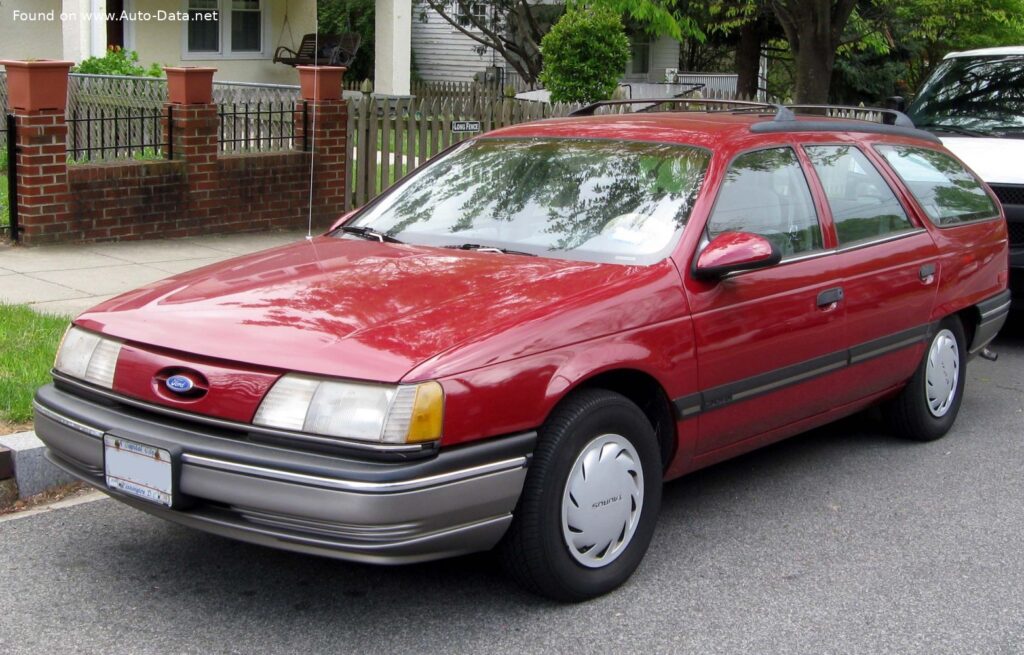
The Ford Taurus I Station Wagon 2.5, produced between 1986 and 1991, represented Ford’s entry into the mid-size station wagon market. As part of the first generation Taurus line, it aimed to modernize Ford’s offerings and compete with established rivals like the Chevrolet Celebrity Wagon and the Dodge Aries Wagon. While the Taurus nameplate would become synonymous with full-size sedans in later generations, the initial Taurus, including the station wagon variant, was a significant departure from the boxy designs of the preceding LTD and Granada models. This model was primarily sold in North America, offering families a practical and relatively fuel-efficient option during a period of shifting automotive preferences.
Ford Taurus I Station Wagon 2.5: A Detailed Overview
The Taurus I Station Wagon was designed to appeal to buyers seeking a blend of practicality, comfort, and modern styling. It was a key component of Ford’s strategy to revitalize its passenger car lineup and offer a competitive alternative to import brands gaining popularity in the American market. The station wagon body style, in particular, provided increased cargo capacity, making it a popular choice for families and those with active lifestyles. The 2.5-liter engine option provided a balance between fuel economy and adequate performance for everyday driving.
Engine & Performance
The Ford Taurus I Station Wagon 2.5 was powered by a 2.498-liter (152.44 cubic inches) inline-four cylinder engine. This naturally aspirated engine produced 89 horsepower at 4,600 rpm and 176 Nm (129.81 lb.-ft.) of torque at 2,800 rpm. The engine featured multi-port fuel injection, a relatively advanced technology for its time, contributing to improved fuel efficiency and smoother operation. Power was delivered to the front wheels via a 5-speed manual transmission. The front-engine, transverse layout was typical for front-wheel-drive vehicles of the era. The vehicle’s weight-to-power ratio was 15.6 kg/Hp, and its weight-to-torque ratio was 7.9 kg/Nm. Maximum speed was rated at 175 km/h (108.74 mph). Fuel consumption was rated at 10.3 liters per 100 kilometers (22.8 US mpg, 27.4 UK mpg, 9.7 km/l).
Design & Features
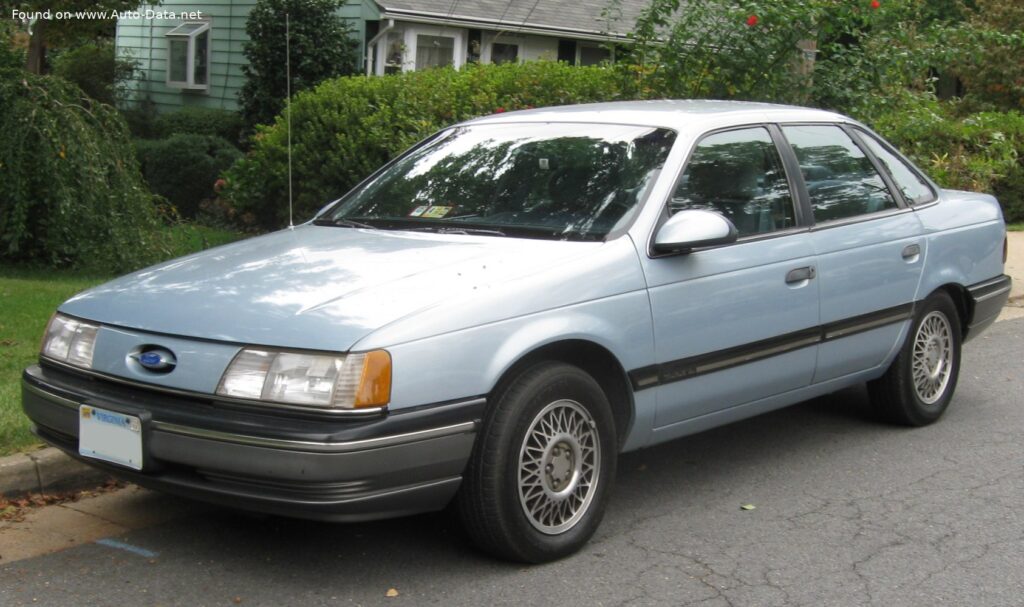
The Taurus I Station Wagon featured a sleek, aerodynamic design that was a significant departure from the more traditional station wagon aesthetics of the past. Its rounded edges and sloping roofline contributed to a more modern and streamlined appearance. The five-door configuration provided easy access to the spacious interior, which could comfortably accommodate five passengers. The interior was designed with practicality in mind, offering a comfortable and functional environment for both driver and passengers. A key selling point was the wagon’s generous cargo capacity, ranging from a minimum of 481 liters (16.99 cubic feet) with the rear seats up to a maximum of 2290 liters (80.87 cubic feet) with the rear seats folded down. Safety features for the time included ventilated front disc brakes and drum brakes in the rear, along with an available Anti-lock Braking System (ABS). The steering system was a hydraulic power steering rack and pinion setup, providing responsive and precise handling. The vehicle rode on 205/70 R14 tires mounted on 14-inch wheel rims.
Technical Specifications
| Brand | Ford |
| Model | Taurus |
| Generation | Taurus I Station Wagon |
| Type (Engine) | 2.5 (89 Hp) |
| Start of production | 1986 |
| End of production | 1991 |
| Powertrain Architecture | Internal Combustion engine |
| Body type | Station wagon (estate) |
| Seats | 5 |
| Doors | 5 |
| Fuel consumption (combined) | 10.3 l/100 km |
| Fuel consumption (US mpg) | 22.8 US mpg |
| Fuel consumption (UK mpg) | 27.4 UK mpg |
| Fuel consumption (km/l) | 9.7 km/l |
| Fuel Type | Petrol (Gasoline) |
| Maximum speed | 175 km/h |
| Maximum speed (mph) | 108.74 mph |
| Weight-to-power ratio | 15.6 kg/Hp |
| Weight-to-torque ratio | 7.9 kg/Nm |
| Power | 89 Hp @ 4600 rpm |
| Power per litre | 35.6 Hp/l |
| Torque | 176 Nm @ 2800 rpm |
| Torque (lb.-ft.) | 129.81 lb.-ft. @ 2800 rpm |
| Engine layout | Front, Transverse |
| Engine displacement | 2498 cm3 |
| Engine displacement (cu. in.) | 152.44 cu. in. |
| Number of cylinders | 4 |
| Engine configuration | Inline |
| Cylinder Bore | 93.47 mm |
| Cylinder Bore (in.) | 3.68 in. |
| Piston Stroke | 91 mm |
| Piston Stroke (in.) | 3.58 in. |
| Compression ratio | 9:1 |
| Number of valves per cylinder | 2 |
| Fuel injection system | Multi-port manifold injection |
| Engine aspiration | Naturally aspirated engine |
| Kerb Weight | 1386 kg |
| Kerb Weight (lbs.) | 3055.61 lbs. |
| Trunk (boot) space – minimum | 481 l |
| Trunk (boot) space – minimum (cu. ft.) | 16.99 cu. ft. |
| Trunk (boot) space – maximum | 2290 l |
| Trunk (boot) space – maximum (cu. ft.) | 80.87 cu. ft. |
| Fuel tank capacity | 61 l |
| Fuel tank capacity (US gal) | 16.11 US gal |
| Fuel tank capacity (UK gal) | 13.42 UK gal |
| Length | 4874 mm |
| Length (in.) | 191.89 in. |
| Width | 1796 mm |
| Width (in.) | 70.71 in. |
| Height | 1402 mm |
| Height (in.) | 55.2 in. |
| Wheelbase | 2692 mm |
| Wheelbase (in.) | 105.98 in. |
| Front track | 1562 mm |
| Front track (in.) | 61.5 in. |
| Rear (Back) track | 1521 mm |
| Rear (Back) track (in.) | 59.88 in. |
| Minimum turning circle | 12.13 m |
| Minimum turning circle (ft.) | 39.8 ft. |
| Drivetrain Architecture | Front wheel drive |
| Number of gears | 5 |
| Gearbox type | manual transmission |
| Front suspension | Wishbone |
| Rear suspension | Double wishbone |
| Front brakes | Ventilated discs |
| Rear brakes | Drum |
| Assisting systems | ABS (Anti-lock braking system) |
| Steering type | Steering rack and pinion |
| Power steering | Hydraulic Steering |
| Tires size | 205/70 R14 |
| Wheel rims size | 14 |
The Ford Taurus I Station Wagon 2.5, while not a performance icon, offered a practical and reasonably efficient transportation solution for families in the late 1980s and early 1990s. Its modern design and spacious interior helped it compete in a crowded market segment, and it laid the groundwork for the continued success of the Taurus nameplate in subsequent generations.