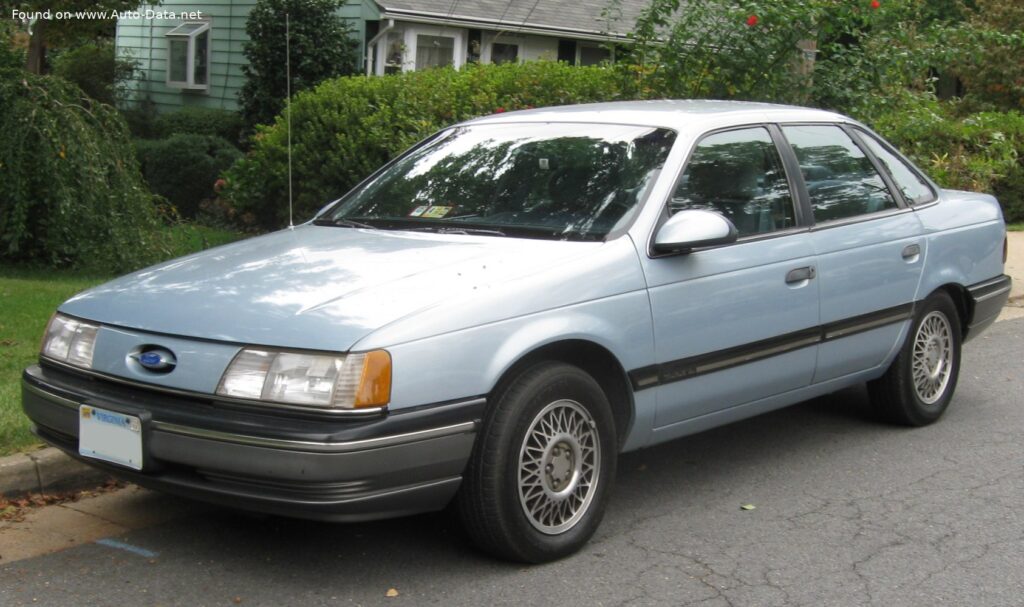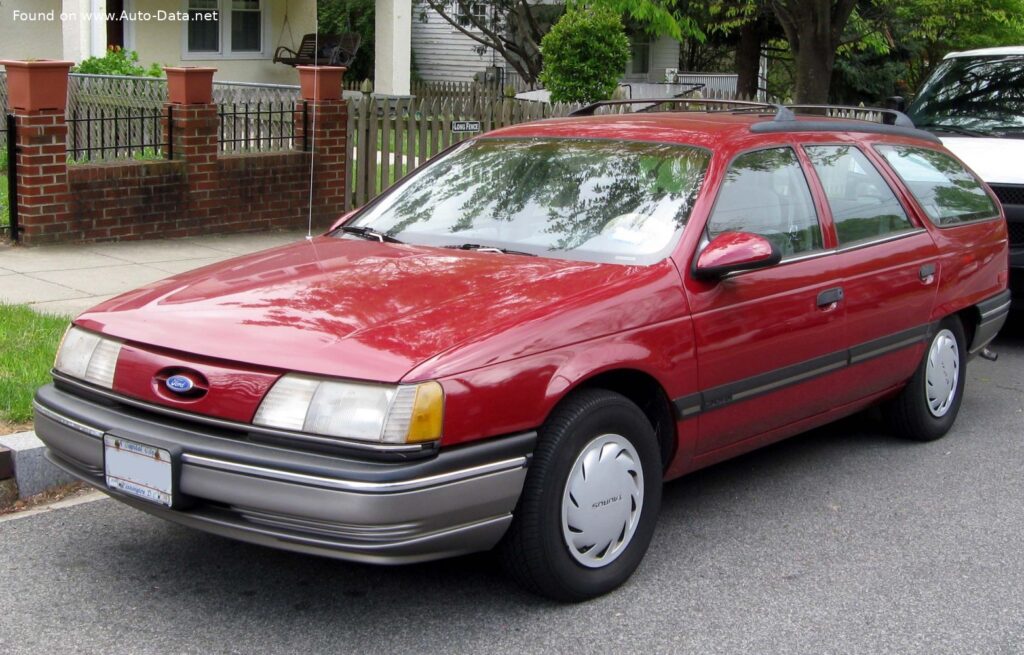
The Ford Taurus I Station Wagon, produced between 1986 and 1991, represented Ford’s entry into the increasingly popular mid-size station wagon segment. As part of the first generation Taurus lineup, it aimed to modernize Ford’s offerings and compete with established rivals like the Chevrolet Celebrity Wagon and the Dodge Aries Wagon. The Taurus was a significant departure from the boxy designs of previous Ford wagons, embracing a more aerodynamic and contemporary aesthetic. The 3.0 V6 model, equipped with an automatic transmission, offered a balance of family practicality and reasonable performance for the era. While not a high-performance vehicle, the Taurus I Station Wagon provided a comfortable and spacious option for American families.
Ford Taurus I Station Wagon: An Overview
The Taurus I Station Wagon was a key component of Ford’s ambitious restructuring in the mid-1980s. The entire Taurus range was designed to replace the aging Ford Granada and LTD, offering a more modern and efficient platform. The station wagon variant specifically targeted buyers needing ample cargo space and passenger capacity. It was a five-door, five-seat vehicle built on a front-wheel-drive chassis, a relatively new configuration for Ford at the time. The 3.0-liter V6 engine was a popular choice, providing adequate power for everyday driving and towing light loads.
Engine & Performance
The heart of the Ford Taurus I Station Wagon 3.0 was a 2.986-liter (182.22 cubic inch) V6 engine. This naturally aspirated engine produced 142 horsepower at 4800 rpm and 217 Nm (160.05 lb.-ft.) of torque at 3000 rpm. While not exceptionally powerful by modern standards, this output was competitive within its class during the late 1980s. The engine featured multi-port fuel injection and an overhead valve (OHV) valvetrain. Power was delivered to the front wheels via a four-speed automatic transmission. The weight-to-power ratio of 10.3 kg/Hp (97.1 Hp/tonne) and weight-to-torque ratio of 6.7 kg/Nm (148.4 Nm/tonne) indicated a reasonably balanced vehicle. The Taurus I Station Wagon could achieve a maximum speed of 175 km/h (108.74 mph). Fuel consumption was rated at 10.3 liters per 100 kilometers (22.8 US mpg, 27.4 UK mpg, 9.7 km/l).
Design & Features
The Ford Taurus I Station Wagon featured a distinctly modern design for its time. The aerodynamic body shape, characterized by smooth lines and a sloping roofline, was a departure from the more angular designs of previous generations. The station wagon body style offered a generous cargo area, with a minimum capacity of 481 liters (16.99 cubic feet) expanding to a substantial 2290 liters (80.87 cubic feet) with the rear seats folded down. The interior was designed with family comfort in mind, offering ample seating space and a relatively simple, functional layout. Safety features for the era included ventilated disc brakes on the front wheels and drum brakes on the rear, along with an available Anti-lock Braking System (ABS). Power steering was standard, utilizing a hydraulic system for ease of maneuverability. The vehicle’s dimensions were 4874 mm (191.89 in) in length, 1796 mm (70.71 in) in width, and 1402 mm (55.2 in) in height, with a wheelbase of 2692 mm (105.98 in).
Technical Specifications
| Brand | Ford |
| Model | Taurus |
| Generation | Taurus I Station Wagon |
| Type (Engine) | 3.0 V6 (142 Hp) Automatic |
| Start of production | 1986 |
| End of production | 1991 |
| Powertrain Architecture | Internal Combustion engine |
| Body type | Station wagon (estate) |
| Seats | 5 |
| Doors | 5 |
| Fuel consumption (combined) | 10.3 l/100 km |
| Fuel consumption (US mpg) | 22.8 US mpg |
| Fuel consumption (UK mpg) | 27.4 UK mpg |
| Fuel consumption (km/l) | 9.7 km/l |
| Fuel Type | Petrol (Gasoline) |
| Maximum speed | 175 km/h (108.74 mph) |
| Weight-to-power ratio | 10.3 kg/Hp |
| Weight-to-torque ratio | 6.7 kg/Nm |
| Power | 142 Hp @ 4800 rpm |
| Power per litre | 47.6 Hp/l |
| Torque | 217 Nm @ 3000 rpm (160.05 lb.-ft. @ 3000 rpm) |
| Engine layout | Front, Transverse |
| Engine displacement | 2986 cm3 (182.22 cu. in.) |
| Number of cylinders | 6 |
| Engine configuration | V-engine |
| Cylinder Bore | 89 mm (3.5 in.) |
| Piston Stroke | 80 mm (3.15 in.) |
| Compression ratio | 9.3:1 |
| Number of valves per cylinder | 2 |
| Fuel injection system | Multi-port manifold injection |
| Engine aspiration | Naturally aspirated engine |
| Valvetrain | OHV |
| Kerb Weight | 1462 kg (3223.16 lbs.) |
| Trunk (boot) space – minimum | 481 l (16.99 cu. ft.) |
| Trunk (boot) space – maximum | 2290 l (80.87 cu. ft.) |
| Fuel tank capacity | 61 l (16.11 US gal | 13.42 UK gal) |
| Length | 4874 mm (191.89 in.) |
| Width | 1796 mm (70.71 in.) |
| Height | 1402 mm (55.2 in.) |
| Wheelbase | 2692 mm (105.98 in.) |
| Front track | 1562 mm (61.5 in.) |
| Rear track | 1521 mm (59.88 in.) |
| Minimum turning circle | 12.13 m (39.8 ft.) |
| Drivetrain Architecture | Front wheel drive, Internal Combustion engine |
| Number of gears and type of gearbox | 4 gears, automatic transmission |
| Front suspension | Wishbone |
| Rear suspension | Double wishbone |
| Front brakes | Ventilated discs |
| Rear brakes | Drum |
| Assisting systems | ABS (Anti-lock braking system) |
| Steering type | Steering rack and pinion |
| Power steering | Hydraulic Steering |
| Tires size | 205/70 R14 |
| Wheel rims size | 14 |
The Ford Taurus I Station Wagon, while not a groundbreaking vehicle, played a significant role in Ford’s revitalization during the late 1980s. It offered a practical and reasonably efficient solution for families needing a spacious and comfortable vehicle. Its blend of modern design, adequate performance, and available features made it a competitive choice in the mid-size station wagon market.