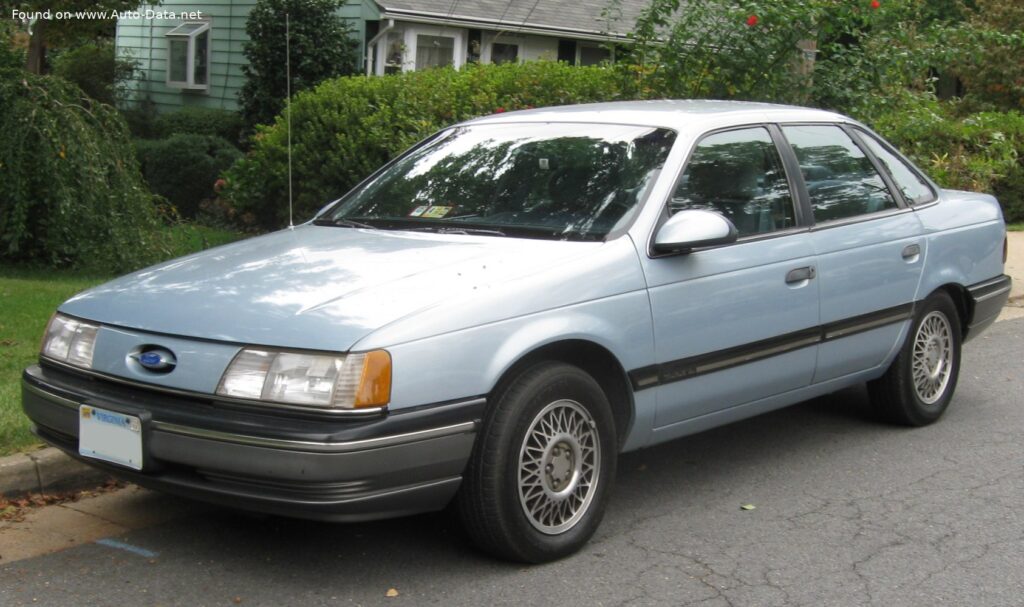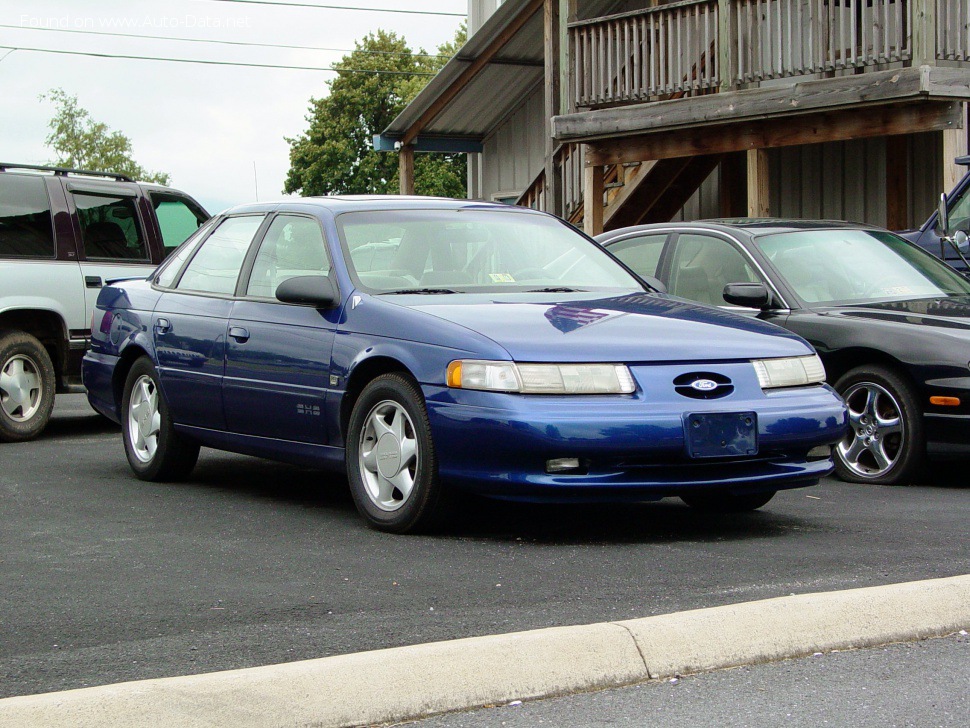
The Ford Taurus II, produced between 1992 and 1995, represented a significant evolution of the original Taurus, which had debuted in 1986. This second generation continued the Taurus’s role as Ford’s full-size family sedan, competing with models like the Chevrolet Lumina and Dodge Intrepid. The Taurus II aimed to refine the original’s aerodynamic styling and improve upon its already successful formula of spaciousness, comfort, and value. This iteration of the Taurus was exclusively offered as a four-door sedan, catering to the North American market’s preference for practical and reliable transportation. The 3.8 V6 engine option, detailed here, was a popular choice, balancing adequate power with reasonable fuel economy.
Ford Taurus II: A Refinement of American Family Transportation
The Taurus II built upon the foundation laid by its predecessor, maintaining the focus on aerodynamic efficiency and interior space. While the fundamental design language remained consistent, the second generation featured subtle styling updates, including revised front and rear fascias, and improved interior materials. Ford aimed to address some of the criticisms leveled at the first-generation Taurus, particularly regarding interior quality and perceived value. The 3.8-liter V6 engine became a mainstay of the Taurus lineup, offering a good compromise between performance and fuel efficiency for the average driver.
Engine & Performance
The 1992-1995 Ford Taurus II equipped with the 3.8-liter V6 engine delivered 141 horsepower at 3800 rpm and 292 Nm (215.37 lb.-ft.) of torque at 2200 rpm. This naturally aspirated engine, designated the Essex engine, featured a V-engine configuration with 6 cylinders, a cylinder bore of 96.8 mm (3.81 in), and a piston stroke of 86 mm (3.39 in). The engine utilized a multi-port manifold fuel injection system and operated with a compression ratio of 9:1. The engine’s transverse front-wheel-drive layout was typical for American sedans of this era. The powertrain was coupled with a 4-speed automatic transmission, providing smooth and convenient shifting. The weight-to-power ratio stood at 10.1 kg/Hp, and the weight-to-torque ratio was 4.9 kg/Nm, indicating a reasonably efficient powertrain for its time. The engine displacement was 3797 cm3 (231.71 cu. in.).
Design & Features
The Ford Taurus II maintained the sleek, aerodynamic profile of the original Taurus, emphasizing a rounded and flowing design. As a four-door sedan, it prioritized passenger comfort and practicality. The vehicle offered seating for five occupants and provided a generous 507-liter (17.9 cu. ft.) trunk space. Safety features for the time included an Anti-lock Braking System (ABS), which was becoming increasingly common on mainstream vehicles. The Taurus II’s interior was designed with family use in mind, offering comfortable seating and a relatively spacious cabin. While not overtly luxurious, the interior materials were improved over the first generation, addressing some customer concerns. The vehicle’s dimensions – a length of 4877 mm (192.01 in), a width of 1808 mm (71.18 in), and a height of 1374 mm (54.09 in) – positioned it squarely within the full-size sedan segment. The wheelbase measured 2692 mm (105.98 in), contributing to a stable and comfortable ride.
Technical Specifications
| Brand | Ford |
| Model | Taurus |
| Generation | Taurus II |
| Type (Engine) | 3.8 V6 (141 Hp) Automatic |
| Start of production | 1992 |
| End of production | 1995 |
| Powertrain Architecture | Internal Combustion engine |
| Body type | Sedan |
| Seats | 5 |
| Doors | 4 |
| Fuel Type | Petrol (Gasoline) |
| Weight-to-power ratio | 10.1 kg/Hp |
| Weight-to-torque ratio | 4.9 kg/Nm |
| Power | 141 Hp @ 3800 rpm |
| Power per litre | 37.1 Hp/l |
| Torque | 292 Nm @ 2200 rpm / 215.37 lb.-ft. @ 2200 rpm |
| Engine layout | Front, Transverse |
| Engine Model/Code | Essex |
| Engine displacement | 3797 cm3 / 231.71 cu. in. |
| Number of cylinders | 6 |
| Engine configuration | V-engine |
| Cylinder Bore | 96.8 mm / 3.81 in. |
| Piston Stroke | 86 mm / 3.39 in. |
| Compression ratio | 9:1 |
| Number of valves per cylinder | 2 |
| Fuel injection system | Multi-port manifold injection |
| Engine aspiration | Naturally aspirated engine |
| Engine oil capacity | 4.7 l / 4.97 US qt | 4.14 UK qt |
| Coolant | 11 l / 11.62 US qt | 9.68 UK qt |
| Kerb Weight | 1420 kg / 3130.56 lbs |
| Trunk (boot) space – minimum | 507 l / 17.9 cu. ft |
| Fuel tank capacity | 61 l / 16.11 US gal | 13.42 UK gal |
| Length | 4877 mm / 192.01 in |
| Width | 1808 mm / 71.18 in |
| Height | 1374 mm / 54.09 in |
| Wheelbase | 2692 mm / 105.98 in |
| Front track | 1562 mm / 61.5 in |
| Rear (Back) track | 1537 mm / 60.51 in |
| Minimum turning circle (turning diameter) | 11.76 m / 38.58 ft |
| Drivetrain Architecture | The Internal combustion engine (ICE) drives the front wheels of the vehicle. |
| Drive wheel | Front wheel drive |
| Number of gears and type of gearbox | 4 gears, automatic transmission |
| Front suspension | Wishbone |
| Rear suspension | Wishbone |
| Front brakes | Ventilated discs |
| Rear brakes | Drum |
| Assisting systems | ABS (Anti-lock braking system) |
| Steering type | Steering rack and pinion |
| Tires size | 205/70 R14 |
| Wheel rims size | 14 |
The Ford Taurus II with the 3.8 V6 engine represented a solid and dependable choice for families seeking a comfortable and spacious sedan. While not a performance leader, it offered a good balance of practicality, reliability, and value, cementing its position as a popular choice in the American automotive landscape of the early 1990s.