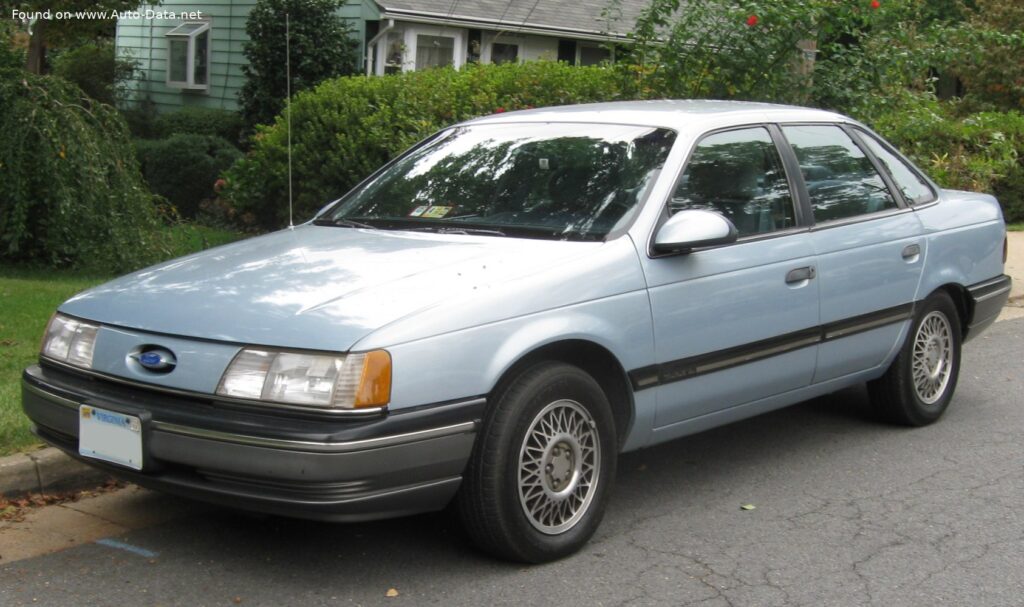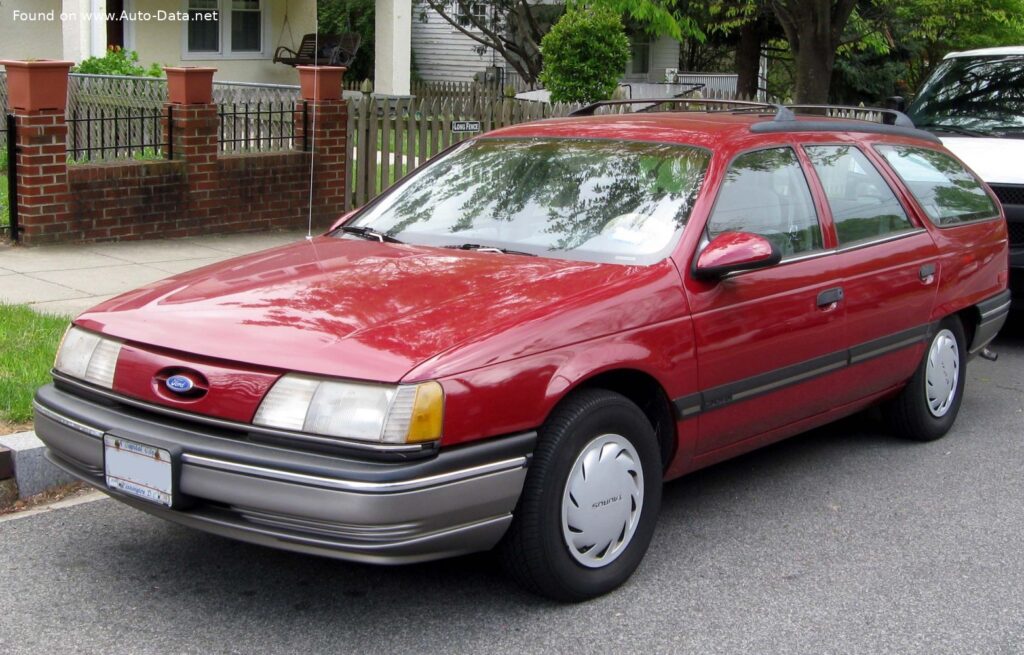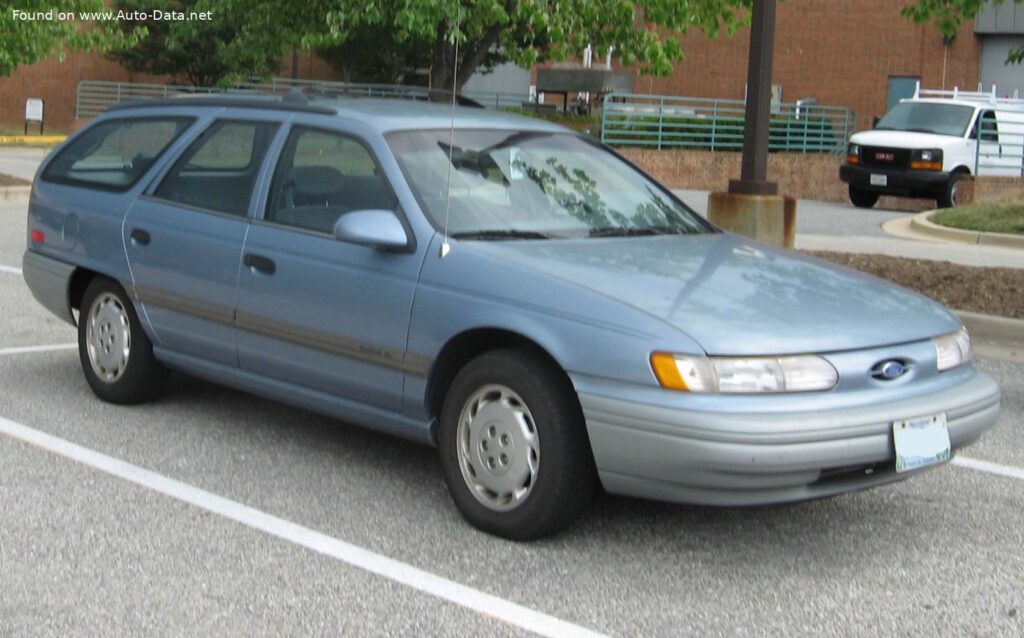
The Ford Taurus II Station Wagon, produced between 1992 and 1995, represented a significant iteration of Ford’s full-size family car. Part of the second generation of the Taurus line, this station wagon variant offered families a practical and spacious alternative to the sedan, capitalizing on the enduring popularity of estate cars in the early 1990s. While the Taurus was a mainstay of the American automotive landscape, the station wagon body style catered to buyers needing enhanced cargo capacity and versatility. The 3.0 V6 engine option, producing 141 horsepower, provided a balance between performance and fuel economy for the era.
Ford Taurus II Station Wagon: An Overview
The Taurus II, including the station wagon, was designed to address criticisms of the first-generation model, focusing on improved build quality, refinement, and a more contemporary aesthetic. The station wagon specifically aimed to compete with similar offerings from Chevrolet, Chrysler, and other domestic manufacturers. It was a vehicle designed for the everyday needs of American families, prioritizing comfort, space, and reliability. The Taurus II station wagon was not a high-performance vehicle, but rather a practical and comfortable mode of transportation.
Engine & Performance
The 1992-1995 Ford Taurus II Station Wagon equipped with the 3.0 V6 engine delivered 141 horsepower at 4800 rpm and 217 Nm (160.05 lb.-ft.) of torque at 3000 rpm. This engine, known as the Vulcan V6, was a staple of Ford’s lineup during this period, praised for its durability and relatively simple design. The engine’s 9.3:1 compression ratio and multi-port fuel injection contributed to its efficiency and driveability. Power was transmitted to the front wheels via a 4-speed automatic transmission. The weight-to-power ratio of 10.5 kg/Hp (95.2 Hp/tonne) and weight-to-torque ratio of 6.8 kg/Nm (146.5 Nm/tonne) reflected the vehicle’s focus on usability rather than outright speed. The engine’s transverse front-wheel-drive layout was typical for American cars of this era, optimizing interior space and improving handling in adverse conditions.
Design & Features
The Ford Taurus II Station Wagon featured a traditional station wagon body style with a long roofline extending to the rear of the vehicle. This design maximized cargo space, offering a substantial 2297 liters (81.12 cu. ft.) with the rear seats folded down. The vehicle comfortably seated five passengers across two rows. Styling cues included rounded edges and a relatively conservative aesthetic, reflecting the design trends of the early 1990s. Safety features, while not as advanced as modern standards, included an Anti-lock Braking System (ABS) which was becoming increasingly common on family vehicles. The hydraulic power steering and wishbone/double wishbone suspension systems aimed to provide a comfortable and controlled driving experience. The interior was designed with practicality in mind, featuring durable materials and a functional layout. The 61-liter (16.11 US gal) fuel tank provided a reasonable driving range between fill-ups.
Technical Specifications
| Brand | Ford |
| Model | Taurus |
| Generation | Taurus II Station Wagon |
| Type (Engine) | 3.0 V6 (141 Hp) Automatic |
| Start of production | 1992 |
| End of production | 1995 |
| Powertrain Architecture | Internal Combustion engine |
| Body type | Station wagon (estate) |
| Seats | 5 |
| Doors | 5 |
| Fuel Type | Petrol (Gasoline) |
| Weight-to-power ratio | 10.5 kg/Hp |
| Power | 141 Hp @ 4800 rpm |
| Power per litre | 47.2 Hp/l |
| Torque | 217 Nm @ 3000 rpm / 160.05 lb.-ft. @ 3000 rpm |
| Engine layout | Front, Transverse |
| Engine Model/Code | Vulcan |
| Engine displacement | 2986 cm3 / 182.22 cu. in. |
| Number of cylinders | 6 |
| Engine configuration | V-engine |
| Cylinder Bore | 89 mm / 3.5 in. |
| Piston Stroke | 80 mm / 3.15 in. |
| Compression ratio | 9.3:1 |
| Number of valves per cylinder | 2 |
| Fuel injection system | Multi-port manifold injection |
| Engine aspiration | Naturally aspirated engine |
| Valvetrain | OHV |
| Engine oil capacity | 4.3 l / 4.54 US qt | 3.78 UK qt |
| Coolant | 11.5 l / 12.15 US qt | 10.12 UK qt |
| Kerb Weight | 1481 kg / 3265.05 lbs |
| Trunk (boot) space – maximum | 2297 l / 81.12 cu. ft |
| Fuel tank capacity | 61 l / 16.11 US gal | 13.42 UK gal |
| Length | 4905 mm / 193.11 in |
| Width | 1808 mm / 71.18 in |
| Height | 1410 mm / 55.51 in |
| Wheelbase | 2692 mm / 105.98 in |
| Front track | 1562 mm / 61.5 in |
| Rear (Back) track | 1521 mm / 59.88 in |
| Minimum turning circle (turning diameter) | 11.76 m / 38.58 ft |
| Drivetrain Architecture | The Internal combustion engine (ICE) drives the front wheels of the vehicle. |
| Drive wheel | Front wheel drive |
| Number of gears and type of gearbox | 4 gears, automatic transmission |
| Front suspension | Wishbone |
| Rear suspension | Double wishbone |
| Front brakes | Ventilated discs |
| Rear brakes | Drum |
| Assisting systems | ABS (Anti-lock braking system) |
| Steering type | Steering rack and pinion |
| Power steering | Hydraulic Steering |
| Tires size | 205/70 R14 |
| Wheel rims size | 14 |
The Ford Taurus II Station Wagon, while not a groundbreaking vehicle in terms of innovation, served as a reliable and practical family car for many Americans during the early 1990s. Its spacious interior, comfortable ride, and durable powertrain made it a popular choice for those seeking a versatile and affordable vehicle. It represents a key period in Ford’s history, demonstrating the company’s commitment to providing functional and dependable transportation to the mass market.