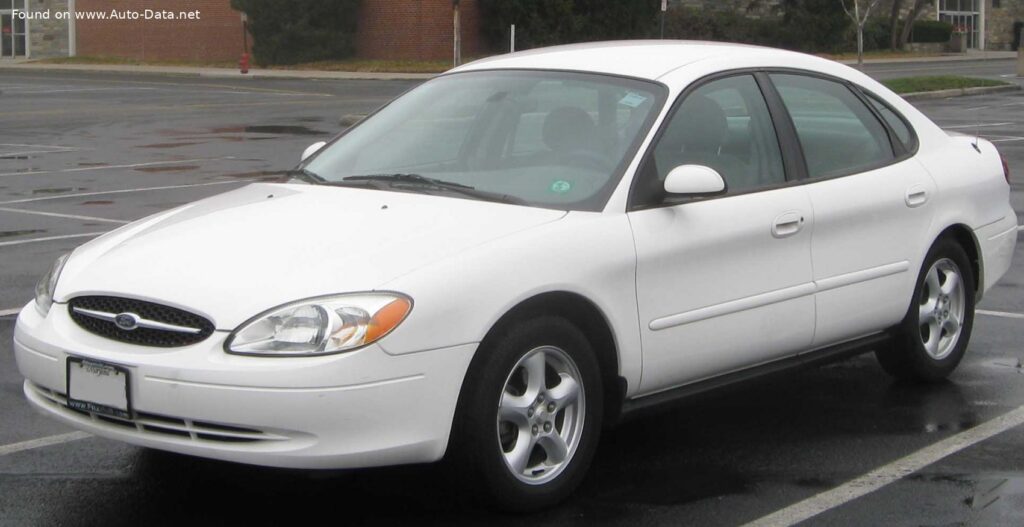
The Ford Taurus IV, produced between 2000 and 2007, represents the fourth generation of Ford’s full-size sedan. This iteration of the Taurus continued the model’s role as a mainstay of the American family car market, offering a spacious interior, comfortable ride, and a focus on practicality. While not a performance-oriented vehicle, the Taurus IV provided a reliable and affordable transportation option for a wide range of buyers. The fourth generation saw incremental improvements in styling, safety, and technology compared to its predecessors, solidifying the Taurus’s position as a popular choice in the competitive mid-size/full-size sedan segment.
Ford Taurus IV: An Overview
The Taurus IV was a significant vehicle for Ford, representing a continued commitment to the large sedan market. Though facing increasing competition from SUVs and crossovers, the Taurus maintained a loyal customer base. The generation focused on refining the existing formula rather than radical redesigns, prioritizing comfort, space, and value. The 3.0 V6 engine option, detailed here, was a common configuration, balancing fuel economy with adequate power for everyday driving. The Taurus IV was exclusively sold in North America, primarily the United States and Canada, and did not receive significant marketing or sales efforts in other global markets.
Engine & Performance
The 3.0-liter V6 engine powering the Ford Taurus IV delivered 155 horsepower at 4900 rpm and 251 Newton-meters (185.13 lb.-ft.) of torque at 3950 rpm. This naturally aspirated engine, designated the Vulcan engine family, utilized a multi-port fuel injection system and a compression ratio of 9.3:1. The engine’s configuration – a 60-degree V-engine with 2 valves per cylinder – was a common design for its time, prioritizing reliability and cost-effectiveness. The engine was transversely mounted at the front of the vehicle, driving the front wheels through a 4-speed automatic transmission. The weight-to-power ratio of 9.8 kg/Hp and a weight-to-torque ratio of 6.1 kg/Nm indicate a focus on usability rather than outright performance. Power per liter was rated at 51.9 Hp/l, a typical figure for naturally aspirated V6 engines of this era. The engine oil capacity was 4.25 liters (4.49 US qt | 3.74 UK qt), and the cooling system required 11 liters (11.62 US qt | 9.68 UK qt) of coolant.
Design & Features
The Ford Taurus IV maintained the sedan body style with four doors and seating for five passengers. Its design was evolutionary, building upon the aesthetics of the previous generation with smoother lines and a more contemporary appearance. The vehicle’s dimensions – 5019 mm (197.6 in) in length, 1854 mm (72.99 in) in width, and 1425 mm (56.1 in) in height – provided a spacious interior. The wheelbase measured 2756 mm (108.5 in), contributing to a comfortable ride.
Safety features were becoming increasingly important during this period, and the Taurus IV included ABS (Anti-lock Braking System) as standard equipment. The front brakes were ventilated discs, while the rear brakes were drums. Steering was handled by a hydraulic power steering rack and pinion system. Interior features focused on comfort and convenience, though specifics varied depending on trim level. The trunk offered a minimum capacity of 481 liters (16.99 cu. ft.), providing ample space for luggage and cargo. The vehicle’s drag coefficient of 0.3 contributed to reasonable fuel efficiency for its size and class. The minimum turning circle was 12.1 meters (39.7 ft).
Technical Specifications
| Brand | Ford |
| Model | Taurus |
| Generation | Taurus IV |
| Type (Engine) | 3.0 V6 (155 Hp) Automatic |
| Start of production | 2000 year |
| End of production | 2007 year |
| Powertrain Architecture | Internal Combustion engine |
| Body type | Sedan |
| Seats | 5 |
| Doors | 4 |
| Fuel Type | Petrol (Gasoline) |
| Weight-to-power ratio | 9.8 kg/Hp |
| Weight-to-torque ratio | 6.1 kg/Nm |
| Power | 155 Hp @ 4900 rpm |
| Power per litre | 51.9 Hp/l |
| Torque | 251 Nm @ 3950 rpm / 185.13 lb.-ft. @ 3950 rpm |
| Engine layout | Front, Transverse |
| Engine Model/Code | Vulcan |
| Engine displacement | 2986 cm3 / 182.22 cu. in. |
| Number of cylinders | 6 |
| Engine configuration | V-engine |
| Cylinder Bore | 89 mm / 3.5 in. |
| Piston Stroke | 80 mm / 3.15 in. |
| Compression ratio | 9.3:1 |
| Number of valves per cylinder | 2 |
| Fuel injection system | Multi-port manifold injection |
| Engine aspiration | Naturally aspirated engine |
| Engine oil capacity | 4.25 l / 4.49 US qt | 3.74 UK qt |
| Coolant | 11 l / 11.62 US qt | 9.68 UK qt |
| Kerb Weight | 1521 kg / 3353.23 lbs |
| Trunk (boot) space – minimum | 481 l / 16.99 cu. ft |
| Fuel tank capacity | 68 l / 17.96 US gal | 14.96 UK gal |
| Length | 5019 mm / 197.6 in |
| Width | 1854 mm / 72.99 in |
| Height | 1425 mm / 56.1 in |
| Wheelbase | 2756 mm / 108.5 in |
| Front track | 1565 mm / 61.61 in |
| Rear (Back) track | 1577 mm / 62.09 in |
| Drag coefficient (Cd) | 0.3 |
| Minimum turning circle (turning diameter) | 12.1 m / 39.7 ft |
| Drivetrain Architecture | The Internal combustion engine (ICE) drives the front wheels of the vehicle. |
| Drive wheel | Front wheel drive |
| Number of gears and type of gearbox | 4 gears, automatic transmission |
| Front suspension | Wishbone |
| Rear suspension | Wishbone |
| Front brakes | Ventilated discs |
| Rear brakes | Drum |
| Assisting systems | ABS (Anti-lock braking system) |
| Steering type | Steering rack and pinion |
| Power steering | Hydraulic Steering |
| Tires size | 215/60 R16 |
| Wheel rims size | 16 |