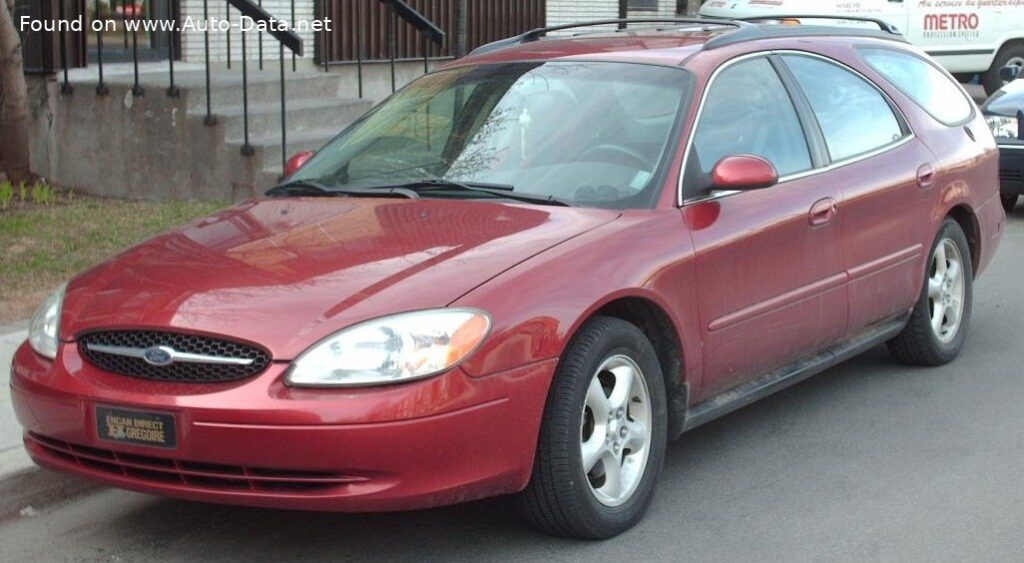
The Ford Taurus IV Station Wagon, produced between 2000 and 2003, represented a continued evolution of Ford’s full-size family vehicle. As the fourth generation of the Taurus, this station wagon variant offered American families a practical and spacious option within the increasingly competitive sedan and wagon market. While the Taurus nameplate had been a mainstay of Ford’s lineup since 1986, the IV generation saw refinements in styling, technology, and powertrain options. The station wagon body style, though declining in overall popularity, remained a significant offering for those prioritizing cargo capacity and versatility. This model was exclusively sold in North America, solidifying the Taurus’s position as a distinctly American family car.
Ford Taurus IV Station Wagon: An Overview
The Taurus IV, including the station wagon, aimed to address criticisms leveled at previous generations, focusing on improved interior quality and a more modern aesthetic. The station wagon specifically catered to buyers needing substantial cargo space without sacrificing the comfort and features expected in a full-size vehicle. It competed with other large wagons like the Chevrolet Malibu Wagon and the Dodge Intrepid ES, though the wagon segment was shrinking as SUVs gained prominence. The 3.0-liter V6 engine offered a balance of power and fuel efficiency, making it a suitable choice for everyday driving and family road trips.
Engine & Performance
The Ford Taurus IV Station Wagon equipped with the 3.0-liter Duratec V6 engine delivered 200 horsepower at 5650 rpm and 271 Nm (199.88 lb.-ft.) of torque at 4400 rpm. This naturally aspirated engine, featuring a 10:1 compression ratio and multi-port fuel injection, provided adequate performance for its intended purpose. The engine’s configuration – a 60-degree V-engine with double overhead camshafts (DOHC) and two valves per cylinder – contributed to its relatively smooth operation. Coupled with a 4-speed automatic transmission and front-wheel drive, the Taurus IV Station Wagon achieved a weight-to-power ratio of 7.9 kg/Hp and a weight-to-torque ratio of 5.8 kg/Nm. While not a performance-oriented vehicle, the powertrain offered sufficient power for comfortable cruising and hauling passengers and cargo. The engine’s 2967 cm3 (181.06 cu. in.) displacement provided a good balance between power output and fuel economy for the time.
Design & Features
The Taurus IV Station Wagon maintained the rounded, aerodynamic styling cues of the fourth-generation Taurus, with a focus on a more contemporary appearance compared to its predecessors. The station wagon body style extended the roofline to the rear, maximizing cargo volume. Inside, the Taurus IV offered seating for five passengers and a spacious interior designed for comfort. Key features included a standard anti-lock braking system (ABS) for enhanced safety, hydraulic power steering for ease of maneuverability, and a generous trunk capacity of 2302 liters (81.29 cu. ft.) with the rear seats folded down. The vehicle’s dimensions – 5022 mm (197.72 in.) in length, 1855 mm (73.03 in.) in width, and 1468 mm (57.8 in.) in height – reflected its full-size status. The 215/60 R16 tires mounted on 16-inch wheel rims provided a comfortable ride and adequate grip. While not boasting cutting-edge technology by today’s standards, the Taurus IV Station Wagon offered a practical and well-equipped package for families.
Technical Specifications
| Brand | Ford |
| Model | Taurus |
| Generation | Taurus IV Station Wagon |
| Type (Engine) | 3.0 V6 24V (200 Hp) Automatic |
| Start of production | 2000 year |
| End of production | 2003 year |
| Powertrain Architecture | Internal Combustion engine |
| Body type | Station wagon (estate) |
| Seats | 5 |
| Doors | 5 |
| Fuel Type | Petrol (Gasoline) |
| Weight-to-power ratio | 7.9 kg/Hp |
| Weight-to-torque ratio | 5.8 kg/Nm |
| Power | 200 Hp @ 5650 rpm |
| Power per litre | 67.4 Hp/l |
| Torque | 271 Nm @ 4400 rpm / 199.88 lb.-ft. @ 4400 rpm |
| Engine layout | Front, Transverse |
| Engine Model/Code | Duratec 30 |
| Engine displacement | 2967 cm3 / 181.06 cu. in. |
| Number of cylinders | 6 |
| Engine configuration | V-engine |
| Cylinder Bore | 89 mm / 3.5 in. |
| Piston Stroke | 79.5 mm / 3.13 in. |
| Compression ratio | 10:1 |
| Number of valves per cylinder | 2 |
| Fuel injection system | Multi-port manifold injection |
| Engine aspiration | Naturally aspirated engine |
| Valvetrain | DOHC |
| Engine oil capacity | 5.2 l / 5.49 US qt | 4.58 UK qt |
| Coolant | 10 l / 10.57 US qt | 8.8 UK qt |
| Kerb Weight | 1584 kg / 3492.12 lbs |
| Trunk (boot) space – maximum | 2302 l / 81.29 cu. ft |
| Fuel tank capacity | 68 l / 17.96 US gal | 14.96 UK gal |
| Length | 5022 mm / 197.72 in |
| Width | 1855 mm / 73.03 in |
| Height | 1468 mm / 57.8 in |
| Wheelbase | 2757 mm / 108.54 in |
| Front track | 1566 mm / 61.65 in |
| Rear (Back) track | 1570 mm / 61.81 in |
| Drag coefficient (Cd) | 0.34 |
| Minimum turning circle (turning diameter) | 12.1 m / 39.7 ft |
| Drivetrain Architecture | The Internal combustion engine (ICE) drives the front wheels of the vehicle. |
| Drive wheel | Front wheel drive |
| Number of gears and type of gearbox | 4 gears, automatic transmission |
| Front suspension | Wishbone |
| Rear suspension | Wishbone |
| Front brakes | Ventilated discs |
| Rear brakes | Disc |
| Assisting systems | ABS (Anti-lock braking system) |
| Steering type | Steering rack and pinion |
| Power steering | Hydraulic Steering |
| Tires size | 215/60 R16 |
| Wheel rims size | 16 |
The Ford Taurus IV Station Wagon, while not a groundbreaking vehicle, represented a solid and reliable option for families seeking a spacious and comfortable wagon. Its blend of practicality, reasonable performance, and available features made it a competitive choice in its segment during its production run.