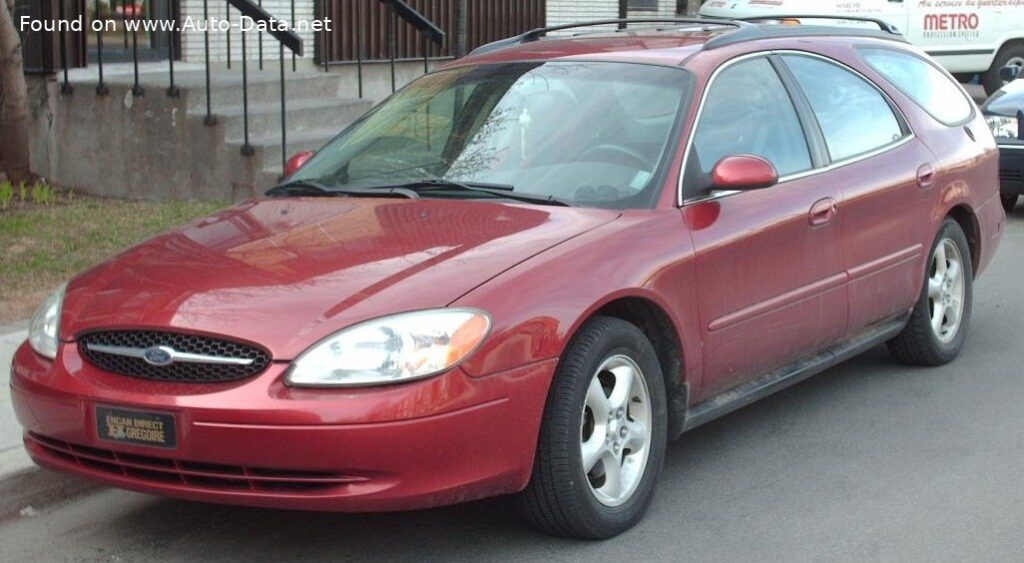
The Ford Taurus IV Station Wagon, produced between 2003 and 2005, represented the fourth generation of Ford’s full-size sedan, offered with a practical station wagon (estate) body style. While the Taurus nameplate was a mainstay of the American automotive landscape for decades, the fourth generation marked a period of refinement rather than radical change. This iteration of the Taurus aimed to provide a comfortable and spacious family vehicle, competing with other large American wagons like the Chevrolet Malibu Wagon and the Dodge Intrepid. The 3.0 V6 model, detailed here, offered a balance of performance and fuel economy, making it a popular choice for families needing both space and reasonable running costs.
Ford Taurus IV Station Wagon: An Overview
The Taurus IV, including the station wagon variant, was designed to appeal to a broad customer base seeking a reliable and comfortable vehicle. The station wagon body style, while declining in overall popularity during this period, offered significant cargo capacity, making it ideal for families and those with active lifestyles. The 3.0L V6 engine provided adequate power for everyday driving, and the automatic transmission contributed to a smooth and effortless driving experience. The Taurus IV continued Ford’s tradition of providing a value-oriented, spacious, and dependable vehicle.
Engine & Performance
The heart of the 2003-2005 Ford Taurus IV Station Wagon 3.0 V6 is the Duratec 30 engine, a 3.0-liter (2967 cm3 or 181.06 cu. in.) V6 powerplant. This naturally aspirated engine produces 201 horsepower at 5500 rpm and 281 Nm (207.25 lb.-ft.) of torque at 4500 rpm. The engine features a double overhead camshaft (DOHC) valvetrain with 2 valves per cylinder and utilizes multi-port fuel injection. This configuration delivers a power-to-weight ratio of 126.6 horsepower per tonne and a torque-to-weight ratio of 177 Nm per tonne. The engine’s output translates to a respectable power-to-liter ratio of 67.7 hp/l. Power is delivered to the front wheels via a 4-speed automatic transmission. The front-engine, transverse layout contributes to efficient packaging and a balanced driving experience. The weight-to-power ratio of 7.9 kg/Hp indicates a reasonably efficient powertrain for its time.
Design & Features
The Ford Taurus IV Station Wagon is a five-door, five-seat vehicle characterized by its traditional station wagon silhouette. The design prioritized practicality and spaciousness, offering a generous 2302 liters (81.29 cu. ft.) of maximum trunk space. The vehicle’s dimensions – 5022 mm (197.72 in.) in length, 1855 mm (73.03 in.) in width, and 1468 mm (57.8 in.) in height – provide ample interior room for passengers and cargo. Safety features included an Anti-lock Braking System (ABS), a standard feature for the era. The suspension system utilizes wishbone configurations for both the front and rear axles, providing a comfortable ride. Steering is rack and pinion with hydraulic power assistance. The vehicle rides on 16-inch wheels fitted with 215/60 R16 tires. The drag coefficient of 0.34, while not exceptional, is typical for a vehicle of this size and shape from the early 2000s.
Technical Specifications
| Brand | Ford |
| Model | Taurus |
| Generation | Taurus IV Station Wagon |
| Type (Engine) | 3.0 V6 24V (201 Hp) Automatic |
| Start of production | 2003 |
| End of production | 2005 |
| Powertrain Architecture | Internal Combustion engine |
| Body type | Station wagon (estate) |
| Seats | 5 |
| Doors | 5 |
| Fuel Type | Petrol (Gasoline) |
| Weight-to-power ratio | 7.9 kg/Hp |
| Weight-to-torque ratio | 5.7 kg/Nm |
| Power | 201 Hp @ 5500 rpm |
| Power per litre | 67.7 Hp/l |
| Torque | 281 Nm @ 4500 rpm / 207.25 lb.-ft. @ 4500 rpm |
| Engine layout | Front, Transverse |
| Engine Model/Code | Duratec 30 |
| Engine displacement | 2967 cm3 / 181.06 cu. in. |
| Number of cylinders | 6 |
| Engine configuration | V-engine |
| Cylinder Bore | 89 mm / 3.5 in. |
| Piston Stroke | 79.5 mm / 3.13 in. |
| Compression ratio | 10:1 |
| Number of valves per cylinder | 2 |
| Fuel injection system | Multi-port manifold injection |
| Engine aspiration | Naturally aspirated engine |
| Valvetrain | DOHC |
| Engine oil capacity | 5.2 l / 5.49 US qt | 4.58 UK qt |
| Coolant | 10 l / 10.57 US qt | 8.8 UK qt |
| Kerb Weight | 1588 kg / 3500.94 lbs |
| Trunk (boot) space – maximum | 2302 l / 81.29 cu. ft. |
| Fuel tank capacity | 68 l / 17.96 US gal | 14.96 UK gal |
| Length | 5022 mm / 197.72 in. |
| Width | 1855 mm / 73.03 in. |
| Height | 1468 mm / 57.8 in. |
| Wheelbase | 2757 mm / 108.54 in. |
| Front track | 1566 mm / 61.65 in. |
| Rear (Back) track | 1570 mm / 61.81 in. |
| Drag coefficient (Cd) | 0.34 |
| Minimum turning circle (turning diameter) | 12.1 m / 39.7 ft |
| Drivetrain Architecture | The Internal combustion engine (ICE) drives the front wheels of the vehicle. |
| Drive wheel | Front wheel drive |
| Number of gears and type of gearbox | 4 gears, automatic transmission |
| Front suspension | Wishbone |
| Rear suspension | Wishbone |
| Front brakes | Ventilated discs |
| Rear brakes | Disc |
| Assisting systems | ABS (Anti-lock braking system) |
| Steering type | Steering rack and pinion |
| Power steering | Hydraulic Steering |
| Tires size | 215/60 R16 |
| Wheel rims size | 16 |
The Ford Taurus IV Station Wagon 3.0 V6 offered a practical and comfortable option for families in the early 2000s. While not a performance leader, it provided a reliable and spacious vehicle with a reasonable level of equipment. Its legacy lies in continuing the Taurus nameplate’s tradition of providing a value-oriented, American-made family car.