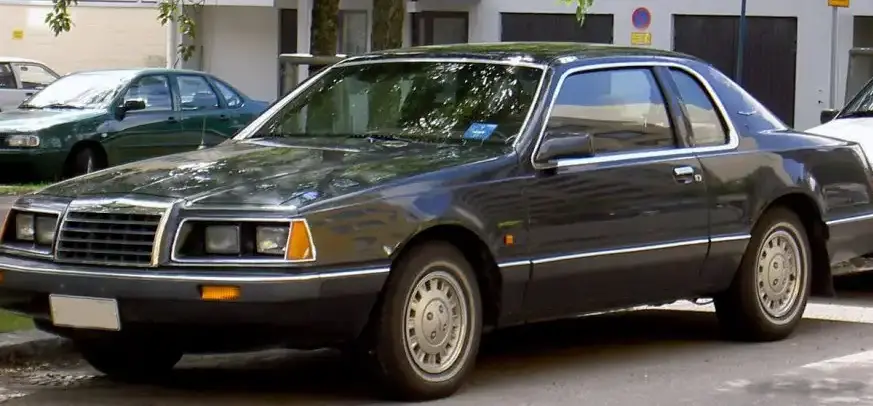
The Ford Thunderbird (Aero Birds) 2.3i, produced between 1983 and 1988, represented a significant departure for the iconic Thunderbird nameplate. This generation, often referred to as the “Aero Birds” due to its more aerodynamic styling, aimed to attract a younger, more fuel-conscious buyer than previous, larger Thunderbird models. Positioned as the entry-level offering within the tenth-generation Thunderbird lineup, the 2.3i provided a more affordable and economical alternative to the V8-powered variants. It was a key component of Ford’s strategy to modernize the Thunderbird and compete in a changing automotive landscape.
Technical Specifications
| Brand | Ford |
| Model | Thunderbird |
| Generation | Thunderbird (Aero Birds) |
| Type (Engine) | 2.3i (190 Hp) |
| Start of production | 1983 |
| End of production | 1988 |
| Powertrain Architecture | Internal Combustion engine |
| Body type | Coupe |
| Seats | 5 |
| Doors | 2 |
| Fuel Type | Petrol (Gasoline) |
| Maximum speed | 235 km/h (146.02 mph) |
| Power | 190 Hp |
| Engine aspiration | Naturally aspirated engine |
| Length | 5133 mm (202.09 in.) |
| Width | 1806 mm (71.1 in.) |
| Height | 1356 mm (53.39 in.) |
| Wheelbase | 2647 mm (104.21 in.) |
| Drivetrain Architecture | Internal Combustion engine (ICE) drives the rear wheels |
| Drive wheel | Rear wheel drive |
| Number of gears and type of gearbox | 5 gears, manual transmission |
Powertrain & Engine Architecture
The heart of the Thunderbird 2.3i was the Ford 2.3-liter inline-four cylinder engine. This engine, part of Ford’s “Lima” family, was a relatively simple and robust design. While not known for its outright performance, it offered a good balance of fuel efficiency and adequate power for the vehicle’s intended purpose. The engine featured a single overhead camshaft (SOHC) design and utilized multi-port fuel injection, a relatively modern feature for the time, contributing to improved fuel economy and reduced emissions. The 2.3-liter engine produced 190 horsepower. The five-speed manual transmission was the standard offering, providing drivers with a more engaging driving experience and contributing to the car’s relatively sporty character. The transmission was a conventional design, known for its durability and relatively straightforward maintenance.
Driving Characteristics
The 1983-1988 Thunderbird 2.3i offered a driving experience that prioritized comfort and fuel economy over outright performance. The 190 horsepower engine, while sufficient for everyday driving, didn’t provide the exhilarating acceleration of the V8-powered models. The five-speed manual transmission allowed drivers to keep the engine in its optimal power band, but the car wasn’t particularly quick. The rear-wheel-drive configuration provided a balanced feel, and the suspension was tuned for a comfortable ride. Compared to the V8 Thunderbirds, the 2.3i felt lighter and more nimble, making it more enjoyable to drive on winding roads. However, it lacked the raw power and muscular feel of its larger siblings. The gear ratios were fairly well-spaced, allowing for reasonable acceleration in each gear, but the engine did feel somewhat strained at higher RPMs.
Equipment & Trim Levels
The Thunderbird 2.3i was generally equipped with a fairly basic level of standard features, reflecting its position as the entry-level model. Standard equipment typically included cloth upholstery, a basic AM/FM radio, and manual windows and locks. Air conditioning was often an optional extra. The interior design was functional and straightforward, with a focus on practicality rather than luxury. Optional extras included upgraded sound systems, power windows and locks, cruise control, and a sunroof. The exterior styling was consistent with the rest of the Aero Bird lineup, featuring a sleek, aerodynamic profile and a distinctive grille. The 2.3i was often identified by its smaller wheels and tires compared to the V8 models.
Chassis & Braking
The Thunderbird 2.3i utilized a conventional rear-wheel-drive chassis with independent front suspension and a solid rear axle. The suspension was tuned for a comfortable ride, prioritizing smoothness over handling precision. The braking system consisted of disc brakes on the front wheels and drum brakes on the rear wheels. While adequate for normal driving conditions, the braking system wasn’t particularly powerful and lacked the stopping power of the V8 models, which often featured larger brakes. Stabilizer bars were included on both the front and rear axles to help reduce body roll during cornering. The chassis was relatively lightweight compared to the V8 Thunderbirds, contributing to the car’s more nimble handling characteristics.
Market Reception & Comparison
The Thunderbird 2.3i was generally well-received by critics as an affordable and fuel-efficient alternative to the larger, more expensive V8 models. It appealed to buyers who were looking for a stylish coupe but didn’t need the extra power of a V8. However, some critics noted that the engine lacked the refinement and performance of its competitors. Compared to the V8-powered Thunderbirds, the 2.3i offered significantly better fuel economy, making it a more practical choice for daily driving. The 2.3i was also generally more reliable than the V8 models, as the simpler engine design had fewer potential points of failure. In terms of maintenance, the 2.3i was relatively easy and inexpensive to repair, making it an attractive option for budget-conscious buyers.
Legacy
The Ford Thunderbird 2.3i, while not as iconic as some of the earlier Thunderbird models, played an important role in the evolution of the nameplate. It demonstrated Ford’s commitment to offering a wider range of options to appeal to a broader audience. Today, the 2.3i is a relatively affordable and accessible classic car, making it a popular choice for enthusiasts and collectors. The 2.3-liter engine is known for its durability and reliability, and parts are generally readily available. While not a high-performance machine, the Thunderbird 2.3i offers a unique blend of style, comfort, and fuel efficiency that continues to appeal to drivers today. Well-maintained examples are increasingly sought after by those looking for a classic American coupe that is both enjoyable to drive and relatively easy to maintain.