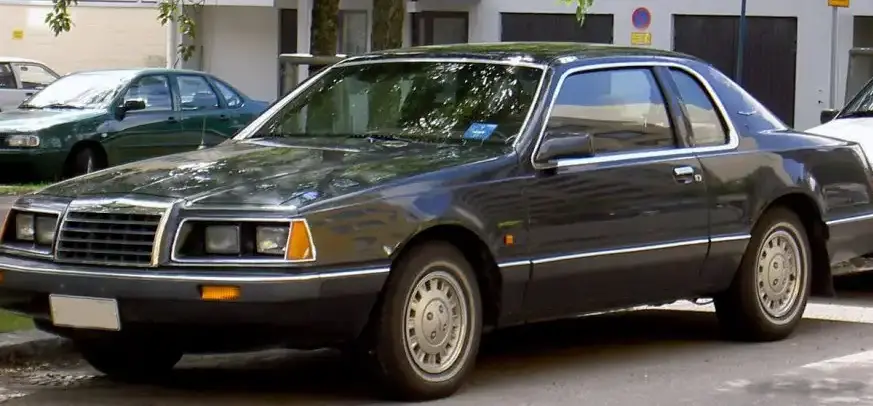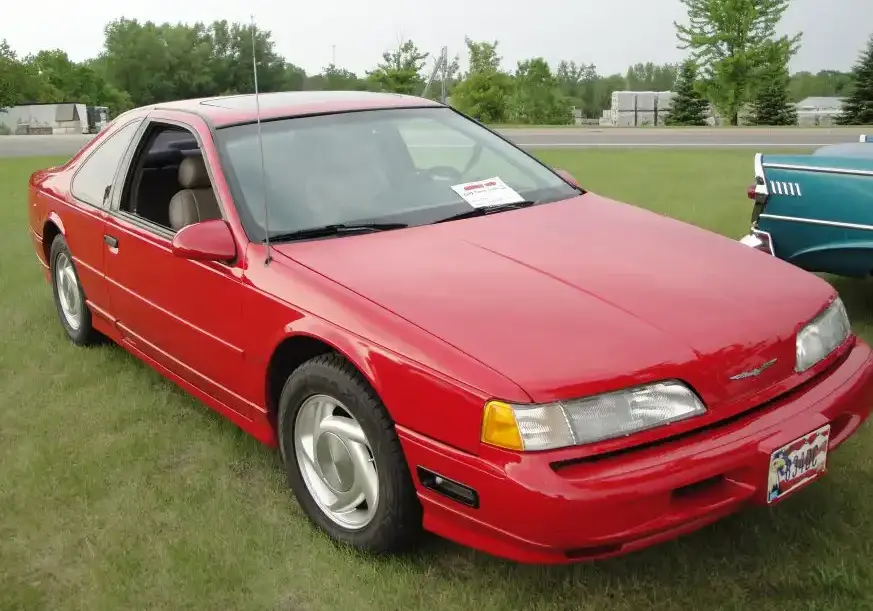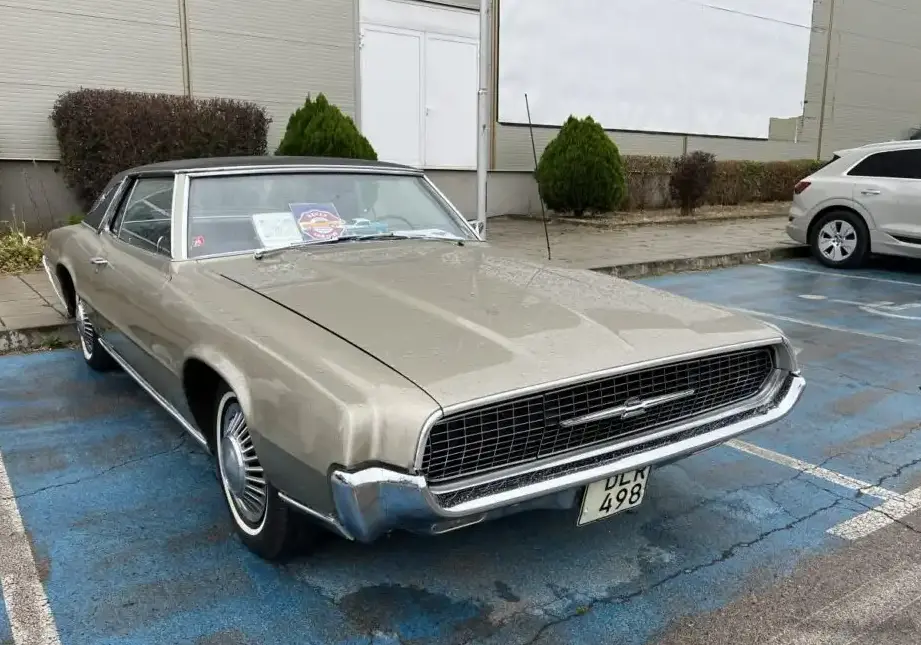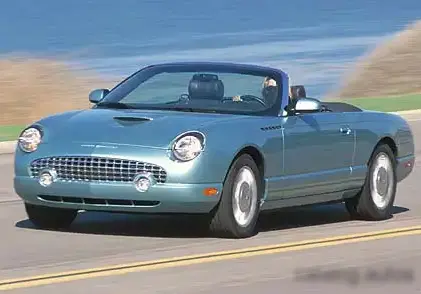
The Ford Thunderbird (Retro Birds), specifically the 4.0 i V8 32V (256 Hp) variant, represents a deliberate attempt by Ford to recapture the spirit of the iconic Thunderbird of the 1950s and 60s. Produced for the 2001 and 2002 model years, this generation – internally designated as the 11th generation – was built on the Ford DEW platform, shared with the Lincoln LS. This particular engine and transmission combination occupied a middle ground in the Thunderbird lineup, offering a balance of performance and relative affordability compared to the more sparsely equipped base models and the limited-edition variants. It was exclusively offered as a two-door convertible.
Technical Specifications
| Brand | Ford |
| Model | Thunderbird |
| Generation | Thunderbird (Retro Birds) |
| Type (Engine) | 4.0 i V8 32V (256 Hp) |
| Start of production | 2001 |
| End of production | 2002 |
| Powertrain Architecture | Internal Combustion engine |
| Body type | Cabriolet |
| Seats | 2 |
| Doors | 2 |
| Fuel consumption (urban) | 13.8 l/100 km (17 US mpg, 20.5 UK mpg) |
| Fuel consumption (extra urban) | 10.2 l/100 km (23.1 US mpg, 27.7 UK mpg) |
| Fuel Type | Petrol (Gasoline) |
| Acceleration 0 – 100 km/h | 7 sec |
| Acceleration 0 – 62 mph | 7 sec |
| Acceleration 0 – 60 mph | 6.7 sec |
| Maximum speed | 210 km/h (130.49 mph) |
| Weight-to-power ratio | 6.6 kg/Hp, 152.4 Hp/tonne |
| Weight-to-torque ratio | 4.6 kg/Nm, 215.5 Nm/tonne |
| Power | 256 Hp @ 6100 rpm |
| Power per litre | 64.8 Hp/l |
| Torque | 362 Nm @ 4300 rpm (267 lb.-ft. @ 4300 rpm) |
| Engine layout | Front, Longitudinal |
| Engine Model/Code | AJ30 |
| Engine displacement | 3950 cm3 (241.04 cu. in.) |
| Number of cylinders | 8 |
| Engine configuration | V-engine |
| Cylinder Bore | 86 mm (3.39 in.) |
| Piston Stroke | 85 mm (3.35 in.) |
| Compression ratio | 10.6:1 |
| Number of valves per cylinder | 4 |
| Fuel injection system | Multi-port manifold injection |
| Engine aspiration | Naturally aspirated engine |
| Valvetrain | DOHC |
| Engine oil capacity | 6.2 l (6.55 US qt | 5.46 UK qt) |
| Coolant | 11.3 l (11.94 US qt | 9.94 UK qt) |
| Kerb Weight | 1680 kg (3703.77 lbs.) |
| Trunk (boot) space – minimum | 190 l (6.71 cu. ft.) |
| Fuel tank capacity | 68 l (17.96 US gal | 14.96 UK gal) |
| Length | 4732 mm (186.3 in.) |
| Width | 1829 mm (72.01 in.) |
| Height | 1323 mm (52.09 in.) |
| Wheelbase | 2723 mm (107.2 in.) |
| Front track | 1540 mm (60.63 in.) |
| Rear (Back) track | 1530 mm (60.24 in.) |
| Drivetrain Architecture | Rear wheel drive |
| Number of gears and type of gearbox | 5 gears, automatic transmission |
| Front suspension | Coil spring |
| Rear suspension | Coil spring |
| Front brakes | Ventilated discs |
| Rear brakes | Ventilated discs |
| Assisting systems | ABS (Anti-lock braking system) |
| Steering type | Steering rack and pinion |
| Power steering | Hydraulic Steering |
| Tires size | 215/60 R16 |
Powertrain & Engine Architecture
The heart of this Thunderbird variant is the 4.0-liter AJ-30 V8 engine, a 32-valve design developed jointly by Ford and Jaguar. This engine, also used in some Jaguar models of the period, features a 90-degree V-angle and dual overhead camshafts (DOHC) per cylinder bank. The engine utilizes multi-port fuel injection, delivering fuel directly into each intake port. The AJ-30 is known for its relatively smooth power delivery and refined character. Paired with this engine is a 5-speed automatic transmission, providing smooth shifts but lacking the driver engagement of a manual gearbox. The transmission was calibrated for comfortable cruising rather than aggressive acceleration.
Driving Characteristics
The 256 horsepower and 267 lb-ft of torque provided by the 4.0L V8 and automatic transmission resulted in a 0-60 mph time of around 6.7 seconds – respectable for a grand touring convertible of the era. However, the automatic transmission, while smooth, did detract from the overall driving experience compared to the available 5-speed manual. The gear ratios were optimized for highway cruising, making the Thunderbird a comfortable long-distance vehicle. The automatic transmission also contributed to slightly lower fuel economy compared to the manual transmission equipped models. The power delivery was linear, with peak torque arriving at 4300 rpm, making it easy to modulate throttle response.
Equipment & Trim Levels
The 4.0L V8 automatic Thunderbird came standard with features such as leather upholstery, power seats, air conditioning, a premium sound system, and alloy wheels. Optional extras included a color-matched hardtop, upgraded sound systems, and various interior trim packages. The interior design was heavily influenced by the original 1950s Thunderbirds, with a prominent instrument panel and a generally luxurious feel. The standard upholstery was typically a leather blend, available in several color combinations.
Chassis & Braking
The Thunderbird’s chassis featured an independent front suspension with coil springs and a multi-link rear suspension, also utilizing coil springs. This setup provided a comfortable ride, although it wasn’t particularly sporty in handling. Braking duties were handled by ventilated disc brakes on all four wheels, assisted by an Anti-lock Braking System (ABS). The braking system was adequate for the vehicle’s weight and performance, providing confident stopping power in most conditions. The steering was rack-and-pinion with hydraulic power assist, offering a reasonably direct feel.
Market Reception & Comparison
Critics generally praised the Thunderbird’s styling and comfortable ride, but some found the performance underwhelming, particularly with the automatic transmission. Compared to the base 3.9L V8 model, the 4.0L offered a noticeable increase in power and torque, making it a more enjoyable driving experience. However, the 4.0L was more expensive. Fuel economy was a common criticism, with the 17 mpg city and 23 mpg highway figures being relatively low for the time. The 4.0L automatic variant was positioned as a sweet spot in the lineup, appealing to buyers who wanted a stylish and comfortable convertible with adequate performance without the higher price tag of the limited-edition models.
Legacy
The 2001-2002 Ford Thunderbird, while a relatively short-lived model, remains a popular choice among collectors and enthusiasts. The 4.0L V8 automatic variant is generally considered a reliable and well-built vehicle. The AJ-30 engine, when properly maintained, is known for its longevity. Common issues include minor electrical glitches and wear and tear on convertible top components. Today, these Thunderbirds are often sought after for their retro styling and comfortable driving experience, representing a unique chapter in Ford’s history. The used car market values these vehicles based on condition, mileage, and originality, with well-maintained examples commanding a premium.