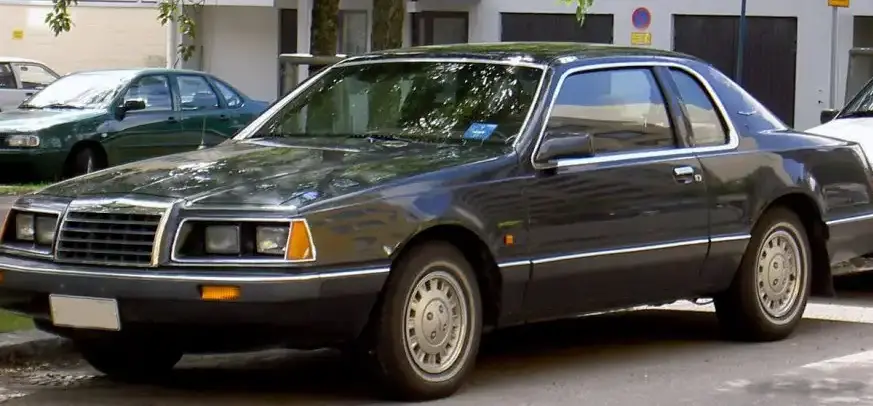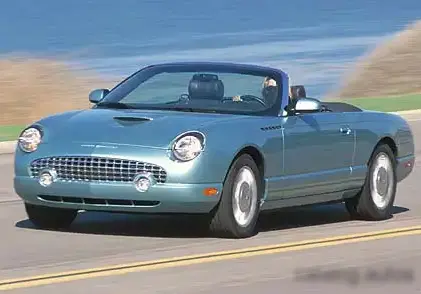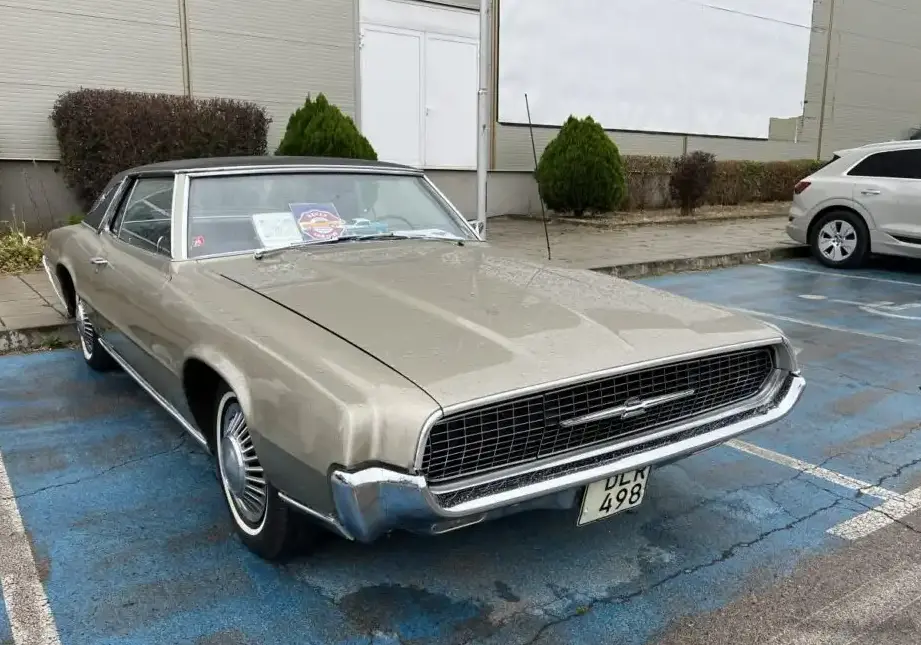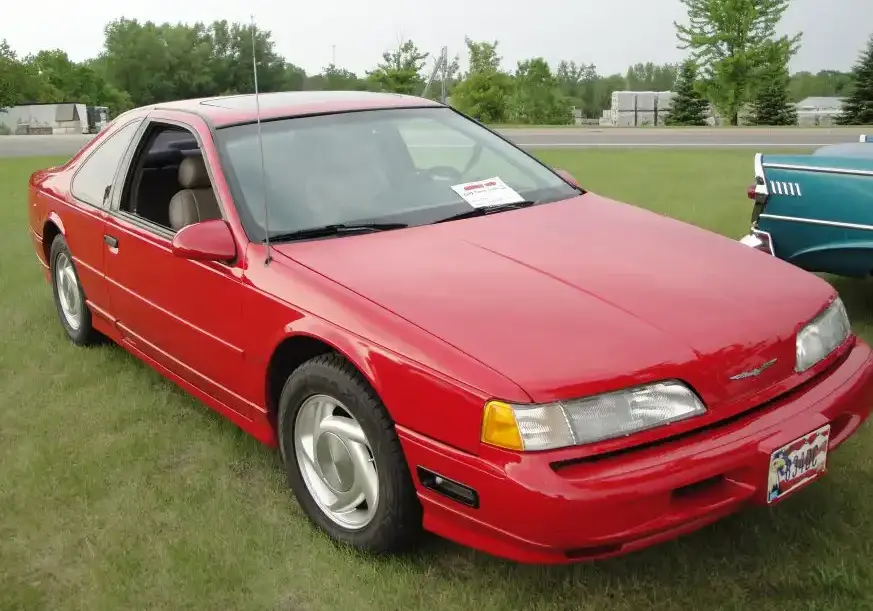
The Ford Thunderbird Super Birds, specifically the 4.6i V8 variant, represented a significant attempt to revive the iconic Thunderbird nameplate in the early 1990s. Produced from 1991 through 1997, this eleventh-generation Thunderbird (designated the 1991-1997 model years) aimed to blend classic styling cues with modern technology. It was positioned as a personal luxury coupe, attempting to recapture the spirit of the original Thunderbirds while appealing to a contemporary audience. This particular 4.6i V8 model served as the performance-oriented trim, sitting above the base 3.8L V6 models in the lineup.
Technical Specifications
| Brand | Ford |
| Model | Thunderbird |
| Generation | Thunderbird (Super Birds) |
| Type (Engine) | 4.6i V8 (208 Hp) |
| Start of production | 1991 year |
| End of production | 1997 year |
| Powertrain Architecture | Internal Combustion engine |
| Body type | Coupe |
| Seats | 5 |
| Doors | 2 |
| Fuel consumption (economy) – urban | 19 l/100 km (12.4 US mpg, 14.9 UK mpg, 5.3 km/l) |
| Fuel consumption (economy) – extra urban | 11 l/100 km (21.4 US mpg, 25.7 UK mpg, 9.1 km/l) |
| Fuel consumption (economy) – combined | 13.5 l/100 km (17.4 US mpg, 20.9 UK mpg, 7.4 km/l) |
| Fuel Type | Petrol (Gasoline) |
| Acceleration 0 – 100 km/h | 8.6 sec |
| Acceleration 0 – 62 mph | 8.6 sec |
| Acceleration 0 – 60 mph | 8.2 sec |
| Weight-to-power ratio | 8.1 kg/Hp, 123.3 Hp/tonne |
| Weight-to-torque ratio | 4.4 kg/Nm, 225.3 Nm/tonne |
| Power | 208 Hp @ 4500 rpm |
| Power per litre | 45.2 Hp/l |
| Torque | 380 Nm @ 3000 rpm (280.27 lb.-ft. @ 3000 rpm) |
| Engine layout | Front, Longitudinal |
| Engine displacement | 4601 cm3 (280.77 cu. in.) |
| Number of cylinders | 8 |
| Engine configuration | V-engine |
| Cylinder Bore | 90.2 mm (3.55 in.) |
| Piston Stroke | 90 mm (3.54 in.) |
| Compression ratio | 9:1 |
| Number of valves per cylinder | 2 |
| Fuel injection system | Multi-port manifold injection |
| Engine aspiration | Naturally aspirated engine |
| Valvetrain | OHC |
| Kerb Weight | 1687 kg (3719.2 lbs.) |
| Fuel tank capacity | 72 l (19.02 US gal | 15.84 UK gal) |
| Length | 5088 mm (200.31 in.) |
| Width | 1847 mm (72.72 in.) |
| Height | 1333 mm (52.48 in.) |
| Wheelbase | 2870 mm (112.99 in.) |
| Front track | 1565 mm (61.61 in.) |
| Rear (Back) track | 1530 mm (60.24 in.) |
| Drivetrain Architecture | The Internal combustion engine (ICE) drives the rear wheels of the vehicle. |
| Drive wheel | Rear wheel drive |
| Number of gears and type of gearbox | 5 gears, manual transmission |
| Front suspension | Spring Strut |
| Rear suspension | Coil spring |
| Front brakes | Ventilated discs |
| Rear brakes | Drum |
| Assisting systems | ABS (Anti-lock braking system), Hydraulic Steering |
| Tires size | 225/50/R16 |
Powertrain & Engine Architecture
The heart of the Super Birds 4.6i V8 was the 4.6-liter (4601 cc) Modular engine, specifically the version designated for the Thunderbird. This engine, part of Ford’s Modular engine family, featured a 90-degree V8 configuration with overhead camshafts (OHC) and two valves per cylinder. The engine utilized a multi-port fuel injection system, delivering fuel directly to each intake port for improved efficiency and power delivery. The 9:1 compression ratio was a compromise between performance and the fuel quality available in the US market. The engine produced 208 horsepower at 4500 rpm and 380 Nm (280 lb-ft) of torque at 3000 rpm. The standard transmission for this model was a 5-speed manual, although a 4-speed automatic transmission was also offered as an option. The automatic transmission was designed to provide smooth shifts and enhance the car’s cruising comfort.
Driving Characteristics
The 4.6i V8-equipped Thunderbird offered a noticeable performance upgrade over the V6 models. Acceleration from 0-60 mph was achieved in approximately 8.2 seconds, making it a reasonably quick car for its time. The engine’s torque curve provided good low-end and mid-range power, making it responsive in everyday driving situations. The manual transmission allowed for greater driver control, while the optional automatic provided a more relaxed driving experience. Compared to the later, more powerful 4.6L engines found in the Mustang, the Thunderbird’s version was tuned for refinement and usability rather than outright performance. The rear-wheel-drive configuration contributed to a balanced feel, although the car’s weight (approximately 3719 lbs) was noticeable during spirited driving.
Equipment & Trim Levels
The Super Birds 4.6i V8 came reasonably well-equipped, reflecting its position as the premium trim level. Standard features typically included air conditioning, power windows and locks, a premium sound system, and upgraded interior trim. Upholstery was usually cloth or leather, with options for different color schemes. Optional extras included a sunroof, upgraded wheels, and a CD player. The interior design aimed for a luxurious feel, with a focus on comfort and convenience. The dashboard layout was relatively straightforward, with easy-to-read gauges and logically placed controls.
Chassis & Braking
The Thunderbird’s chassis featured an independent front suspension with coil springs and a live rear axle with coil springs. The front suspension utilized a strut design, while the rear suspension was designed to provide a comfortable ride. Braking duties were handled by ventilated discs at the front and drum brakes at the rear. Anti-lock brakes (ABS) were standard, enhancing safety and control during hard braking. The steering was hydraulic power-assisted, providing light and responsive steering feel. The suspension tuning was geared towards a balance between comfort and handling, prioritizing a smooth ride over aggressive cornering.
Market Reception & Comparison
The 1991-1997 Thunderbird received mixed reviews. Critics praised its styling, comfortable ride, and the performance of the 4.6i V8 engine. However, some criticized its weight and handling, finding it less sporty than some of its competitors. Fuel economy was also a concern, with combined fuel consumption averaging around 17.4 US mpg. Compared to the base V6 models, the 4.6i V8 offered a significant performance boost, but at a higher price point. The 4.6i V8 was also more expensive to maintain than the V6, due to the more complex engine and its higher parts cost. The Thunderbird competed with other personal luxury coupes such as the Buick Riviera and the Chrysler LeBaron.
Legacy
The Ford Thunderbird Super Birds 4.6i V8, while not a runaway sales success, remains a fondly remembered vehicle for many enthusiasts. The 4.6-liter Modular engine proved to be a durable and reliable powerplant, and many examples are still on the road today. The car’s classic styling and comfortable ride continue to appeal to collectors and enthusiasts. However, maintenance costs can be higher than for more modern vehicles, and parts availability can be a challenge. The Thunderbird’s attempt to revive a classic nameplate ultimately paved the way for future iterations of the Thunderbird, demonstrating Ford’s continued interest in the personal luxury coupe segment.