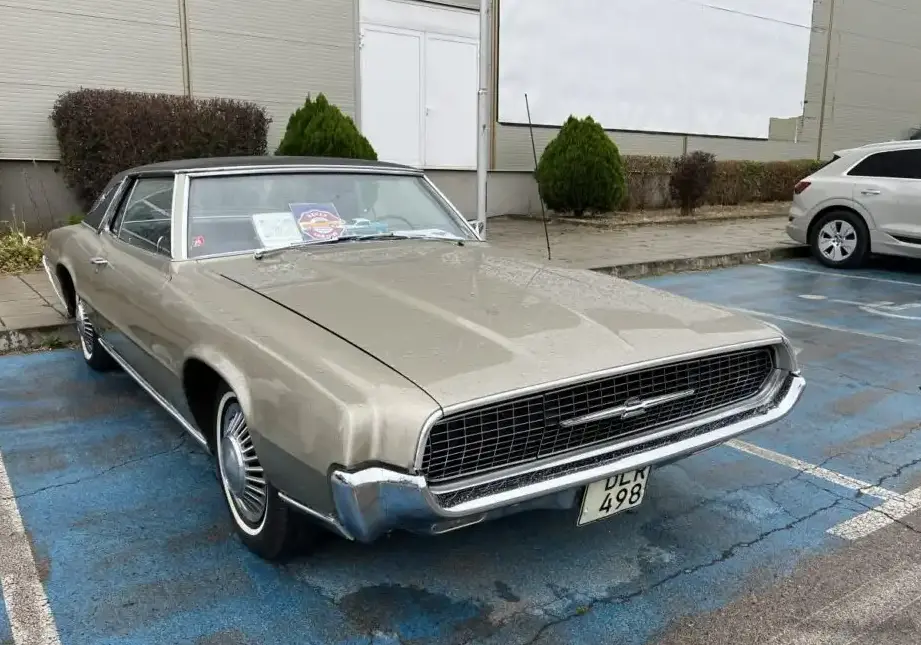
The Ford Thunderbird V Coupe, specifically equipped with the 6.4-liter (390 cubic inch) V8 engine producing 315 horsepower and paired with the Cruise-O-Matic automatic transmission, represents a high-performance iteration of the fourth-generation Thunderbird (1964-1966). Produced from August 1966 through 1967, this variant occupied a premium position within the Thunderbird lineup, appealing to buyers seeking a blend of luxury and substantial power. It was a key offering during a period when American automakers were engaged in a horsepower race, and the Thunderbird aimed to deliver a sophisticated grand touring experience.
Technical Specifications
| Brand | Ford |
| Model | Thunderbird |
| Generation | Thunderbird V Coupe |
| Engine Type | 6.4 V8 (315 Hp) Cruise-O-Matic |
| Start of Production | August, 1966 |
| End of Production | 1967 |
| Powertrain Architecture | Internal Combustion engine |
| Body Type | Coupe |
| Seats | 4 |
| Doors | 2 |
| Fuel Type | Petrol (Gasoline) |
| Power | 315 Hp |
| Power per litre | 49.3 Hp/l |
| Engine Layout | Front, Longitudinal |
| Engine Model/Code | FE |
| Engine Displacement | 6391 cm3 / 390 cu. in. |
| Number of Cylinders | 8 |
| Engine Configuration | V-engine |
| Cylinder Bore | 102.9 mm / 4.05 in. |
| Piston Stroke | 96.1 mm / 3.78 in. |
| Compression Ratio | 10.5:1 |
| Number of Valves per Cylinder | 2 |
| Fuel Injection System | Carburettor |
| Engine Aspiration | Naturally Aspirated |
| Valvetrain | OHV |
| Engine Oil Capacity | 4.7 l / 4.97 US qt | 4.14 UK qt |
| Coolant Capacity | 19.4 l / 20.5 US qt | 17.07 UK qt |
| Trunk (boot) Space (minimum) | 331 l / 11.69 cu. ft. |
| Fuel Tank Capacity | 95 l / 25.1 US gal | 20.9 UK gal |
| Length | 5255 mm / 206.89 in. |
| Width | 1961 mm / 77.2 in. |
| Height | 1341 mm / 52.8 in. |
| Wheelbase | 2921 mm / 115 in. |
| Front Track | 1575 mm / 62.01 in. |
| Rear Track | 1575 mm / 62.01 in. |
| Minimum Turning Circle | 12.3 m / 40.35 ft. |
| Drivetrain Architecture | Rear wheel drive |
| Drive Wheel | Rear wheel drive |
| Number of Gears & Gearbox Type | 3 gears, automatic transmission |
| Front Suspension | Transverse stabilizer |
| Rear Suspension | Rigid axle suspension, Coil spring |
| Front Brakes | Disc |
| Rear Brakes | Drum |
| Power Steering | Hydraulic Steering |
| Wheel Rims Size | 5.5J x 15 |
Powertrain & Engine Architecture
The heart of this Thunderbird variant is the Ford FE-series V8 engine, specifically the 390 cubic inch (6.4-liter) displacement version. This engine utilized a cast iron block and cylinder heads, with a 10.5:1 compression ratio contributing to its substantial power output. Fuel delivery was managed by a carburetor, a common practice for the era. The overhead valve (OHV) valvetrain, while not as sophisticated as contemporary overhead cam designs, proved durable and reliable. The Cruise-O-Matic transmission was a three-speed automatic, designed to provide smooth and comfortable shifting. It was a typical automatic transmission of the time, prioritizing ease of use over outright performance. The transmission’s gear ratios were geared towards cruising comfort and acceleration from a standstill, rather than maximizing fuel efficiency.
Driving Characteristics
The 315 horsepower on tap provided brisk acceleration for the time. While not a sports car, the Thunderbird V Coupe with this engine configuration could achieve 0-60 mph times in the low 8-second range, respectable for a large, luxurious coupe. The automatic transmission, while convenient, did result in some power loss compared to the available manual transmission options. The power delivery was characterized by strong low-end torque, making it well-suited for highway cruising and passing maneuvers. The suspension, while comfortable, leaned towards a softer ride, prioritizing passenger comfort over sharp handling. The rear-wheel-drive configuration provided a traditional driving experience, but lacked the cornering stability of more modern designs.
Equipment & Trim Levels
The Thunderbird V Coupe with the 6.4-liter V8 typically came standard with a generous array of features for the mid-1960s. These included power steering, power brakes, a deluxe interior with comfortable seating, and a full complement of gauges. Options included air conditioning, power windows, power seats, a premium sound system, and various exterior trim enhancements. Interior upholstery was typically offered in cloth or vinyl, with a range of color choices available. The dashboard featured a woodgrain finish and a stylish design that reflected the Thunderbird’s luxury positioning.
Chassis & Braking
The Thunderbird V Coupe utilized a body-on-frame construction, providing a robust and durable chassis. The front suspension employed independent upper and lower control arms with a transverse stabilizer bar, while the rear suspension featured a solid axle with coil springs. This setup prioritized ride comfort over handling precision. Braking duties were handled by disc brakes at the front and drum brakes at the rear. While adequate for the time, the braking system lacked the stopping power and modulation of modern systems. Power steering was standard, making the car relatively easy to maneuver, despite its size.
Market Reception & Comparison
The 1966-1967 Thunderbird V Coupe with the 315 hp 6.4-liter V8 was generally well-received by automotive critics. It was praised for its powerful engine, comfortable ride, and luxurious appointments. However, some critics noted that the car’s size and weight hindered its handling. Compared to other Thunderbird variants, such as those equipped with smaller engines, this version offered significantly more performance. It was positioned as a step up from the base models, appealing to buyers who wanted a more engaging driving experience. Fuel economy, unsurprisingly, was not a strong point, averaging around 12-15 mpg in real-world driving.
Legacy
The Ford Thunderbird V Coupe with the 6.4-liter V8 and Cruise-O-Matic transmission remains a desirable classic car today. The FE-series engine is known for its durability and relative simplicity, making it a relatively easy engine to maintain and repair. However, parts availability can be a challenge. These Thunderbirds are often sought after by collectors and enthusiasts who appreciate their classic styling and powerful V8 engines. While not as iconic as some other American muscle cars, the Thunderbird V Coupe represents a significant chapter in Ford’s history and a testament to the era of American automotive excess. A well-maintained example can command a significant price on the used car market, reflecting its enduring appeal.