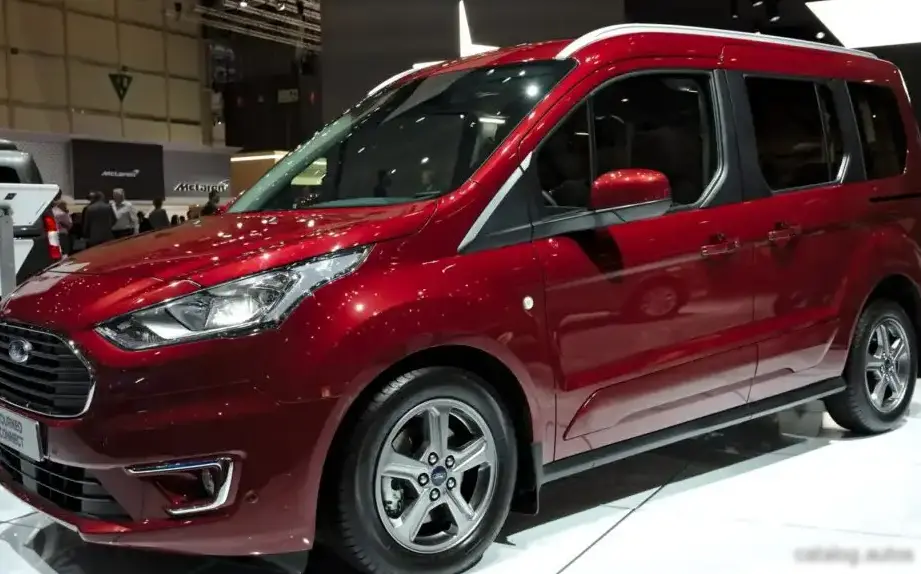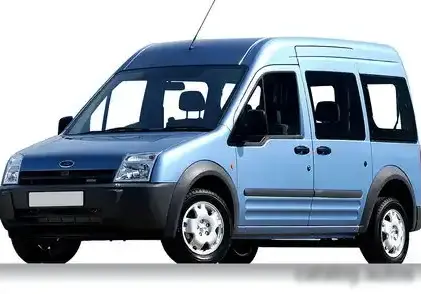
The Ford Tourneo Connect, launched in 2003, represented Ford’s entry into the compact leisure activity vehicle (LAV) segment in Europe. Based on the Ford Focus platform (specifically the C170 series), the Tourneo Connect was designed to offer a practical and versatile alternative to traditional MPVs. The 1.8 i 16V variant, producing 115 horsepower, was a key part of the initial lineup, positioned as a mid-range option offering a balance between affordability and usability. Production of the first generation Tourneo Connect continued until 2013, with this 1.8L engine remaining a consistent offering throughout much of its lifespan. This model aimed to appeal to families and small businesses needing a flexible vehicle for both passenger and light cargo duties.
Technical Specifications
| Brand | Ford |
| Model | Tourneo Connect |
| Generation | Tourneo Connect I |
| Type (Engine) | 1.8 i 16V (115 Hp) |
| Start of production | 2003 |
| End of production | 2013 |
| Powertrain Architecture | Internal Combustion engine |
| Body type | Minivan |
| Seats | 5 |
| Doors | 5 |
| Fuel Type | Petrol (Gasoline) |
| Maximum speed | 165 km/h (102.53 mph) |
| Weight-to-power ratio | 12.4 kg/Hp, 80.7 Hp/tonne |
| Weight-to-torque ratio | 8.9 kg/Nm, 112.3 Nm/tonne |
| Power | 115 Hp @ 5750 rpm |
| Power per litre | 64 Hp/l |
| Torque | 160 Nm @ 4500 rpm (118.01 lb.-ft. @ 4500 rpm) |
| Engine layout | Front, Transverse |
| Engine Model/Code | EYPA, EYPB, EYPC, EYPD |
| Engine displacement | 1796 cm3 (109.6 cu. in.) |
| Number of cylinders | 4 |
| Engine configuration | Inline |
| Cylinder Bore | 80.6 mm (3.17 in.) |
| Piston Stroke | 88 mm (3.46 in.) |
| Compression ratio | 9.8:1 |
| Number of valves per cylinder | 4 |
| Fuel injection system | Multi-port manifold injection |
| Engine aspiration | Naturally aspirated engine |
| Valvetrain | DOHC |
| Engine oil capacity | 3.75 l (3.96 US qt | 3.3 UK qt) |
| Coolant | 6.5 l (6.87 US qt | 5.72 UK qt) |
| Kerb Weight | 1425 kg (3141.59 lbs) |
| Max. weight | 2045 kg (4508.45 lbs) |
| Max load | 620 kg (1366.87 lbs) |
| Fuel tank capacity | 60 l (15.85 US gal | 13.2 UK gal) |
| Length | 4278 mm (168.43 in) |
| Width | 1795 mm (70.67 in) |
| Height | 1814 mm (71.42 in) |
| Wheelbase | 2664 mm (104.88 in) |
| Front track | 1505 mm (59.25 in) |
| Rear (Back) track | 1552 mm (61.1 in) |
| Drivetrain Architecture | The Internal combustion engine (ICE) drives the front wheels of the vehicle. |
| Drive wheel | Front wheel drive |
| Number of gears and type of gearbox | 5 gears, manual transmission |
| Front suspension | Wishbone |
| Rear suspension | Leaf spring |
| Front brakes | Disc |
| Rear brakes | Drum |
| Steering type | Steering rack and pinion |
| Tires size | 195/65 R15 |
Powertrain & Engine Architecture
The heart of the Tourneo Connect 1.8 i 16V is the Ford EYPA/EYPB engine family. This 1.8-liter inline-four cylinder engine utilizes a naturally aspirated configuration, relying on atmospheric pressure for air intake. The engine features a double overhead camshaft (DOHC) valvetrain, operating four valves per cylinder, which contributes to improved breathing and higher-end power delivery. Fuel delivery is managed by a multi-port fuel injection system, providing precise fuel metering for efficient combustion. The engine’s 9.8:1 compression ratio represents a compromise between performance and fuel economy. The 115 horsepower and 160 Nm (118 lb-ft) of torque are respectable figures for this class of vehicle, but not exceptional. The engine was paired with a five-speed manual transmission as standard, offering a relatively direct driving experience.
Driving Characteristics
The 1.8L engine, coupled with the five-speed manual transmission, provided adequate, though not exhilarating, performance. Acceleration from 0 to 60 mph was estimated to be around 11-12 seconds. The engine felt most comfortable in the mid-range, offering sufficient power for everyday driving and highway cruising. Compared to the later 1.6-liter EcoBoost turbocharged engine, the 1.8L felt less responsive at lower RPMs, requiring more downshifting to maintain momentum. The manual transmission offered a more engaging driving experience than the optional four-speed automatic, which could feel sluggish and detract from the vehicle’s overall responsiveness. The suspension, tuned for comfort, provided a reasonably smooth ride, but handling was not particularly sporty.
Equipment & Trim Levels
The 1.8 i 16V trim typically included features such as power steering, central locking, electric front windows, and an adjustable steering column. Interior upholstery was generally cloth, with a functional, if somewhat basic, dashboard layout. Optional extras included air conditioning, alloy wheels, and a CD player. Higher trim levels, such as the ‘Zetec’, added features like body-colored bumpers, upgraded interior trim, and additional safety equipment. The Tourneo Connect was designed with practicality in mind, offering a flexible seating configuration and ample cargo space. The rear seats could be folded or removed entirely to create a larger load area.
Chassis & Braking
The Tourneo Connect utilized a front-wheel-drive layout with a MacPherson strut front suspension and a leaf spring rear suspension. The leaf spring setup, while cost-effective, was a compromise in terms of ride quality compared to more sophisticated independent rear suspension systems. Braking was handled by disc brakes on the front wheels and drum brakes on the rear. The braking system was adequate for the vehicle’s weight and performance, but lacked the stopping power of more advanced setups. Steering was provided by a rack and pinion system, offering reasonable precision and feedback.
Market Reception & Comparison
The Tourneo Connect 1.8 i 16V was generally well-received by critics as a practical and affordable family vehicle. However, some reviewers noted the engine’s lack of refinement and the somewhat basic interior. Compared to the diesel-powered versions (particularly the 1.9 TDI), the 1.8L petrol engine offered less torque and lower fuel economy. The diesel models were favored by those who prioritized fuel efficiency and long-distance driving. The 1.8L, however, appealed to buyers who preferred the smoother operation and lower initial cost of a petrol engine. Reliability was generally good, with the 1.8L engine proving to be a durable and dependable unit.
Legacy
The Ford Tourneo Connect I 1.8 i 16V remains a relatively common sight on used car markets today. The engine is known for its robustness and relatively straightforward maintenance requirements. While not the most exciting vehicle to drive, it offers a practical and affordable solution for families and small businesses. Common issues include wear and tear on suspension components and occasional problems with the fuel injection system. However, parts availability is generally good, and repair costs are typically reasonable. The Tourneo Connect established Ford as a serious contender in the compact LAV segment, paving the way for subsequent generations of the vehicle.