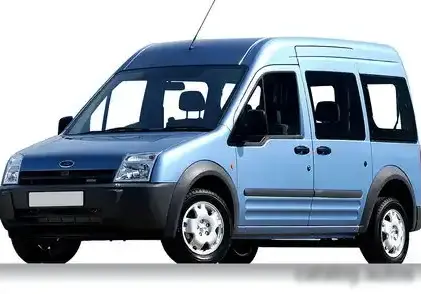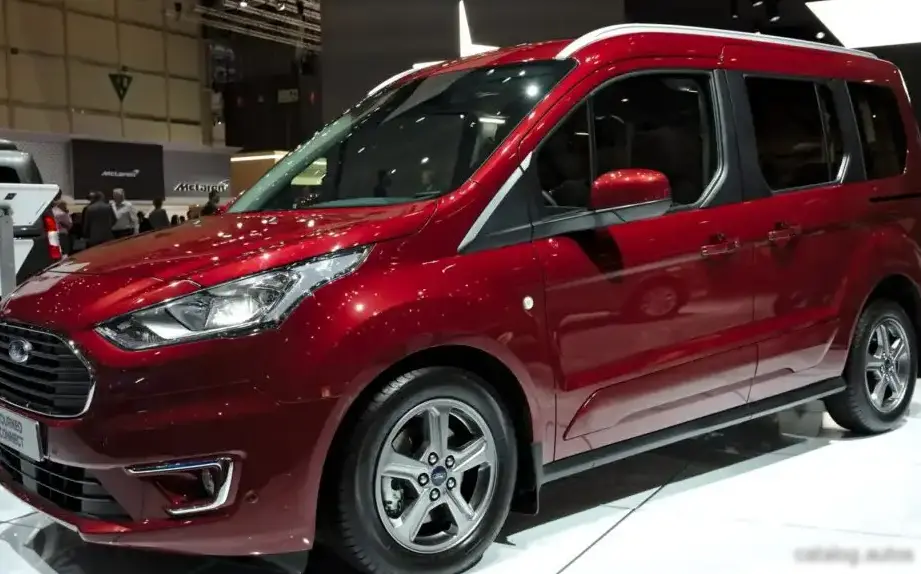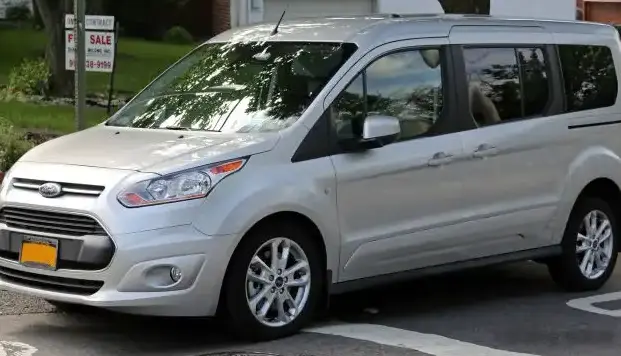
The Ford Tourneo Connect II 1.0 EcoBoost (100 hp) represents a significant entry point into the compact people carrier segment, particularly in European markets where it was primarily sold from 2014 to 2018. Based on the Ford Transit Connect platform, the Tourneo Connect II aimed to provide a practical and affordable option for families and commercial users needing a versatile vehicle. This specific 1.0 EcoBoost variant, paired with a six-speed manual transmission, occupied the lower-mid range of the Tourneo Connect lineup, offering a balance between fuel efficiency and acceptable performance. It was positioned below the 1.6-liter diesel and higher-output gasoline options, targeting buyers prioritizing economy over outright speed.
Technical Specifications
| Brand | Ford |
| Model | Tourneo Connect |
| Generation | Tourneo Connect II |
| Type (Engine) | 1.0 EcoBoost (100 Hp) |
| Start of production | 2014 |
| End of production | 2018 |
| Powertrain Architecture | Internal Combustion engine |
| Body type | Minivan |
| Seats | 5 |
| Doors | 5 |
| Fuel consumption (urban) | 6.4 l/100 km (36.8 US mpg, 44.1 UK mpg, 15.6 km/l) |
| Fuel consumption (extra urban) | 5.1 l/100 km (46.1 US mpg, 55.4 UK mpg, 19.6 km/l) |
| Fuel consumption (combined) | 5.6 l/100 km (42 US mpg, 50.4 UK mpg, 17.9 km/l) |
| CO2 emissions | 129 g/km |
| Fuel Type | Petrol (Gasoline) |
| Acceleration 0 – 100 km/h | 14 sec |
| Acceleration 0 – 62 mph | 14 sec |
| Acceleration 0 – 60 mph | 13.3 sec |
| Maximum speed | 165 km/h (102.53 mph) |
| Emission standard | Euro 5 |
| Weight-to-power ratio | 14.2 kg/Hp, 70.4 Hp/tonne |
| Weight-to-torque ratio | 8.4 kg/Nm, 119.7 Nm/tonne |
| Power | 100 Hp @ 6000 rpm |
| Power per litre | 100.1 Hp/l |
| Torque | 170 Nm @ 1400-4000 rpm (125.39 lb.-ft. @ 1400-4000 rpm) |
| Engine layout | Front, Transverse |
| Engine Model/Code | M2GA, M2GB |
| Engine displacement | 999 cm3 (60.96 cu. in.) |
| Number of cylinders | 3 |
| Engine configuration | Inline |
| Cylinder Bore | 71.9 mm (2.83 in.) |
| Piston Stroke | 82 mm (3.23 in.) |
| Compression ratio | 10:1 |
| Number of valves per cylinder | 4 |
| Fuel injection system | Direct injection |
| Engine aspiration | Turbocharger, Intercooler |
| Valvetrain | DOHC |
| Engine oil capacity | 4.1 l (4.33 US qt | 3.61 UK qt) |
| Coolant | 5.85 l (6.18 US qt | 5.15 UK qt) |
| Kerb Weight | 1420 kg (3130.56 lbs.) |
| Max. weight | 2010 kg (4431.29 lbs.) |
| Max load | 590 kg (1300.73 lbs.) |
| Trunk (boot) space – minimum | 1029 l (36.34 cu. ft.) |
| Trunk (boot) space – maximum | 2410 l (85.11 cu. ft.) |
| Length | 4418 mm (173.94 in.) |
| Width | 2137 mm (84.13 in.) |
| Height | 1852 mm (72.91 in.) |
| Wheelbase | 2662 mm (104.8 in.) |
| Front track | 1568 mm (61.73 in.) |
| Rear (Back) track | 1584 mm (62.36 in.) |
| Minimum turning circle | 11.7 m (38.39 ft.) |
| Drivetrain Architecture | Front wheel drive |
| Number of gears | 6 gears, manual transmission |
| Front suspension | Independent, type McPherson with coil spring and anti-roll bar |
| Rear suspension | Semi-dependent beam with stabilizer lateral stability |
| Front brakes | Ventilated discs |
| Rear brakes | Disc |
| Assisting systems | ABS (Anti-lock braking system) |
| Steering type | Steering rack and pinion |
| Tires size | 205/60 R16 |
| Wheel rims size | 6.5J x 16 |
Powertrain & Engine Architecture
The heart of this Tourneo Connect variant is the Ford 1.0 EcoBoost engine, specifically the M2GA or M2GB iteration. This is a three-cylinder, turbocharged gasoline engine utilizing direct fuel injection and a double overhead camshaft (DOHC) valvetrain. The engine’s small displacement is compensated for by the turbocharger and intercooler, which boost power output to 100 horsepower at 6000 rpm and 170 Nm (125 lb-ft) of torque available from a low 1400 rpm to 4000 rpm. This broad torque curve is a key characteristic, providing reasonable responsiveness in everyday driving situations. The 1.0 EcoBoost engine was a significant achievement for Ford, demonstrating the potential of downsized, turbocharged engines to deliver both performance and fuel efficiency. The six-speed manual transmission was the standard offering for this trim, providing a good balance of gear ratios for both urban and highway driving. The transmission’s shift quality was generally considered smooth, though not particularly sporty.
Driving Characteristics
The 1.0 EcoBoost-equipped Tourneo Connect offers a driving experience geared towards practicality rather than performance. Acceleration from 0-60 mph takes around 13.3 seconds, and top speed is limited to 165 km/h (102.53 mph). While not brisk, the engine provides sufficient power for typical daily commutes and family trips, especially when not fully loaded. The turbocharger does introduce a slight amount of turbo lag, but the broad torque band helps mitigate this. Compared to the 1.6-liter diesel versions, the 1.0 EcoBoost feels less powerful, particularly when carrying a full load of passengers and luggage. However, it offers a smoother and quieter driving experience than the diesel, with less engine vibration. The manual transmission allows for greater driver control, but the gear ratios are optimized for fuel economy rather than spirited driving.
Equipment & Trim Levels
The 1.0 EcoBoost trim typically came with a reasonable level of standard equipment. This included air conditioning, power windows, central locking, and a basic audio system with USB connectivity. Safety features such as ABS, electronic stability control, and multiple airbags were also standard. Interior upholstery was typically cloth, with a functional but not luxurious design. Optional extras included alloy wheels, parking sensors, a touchscreen infotainment system with navigation, and cruise control. Higher trim levels offered more premium interior materials and additional comfort features.
Chassis & Braking
The Tourneo Connect II utilizes a McPherson strut front suspension and a semi-independent beam rear suspension. This setup provides a comfortable ride quality, absorbing bumps and imperfections in the road reasonably well. The front suspension incorporates an anti-roll bar to reduce body roll during cornering. Braking duties are handled by ventilated discs at the front and solid discs at the rear. The ABS system provides effective stopping power in emergency situations. The steering is a rack and pinion system, offering precise and responsive handling.
Market Reception & Comparison
The Ford Tourneo Connect II 1.0 EcoBoost was generally well-received by critics as a practical and affordable people carrier. Its fuel economy of around 42 US mpg combined was a major selling point, making it an attractive option for budget-conscious buyers. However, some reviewers noted that the engine could feel strained when fully loaded or driving uphill. Compared to the 1.6-liter diesel versions, the 1.0 EcoBoost offered lower running costs but less overall performance. The 1.0 EcoBoost was often seen as a good choice for urban driving and shorter trips, while the diesel was better suited for long-distance journeys and heavier loads.
Legacy
The 1.0 EcoBoost engine has proven to be a relatively reliable powertrain, although some owners have reported issues with the timing belt and water pump. Regular maintenance, including oil changes and timing belt replacements, is crucial for ensuring long-term reliability. In the used car market, the Tourneo Connect II 1.0 EcoBoost remains a popular choice for families and small businesses seeking a versatile and economical vehicle. Its compact size, spacious interior, and fuel-efficient engine make it a practical and affordable option. The engine’s continued presence in later Ford models demonstrates its enduring appeal and technological significance.