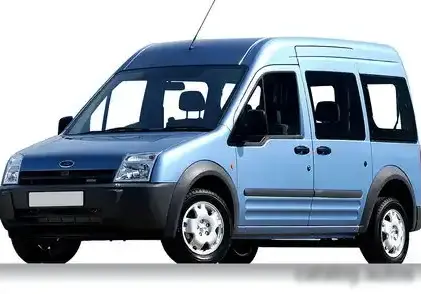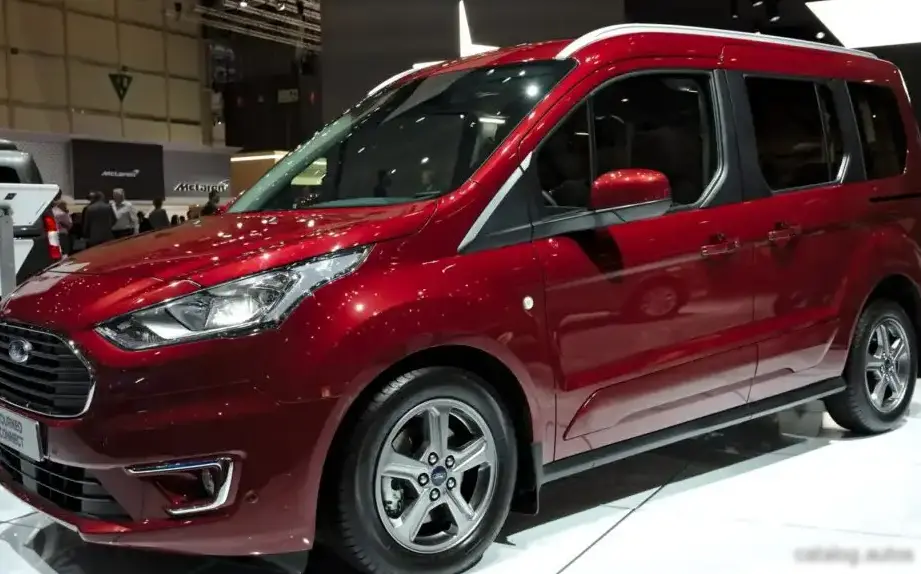
The Ford Tourneo Connect II 1.6 Duratorq TDCi, producing 115 horsepower, was a popular configuration of Ford’s compact people carrier sold primarily in Europe from 2013 to 2015. Positioned as a mid-range offering within the Tourneo Connect II lineup, it aimed to balance fuel efficiency with adequate performance for family and commercial use. This second generation Tourneo Connect, built on the Ford C170 platform (derived from the global Ford Focus C346 platform), represented a significant step up in refinement and practicality compared to its predecessor, the Tourneo Connect I. It shared its underpinnings with the similarly-styled, but commercially-focused, Ford Transit Connect.
Technical Specifications
| Brand | Ford |
| Model | Tourneo Connect |
| Generation | Tourneo Connect II |
| Type (Engine) | 1.6 Duratorq TDCi (115 Hp) |
| Start of production | 2013 |
| End of production | 2015 |
| Powertrain Architecture | Internal Combustion engine |
| Body type | Minivan |
| Seats | 5 |
| Doors | 5 |
| Fuel consumption (urban) | 5.6 l/100 km (42 US mpg, 50.4 UK mpg, 17.9 km/l) |
| Fuel consumption (extra urban) | 4.6 l/100 km (51.1 US mpg, 61.4 UK mpg, 21.7 km/l) |
| Fuel consumption (combined) | 4.9 l/100 km (48 US mpg, 57.6 UK mpg, 20.4 km/l) |
| CO2 emissions | 130 g/km |
| Fuel Type | Diesel |
| Acceleration 0 – 100 km/h | 13.8 sec |
| Acceleration 0 – 62 mph | 13.8 sec |
| Acceleration 0 – 60 mph | 13.1 sec |
| Maximum speed | 165 km/h (102.53 mph) |
| Emission standard | Euro 5 |
| Weight-to-power ratio | 12.8 kg/Hp, 78.4 Hp/tonne |
| Weight-to-torque ratio | 5.4 kg/Nm, 184 Nm/tonne |
| Power | 115 Hp @ 3600 rpm |
| Power per litre | 73.7 Hp/l |
| Torque | 270 Nm @ 1750-2500 rpm (199.14 lb.-ft. @ 1750-2500 rpm) |
| Engine layout | Front, Transverse |
| Engine Model/Code | T1GA |
| Engine displacement | 1560 cm3 (95.2 cu. in.) |
| Number of cylinders | 4 |
| Engine configuration | Inline |
| Cylinder Bore | 75 mm (2.95 in.) |
| Piston Stroke | 88.3 mm (3.48 in.) |
| Compression ratio | 16:1 |
| Number of valves per cylinder | 2 |
| Fuel injection system | Diesel Commonrail |
| Engine aspiration | Turbocharger, Intercooler |
| Valvetrain | SOHC |
| Engine oil capacity | 6.2 l (6.55 US qt | 5.46 UK qt) |
| Coolant | 7.3 l (7.71 US qt | 6.42 UK qt) |
| Kerb Weight | 1467 kg (3234.18 lbs.) |
| Max. weight | 2055 kg (4530.5 lbs.) |
| Max load | 588 kg (1296.32 lbs.) |
| Trunk (boot) space – minimum | 1029 l (36.34 cu. ft.) |
| Trunk (boot) space – maximum | 2410 l (85.11 cu. ft.) |
| Length | 4418 mm (173.94 in.) |
| Width | 2137 mm (84.13 in.) |
| Height | 1852 mm (72.91 in.) |
| Wheelbase | 2662 mm (104.8 in.) |
| Front track | 1568 mm (61.73 in.) |
| Rear (Back) track | 1584 mm (62.36 in.) |
| Minimum turning circle | 11.7 m (38.39 ft.) |
| Drivetrain Architecture | Front wheel drive |
| Number of gears | 6 gears, manual transmission |
| Front suspension | Independent, type McPherson with coil spring and anti-roll bar |
| Rear suspension | Semi-dependent beam with stabilizer lateral stability |
| Front brakes | Ventilated discs |
| Rear brakes | Disc |
| Assisting systems | ABS (Anti-lock braking system) |
| Steering type | Steering rack and pinion |
| Tires size | 205/60 R16 |
| Wheel rims size | 6.5J x 16 |
Powertrain & Engine Architecture
The 1.6 Duratorq TDCi engine, specifically the T1GA variant, is a four-cylinder, inline diesel engine. It utilizes a common rail direct injection system, delivering fuel at extremely high pressure for improved combustion efficiency and reduced emissions. The engine features a single overhead camshaft (SOHC) operating two valves per cylinder. A turbocharger with an intercooler is employed to boost power output and improve torque across a wider rev range. This particular engine was part of Ford’s Duratorq family, known for its robustness and relatively simple design. The 115 horsepower output was achieved through careful calibration of the engine management system and turbocharger boost. The engine was paired with a six-speed manual transmission, providing a good balance between fuel economy and drivability. While an automatic transmission was offered on other Tourneo Connect II variants, the 1.6 Duratorq TDCi 115 hp was exclusively available with the manual gearbox.
Driving Characteristics
The 1.6 Duratorq TDCi 115 hp Tourneo Connect II offered a practical, if not particularly exciting, driving experience. Acceleration was modest, taking around 13.8 seconds to reach 62 mph. However, the engine’s 270 Nm (199 lb-ft) of torque, available from 1750-2500 rpm, provided sufficient pulling power for everyday driving and carrying a full load of passengers or cargo. The six-speed manual transmission was well-matched to the engine, allowing for comfortable cruising on the highway. Compared to the more powerful 1.6-liter TDCi variants (typically around 125 hp), this version felt less strained when fully loaded. Compared to petrol engine options, the diesel offered significantly better fuel economy, making it a popular choice for high-mileage drivers. The gear ratios were optimized for fuel efficiency, meaning the engine didn’t rev as freely as some competitors.
Equipment & Trim Levels
The 1.6 Duratorq TDCi 115 hp version of the Tourneo Connect II typically came equipped as a mid-range model. Standard features generally included air conditioning, power steering, electric front windows, a basic audio system with USB connectivity, and ABS brakes. Interior upholstery was typically cloth, with durable plastic trim. Optional extras included alloy wheels, rear parking sensors, a more advanced audio system with Bluetooth connectivity, and cruise control. Higher trim levels added features like fog lights, upgraded interior trim, and automatic headlights and wipers. The focus was on practicality and functionality rather than luxury.
Chassis & Braking
The Tourneo Connect II utilized a McPherson strut front suspension and a semi-independent rear beam suspension. This setup provided a comfortable ride quality, although it wasn’t particularly sporty. The front brakes were ventilated discs, while the rear brakes were solid discs. ABS (Anti-lock Braking System) was standard. The suspension was tuned to prioritize ride comfort and stability when carrying a load. Stabilizer bars were fitted to both the front and rear axles to reduce body roll during cornering.
Market Reception & Comparison
The Ford Tourneo Connect II 1.6 Duratorq TDCi 115 hp was well-received by critics for its practicality, fuel efficiency, and competitive pricing. It was often praised as a sensible and economical choice for families and small businesses. Compared to other compact MPVs like the Citroën Berlingo and Renault Kangoo, the Tourneo Connect II offered a more refined driving experience and a more spacious interior. The 115 hp engine was considered adequate for most users, but some reviewers noted that it could feel underpowered when fully loaded or driving on steep hills. Fuel economy was a strong point, consistently achieving around 48 US mpg on the combined cycle. Reliability was generally good, although some owners reported minor issues with the diesel particulate filter (DPF).
Legacy
The 1.6 Duratorq TDCi engine proved to be a reliable and durable unit, and many examples are still on the road today. The Tourneo Connect II, in general, has established a reputation as a practical and dependable vehicle. On the used car market, the 1.6 Duratorq TDCi 115 hp variant represents a good value proposition, offering a balance of affordability, fuel efficiency, and practicality. However, potential buyers should be aware of the potential for DPF issues and ensure that the vehicle has been properly maintained. The Tourneo Connect II laid the groundwork for the current generation model, continuing Ford’s commitment to providing practical and versatile commercial and passenger vehicles.