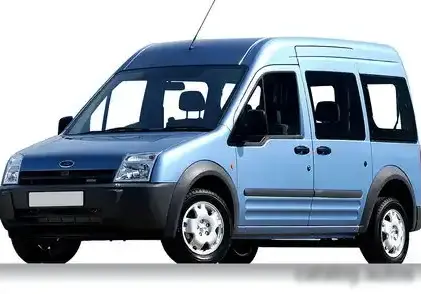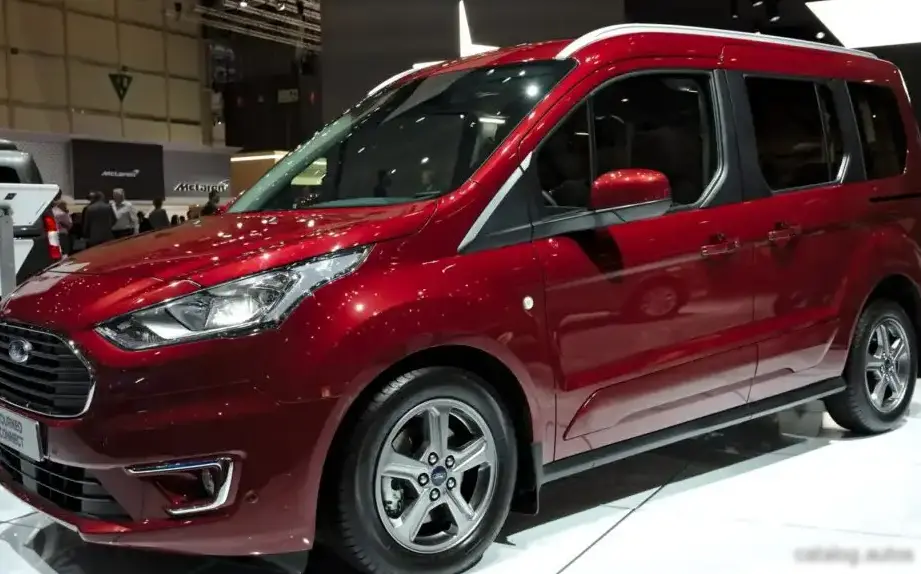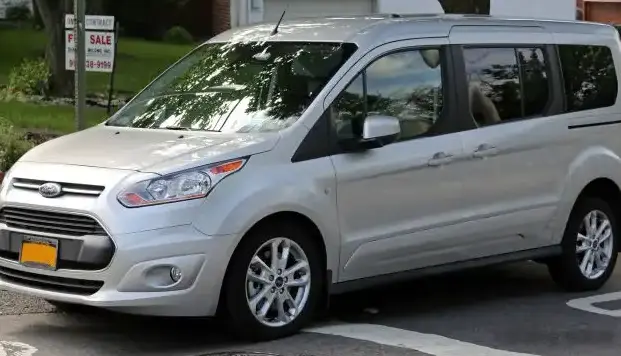
The Ford Tourneo Connect II 1.6 EcoBoost (150 hp) Automatic, produced from 2014 to 2015, represents a compelling blend of practicality and efficiency within the compact minivan segment. Based on the Ford C-Max/Focus platform (Mk2), the Tourneo Connect II aimed to provide a more car-like driving experience compared to traditional, van-derived competitors. This particular variant, equipped with the 1.6-liter EcoBoost engine and a six-speed automatic transmission, occupied a mid-range position in the Tourneo Connect II lineup, offering a balance between performance, fuel economy, and convenience. It was primarily marketed in Europe, where compact vans and leisure activity vehicles (LAVs) are highly popular, offering a versatile solution for families and small businesses.
Technical Specifications
| Brand | Ford |
| Model | Tourneo Connect |
| Generation | Tourneo Connect II |
| Type (Engine) | 1.6 EcoBoost (150 Hp) Automatic |
| Start of production | 2014 |
| End of production | 2015 |
| Powertrain Architecture | Internal Combustion engine |
| Body type | Minivan |
| Seats | 5 |
| Doors | 5 |
| Fuel consumption (urban) | 10.9 l/100 km (21.6 US mpg) |
| Fuel consumption (extra urban) | 6.3 l/100 km (37.3 US mpg) |
| Fuel consumption (combined) | 8 l/100 km (29.4 US mpg) |
| CO2 emissions | 184 g/km |
| Fuel Type | Petrol (Gasoline) |
| Acceleration 0 – 100 km/h | 10.9 sec |
| Acceleration 0 – 62 mph | 10.9 sec |
| Acceleration 0 – 60 mph | 10.4 sec |
| Maximum speed | 173 km/h (107.5 mph) |
| Emission standard | Euro 5 |
| Weight-to-power ratio | 9.8 kg/Hp |
| Weight-to-torque ratio | 6.1 kg/Nm |
| Power | 150 Hp @ 5700 rpm |
| Torque | 240 Nm @ 1600-4000 rpm (177.01 lb.-ft.) |
| Engine layout | Front, Transverse |
| Engine Model/Code | JQGA |
| Engine displacement | 1597 cm3 (97.45 cu. in.) |
| Number of cylinders | 4 |
| Engine configuration | Inline |
| Cylinder Bore | 79 mm (3.11 in.) |
| Piston Stroke | 81.4 mm (3.2 in.) |
| Compression ratio | 10:1 |
| Number of valves per cylinder | 4 |
| Fuel injection system | Direct injection |
| Engine aspiration | Turbocharger, Intercooler |
| Valvetrain | DOHC |
| Engine oil capacity | 4.1 l (4.33 US qt | 3.61 UK qt) |
| Coolant capacity | 9.1 l (9.62 US qt | 8.01 UK qt) |
| Kerb Weight | 1469 kg (3238.59 lbs.) |
| Max. weight | 2045 kg (4508.45 lbs.) |
| Max load | 576 kg (1269.86 lbs.) |
| Trunk (boot) space – minimum | 1029 l (36.34 cu. ft.) |
| Trunk (boot) space – maximum | 2410 l (85.11 cu. ft.) |
| Length | 4418 mm (173.94 in.) |
| Width | 2137 mm (84.13 in.) |
| Height | 1852 mm (72.91 in.) |
| Wheelbase | 2662 mm (104.8 in.) |
| Front track | 1568 mm (61.73 in.) |
| Rear track | 1584 mm (62.36 in.) |
| Minimum turning circle | 11.7 m (38.39 ft.) |
| Drivetrain | Front wheel drive |
| Number of gears | 6 |
| Gearbox type | Automatic transmission |
| Front suspension | Independent, McPherson with coil spring and anti-roll bar |
| Rear suspension | Semi-dependent beam with stabilizer |
| Front brakes | Ventilated discs |
| Rear brakes | Disc |
| Assisting systems | ABS (Anti-lock braking system) |
| Steering type | Steering rack and pinion |
| Tires size | 205/60 R16 |
| Wheel rims size | 6.5J x 16 |
Powertrain & Engine Architecture
The heart of the Tourneo Connect II 1.6 EcoBoost Automatic is the JQGA engine, a 1.6-liter inline-four cylinder gasoline engine. This engine belongs to Ford’s EcoBoost family, characterized by direct fuel injection, turbocharging, and variable valve timing. The direct injection system, operating at pressures up to 200 bar, ensures precise fuel delivery for improved combustion efficiency and reduced emissions. The single scroll turbocharger, coupled with an intercooler, boosts power output while minimizing turbo lag. The engine utilizes a double overhead camshaft (DOHC) valvetrain with four valves per cylinder, optimizing gas flow for enhanced performance. The six-speed automatic transmission, a Ford-developed unit, was chosen for its smooth shifting and convenience, catering to drivers prioritizing ease of use over outright performance. This transmission features a torque converter and electronic control for optimized gear selection based on driving conditions.
Driving Characteristics
The 150 hp EcoBoost engine, paired with the six-speed automatic, provided adequate, though not exhilarating, performance for the Tourneo Connect II. Acceleration from 0-60 mph took approximately 10.4 seconds, and top speed was around 107.5 mph. The automatic transmission, while smooth, did exhibit some hesitation during quick acceleration, particularly when compared to the more responsive manual transmission options. The gear ratios were tuned for fuel efficiency and everyday drivability, rather than sporty performance. In real-world conditions, the vehicle felt comfortable and composed during highway cruising, but could feel somewhat strained when fully loaded or tackling steep inclines. The automatic transmission’s programming prioritized fuel economy, often upshifting quickly to maintain lower engine speeds.
Equipment & Trim Levels
The 1.6 EcoBoost Automatic trim typically included standard features such as air conditioning, power windows, power mirrors, a basic audio system with USB connectivity, and ABS brakes. Higher trim levels, such as the Titanium, offered additional features like alloy wheels, a more advanced infotainment system with touchscreen display, rear parking sensors, and cruise control. Interior upholstery was typically cloth, with options for upgraded materials on higher trims. The dashboard layout was functional and straightforward, prioritizing usability over aesthetic flair. Optional extras included a panoramic sunroof, navigation system, and various driver assistance features.
Chassis & Braking
The Tourneo Connect II utilized a McPherson strut front suspension and a semi-independent beam rear suspension. This setup provided a reasonable balance between ride comfort and handling. The front suspension incorporated a stabilizer bar to reduce body roll during cornering. Braking duties were handled by ventilated discs at the front and solid discs at the rear. ABS (Anti-lock Braking System) was standard, enhancing braking performance and stability in emergency situations. The steering system employed a rack and pinion setup, providing precise and responsive steering feel.
Market Reception & Comparison
The Tourneo Connect II 1.6 EcoBoost Automatic received generally positive reviews for its practicality, fuel efficiency, and comfortable ride. Critics noted that the engine, while adequate, wasn’t particularly powerful, and the automatic transmission could feel somewhat sluggish. Compared to the 1.0-liter EcoBoost variant, the 1.6-liter offered noticeably more power and torque, making it a better choice for those frequently carrying passengers or cargo. Compared to the diesel-powered versions (e.g., 1.6 TDCi), the EcoBoost offered a quieter and smoother driving experience, but at the expense of fuel economy. The 1.6 EcoBoost Automatic was positioned as a versatile option for families and small businesses seeking a practical and efficient minivan.
Legacy
The Ford Tourneo Connect II 1.6 EcoBoost Automatic has proven to be a relatively reliable vehicle, with the EcoBoost engine generally exhibiting good durability. Common issues reported by owners include occasional turbocharger problems and minor electrical glitches. The automatic transmission, when properly maintained, has also proven to be dependable. In the used car market, these models represent a good value proposition, offering a practical and well-equipped minivan at an affordable price. However, potential buyers should carefully inspect the vehicle for any signs of previous damage or neglect, and ensure that all scheduled maintenance has been performed.