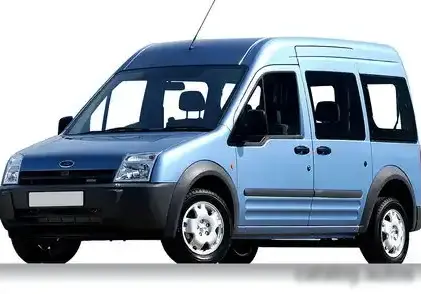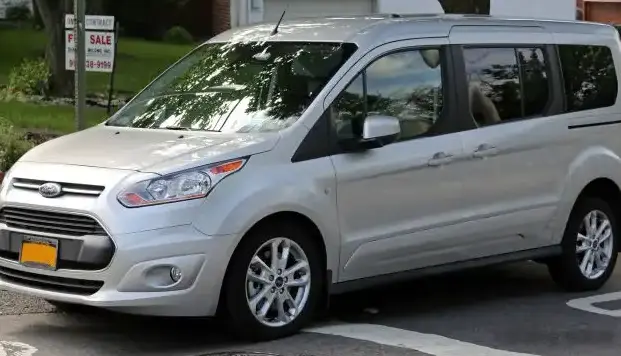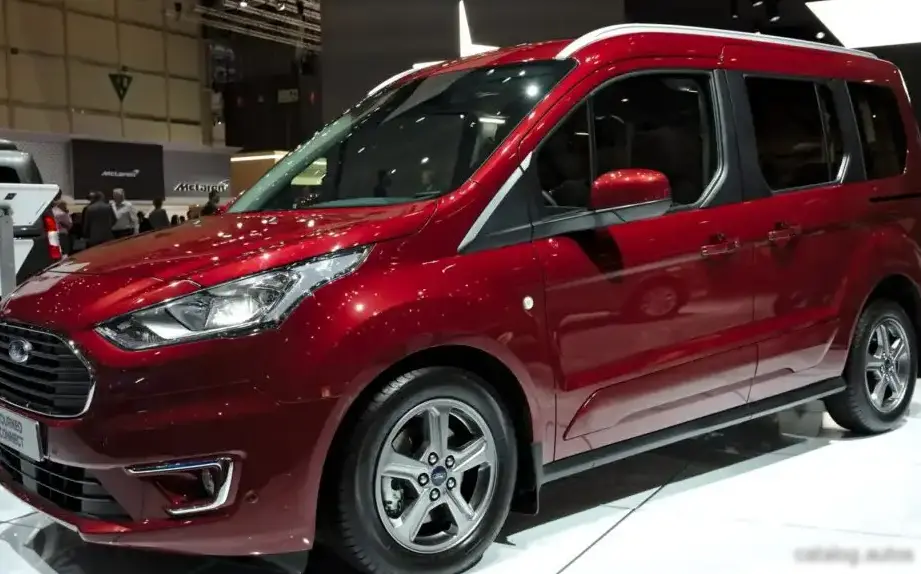
The Ford Tourneo Connect II, particularly the facelifted version introduced in 2018, represents Ford’s entry into the compact leisure activity vehicle (LAV) segment in Europe. Derived from the Ford Transit Connect commercial van, the Tourneo Connect aimed to provide a more family-friendly and versatile alternative to traditional MPVs. The 1.5 EcoBlue 120 horsepower automatic variant, produced from 2018 to 2020, occupied a mid-range position within the Tourneo Connect lineup, offering a balance between fuel efficiency, practicality, and ease of driving. This model was primarily marketed in Europe, where compact vans and LAVs enjoy significant popularity due to their practicality and suitability for urban environments.
Technical Specifications
| Brand | Ford |
| Model | Tourneo Connect |
| Generation | Tourneo Connect II (facelift 2018) |
| Type (Engine) | 1.5 EcoBlue (120 Hp) Automatic S&S |
| Start of production | 2018 |
| End of production | 2020 |
| Powertrain Architecture | Internal Combustion engine |
| Body type | Minivan |
| Seats | 5 |
| Doors | 5 |
| Fuel consumption (urban) | 5.2-5.3 l/100 km (45.2 – 44.4 US mpg) |
| Fuel consumption (extra urban) | 4.8-4.9 l/100 km (49 – 48 US mpg) |
| Fuel consumption (combined) | 5.0-5.1 l/100 km (47 – 46.1 US mpg) |
| CO2 emissions | 130-134 g/km |
| Fuel Type | Diesel |
| Acceleration 0 – 100 km/h | 12.9 sec |
| Acceleration 0 – 62 mph | 12.9 sec |
| Acceleration 0 – 60 mph | 12.3 sec |
| Maximum speed | 170 km/h (105.63 mph) |
| Emission standard | Euro 6 d-TEMP |
| Weight-to-power ratio | 13.4 kg/Hp |
| Weight-to-torque ratio | 6 kg/Nm |
| Power | 120 Hp @ 3600 rpm |
| Torque | 270 Nm @ 1750-2500 rpm (199.14 lb.-ft.) |
| Engine layout | Front, Transverse |
| Engine Model/Code | ZTGA |
| Engine displacement | 1499 cm3 (91.47 cu. in.) |
| Number of cylinders | 4 |
| Engine configuration | Inline |
| Number of valves per cylinder | 2 |
| Fuel injection system | Diesel Commonrail |
| Engine aspiration | Turbocharger, Intercooler |
| Engine oil capacity | 6 l (6.34 US qt | 5.28 UK qt) |
| Coolant capacity | 7 l (7.4 US qt | 6.16 UK qt) |
| Kerb Weight | 1612-1750 kg (3553.85 – 3858.09 lbs.) |
| Max. weight | 2210-2250 kg (4872.22 – 4960.4 lbs.) |
| Max load | 500-598 kg (1102.31 – 1318.36 lbs.) |
| Trunk (boot) space – minimum | 1029 l (36.34 cu. ft.) |
| Trunk (boot) space – maximum | 1838 l (64.91 cu. ft.) |
| Permitted trailer load with brakes (12%) | 1401-1447 kg (3088.68 – 3190.09 lbs.) |
| Permitted trailer load without brakes | 750 kg (1653.47 lbs.) |
| Permitted towbar download | 75 kg (165.35 lbs.) |
| Length | 4425 mm (174.21 in.) |
| Width | 1835 mm (72.24 in.) |
| Width with mirrors folded | 1966 mm (77.4 in.) |
| Width including mirrors | 2137 mm (84.13 in.) |
| Height | 1847 mm (72.72 in.) |
| Wheelbase | 2662 mm (104.8 in.) |
| Minimum turning circle | 11.0 m (36.09 ft.) |
| Drivetrain Architecture | Front wheel drive |
| Number of gears | 8 |
| Gearbox type | Automatic transmission |
| Front suspension | Independent, McPherson with coil spring and anti-roll bar |
| Rear suspension | Semi-dependent beam with stabilizer |
| Front brakes | Ventilated discs |
| Rear brakes | Disc |
| Tires size | 205/60 R16 |
| Wheel rims size | 6.5J x 16 |
INTRODUCTION
The Ford Tourneo Connect II, launched in 2013 and facelifted in 2018, is a compact multi-purpose vehicle (MPV) based on the Ford Transit Connect platform. The 1.5 EcoBlue 120 PS Automatic variant, introduced with the 2018 facelift, aimed to broaden the appeal of the Tourneo Connect by offering a more refined and accessible driving experience. This version was positioned as a practical and economical choice for families and individuals needing a versatile vehicle for both daily commutes and leisure activities. The “S&S” designation indicates the inclusion of Ford’s Auto Start/Stop technology, designed to improve fuel economy in urban driving conditions.
Powertrain & Engine Architecture
The heart of this Tourneo Connect variant is the 1.5-liter EcoBlue turbocharged diesel engine, bearing the engine code ZTGA. This engine is part of Ford’s EcoBlue family, known for its focus on efficiency and reduced emissions. The 1.5 EcoBlue utilizes a common-rail direct fuel injection system, delivering fuel directly into the combustion chamber at high pressure for optimized combustion. The engine features a single turbocharger with an intercooler to enhance power and torque output. The 120 horsepower output is achieved at 3600 rpm, while peak torque of 270 Nm (199 lb-ft) is available between 1750 and 2500 rpm, providing good low-end responsiveness. Paired with the engine is an eight-speed automatic transmission, providing smooth gear changes and contributing to improved fuel economy compared to a manual transmission. This transmission was a key upgrade with the facelift, offering a more comfortable driving experience, particularly in congested urban areas.
Driving Characteristics
The 1.5 EcoBlue 120 hp automatic Tourneo Connect delivers a comfortable and practical driving experience. While not particularly sporty, the engine provides adequate power for everyday driving situations. The eight-speed automatic transmission is well-tuned, offering smooth and timely gear changes. Acceleration from 0-62 mph takes approximately 12.9 seconds, which is typical for a vehicle of this type and weight. The engine’s strong low-end torque makes it easy to navigate city streets and maintain highway speeds. Compared to the higher-powered 1.6-liter EcoBoost petrol engine or the more economical 1.6-liter TDCi diesel, the 1.5 EcoBlue strikes a balance between performance and fuel efficiency. The automatic transmission, while convenient, does result in a slight reduction in fuel economy compared to the manual versions.
Equipment & Trim Levels
The 1.5 EcoBlue 120 hp Automatic S&S trim typically included a good level of standard equipment. Features commonly found in this variant include air conditioning, power windows, power door mirrors, a basic audio system with USB connectivity, and ABS brakes. The “S&S” designation signifies the inclusion of Ford’s Auto Start/Stop system. Optional extras available for this trim level often included alloy wheels, a touchscreen infotainment system with navigation, rear parking sensors, and cruise control. Interior upholstery was typically cloth, with a functional and durable design. The dashboard layout was straightforward and user-friendly, prioritizing practicality over luxury.
Chassis & Braking
The Tourneo Connect II utilizes a front-wheel-drive layout. The front suspension consists of an independent McPherson strut setup with coil springs and an anti-roll bar, providing a comfortable ride and decent handling. The rear suspension employs a semi-independent beam axle with a stabilizer bar, which contributes to stability and load-carrying capacity. Braking duties are handled by ventilated discs on the front wheels and solid discs on the rear. ABS (Anti-lock Braking System) is standard, enhancing safety during emergency braking situations. The suspension setup is tuned for comfort and practicality, rather than sporty handling, reflecting the vehicle’s intended use as a family vehicle.
Market Reception & Comparison
The Ford Tourneo Connect II, and specifically the 1.5 EcoBlue 120 hp Automatic variant, received generally positive reviews for its practicality, fuel efficiency, and comfortable ride. Critics praised the spacious interior and versatile seating arrangements. However, some reviewers noted that the engine could feel slightly underpowered when fully loaded or tackling steep hills. Compared to other compact MPVs like the Citroën Berlingo and Renault Kangoo, the Tourneo Connect offered a competitive package in terms of price, features, and fuel economy. The automatic transmission was seen as a significant improvement over the earlier manual-only options, making the vehicle more appealing to a wider range of buyers. Fuel economy figures of around 5.0-5.1 l/100 km (47-46.1 US mpg) were considered respectable for a vehicle of this size and type.
Legacy
The 1.5 EcoBlue engine has proven to be a relatively reliable unit, although, like any diesel engine, it requires regular maintenance and the use of high-quality oil. The eight-speed automatic transmission has also demonstrated good durability. On the used car market, the Tourneo Connect II 1.5 EcoBlue 120 hp Automatic S&S represents a good value proposition for buyers seeking a practical and economical MPV. Its spacious interior, fuel efficiency, and comfortable ride make it a suitable choice for families and individuals needing a versatile vehicle for a variety of purposes. However, potential buyers should be aware of the potential for diesel particulate filter (DPF) issues, particularly if the vehicle has been primarily used for short journeys. Regular DPF regeneration is essential to prevent blockages and ensure long-term reliability.