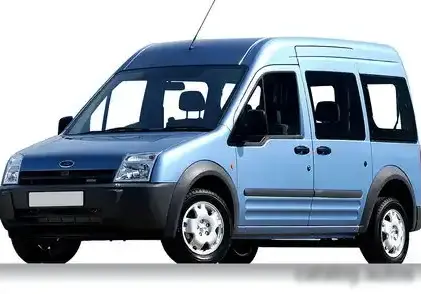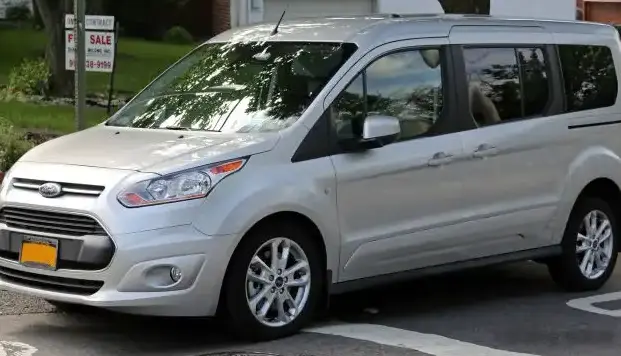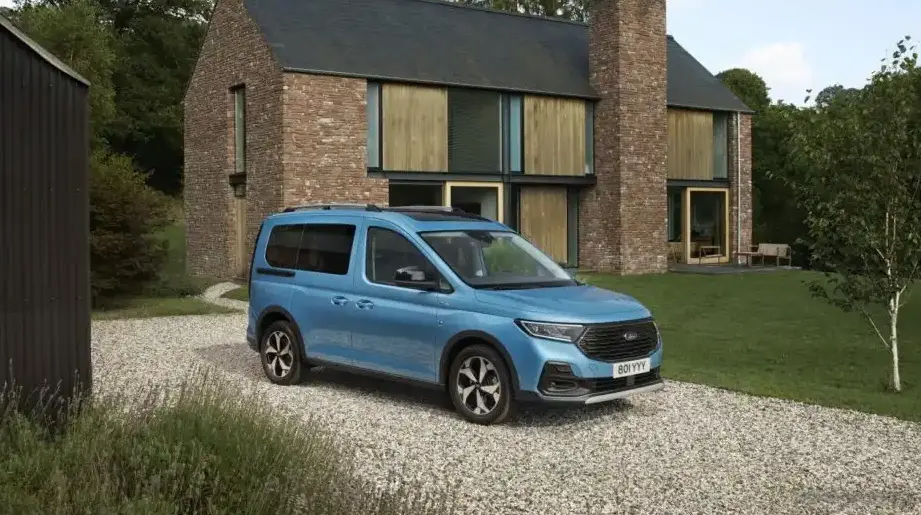
The Ford Tourneo Connect III 2.0 EcoBlue (122 Hp) represents a significant iteration in Ford’s compact multi-purpose vehicle (MPV) lineup, launched in 2022. Built upon the shared platform with the Volkswagen Caddy (following Ford’s commercial vehicle partnership with VW), the Tourneo Connect III aimed to provide a practical and efficient people-mover for families and commercial users alike. This specific 2.0 EcoBlue variant, producing 122 horsepower, occupied a middle ground in the Tourneo Connect range, offering a balance between fuel economy, performance, and affordability. It was positioned as a step up from the lower-powered diesel options, while remaining more accessible than the higher-output versions.
Technical Specifications
| Brand | Ford |
| Model | Tourneo Connect |
| Generation | Tourneo Connect III |
| Type (Engine) | 2.0 EcoBlue (122 Hp) |
| Start of production | 2022 |
| Powertrain Architecture | Internal Combustion engine |
| Body type | MPV |
| Seats | 5-7 |
| Doors | 5 |
| Fuel consumption at Low speed (WLTP) | 7-5.9 l/100 km (33.6 – 39.9 US mpg, 40.4 – 47.9 UK mpg, 14.3 – 16.9 km/l) |
| Fuel consumption at Medium speed (WLTP) | 5.7-4.5 l/100 km (41.3 – 52.3 US mpg, 49.6 – 62.8 UK mpg, 17.5 – 22.2 km/l) |
| Fuel consumption at high speed (WLTP) | 5.7-4.1 l/100 km (41.3 – 57.4 US mpg, 49.6 – 68.9 UK mpg, 17.5 – 24.4 km/l) |
| Fuel consumption at very high speed (WLTP) | 6.2-5.1 l/100 km (37.9 – 46.1 US mpg, 45.6 – 55.4 UK mpg, 16.1 – 19.6 km/l) |
| Combined fuel consumption (WLTP) | 5.7-4.8 l/100 km (41.3 – 49 US mpg, 49.6 – 58.9 UK mpg, 17.5 – 20.8 km/l) |
| CO2 emissions (WLTP) | 126-150 g/km |
| Fuel Type | Diesel |
| Acceleration 0 – 100 km/h | 11.2 sec |
| Acceleration 0 – 62 mph | 11.2 sec |
| Acceleration 0 – 60 mph | 10.6 sec |
| Maximum speed | 187 km/h (116.2 mph) |
| Emission standard | Euro 6d-ISC-FCM |
| Weight-to-power ratio | 12.6 kg/Hp, 79.5 Hp/tonne |
| Weight-to-torque ratio | 4.8 kg/Nm, 208.5 Nm/tonne |
| Power | 122 Hp @ 2750-4250 rpm |
| Power per litre | 62 Hp/l |
| Torque | 320 Nm @ 1600-2500 rpm (236.02 lb.-ft. @ 1600-2500 rpm) |
| Engine layout | Front, Transverse |
| Engine Model/Code | DTRC |
| Engine displacement | 1968 cm3 (120.09 cu. in.) |
| Number of cylinders | 4 |
| Engine configuration | Inline |
| Cylinder Bore | 81 mm (3.19 in.) |
| Piston Stroke | 95.5 mm (3.76 in.) |
| Compression ratio | 16:1 |
| Number of valves per cylinder | 4 |
| Fuel injection system | Diesel Commonrail |
| Engine aspiration | Turbocharger, Intercooler |
| Valvetrain | DOHC |
| Kerb Weight | 1535-1789 kg (3384.1 – 3944.07 lbs.) |
| Max. weight | 2350 kg (5180.86 lbs.) |
| Max load | 561-815 kg (1236.79 – 1796.77 lbs.) |
| Trunk (boot) space – minimum | 248 l (8.76 cu. ft.) |
| Trunk (boot) space – maximum | 2556 l (90.26 cu. ft.) |
| Fuel tank capacity | 50 l (13.21 US gal | 11 UK gal) |
| AdBlue tank | 15 l (3.96 US gal | 3.3 UK gal) |
| Max. roof load | 100 kg (220.46 lbs.) |
| Permitted trailer load with brakes (12%) | 1500 kg (3306.93 lbs.) |
| Permitted trailer load without brakes | 750 kg (1653.47 lbs.) |
| Permitted towbar download | 75 kg (165.35 lbs.) |
| Length | 4515 mm (177.76 in.) |
| Width | 1855 mm (73.03 in.) |
| Width including mirrors | 2100 mm (82.68 in.) |
| Height | 1833 mm (72.17 in.) |
| Wheelbase | 2755 mm (108.46 in.) |
| Front track | 1565-1572 mm (61.61 – 61.89 in.) |
| Rear (Back) track | 1603-1606 mm (63.11 – 63.23 in.) |
| Ride height (ground clearance) | 153 mm (6.02 in.) |
| Minimum turning circle (turning diameter) | 11.4 m (37.4 ft.) |
| Drivetrain Architecture | The Internal combustion engine (ICE) drives the front wheels of the vehicle. |
| Drive wheel | Front wheel drive |
| Number of gears and type of gearbox | 6 gears, manual transmission |
| Front suspension | Independent, type McPherson with coil spring and anti-roll bar |
| Rear suspension | Rigid axle suspension, Trailing arm, Coil spring |
| Front brakes | Ventilated discs, 288-312 mm |
| Rear brakes | Disc, 272-300 mm |
| Assisting systems | ABS (Anti-lock braking system) |
| Steering type | Steering rack and pinion |
| Power steering | Electric Steering |
| Tires size | 205/65 R15; 205/60 R16 |
| Wheel rims size | 6.0J x 15; 6.5J x 16 |
Powertrain & Engine Architecture
The heart of the Tourneo Connect III 2.0 EcoBlue (122 Hp) is the DTRC engine, a four-cylinder diesel engine displacing 1968cc. This engine belongs to Ford’s EcoBlue family, known for its focus on efficiency and reduced emissions. It utilizes a common-rail direct fuel injection system, delivering fuel at extremely high pressure for optimized combustion. The engine features a turbocharger with an intercooler, boosting power output and improving torque delivery. The DOHC (Double Overhead Camshaft) valvetrain, with four valves per cylinder, further enhances breathing and contributes to the engine’s overall performance. The 122 horsepower peak is achieved between 2750 and 4250 rpm, while the 320 Nm (236 lb-ft) of torque is available from 1600 to 2500 rpm. This broad torque curve is particularly beneficial for a vehicle intended for carrying passengers and cargo. The engine is transversely mounted at the front of the vehicle. The 6-speed manual transmission was standard for this variant, providing a good balance between fuel economy and driver control.
Driving Characteristics
The 2.0 EcoBlue 122 Hp engine, paired with the 6-speed manual transmission, delivers adequate performance for everyday driving. Acceleration from 0-60 mph takes around 10.6 seconds, and top speed is rated at 116.2 mph. While not a sporty vehicle, the Tourneo Connect III offers sufficient power for highway cruising and overtaking maneuvers. The engine’s strong low-end torque makes it easy to pull away from a standstill, even when loaded with passengers or cargo. The gear ratios are well-chosen to maximize fuel efficiency and provide smooth transitions between gears. Compared to the higher-powered EcoBlue variants, this 122 hp version feels less strained during acceleration, but it also lacks the same level of outright performance. The manual transmission provides a more engaging driving experience than an automatic, allowing drivers to maintain better control over the engine’s power delivery.
Equipment & Trim Levels
The Tourneo Connect III 2.0 EcoBlue (122 Hp) typically came equipped with a respectable level of standard features. These included air conditioning, power windows, power mirrors, a basic audio system with Bluetooth connectivity, and a driver’s airbag. Higher trim levels offered additional features such as alloy wheels, a touchscreen infotainment system with navigation, rear parking sensors, cruise control, and upgraded interior upholstery. Interior materials were generally durable and practical, reflecting the vehicle’s utilitarian nature. Optional extras included a panoramic sunroof, a rearview camera, and various driver-assistance systems.
Chassis & Braking
The Tourneo Connect III utilizes an independent McPherson strut suspension at the front, providing a comfortable ride and good handling characteristics. The rear suspension employs a rigid axle setup with coil springs, which is a cost-effective solution for a vehicle of this type. The front brakes are ventilated discs, while the rear brakes are solid discs. ABS (Anti-lock Braking System) is standard, enhancing safety during emergency braking situations. Steering is rack and pinion with electric power assistance, providing a light and responsive feel. The vehicle’s relatively high center of gravity and soft suspension tuning contribute to a noticeable degree of body roll during cornering.
Market Reception & Comparison
The Ford Tourneo Connect III 2.0 EcoBlue (122 Hp) was generally well-received by critics as a practical and efficient MPV. It was praised for its spacious interior, versatile seating configurations, and good fuel economy. However, some reviewers noted that the interior design was somewhat bland and that the ride quality could be improved. Compared to the higher-powered EcoBlue variants, this 122 hp version offered a more affordable entry point into the Tourneo Connect range, but it came at the expense of performance. Its fuel economy was comparable to other diesel-powered MPVs in its class, and its reliability was generally considered to be good.
Legacy
The Ford Tourneo Connect III 2.0 EcoBlue (122 Hp) represents a solid and dependable choice in the used car market. The EcoBlue engine has proven to be relatively reliable, although regular maintenance is essential to ensure long-term durability. Common issues include diesel particulate filter (DPF) problems, particularly on vehicles that are primarily used for short trips. Overall, the Tourneo Connect III remains a popular choice for families and businesses seeking a practical and affordable MPV.