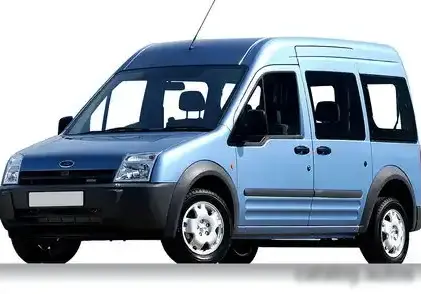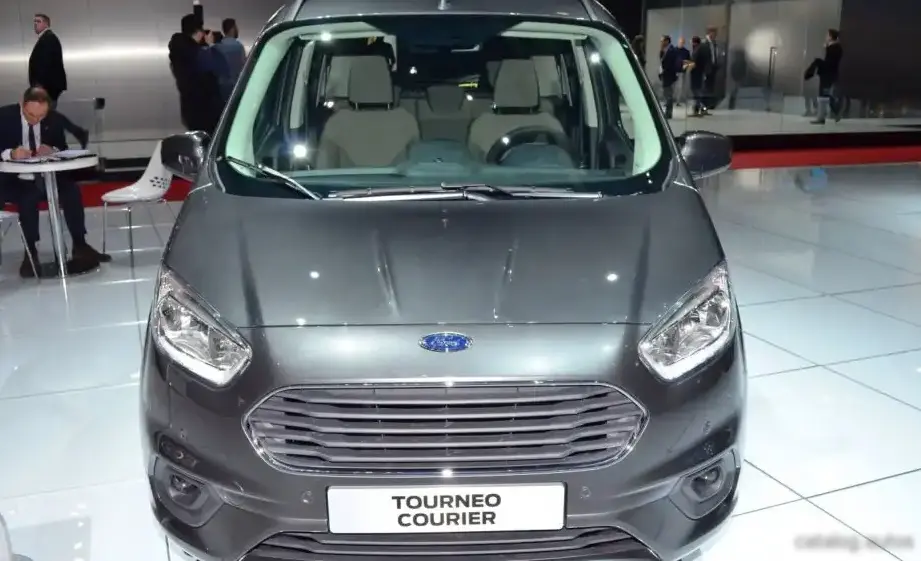
The Ford Tourneo Courier, specifically the 1.5 TDCi 75 horsepower variant produced from 2018 to 2023 (following the 2017 facelift), represents an entry-level offering within the first generation of the Tourneo Courier line. Positioned as a compact leisure activity vehicle (LAV) primarily for the European market, it aimed to provide an affordable and practical solution for small families and businesses needing a versatile, van-like vehicle in a smaller footprint. This model sat at the base of the Tourneo Courier range, offering a more economical alternative to the higher-powered diesel and gasoline options available. It shared its platform and many components with the Ford Fiesta, benefiting from Ford’s established expertise in small vehicle engineering.
Technical Specifications
| Brand | Ford |
| Model | Tourneo Courier |
| Generation | Tourneo Courier I (facelift 2017) |
| Type (Engine) | 1.5 TDCi (75 Hp) |
| Start of production | 2018 |
| End of production | 2023 |
| Powertrain Architecture | Internal Combustion engine |
| Body type | MPV |
| Seats | 5 |
| Doors | 5 |
| Fuel consumption (urban) | 5.1 l/100 km (46.1 US mpg, 55.4 UK mpg, 19.6 km/l) |
| Fuel consumption (extra urban) | 4.1 l/100 km (57.4 US mpg, 68.9 UK mpg, 24.4 km/l) |
| Fuel consumption (combined) | 4.5 l/100 km (52.3 US mpg, 62.8 UK mpg, 22.2 km/l) |
| CO2 emissions | 117 g/km |
| Fuel Type | Diesel |
| Emission standard | Euro 6 |
| Weight-to-power ratio | 17.1 kg/Hp, 58.6 Hp/tonne |
| Power | 75 Hp @ 4000 rpm |
| Power per litre | 50.1 Hp/l |
| Engine layout | Front, Transverse |
| Engine Model/Code | XWCA, XWCB |
| Engine displacement | 1498 cm3 (91.41 cu. in.) |
| Number of cylinders | 4 |
| Engine configuration | Inline |
| Cylinder Bore | 73.5 mm (2.89 in.) |
| Piston Stroke | 88.3 mm (3.48 in.) |
| Compression ratio | 16:1 |
| Number of valves per cylinder | 2 |
| Fuel injection system | Diesel Commonrail |
| Engine aspiration | Turbocharger, Intercooler |
| Valvetrain | SOHC |
| Engine oil capacity | 3.8 l (4.02 US qt | 3.34 UK qt) |
| Coolant capacity | 6 l (6.34 US qt | 5.28 UK qt) |
| Kerb Weight | 1280 kg (2821.92 lbs.) |
| Max. weight | 1780 kg (3924.23 lbs.) |
| Max load | 500 kg (1102.31 lbs.) |
| Trunk (boot) space – minimum | 395 l (13.95 cu. ft.) |
| Trunk (boot) space – maximum | 1656 l (58.48 cu. ft.) |
| Fuel tank capacity | 48 l (12.68 US gal | 10.56 UK gal) |
| Length | 4157 mm (163.66 in.) |
| Width | 1964 mm (77.32 in.) |
| Width including mirrors | 2112 mm (83.15 in.) |
| Height | 1723 mm (67.83 in.) |
| Wheelbase | 2489 mm (97.99 in.) |
| Minimum turning circle | 10.9 m (35.76 ft.) |
| Drivetrain | Front wheel drive |
| Number of gears | 6 |
| Gearbox type | Manual transmission |
| Front suspension | Independent, McPherson with coil spring and anti-roll bar |
| Rear suspension | Semi-independent, coil spring |
| Front brakes | Ventilated discs |
| Rear brakes | Drum |
| Assisting systems | ABS (Anti-lock braking system) |
| Steering type | Steering rack and pinion |
| Tires size | 195/60 R15 |
| Wheel rims size | 6.0 J x 15 |
Introduction
The Ford Tourneo Courier 1.5 TDCi 75 hp, introduced after the 2017 facelift, is a compact MPV designed to appeal to buyers seeking a practical and economical vehicle. Built on the B-platform (shared with the Ford Fiesta), it offered a more affordable entry point into the Tourneo Courier range. Production spanned from 2018 to 2023, and it was primarily marketed in Europe as a versatile option for urban driving and small families. The “75 hp” designation refers to the engine’s power output, indicating its position as the least powerful engine option in the lineup.
Powertrain & Engine Architecture
At the heart of this Tourneo Courier variant lies the 1.5-liter TDCi diesel engine, specifically utilizing the XWCA or XWCB engine codes. This engine is a four-cylinder, inline configuration, featuring a single overhead camshaft (SOHC) valvetrain with two valves per cylinder. The engine benefits from a turbocharger with an intercooler, which helps to improve efficiency and power delivery. Fuel is delivered via a modern diesel commonrail direct injection system, optimizing combustion and reducing emissions. The 75 horsepower output is achieved at 4000 rpm. The engine’s relatively modest power output is a direct result of its tuning for fuel economy and reduced emissions, aligning with Euro 6 standards. This variant was exclusively offered with a six-speed manual transmission, prioritizing affordability and simplicity over the convenience of an automatic.
Driving Characteristics
The 1.5 TDCi 75 hp Tourneo Courier delivers a driving experience focused on practicality and fuel efficiency rather than outright performance. Acceleration is modest, and the engine requires downshifting for overtaking maneuvers. The six-speed manual transmission is well-matched to the engine’s characteristics, offering a reasonable spread of gears to keep the engine within its optimal operating range. The gear ratios are tuned for economy, meaning higher gears are engaged at lower speeds. While not sporty, the Tourneo Courier provides adequate power for everyday driving, particularly in urban environments. Compared to the higher-powered 1.5 TDCi variants (95 hp and 125 hp), this version feels noticeably slower, but it compensates with improved fuel economy. The manual transmission also provides a more engaging driving experience than an automatic would.
Equipment & Trim Levels
The 1.5 TDCi 75 hp Tourneo Courier typically came equipped with a basic, yet functional, level of standard features. These generally included power steering, ABS, front airbags, and a basic audio system with USB connectivity. Interior upholstery was typically cloth, and the dashboard featured a straightforward design with easy-to-use controls. Optional extras included air conditioning, alloy wheels, parking sensors, and a more advanced audio system with Bluetooth connectivity. Trim levels varied slightly depending on the market, but the 75 hp version generally represented the entry-level offering, with fewer standard features than the higher-powered models. The focus was on providing a cost-effective and practical vehicle, rather than luxury or extensive features.
Chassis & Braking
The Tourneo Courier’s chassis utilizes a McPherson strut independent suspension setup at the front, providing a comfortable ride and decent handling. The rear suspension employs a semi-independent coil spring arrangement, which is a cost-effective solution for this class of vehicle. Braking duties are handled by ventilated discs at the front and drum brakes at the rear. ABS (Anti-lock Braking System) is standard, enhancing safety during emergency braking situations. The suspension tuning is geared towards comfort and practicality, prioritizing a smooth ride over sporty handling. The drum brakes on the rear are a cost-saving measure typical of entry-level variants.
Market Reception & Comparison
The Ford Tourneo Courier 1.5 TDCi 75 hp was generally well-received as an affordable and practical option in the compact MPV segment. Critics praised its fuel efficiency and versatility, but noted its modest performance. Compared to the higher-powered diesel variants, the 75 hp model offered significantly better fuel economy, making it an attractive choice for drivers prioritizing running costs. However, it lacked the punch and responsiveness of its more powerful siblings. Against competitors like the Renault Kangoo and Citroën Berlingo, the Tourneo Courier offered a competitive package in terms of price, practicality, and fuel efficiency. The manual transmission was seen as a positive by some, offering a more engaging driving experience, while others preferred the convenience of an automatic.
Legacy
The 1.5 TDCi engine, in its various iterations, has proven to be a relatively reliable powertrain. While diesel engines are inherently more complex than gasoline engines, the Ford 1.5 TDCi has generally demonstrated good durability. Common issues, when they arise, often relate to the diesel particulate filter (DPF) and the turbocharger, particularly on vehicles that have primarily been used for short journeys. In the used car market, the 75 hp Tourneo Courier represents an affordable entry point into the compact MPV segment. Its fuel efficiency and practicality continue to make it an appealing option for budget-conscious buyers. However, potential buyers should be aware of the potential for DPF issues and ensure the vehicle has been properly maintained.