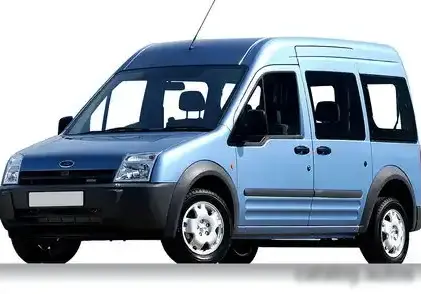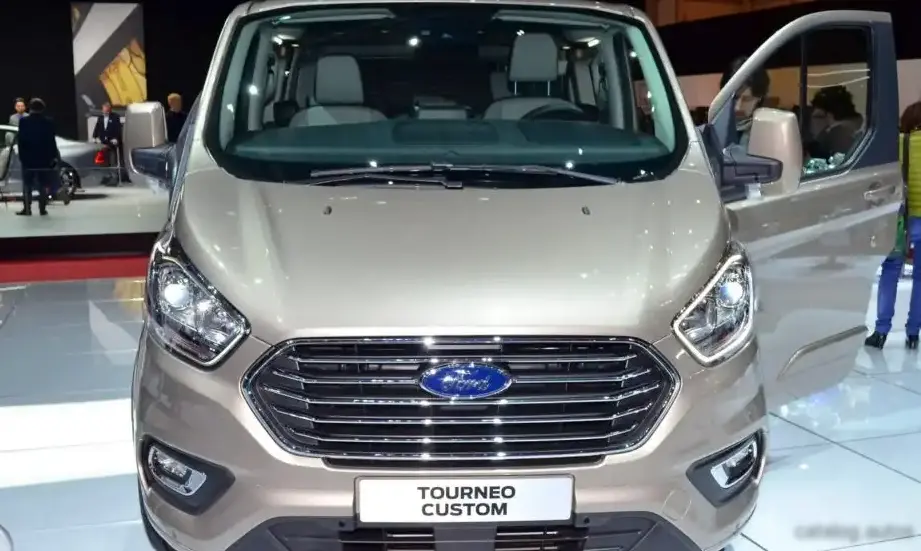
The Ford Tourneo Custom I (facelift 2018) L1 1.0 EcoBoost Plug-in Hybrid Automatic, produced from 2020 to 2023, represents Ford’s entry into the increasingly popular plug-in hybrid van segment. Positioned as a versatile people-mover and commercial vehicle, this variant aimed to offer a balance between fuel efficiency, reduced emissions, and practicality for both private and fleet customers. It falls within the first generation of the Tourneo Custom, which itself is based on the Ford Transit Custom platform, and was a key offering in the European market where demand for such vehicles was growing. This specific configuration, combining the small-displacement 1.0-liter EcoBoost engine with an electric motor and automatic transmission, targeted buyers seeking a more environmentally conscious and technologically advanced van option.
Technical Specifications
| Brand | Ford |
| Model | Tourneo Custom |
| Generation | Tourneo Custom I (facelift 2018) L1 |
| Type (Engine) | 1.0 EcoBoost (126 Hp) Plug-in Hybrid Automatic |
| Start of production | 2020 |
| End of production | 2023 |
| Powertrain Architecture | PHEV (Plug-in Hybrid Electric Vehicle) |
| Body type | Van |
| Seats | 8-9 |
| Doors | 5 |
| Combined fuel consumption (WLTP) | 3.3 l/100 km (71.3 US mpg, 85.6 UK mpg, 30.3 km/l) |
| CO2 emissions (WLTP) | 75 g/km |
| Fuel consumption (NEDC) – combined | 2.6 l/100 km (90.5 US mpg, 108.6 UK mpg, 38.5 km/l) |
| CO2 emissions (NEDC) | 56 g/km |
| Fuel Type | Petrol / electricity |
| Emission standard | Euro 6d-ISC-FCM |
| Weight-to-power ratio | 20.7 kg/Hp, 48.3 Hp/tonne |
| Weight-to-torque ratio | 7.3 kg/Nm, 136.1 Nm/tonne |
| Gross battery capacity | 13.6 kWh |
| Battery technology | Lithium-ion (Li-Ion) |
| Battery location | Below the floor |
| All-electric range (WLTP) | 40.4 km (25.1 mi) |
| All-electric range (NEDC) | 42.8 km (26.59 mi) |
| Average Energy consumption (WLTP) | 19.6 kWh/100 km (31.54 kWh/100 mi, 107 MPGe, 5.1 km/kWh, 3.2 mi/kWh) |
| Electric motor power | 126 Hp @ 9000 rpm |
| Electric motor Torque | 355 Nm @ 1-2250 rpm (261.83 lb.-ft. @ 1-2250 rpm) |
| Electric motor location | Front axle, Transverse |
| System power | 126 Hp |
| System torque | 355 Nm (261.83 lb.-ft.) |
| Engine layout | Front, Transverse |
| Engine Model/Code | M1FA |
| Engine displacement | 998 cm3 (60.9 cu. in.) |
| Number of cylinders | 3 |
| Engine configuration | Inline |
| Number of valves per cylinder | 4 |
| Fuel injection system | Direct injection |
| Engine oil capacity | 4.6 l (4.86 US qt | 4.05 UK qt) |
| Coolant | 11.85 l (12.52 US qt | 10.43 UK qt) |
| Kerb Weight | 2609 kg (5751.86 lbs.) |
| Max. weight | 3240 kg (7142.98 lbs.) |
| Max load | 631 kg (1391.12 lbs.) |
| Fuel tank capacity | 50 l (13.21 US gal | 11 UK gal) |
| Length | 4973 mm (195.79 in.) |
| Width | 1986 mm (78.19 in.) |
| Width with mirrors folded | 2032 mm (80 in.) |
| Width including mirrors | 2272 mm (89.45 in.) |
| Height | 1959-1979 mm (77.13 – 77.91 in.) |
| Wheelbase | 2933 mm (115.47 in.) |
| Front track | 1732-1752 mm (68.19 – 68.98 in.) |
| Rear (Back) track | 1735-1762 mm (68.31 – 69.37 in.) |
| Minimum turning circle | 11.6 m (38.06 ft.) |
| Drivetrain Architecture | The ICE drives the generator only, with no mechanical connection to the drive. An electric motor drives the front wheels. |
| Drive wheel | Front wheel drive |
| Number of gears and type of gearbox | 1 gears, automatic transmission |
| Front brakes | Disc |
| Rear brakes | Disc |
| Assisting systems | ABS (Anti-lock braking system) |
| Tires size | 215/60 R17 |
INTRODUCTION
The Ford Tourneo Custom I (facelift 2018) L1 1.0 EcoBoost Plug-in Hybrid Automatic, launched in 2020, was a significant addition to Ford’s commercial vehicle lineup. Built on the 1HX0/A3 platform shared with the Transit Custom, this variant aimed to address the growing demand for more sustainable and efficient transportation solutions. The “L1” designation indicates the short wheelbase version of the Tourneo Custom. This plug-in hybrid model was primarily marketed in Europe, where stricter emissions regulations and incentives for electric vehicles were driving consumer and fleet adoption. It offered seating for up to nine passengers, making it suitable for families, shuttle services, and accessible transport.
Powertrain & Engine Architecture
At the heart of the Tourneo Custom PHEV lies a unique powertrain configuration. The 1.0 EcoBoost engine (M1FA code) is a three-cylinder, 998cc turbocharged gasoline engine. Crucially, in this application, the engine functions primarily as a generator, charging the 13.6 kWh lithium-ion battery pack located under the floor. It doesn’t directly drive the wheels. The electric motor, delivering 126 horsepower and a substantial 355 Nm (261.83 lb-ft) of torque, is responsible for propelling the vehicle. The combined system output is also 126 horsepower. The engine utilizes direct fuel injection and a turbocharger with an intercooler to maximize efficiency. The single-speed automatic transmission is specifically designed for the electric motor, providing smooth and seamless acceleration. The battery pack allows for an all-electric range of up to 40.4 km (25.1 miles) WLTP, enabling zero-emission driving for shorter journeys.
Driving Characteristics
The driving experience of the 1.0 EcoBoost Plug-in Hybrid Tourneo Custom is markedly different from its conventionally powered siblings. The instant torque delivery of the electric motor provides brisk acceleration, particularly in urban environments. The single-speed transmission ensures a smooth, jerk-free ride. When the battery is depleted, the 1.0 EcoBoost engine seamlessly kicks in to act as a generator, maintaining power to the electric motor. While the overall power output of 126 hp is modest, the electric motor’s torque compensates for this, making the van feel surprisingly responsive. Compared to the higher-powered diesel versions, this variant prioritizes efficiency and refinement over outright performance. The regenerative braking system helps to recapture energy during deceleration, further extending the electric range.
Equipment & Trim Levels
The Tourneo Custom Plug-in Hybrid Automatic typically came well-equipped, reflecting its position as a more premium offering. Standard features included air conditioning, power windows, a touchscreen infotainment system with Bluetooth connectivity, and a comprehensive suite of safety features such as ABS, ESP, and multiple airbags. Interior upholstery was generally cloth, with options for leather upgrades. Higher trim levels offered features like navigation, parking sensors, a rearview camera, and advanced driver-assistance systems. The van’s flexible seating configuration allowed for various arrangements to accommodate passengers and cargo. Optional extras included alloy wheels, metallic paint, and a panoramic sunroof.
Chassis & Braking
The Tourneo Custom PHEV utilizes a front-wheel-drive layout. The suspension system consists of MacPherson struts at the front and a multi-link setup at the rear, providing a comfortable ride quality. The braking system features disc brakes on all four wheels, ensuring adequate stopping power. ABS (Anti-lock Braking System) is standard, enhancing safety during emergency braking situations. The weight of the battery pack, located under the floor, lowers the vehicle’s center of gravity, contributing to improved stability and handling. Stabilizer bars are fitted to both the front and rear axles to reduce body roll during cornering.
Market Reception & Comparison
The Ford Tourneo Custom Plug-in Hybrid Automatic received generally positive reviews from critics. Its fuel efficiency, low emissions, and smooth driving experience were particularly praised. However, some reviewers noted the relatively modest power output and the limited all-electric range compared to some competitors. Compared to the diesel-powered Tourneo Customs, the PHEV variant offered significantly lower running costs, especially for those who primarily drive short distances and can take advantage of the electric-only mode. The higher purchase price was a drawback for some buyers, but it was often offset by government incentives and tax benefits. Compared to other plug-in hybrid vans, the Tourneo Custom offered a competitive combination of practicality, comfort, and technology.
Legacy
The Ford Tourneo Custom I (facelift 2018) L1 1.0 EcoBoost Plug-in Hybrid Automatic represents an important step in Ford’s electrification strategy. While production ended in 2023, these vans are now appearing on the used car market. The powertrain has proven to be relatively reliable, with the electric motor and battery pack demonstrating good longevity. The 1.0 EcoBoost engine, while used primarily as a generator, is a well-established unit with a good track record. The availability of spare parts and servicing is generally good, thanks to Ford’s extensive dealer network. As demand for electric and hybrid vehicles continues to grow, the Tourneo Custom PHEV is likely to remain a popular choice for buyers seeking a versatile and environmentally friendly van.