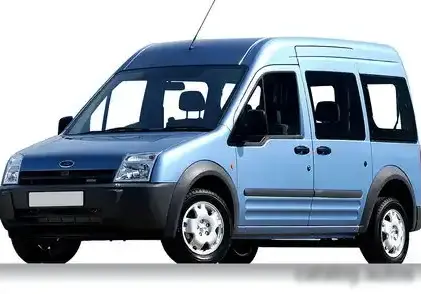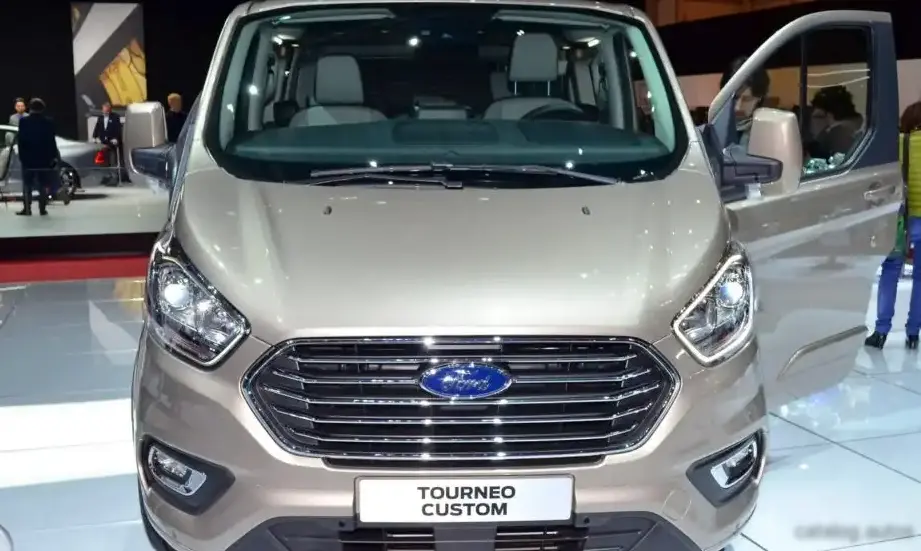
The Ford Tourneo Custom, specifically the first generation facelift model produced from 2018-2023, represents Ford’s entry into the European and global one-ton van segment. The L1 variant, powered by the 2.0 EcoBlue 130 horsepower mild-hybrid diesel engine, was a popular configuration aimed at both commercial and passenger transport. Introduced in 2020, this version offered a balance between fuel efficiency, practicality, and affordability within the Tourneo Custom lineup. It served as a versatile option for families, shuttle services, and businesses requiring a spacious and adaptable vehicle. The Tourneo Custom is essentially the passenger-carrying version of the Ford Transit Custom, sharing its core mechanicals and chassis.
Technical Specifications
| Brand | Ford |
| Model | Tourneo Custom |
| Generation | Tourneo Custom I (facelift 2018) L1 |
| Type (Engine) | 2.0 EcoBlue (130 Hp) Mild Hybrid |
| Start of production | 2020 |
| End of production | 2023 |
| Powertrain Architecture | MHEV (Mild Hybrid Electric Vehicle) |
| Body type | Van |
| Seats | 8-9 |
| Doors | 5 |
| Fuel consumption at Low speed (WLTP) | 8.1-8.4 l/100 km (29 – 28 US mpg) |
| Fuel consumption at Medium speed (WLTP) | 7.0-7.4 l/100 km (33.6 – 31.8 US mpg) |
| Fuel consumption at high speed (WLTP) | 6.4-6.7 l/100 km (36.8 – 35.1 US mpg) |
| Fuel consumption at very high speed (WLTP) | 8.3-8.8 l/100 km (28.3 – 26.7 US mpg) |
| Combined fuel consumption (WLTP) | 7.4-7.8 l/100 km (31.8 – 30.2 US mpg) |
| CO2 emissions (WLTP) | 195-205 g/km |
| Fuel Type | Diesel |
| Maximum speed | 160 km/h (99.42 mph) |
| Emission standard | Euro 6b-ISC-FCM |
| Weight-to-power ratio | 18.1 kg/Hp |
| Weight-to-torque ratio | 6.5 kg/Nm |
| Power | 130 Hp @ 3500 rpm |
| Torque | 360 Nm @ 1500-2500 rpm (265.52 lb.-ft. @ 1500-2500 rpm) |
| Engine layout | Front, Transverse |
| Engine Model/Code | BKFC |
| Engine displacement | 1995 cm3 (121.74 cu. in.) |
| Number of cylinders | 4 |
| Engine configuration | Inline |
| Number of valves per cylinder | 4 |
| Fuel injection system | Diesel Commonrail |
| Engine aspiration | Turbocharger, Intercooler |
| Engine oil capacity | 9.8 l (10.36 US qt | 8.62 UK qt) |
| Coolant capacity | 11.2 l (11.83 US qt | 9.85 UK qt) |
| Kerb Weight | 2353-2417 kg (5187.48 – 5328.57 lbs.) |
| Max. weight | 3190 kg (7032.75 lbs.) |
| Max load | 773-837 kg (1704.17 – 1845.27 lbs.) |
| Trunk (boot) space – minimum | 1150 l (40.61 cu. ft.) |
| Fuel tank capacity | 70 l (18.49 US gal | 15.4 UK gal) |
| AdBlue tank | 21 l (5.55 US gal | 4.62 UK gal) |
| Max. roof load | 150 kg (330.69 lbs.) |
| Permitted trailer load with brakes (12%) | 2100 kg (4629.71 lbs.) |
| Permitted trailer load without brakes | 750 kg (1653.47 lbs.) |
| Length | 4973 mm (195.79 in.) |
| Width | 1986 mm (78.19 in.) |
| Width with mirrors folded | 2032 mm (80 in.) |
| Width including mirrors | 2272 mm (89.45 in.) |
| Height | 1959-2039 mm (77.13 – 80.28 in.) |
| Wheelbase | 2933 mm (115.47 in.) |
| Front track | 1732-1752 mm (68.19 – 68.98 in.) |
| Rear (Back) track | 1735-1762 mm (68.31 – 69.37 in.) |
| Minimum turning circle | 11.6 m (38.06 ft.) |
| Drivetrain Architecture | Front wheel drive, MHEV |
| Number of gears and type of gearbox | 6 gears, manual transmission |
| Front brakes | Ventilated discs |
| Rear brakes | Ventilated discs |
| Tires size | 215/65 R16 |
| Wheel rims size | 6.5J x 16 |
Powertrain & Engine Architecture
The heart of this Tourneo Custom variant is the 2.0-liter EcoBlue BKFC diesel engine. This engine is part of Ford’s EcoBlue range, designed for improved efficiency and reduced emissions. The 130 horsepower output is achieved through a turbocharger with intercooling and a direct fuel injection system utilizing common rail technology. The mild-hybrid system incorporates a 48-volt starter-generator, which assists the engine during acceleration and allows for regenerative braking, capturing energy normally lost during deceleration. This system doesn’t provide full electric drive capability but contributes to fuel savings and smoother operation. The engine features four valves per cylinder and a robust cast iron block, contributing to its durability. The 6-speed manual transmission provides a balance between fuel economy and driver control.
Driving Characteristics
The 130 horsepower EcoBlue engine, paired with the 6-speed manual transmission, delivers adequate performance for everyday driving and moderate loads. Acceleration is not particularly brisk, but sufficient for merging onto highways and maintaining cruising speeds. The mild-hybrid system provides a noticeable boost during initial acceleration, improving responsiveness. The gear ratios are tuned for fuel efficiency, meaning the engine may need to be revved slightly to maintain speed when fully loaded or climbing hills. Compared to higher-output versions of the 2.0 EcoBlue (like the 185 hp variant), this setup prioritizes fuel economy over outright performance. The manual transmission offers more driver engagement than an automatic, but requires more effort in stop-and-go traffic.
Equipment & Trim Levels
The L1 2.0 EcoBlue 130 hp variant typically came with a respectable level of standard equipment. This included air conditioning, power windows, power mirrors, a basic audio system with Bluetooth connectivity, and a driver’s airbag. Higher trim levels, such as Trend or Titanium, added features like alloy wheels, parking sensors, a touchscreen infotainment system with navigation, cruise control, and additional safety features. Interior upholstery was typically cloth, with options for upgraded materials on higher trims. The Tourneo Custom’s modular seating arrangement allowed for flexible configurations, accommodating up to nine passengers depending on the layout.
Chassis & Braking
The Tourneo Custom utilizes a front-wheel-drive chassis with independent MacPherson strut suspension at the front and a semi-independent twist beam suspension at the rear. This setup provides a comfortable ride quality, particularly when unladen. The braking system consists of ventilated discs on all four wheels, providing adequate stopping power. Anti-lock Braking System (ABS) and Electronic Stability Control (ESC) are standard safety features. The suspension is tuned for a balance between comfort and handling, leaning towards the former given the vehicle’s primary purpose as a people carrier or light commercial vehicle.
Market Reception & Comparison
The 2.0 EcoBlue 130 hp mild-hybrid variant of the Tourneo Custom was generally well-received by critics and buyers alike. It was praised for its fuel efficiency, practicality, and comfortable ride. Compared to the more powerful 185 hp version, it offered a lower purchase price and better fuel economy, making it an attractive option for budget-conscious buyers. However, some reviewers noted that the engine could feel strained when fully loaded or driving uphill. Against competitors like the Volkswagen Multivan and Mercedes-Benz Vito, the Tourneo Custom offered a compelling value proposition, often undercutting them in price while providing similar levels of practicality and comfort.
Legacy
The 2.0 EcoBlue engine, in its various iterations, has proven to be a relatively reliable powertrain. The mild-hybrid system, while not as complex as a full hybrid, has also demonstrated good durability. The Tourneo Custom, as a whole, has established itself as a popular choice in the European van market. On the used car market, these models are generally sought after for their practicality and affordability. Regular maintenance, including oil changes and adherence to Ford’s recommended service intervals, is crucial for ensuring the long-term reliability of this powertrain. The availability of parts and qualified mechanics is also good, making ownership relatively straightforward.