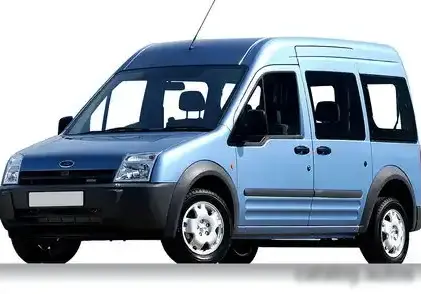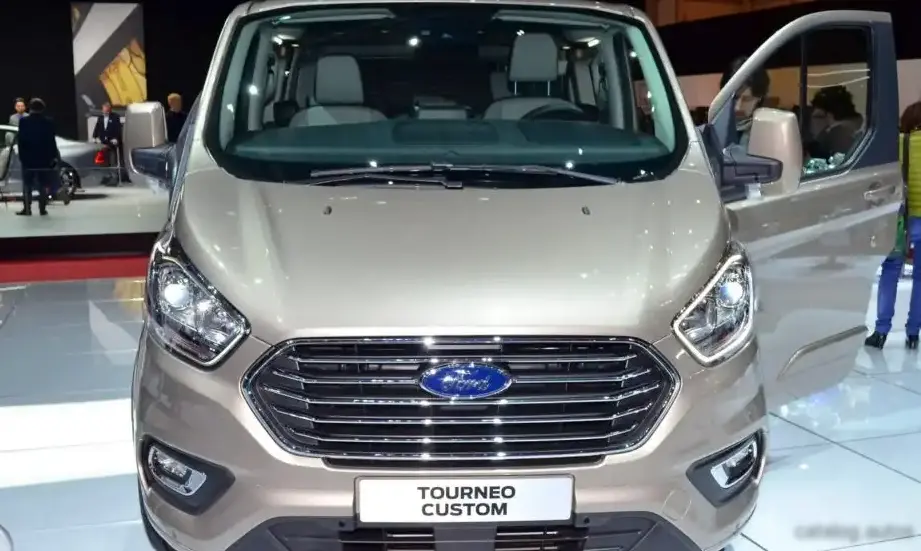
The Ford Tourneo Custom, particularly the first generation (facelifted in 2018), represents Ford’s entry into the European and increasingly, North American, market for versatile passenger vans. Introduced as a more comfortable and refined alternative to traditional cargo vans, the Tourneo Custom aimed to cater to families, shuttle services, and businesses requiring flexible people-moving capabilities. The L1 variant, denoting the short wheelbase, was a popular choice for those prioritizing maneuverability and ease of parking. This article focuses specifically on the 2022-2023 model year Tourneo Custom L1 equipped with the 2.0 EcoBlue diesel engine producing 150 horsepower, paired with a six-speed automatic transmission. This configuration occupied a middle ground in the Tourneo Custom lineup, offering a balance between fuel efficiency, performance, and affordability.
Technical Specifications
| Brand | Ford |
| Model | Tourneo Custom |
| Generation | Tourneo Custom I (facelift 2018) L1 |
| Type (Engine) | 2.0 EcoBlue (150 Hp) Automatic |
| Start of production | 2022 |
| End of production | 2023 |
| Powertrain Architecture | Internal Combustion engine |
| Body type | Van |
| Seats | 8-9 |
| Doors | 5 |
| Fuel consumption at Low speed (WLTP) | 10.3-10.7 l/100 km (22.8 – 22 US mpg, 27.4 – 26.4 UK mpg, 9.7 – 9.3 km/l) |
| Fuel consumption at Medium speed (WLTP) | 8-8.4 l/100 km (29.4 – 28 US mpg, 35.3 – 33.6 UK mpg, 12.5 – 11.9 km/l) |
| Fuel consumption at high speed (WLTP) | 7.1-7.6 l/100 km (33.1 – 30.9 US mpg, 39.8 – 37.2 UK mpg, 14.1 – 13.2 km/l) |
| Fuel consumption at very high speed (WLTP) | 8.9-9.4 l/100 km (26.4 – 25 US mpg, 31.7 – 30.1 UK mpg, 11.2 – 10.6 km/l) |
| Combined fuel consumption (WLTP) | 8.4-8.8 l/100 km (28 – 26.7 US mpg, 33.6 – 32.1 UK mpg, 11.9 – 11.4 km/l) |
| CO2 emissions (WLTP) | 220-231 g/km |
| Fuel Type | Diesel |
| Emission standard | Euro 6b-ISC-FCM |
| Power | 150 Hp @ 3500 rpm |
| Power per litre | 75.2 Hp/l |
| Torque | 360 Nm @ 1500-2750 rpm (265.52 lb.-ft. @ 1500-2750 rpm) |
| Engine layout | Front, Transverse |
| Engine Model/Code | P0FA |
| Engine displacement | 1995 cm3 (121.74 cu. in.) |
| Number of cylinders | 4 |
| Engine configuration | Inline |
| Number of valves per cylinder | 4 |
| Fuel injection system | Diesel Commonrail |
| Engine aspiration | Turbocharger, Intercooler |
| Engine oil capacity | 9.8 l (10.36 US qt | 8.62 UK qt) |
| Coolant | 11.2 l (11.83 US qt | 9.85 UK qt) |
| Trunk (boot) space – minimum | 1150 l (40.61 cu. ft.) |
| Fuel tank capacity | 70 l (18.49 US gal | 15.4 UK gal) |
| AdBlue tank | 21 l (5.55 US gal | 4.62 UK gal) |
| Max. roof load | 150 kg (330.69 lbs.) |
| Permitted trailer load with brakes (12%) | 2100 kg (4629.71 lbs.) |
| Permitted trailer load without brakes | 750 kg (1653.47 lbs.) |
| Length | 4973 mm (195.79 in.) |
| Width | 1986 mm (78.19 in.) |
| Width with mirrors folded | 2032 mm (80 in.) |
| Width including mirrors | 2272 mm (89.45 in.) |
| Height | 1959-2039 mm (77.13 – 80.28 in.) |
| Wheelbase | 2933 mm (115.47 in.) |
| Front track | 1732-1752 mm (68.19 – 68.98 in.) |
| Rear (Back) track | 1735-1762 mm (68.31 – 69.37 in.) |
| Minimum turning circle (turning diameter) | 11.6 m (38.06 ft.) |
| Drivetrain Architecture | Front wheel drive |
| Number of gears and type of gearbox | 6 gears, automatic transmission |
| Front brakes | Ventilated discs |
| Rear brakes | Ventilated discs |
| Tires size | 215/65 R16 |
| Wheel rims size | 6.5J x 16 |
INTRODUCTION
The 2022-2023 Ford Tourneo Custom L1 2.0 EcoBlue 150 hp Automatic represents a significant iteration of Ford’s popular passenger van. Built on the 1HX0 platform, also shared with the Transit Custom, this version benefited from the 2018 facelift which brought updated styling, improved technology, and enhanced safety features. The 2.0 EcoBlue engine, part of Ford’s modern diesel lineup, was designed to meet stringent Euro 6 emissions standards while providing a reasonable balance of power and fuel economy. The L1 designation indicates the shorter of the two available wheelbases, making it a more practical choice for urban environments and drivers prioritizing ease of handling. This particular configuration aimed to appeal to buyers seeking a comfortable, versatile, and relatively efficient people carrier.
Powertrain & Engine Architecture
At the heart of this Tourneo Custom variant lies the Ford 2.0 EcoBlue P0FA diesel engine. This is a four-cylinder, inline engine utilizing a common-rail direct fuel injection system and a turbocharger with intercooling. The EcoBlue series was designed for improved efficiency and reduced emissions, incorporating technologies like optimized combustion chambers and low-friction components. The 150 horsepower output is achieved at 3500 rpm, while peak torque of 360 Nm (265.52 lb.-ft.) is available between 1500 and 2750 rpm, providing a broad and usable powerband. The engine is transversely mounted in the front of the vehicle. Paired with the engine is a six-speed automatic transmission, providing smooth and convenient gear changes. This transmission is a conventional torque converter automatic, chosen for its reliability and suitability for the van’s intended use. While not the sportiest transmission, it prioritizes comfort and ease of driving.
Driving Characteristics
The 150 hp EcoBlue engine, coupled with the automatic transmission, delivers a competent, if not exhilarating, driving experience. Acceleration is adequate for everyday driving, but the van’s weight (typically around 2.3-2.5 tons depending on specification) is noticeable, especially when fully loaded. The automatic transmission is programmed for fuel efficiency, meaning it will upshift quickly to maintain lower engine speeds. This can sometimes result in the engine feeling slightly strained when climbing hills or overtaking. Compared to the higher-output 185 hp version of the 2.0 EcoBlue, this variant offers less outright performance. However, it provides better fuel economy and a more relaxed driving experience. Compared to manual transmission versions, the automatic offers greater convenience, particularly in stop-and-go traffic, but may sacrifice some driver engagement and control.
Equipment & Trim Levels
The Tourneo Custom L1 2.0 EcoBlue 150 hp Automatic typically came with a reasonable level of standard equipment. This included air conditioning, power windows, power mirrors, a basic audio system with Bluetooth connectivity, and a driver information display. Safety features such as ABS, Electronic Stability Control (ESC), and multiple airbags were also standard. Higher trim levels, such as Titanium, added features like alloy wheels, upgraded upholstery, a touchscreen infotainment system with navigation, parking sensors, and a rearview camera. Interior upholstery was typically cloth, with options for leather upgrades. The van’s modular seating arrangement allowed for flexible configurations, accommodating up to nine passengers depending on the layout chosen.
Chassis & Braking
The Tourneo Custom utilizes a front-wheel-drive layout with independent MacPherson strut suspension at the front and a semi-independent twist beam suspension at the rear. This setup provides a comfortable ride quality, although it’s not particularly sporty. The braking system consists of ventilated discs on all four wheels, providing adequate stopping power for the van’s weight. ABS (Anti-lock Braking System) and ESC (Electronic Stability Control) are standard features, enhancing safety and stability. The L1 variant’s shorter wheelbase contributes to improved maneuverability compared to the longer L2 version.
Market Reception & Comparison
The Tourneo Custom, in general, was well-received by critics for its practicality, comfort, and versatility. The 150 hp EcoBlue automatic variant was often praised for its fuel efficiency and ease of driving, making it a popular choice for families and businesses. However, some reviewers noted that the engine could feel underpowered when fully loaded or when tackling steep inclines. Compared to the 185 hp version, the 150 hp model offered a more affordable price point but sacrificed some performance. Fuel economy figures were competitive within the segment, typically ranging from 28-33 mpg (US) on combined cycles. Reliability reports generally indicated good dependability, although diesel particulate filter (DPF) issues could occur with frequent short journeys.
Legacy
The Ford Tourneo Custom, particularly the 2.0 EcoBlue variants, has established a solid reputation for reliability and practicality. The 2.0 EcoBlue engine, while not without its potential issues (such as DPF regeneration and occasional turbocharger concerns), has proven to be a durable and relatively efficient powerplant. On the used car market, these vans hold their value reasonably well, particularly those with lower mileage and a full service history. The combination of comfort, versatility, and fuel efficiency continues to make the Tourneo Custom a popular choice for buyers seeking a practical and adaptable people carrier.