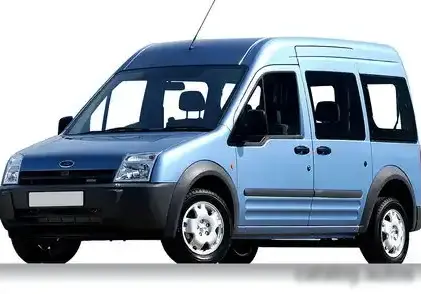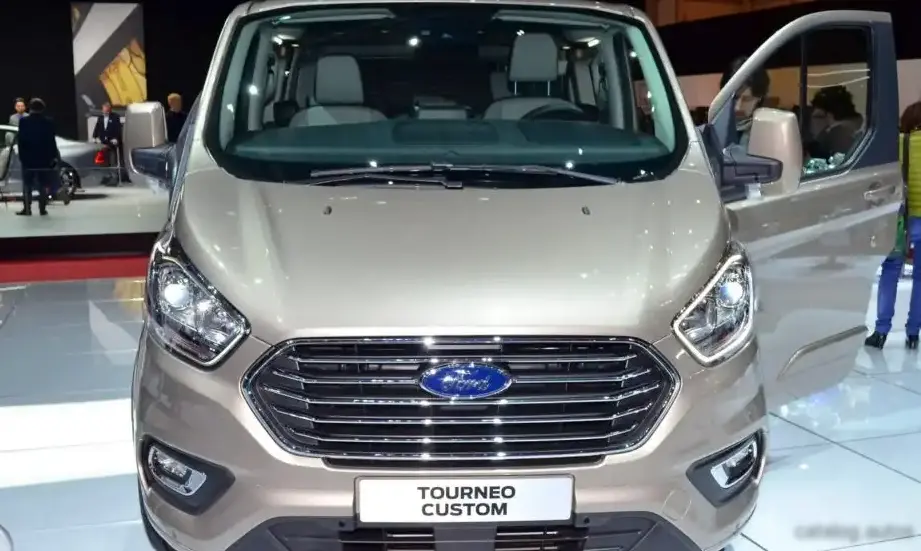
The Ford Tourneo Custom, specifically the first generation facelift model produced from 2018-2023, represents Ford’s entry into the European and increasingly North American market for versatile passenger vans. The L1 variant, denoting the short wheelbase configuration, offered a balance between maneuverability and interior space. This article focuses on the 2.0 EcoBlue engine producing 185 horsepower paired with a six-speed automatic transmission, a popular configuration offered from 2020-2023. This powertrain combination aimed to provide a comfortable and efficient driving experience for families, shuttle services, and commercial applications requiring passenger transport. It sat in the mid-range of the Tourneo Custom lineup, offering a step up in performance from the lower-powered diesel options while remaining more accessible than the higher-output variants.
Technical Specifications
| Brand | Ford |
| Model | Tourneo Custom |
| Generation | Tourneo Custom I (facelift 2018) L1 |
| Type (Engine) | 2.0 EcoBlue (185 Hp) Automatic |
| Start of production | 2020 |
| End of production | 2023 |
| Powertrain Architecture | Internal Combustion engine |
| Body type | Van |
| Seats | 8-9 |
| Doors | 5 |
| Combined fuel consumption (WLTP) | 8.4 l/100 km (28 US mpg, 33.6 UK mpg, 11.9 km/l) |
| CO2 emissions (WLTP) | 219-222 g/km |
| Fuel Type | Diesel |
| Emission standard | Euro 6.2 |
| Weight-to-power ratio | 13.2 kg/Hp, 75.9 Hp/tonne |
| Weight-to-torque ratio | 5.9 kg/Nm, 170.2 Nm/tonne |
| Power | 185 Hp |
| Power per litre | 92.7 Hp/l |
| Torque | 415 Nm (306.09 lb.-ft.) |
| Engine layout | Front, Transverse |
| Engine Model/Code | BCFC |
| Engine displacement | 1995 cm3 (121.74 cu. in.) |
| Number of cylinders | 4 |
| Engine configuration | Inline |
| Number of valves per cylinder | 4 |
| Fuel injection system | Diesel Commonrail |
| Engine aspiration | Turbocharger, Intercooler |
| Engine oil capacity | 9.8 l (10.36 US qt | 8.62 UK qt) |
| Coolant | 11.2 l (11.83 US qt | 9.85 UK qt) |
| Kerb Weight | 2438-2449 kg (5374.87 – 5399.12 lbs.) |
| Max. weight | 3240 kg (7142.98 lbs.) |
| Max load | 791-802 kg (1743.86 – 1768.11 lbs.) |
| Trunk (boot) space – minimum | 1200 l (42.38 cu. ft.) |
| Fuel tank capacity | 70 l (18.49 US gal | 15.4 UK gal) |
| AdBlue tank | 21 l (5.55 US gal | 4.62 UK gal) |
| Max. roof load | 150 kg (330.69 lbs.) |
| Permitted trailer load with brakes (12%) | 1100-1150 kg (2425.08 – 2535.32 lbs.) |
| Permitted trailer load without brakes | 750 kg (1653.47 lbs.) |
| Length | 4973 mm (195.79 in.) |
| Width | 1986 mm (78.19 in.) |
| Width with mirrors folded | 2032 mm (80 in.) |
| Width including mirrors | 2272 mm (89.45 in.) |
| Height | 1959-2039 mm (77.13 – 80.28 in.) |
| Wheelbase | 2933 mm (115.47 in.) |
| Front track | 1732-1752 mm (68.19 – 68.98 in.) |
| Rear (Back) track | 1735-1762 mm (68.31 – 69.37 in.) |
| Minimum turning circle (turning diameter) | 11.6 m (38.06 ft.) |
| Drivetrain Architecture | The Internal combustion engine (ICE) drives the front wheels of the vehicle. |
| Drive wheel | Front wheel drive |
| Number of gears and type of gearbox | 6 gears, automatic transmission |
| Front brakes | Ventilated discs |
| Rear brakes | Ventilated discs |
| Assisting systems | ABS (Anti-lock braking system) |
| Tires size | 215/65 R16 |
| Wheel rims size | 6.5J x 16 |
INTRODUCTION
The Ford Tourneo Custom, launched in 2013 and receiving a significant facelift in 2018, quickly became a popular choice in the European MPV (Multi-Purpose Vehicle) segment. Built on the 1HX0/A3 platform shared with the Ford Transit Custom van, the Tourneo Custom prioritized passenger comfort and versatility. The 2020-2023 model year featuring the 2.0 EcoBlue 185 horsepower automatic powertrain was designed to appeal to buyers seeking a refined and capable vehicle for both daily commuting and longer journeys. The L1 (short wheelbase) version offered a more compact footprint, making it easier to navigate urban environments while still providing ample space for up to nine passengers.
Powertrain & Engine Architecture
The heart of this Tourneo Custom variant is the Ford 2.0 EcoBlue BCFC diesel engine. This engine is a four-cylinder, inline configuration utilizing a common-rail direct fuel injection system. The EcoBlue series represented a significant investment by Ford in diesel engine technology, focusing on improved efficiency and reduced emissions. The BCFC engine benefits from a turbocharger with an intercooler, boosting power output to 185 horsepower and 415 Nm (306 lb-ft) of torque. The six-speed automatic transmission, sourced from a well-established supplier, was chosen for its smooth operation and ease of use. This transmission features a torque converter and electronic control, optimizing gear selection based on driving conditions and throttle input. The engine also incorporates a particulate filter to meet stringent Euro 6.2 emission standards, and a Start & Stop system further contributes to fuel economy in urban driving.
Driving Characteristics
The 185 horsepower EcoBlue engine paired with the six-speed automatic provides a noticeable step up in performance compared to the lower-powered diesel options available in the Tourneo Custom range. While not a sports van, the powertrain delivers adequate acceleration for merging onto highways and overtaking maneuvers. The automatic transmission shifts smoothly and responsively, contributing to a comfortable driving experience. The gear ratios are tuned for a balance between fuel efficiency and usability, with a focus on providing sufficient torque at lower speeds for effortless cruising. Compared to the manual transmission versions, the automatic offers greater convenience, particularly in stop-and-go traffic. However, the manual variants generally achieve slightly better fuel economy due to the reduced drivetrain losses. The weight of the vehicle, ranging from 2438-2449 kg, is noticeable, but the engine’s torque output helps to mitigate this.
Equipment & Trim Levels
The 2.0 EcoBlue 185 hp Automatic trim typically included a generous level of standard equipment. Interior features generally included comfortable cloth upholstery, air conditioning, a basic audio system with USB connectivity, and power windows. Higher trim levels offered upgrades such as leather upholstery, a more advanced infotainment system with navigation, and parking sensors. Safety features such as ABS, electronic stability control, and multiple airbags were standard across the range. Optional extras included a panoramic sunroof, alloy wheels, and a rear-view camera. The dashboard layout is functional and driver-focused, with clear instrumentation and intuitive controls.
Chassis & Braking
The Tourneo Custom L1 utilizes a front-wheel-drive layout with independent suspension at the front and a semi-independent twist beam suspension at the rear. This configuration provides a reasonable balance between ride comfort and handling. The braking system consists of ventilated discs on all four wheels, providing ample stopping power. ABS (Anti-lock Braking System) is standard, enhancing safety during emergency braking situations. The suspension is tuned to prioritize comfort, but the vehicle remains relatively stable when cornering. Stabilizer bars are fitted to both the front and rear axles to reduce body roll.
Market Reception & Comparison
The Ford Tourneo Custom, and specifically the 2.0 EcoBlue 185 hp Automatic variant, received generally positive reviews from automotive critics. The engine was praised for its refinement and adequate power delivery, while the automatic transmission was noted for its smooth operation. Fuel economy, averaging around 8.4 l/100 km (28 US mpg), was considered competitive for a vehicle of its size and weight. Compared to the lower-powered diesel versions, the 185 hp model offered a more relaxed and confident driving experience, particularly when fully loaded with passengers and luggage. However, some critics noted that the automatic transmission could occasionally feel hesitant during quick acceleration. Compared to rivals like the Volkswagen Multivan and Mercedes-Benz Vito, the Tourneo Custom offered a compelling combination of value, practicality, and driving dynamics.
Legacy
The 2.0 EcoBlue engine has proven to be a relatively reliable powertrain, although, like any diesel engine, it requires regular maintenance, including oil changes and filter replacements. The automatic transmission, if properly maintained, is also generally durable. In the used car market, the Tourneo Custom 2.0 EcoBlue 185 hp Automatic holds its value reasonably well, particularly well-maintained examples with a full service history. Its versatility, spacious interior, and comfortable driving experience continue to make it a popular choice for families and businesses seeking a practical and reliable passenger van. The EcoBlue engine’s focus on efficiency and reduced emissions also contributes to its ongoing appeal in a market increasingly focused on sustainability.