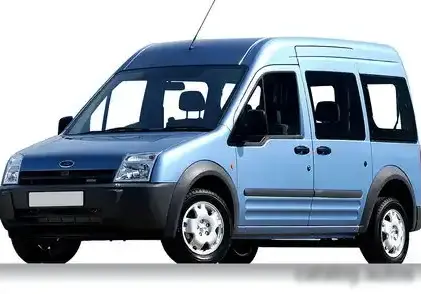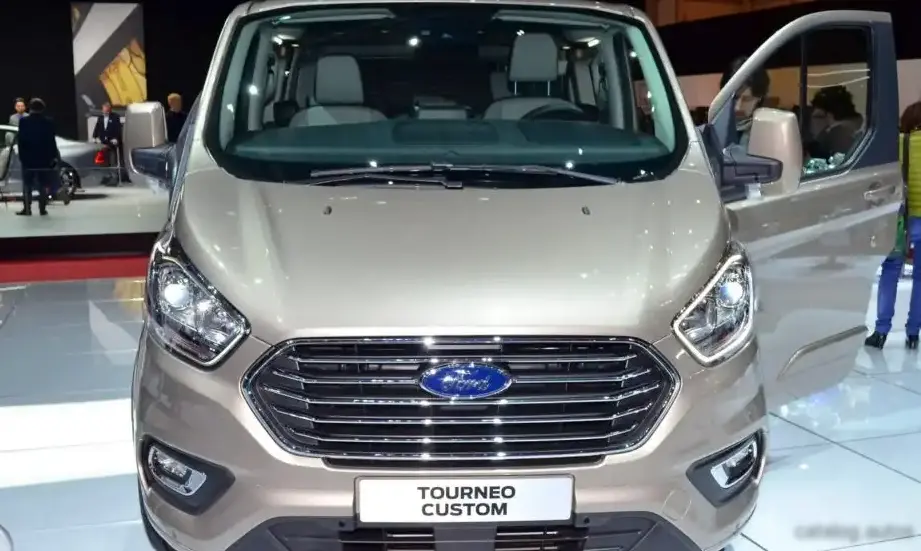
The Ford Tourneo Custom, specifically the first generation (facelifted in 2018) L1 variant powered by the 2.0 TDCi 130 horsepower engine with an automatic transmission, represents a significant offering in the European and increasingly North American commercial vehicle market. Produced from 2018 through 2023, this configuration aimed to balance practicality, fuel efficiency, and ease of use for both commercial operators and larger families. The Tourneo Custom, built upon the 1HX0 platform shared with the Ford Transit Custom, served as the passenger-carrying counterpart to the Transit Custom van, offering seating for up to nine occupants. This particular engine and transmission pairing positioned itself as a mid-range option, appealing to buyers who didn’t require the outright performance of higher-powered engines but desired the convenience of an automatic gearbox.
Technical Specifications
| Brand | Ford |
| Model | Tourneo Custom |
| Generation | Tourneo Custom I (facelift 2018) L1 |
| Type (Engine) | 2.0 TDCi (130 Hp) Automatic |
| Start of production | 2018 |
| End of production | 2023 |
| Powertrain Architecture | Internal Combustion engine |
| Body type | Van |
| Seats | 8-9 |
| Doors | 5 |
| Fuel consumption (urban) | 7.7 l/100 km (30.5 US mpg) |
| Fuel consumption (extra urban) | 6.5 l/100 km (36.2 US mpg) |
| Fuel consumption (combined) | 7.1 l/100 km (33.1 US mpg) |
| CO2 emissions | 183 g/km |
| Fuel Type | Diesel |
| Maximum speed | 160 km/h (99.42 mph) |
| Emission standard | Euro 6b |
| Weight-to-power ratio | 18.2 kg/Hp |
| Weight-to-torque ratio | 6.1 kg/Nm |
| Power | 130 Hp @ 3500 rpm |
| Torque | 385 Nm @ 1500-2000 rpm (283.96 lb.-ft.) |
| Engine layout | Front, Transverse |
| Engine Model/Code | YMFS, YMF6 |
| Engine displacement | 1995 cm3 (121.74 cu. in.) |
| Number of cylinders | 4 |
| Engine configuration | Inline |
| Number of valves per cylinder | 4 |
| Fuel injection system | Diesel Commonrail |
| Engine aspiration | Turbocharger, Intercooler |
| Engine oil capacity | 9.8 l (10.36 US qt | 8.62 UK qt) |
| Coolant capacity | 11.2 l (11.83 US qt | 9.85 UK qt) |
| Kerb Weight | 2366 kg (5216.14 lbs.) |
| Max. weight | 3140 kg (6922.52 lbs.) |
| Max load | 774 kg (1706.38 lbs.) |
| Trunk (boot) space – minimum | 1150 l (40.61 cu. ft.) |
| Fuel tank capacity | 70 l (18.49 US gal | 15.4 UK gal) |
| AdBlue tank | 21 l (5.55 US gal | 4.62 UK gal) |
| Permitted trailer load with brakes (12%) | 1000 kg (2204.62 lbs.) |
| Permitted trailer load without brakes | 750 kg (1653.47 lbs.) |
| Length | 4973 mm (195.79 in.) |
| Width | 2032 mm (80 in.) |
| Height | 1979 mm (77.91 in.) |
| Wheelbase | 2933 mm (115.47 in.) |
| Minimum turning circle | 11.6 m (38.06 ft.) |
| Drivetrain | Front wheel drive |
| Number of gears | 6 |
| Gearbox type | Automatic transmission |
| Front brakes | Ventilated discs |
| Rear brakes | Ventilated discs |
| Tire size | 215/65 R16 |
| Wheel rims size | 16 |
Powertrain & Engine Architecture
The heart of this Tourneo Custom variant is the 2.0-liter TDCi diesel engine, specifically utilizing the YMFS or YMF6 engine code. This engine is a four-cylinder, inline configuration, employing a common-rail direct fuel injection system. The common-rail system, operating at very high pressures, ensures precise fuel delivery for optimized combustion and reduced emissions. A turbocharger with an intercooler is standard, boosting power output and improving torque across a wider RPM range. The engine features four valves per cylinder, enhancing breathing and contributing to its overall efficiency. Paired with this engine is a six-speed automatic transmission, designed to provide smooth and convenient gear changes. This transmission isn’t a dual-clutch unit, but a traditional torque-converter automatic, prioritizing comfort and reliability over outright performance.
Driving Characteristics
The 130 horsepower output, coupled with the automatic transmission, delivers a driving experience focused on usability rather than sporty performance. Acceleration is adequate for everyday driving, but it won’t provide the briskness of the higher-powered 170 or 185 horsepower versions. The automatic transmission is tuned for fuel efficiency, often upshifting quickly to maintain lower engine speeds. This can sometimes result in the engine feeling slightly strained when climbing hills or overtaking. The gear ratios are optimized for cruising, making it a comfortable vehicle for long journeys. Compared to the manual transmission versions of the same engine, the automatic offers a more relaxed driving experience, particularly in urban traffic. However, it does come with a slight penalty in fuel economy and a less engaging driving feel.
Equipment & Trim Levels
The 2.0 TDCi 130 hp Automatic typically came equipped as a mid-range trim level. Standard features generally included air conditioning, power windows, power mirrors, a basic audio system with USB connectivity, and a driver’s airbag. Higher trim levels, such as Titanium, added features like alloy wheels, upgraded interior trim, parking sensors, a touchscreen infotainment system with navigation, and additional safety equipment. Optional extras available for this trim included a panoramic sunroof, leather upholstery, and a rear parking camera. The interior typically featured durable cloth upholstery and a functional dashboard layout designed for practicality.
Chassis & Braking
The Tourneo Custom utilizes a front-wheel-drive layout with independent suspension at the front and a semi-independent twist beam suspension at the rear. The braking system consists of ventilated discs on all four wheels, providing adequate stopping power for the vehicle’s weight. Anti-lock Braking System (ABS) is standard. The suspension is tuned for comfort, prioritizing a smooth ride over sporty handling. Stabilizer bars are fitted to both the front and rear axles to reduce body roll during cornering. The L1 designation refers to the short wheelbase version, making it more maneuverable in tight spaces.
Market Reception & Comparison
The Ford Tourneo Custom 2.0 TDCi 130 hp Automatic was generally well-received by critics as a practical and versatile people carrier. It was praised for its spacious interior, comfortable ride, and reasonable fuel economy. However, some reviewers noted that the engine could feel underpowered when fully loaded or driving uphill. Compared to the higher-powered versions, this variant offered a more affordable entry point into the Tourneo Custom range. In terms of fuel economy, it typically achieved around 33 mpg combined, slightly less than the manual transmission version but comparable to other diesel-powered MPVs in its class. Reliability was generally good, with the 2.0 TDCi engine proving to be a robust and dependable unit.
Legacy
The 2.0 TDCi engine, in various iterations, has become a mainstay in Ford’s commercial vehicle lineup. The automatic transmission, while not the most technologically advanced, has proven to be relatively reliable. In the used car market, this particular Tourneo Custom variant represents a good value proposition for buyers seeking a spacious, practical, and fuel-efficient people carrier. Maintenance costs are generally reasonable, and parts availability is good. However, potential buyers should be aware of the potential for diesel particulate filter (DPF) issues, particularly if the vehicle has been primarily used for short journeys. Overall, the Ford Tourneo Custom 2.0 TDCi 130 hp Automatic remains a popular and well-regarded vehicle, offering a compelling blend of practicality, comfort, and affordability.