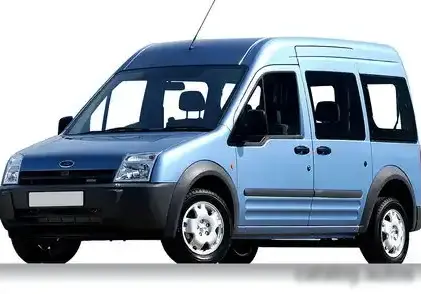
The Ford Tourneo Custom, specifically the first generation (facelifted in 2018) L2 variant powered by the 2.0 TDCi engine producing 130 horsepower, represents a significant offering in the European and increasingly, North American, van market. Introduced in 2018 and continuing through 2023, this configuration aimed to balance practicality, fuel efficiency, and affordability within the Tourneo Custom lineup. Positioned as a mid-range option, it catered to families, shuttle services, and businesses requiring a versatile passenger or cargo vehicle. The L2 designation refers to the extended wheelbase, providing increased interior space compared to the standard-length version.
Technical Specifications
| Brand | Ford |
| Model | Tourneo Custom |
| Generation | Tourneo Custom I (facelift 2018) L2 |
| Type (Engine) | 2.0 TDCi (130 Hp) |
| Start of production | 2018 |
| End of production | 2023 |
| Powertrain Architecture | Internal Combustion engine |
| Body type | Van |
| Seats | 8-9 |
| Doors | 5 |
| Fuel consumption (urban) | 7.2 l/100 km (32.7 US mpg) |
| Fuel consumption (extra urban) | 5.8 l/100 km (40.6 US mpg) |
| Fuel consumption (combined) | 6.3 l/100 km (37.3 US mpg) |
| CO2 emissions | 164 g/km |
| Fuel Type | Diesel |
| Maximum speed | 160 km/h (99.42 mph) |
| Emission standard | Euro 6b |
| Weight-to-power ratio | 18.2 kg/Hp |
| Weight-to-torque ratio | 6.1 kg/Nm |
| Power | 130 Hp @ 3500 rpm |
| Torque | 385 Nm @ 1500-2000 rpm (283.96 lb.-ft.) |
| Engine layout | Front, Transverse |
| Engine Model/Code | YMFS, YMF6 |
| Engine displacement | 1995 cm3 (121.74 cu. in.) |
| Number of cylinders | 4 |
| Engine configuration | Inline |
| Number of valves per cylinder | 4 |
| Fuel injection system | Diesel Commonrail |
| Engine aspiration | Turbocharger, Intercooler |
| Engine oil capacity | 9.8 l (10.36 US qt | 8.62 UK qt) |
| Coolant capacity | 11.2 l (11.83 US qt | 9.85 UK qt) |
| Kerb Weight | 2361 kg (5205.11 lbs.) |
| Max. weight | 3140 kg (6922.52 lbs.) |
| Max load | 779 kg (1717.4 lbs.) |
| Trunk (boot) space – minimum | 1900 l (67.1 cu. ft.) |
| Fuel tank capacity | 70 l (18.49 US gal | 15.4 UK gal) |
| AdBlue tank | 21 l (5.55 US gal | 4.62 UK gal) |
| Permitted trailer load with brakes (12%) | 2100 kg (4629.71 lbs.) |
| Length | 5340 mm (210.24 in.) |
| Width | 2032 mm (80 in.) |
| Height | 1977 mm (77.83 in.) |
| Wheelbase | 3300 mm (129.92 in.) |
| Minimum turning circle | 12.8 m (41.99 ft.) |
| Drivetrain Architecture | Front wheel drive |
| Number of gears | 6 |
| Gearbox type | Manual transmission |
| Front brakes | Ventilated discs |
| Rear brakes | Ventilated discs |
| Tire size | 215/65 R16 |
| Wheel rims size | 16 |
Powertrain & Engine Architecture
The heart of this Tourneo Custom variant is the 2.0-liter TDCi diesel engine, specifically utilizing the YMFS or YMF6 engine code. This engine is a four-cylinder, inline configuration, employing a common-rail direct fuel injection system. The common-rail system, operating at very high pressures, ensures precise fuel delivery for optimized combustion and reduced emissions. A turbocharger with an intercooler is standard, boosting power output and improving torque across a wider RPM range. The engine features four valves per cylinder, enhancing breathing and contributing to its overall efficiency. The 130 horsepower output is achieved at 3500 rpm, while the substantial 385 Nm (283.96 lb.-ft.) of torque is available from a low 1500-2000 rpm, making it well-suited for carrying passengers or cargo. This engine is paired with a six-speed manual transmission, chosen for its balance of fuel economy and driver control.
Driving Characteristics
The 130 hp 2.0 TDCi with a manual transmission in the Tourneo Custom L2 delivers a practical, if not exhilarating, driving experience. The emphasis is on usability and efficiency rather than outright performance. Acceleration is adequate for everyday driving, but fully loaded with passengers or cargo, it will feel noticeably slower. The torque-rich engine provides good pulling power, making it capable of handling inclines and overtaking maneuvers with reasonable confidence. The six-speed gearbox is well-matched to the engine’s characteristics, offering a good spread of ratios for both fuel-efficient cruising and responsive acceleration. Compared to higher-output versions of the 2.0 TDCi (like the 170 hp variant), this setup prioritizes fuel economy and lower running costs. It also feels more manageable for drivers less accustomed to powerful engines.
Equipment & Trim Levels
The 130 hp Tourneo Custom L2 typically came with a respectable level of standard equipment, though specific features varied depending on the market and optional packages selected. Standard features generally included air conditioning, power windows, central locking, and a basic audio system with USB connectivity. Safety features such as ABS, Electronic Stability Control (ESC), and driver/passenger airbags were also standard. Interior upholstery was typically cloth, with durable and practical materials used throughout the cabin. Optional extras included features like navigation systems, parking sensors, upgraded audio systems, alloy wheels, and various comfort and convenience packages. Higher trim levels offered more luxurious interior appointments, such as leather upholstery and additional chrome trim.
Chassis & Braking
The Tourneo Custom utilizes a front-wheel-drive platform with a MacPherson strut front suspension and a twist-beam rear suspension. This configuration provides a good balance of ride comfort and handling. The L2 variant, due to its extended wheelbase, offers improved stability compared to the shorter wheelbase models. Braking is handled by ventilated discs on all four wheels, providing adequate stopping power for the vehicle’s weight. ABS (Anti-lock Braking System) is standard, enhancing braking performance in emergency situations. Stabilizer bars are fitted to both the front and rear axles to reduce body roll during cornering.
Market Reception & Comparison
The Ford Tourneo Custom, and specifically the 130 hp 2.0 TDCi variant, received generally positive reviews from automotive critics. It was praised for its spacious interior, practicality, and fuel efficiency. However, some critics noted that the engine could feel underpowered when fully loaded. Compared to other vans in its class, such as the Volkswagen Transporter and Mercedes-Benz Vito, the Tourneo Custom offered a competitive price point and a good level of standard equipment. The 130 hp engine offered a compelling balance between performance and fuel economy, making it a popular choice for those prioritizing running costs. The manual transmission was favored by many for its driver engagement and efficiency.
Legacy
The 2.0 TDCi engine, in its various iterations, has proven to be a relatively reliable powertrain. While not immune to issues, the engine is generally known for its durability and longevity, provided it receives regular maintenance. Common issues can include turbocharger wear, injector problems, and occasional issues with the dual-mass flywheel. In the used car market, the Tourneo Custom L2 2.0 TDCi (130 hp) remains a popular choice due to its practicality, affordability, and relatively low running costs. Its spacious interior and versatile configuration make it well-suited for a variety of applications, from family transport to commercial use. The availability of parts and servicing is also good, contributing to its continued appeal.