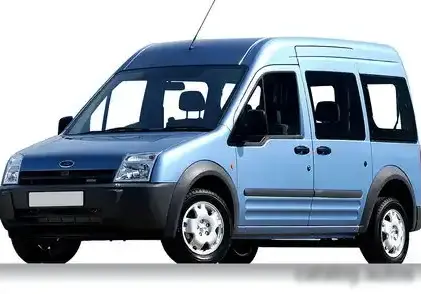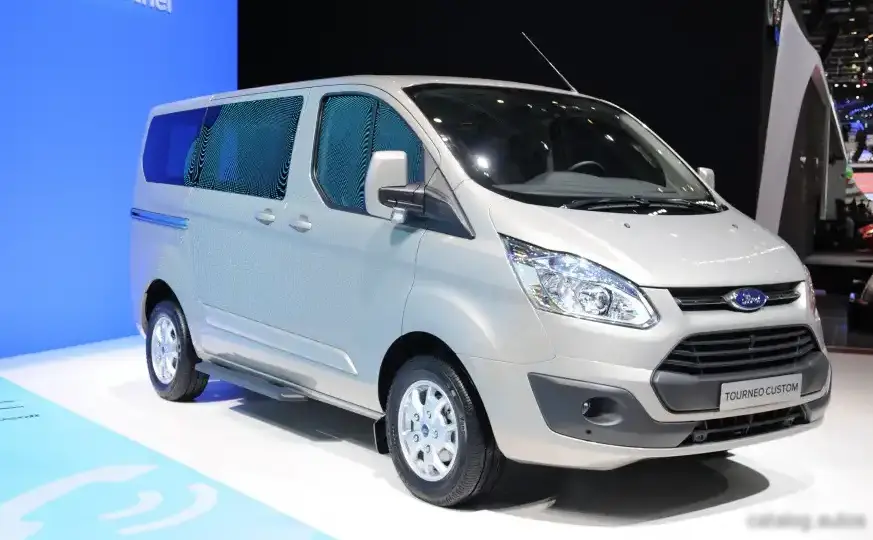
The Ford Tourneo Custom I L1 2.2 Duratorq TDCi, producing 100 horsepower, was a popular configuration within the first generation of the Tourneo Custom van, manufactured from 2012 to 2017. Positioned as an entry-level to mid-range option, this variant catered to buyers prioritizing practicality and fuel efficiency over outright performance. It served as a versatile people carrier and light commercial vehicle, primarily aimed at families, shuttle services, and small businesses across Europe. The Tourneo Custom itself was a significant model for Ford, representing a shift towards a more modern and car-like driving experience in the van segment, built upon the global Ford Transit platform.
Technical Specifications
| Brand | Ford |
| Model | Tourneo Custom |
| Generation | Tourneo Custom I L1 |
| Type (Engine) | 2.2 Duratorq TDCi (100 Hp) |
| Start of production | 2012 |
| End of production | 2017 |
| Powertrain Architecture | Internal Combustion engine |
| Body type | Van |
| Seats | 8-9 |
| Doors | 5 |
| Fuel consumption (urban) | 7.3 l/100 km (32.2 US mpg) |
| Fuel consumption (extra urban) | 6.1 l/100 km (38.6 US mpg) |
| Fuel consumption (combined) | 6.5 l/100 km (36.2 US mpg) |
| CO2 emissions | 172 g/km |
| Fuel Type | Diesel |
| Maximum speed | 147 km/h (91.34 mph) |
| Emission standard | Euro 5 |
| Weight-to-power ratio | 21 kg/Hp |
| Weight-to-torque ratio | 6.8 kg/Nm |
| Power | 100 Hp @ 3500 rpm |
| Power per litre | 45.5 Hp/l |
| Torque | 310 Nm @ 1300 rpm (228.64 lb.-ft. @ 1300 rpm) |
| Engine layout | Front, Transverse |
| Engine Model/Code | DRFF |
| Engine displacement | 2198 cm3 (134.13 cu. in.) |
| Number of cylinders | 4 |
| Engine configuration | Inline |
| Cylinder Bore | 86 mm (3.39 in.) |
| Piston Stroke | 94.6 mm (3.72 in.) |
| Number of valves per cylinder | 4 |
| Fuel injection system | Diesel Commonrail |
| Engine aspiration | Turbocharger, Intercooler |
| Valvetrain | DOHC |
| Engine oil capacity | 6.2 l (6.55 US qt | 5.46 UK qt) |
| Coolant | 10 l (10.57 US qt | 8.8 UK qt) |
| Kerb Weight | 2104 kg (4638.53 lbs.) |
| Max. weight | 3000 kg (6613.87 lbs.) |
| Max load | 896 kg (1975.34 lbs.) |
| Fuel tank capacity | 80 l (21.13 US gal | 17.6 UK gal) |
| Permitted trailer load (braked) | 1450 kg (3196.7 lbs.) |
| Permitted trailer load (unbraked) | 750 kg (1653.47 lbs.) |
| Length | 4972 mm (195.75 in.) |
| Width | 1986 mm (78.19 in.) |
| Width including mirrors | 2272 mm (89.45 in.) |
| Height | 1827-1984 mm (71.93 – 78.11 in.) |
| Wheelbase | 2933 mm (115.47 in.) |
| Minimum turning circle | 10.9-11.6 m (35.76 – 38.06 ft.) |
| Drivetrain | Front wheel drive |
| Number of gears | 6 |
| Gearbox type | Manual transmission |
| Front brakes | Ventilated discs |
| Rear brakes | Disc |
| Assisting systems | ABS (Anti-lock braking system) |
| Tires size | 215/65 R15; 215/65 R16 |
| Wheel rims size | 6.5J x 15; 6.5J x 16 |
Powertrain & Engine Architecture
The heart of this Tourneo Custom variant is the 2.2-liter Duratorq TDCi diesel engine, specifically the DRFF engine code. This engine belongs to the Puma family of diesel engines developed by Ford. It features a cast iron block, aluminum cylinder head, and a single overhead camshaft (SOHC) design with four valves per cylinder (DOHC). The engine utilizes a common rail direct injection system, delivering fuel at extremely high pressures for optimized combustion. A turbocharger with an intercooler is employed to boost power and torque, providing 100 horsepower at 3500 rpm and a respectable 310 Nm (228.64 lb-ft) of torque from as low as 1300 rpm. The engine is transversely mounted in the front of the vehicle. The 6-speed manual transmission was the standard offering for this trim, providing a balance between fuel economy and drivability.
Driving Characteristics
The 100 hp Duratorq TDCi, paired with the 6-speed manual gearbox, offered a practical, if not exhilarating, driving experience. Acceleration was modest, with a focus on providing sufficient power for everyday driving and carrying a full load of passengers or cargo. The engine’s peak torque, available at low revs, made it relatively easy to pull away from a standstill and maintain speed on inclines. The gear ratios were tuned for fuel efficiency, meaning the engine needed to be revved somewhat to achieve brisk acceleration. Compared to higher-powered versions of the Tourneo Custom, such as those equipped with the 125 hp or 155 hp variants of the Duratorq engine, this 100 hp model felt noticeably less responsive. However, it offered a smoother and more relaxed driving experience, particularly in urban environments.
Equipment & Trim Levels
The 100 hp Tourneo Custom L1 typically came with a reasonable level of standard equipment. This included features like air conditioning, power steering, electric front windows, a basic audio system with USB connectivity, and ABS brakes. Interior upholstery was generally cloth, with durable plastic trim. Higher trim levels offered options such as alloy wheels, upgraded audio systems, rear parking sensors, cruise control, and a more sophisticated infotainment system. The L1 designation refers to the short wheelbase version of the Tourneo Custom, offering a more compact footprint for easier maneuverability in urban areas. The van was available in multiple seating configurations, ranging from 8 to 9 seats, depending on the specific layout chosen.
Chassis & Braking
The Tourneo Custom I L1 utilized a front-wheel-drive layout with independent MacPherson strut suspension at the front and a semi-independent twist beam suspension at the rear. This setup provided a comfortable ride quality, although it wasn’t particularly sporty. The front brakes were ventilated discs, offering good stopping power, while the rear brakes were solid discs. ABS (Anti-lock Braking System) was standard, enhancing safety during emergency braking situations. The suspension was tuned to prioritize ride comfort and load-carrying capacity, rather than handling precision. Stabilizer bars were fitted to both the front and rear axles to reduce body roll during cornering.
Market Reception & Comparison
The 100 hp Tourneo Custom L1 was generally well-received by critics as a practical and affordable people carrier. It was praised for its fuel efficiency, spacious interior, and comfortable ride. However, some reviewers noted that the engine lacked power, particularly when fully loaded. Compared to the 125 hp version, the 100 hp model offered a lower purchase price but came with a noticeable performance penalty. In terms of fuel economy, the 100 hp variant was slightly more efficient, but the difference was not significant. Reliability was generally good, with the Duratorq engine proving to be a robust and durable unit.
Legacy
The Ford Tourneo Custom I L1 2.2 Duratorq TDCi (100 Hp) remains a relatively common sight on used car markets today. The Duratorq engine is known for its longevity and relatively low maintenance costs, making it a popular choice for budget-conscious buyers. While not the most powerful or refined van in its class, it offers a practical and reliable solution for families and businesses needing a versatile people carrier. Common issues reported with these vehicles include wear and tear on suspension components and occasional problems with the turbocharger. However, with regular maintenance, these vans can provide many years of reliable service.