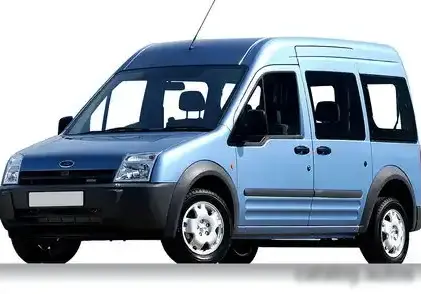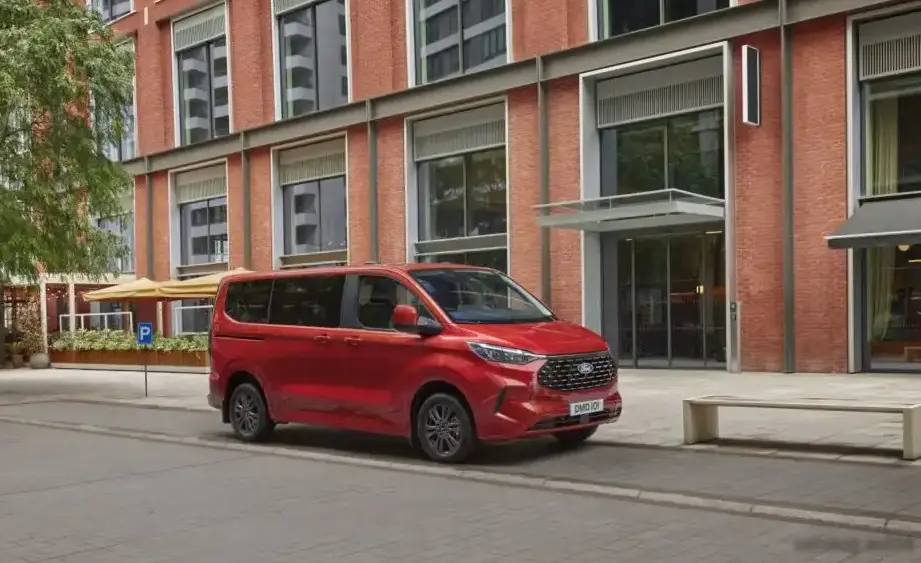
The Ford Tourneo Custom II L1 2.0 EcoBlue (136 Hp) AWD Automatic represents a significant offering in the mid-size van segment, launched in July 2023. Positioned as a versatile option within the broader Tourneo Custom II range, this variant caters to buyers seeking a balance between passenger capacity, all-weather capability, and reasonable fuel efficiency. It builds upon the foundation of the first-generation Tourneo Custom, utilizing the 1HX0 platform, but with substantial updates to the powertrain, technology, and overall refinement. The L1 designation indicates the short wheelbase version, making it particularly suitable for urban environments where maneuverability is key. This model is primarily marketed in Europe and other regions where vans of this size are popular for both commercial and family use.
Technical Specifications
| Brand | Ford |
| Model | Tourneo Custom |
| Generation | Tourneo Custom II L1 |
| Type (Engine) | 2.0 EcoBlue (136 Hp) AWD Automatic |
| Start of production | July, 2023 |
| Powertrain Architecture | Internal Combustion engine |
| Body type | Van |
| Seats | 8-9 |
| Doors | 4-5 |
| Fuel consumption at Low speed (WLTP) | 11.1-12.4 l/100 km (21.2 – 19 US mpg, 25.4 – 22.8 UK mpg, 9 – 8.1 km/l) |
| Fuel consumption at Medium speed (WLTP) | 8.1-9.8 l/100 km (29 – 24 US mpg, 34.9 – 28.8 UK mpg, 12.3 – 10.2 km/l) |
| Fuel consumption at high speed (WLTP) | 7.2-9.6 l/100 km (32.7 – 24.5 US mpg, 39.2 – 29.4 UK mpg, 13.9 – 10.4 km/l) |
| Fuel consumption at very high speed (WLTP) | 9.2-13.3 l/100 km (25.6 – 17.7 US mpg, 30.7 – 21.2 UK mpg, 10.9 – 7.5 km/l) |
| Combined fuel consumption (WLTP) | 8.6-11.3 l/100 km (27.4 – 20.8 US mpg, 32.8 – 25 UK mpg, 11.6 – 8.8 km/l) |
| CO2 emissions (WLTP) | 225-296 g/km |
| Fuel Type | Diesel |
| Emission standard | Euro 6.2 |
| Weight-to-power ratio | 17.1 kg/Hp, 58.3 Hp/tonne |
| Weight-to-torque ratio | 6.5 kg/Nm, 154.4 Nm/tonne |
| Power | 136 Hp |
| Power per litre | 68.1 Hp/l |
| Torque | 360 Nm (265.52 lb.-ft.) |
| Engine layout | Front, Transverse |
| Engine Model/Code | BJAA |
| Engine displacement | 1996 cm3 (121.8 cu. in.) |
| Number of cylinders | 4 |
| Engine configuration | Inline |
| Cylinder Bore | 84.01 mm (3.31 in.) |
| Piston Stroke | 90.03 mm (3.54 in.) |
| Compression ratio | 16.5:1 |
| Number of valves per cylinder | 4 |
| Fuel injection system | Diesel Commonrail |
| Engine aspiration | Turbocharger, Intercooler |
| Valvetrain | DOHC |
| Engine oil capacity | 9.6 l (10.14 US qt | 8.45 UK qt) |
| Coolant | 12.7 l (13.42 US qt | 11.17 UK qt) |
| Kerb Weight | 2331-2356 kg (5138.98 – 5194.09 lbs.) |
| Max. weight | 3275-3300 kg (7220.14 – 7275.25 lbs.) |
| Max load | 944 kg (2081.16 lbs.) |
| Trunk (boot) space – minimum | 672 l (23.73 cu. ft.) |
| Trunk (boot) space – maximum | 4683 l (165.38 cu. ft.) |
| Fuel tank capacity | 55 l (14.53 US gal | 12.1 UK gal) |
| AdBlue tank | 20 l (5.28 US gal | 4.4 UK gal) |
| Permitted trailer load with brakes (12%) | 2400 kg (5291.09 lbs.) |
| Permitted trailer load without brakes | 750 kg (1653.47 lbs.) |
| Length | 5050 mm (198.82 in.) |
| Width | 2032 mm (80 in.) |
| Width with mirrors folded | 2148 mm (84.57 in.) |
| Width including mirrors | 2275 mm (89.57 in.) |
| Height | 1959-2040 mm (77.13 – 80.31 in.) |
| Wheelbase | 3100 mm (122.05 in.) |
| Front track | 1730 mm (68.11 in.) |
| Rear (Back) track | 1721 mm (67.76 in.) |
| Front overhang | 958 mm (37.72 in.) |
| Rear overhang | 992 mm (39.06 in.) |
| Ride height (ground clearance) | 140 mm (5.51 in.) |
| Minimum turning circle (turning diameter) | 11.6 m (38.06 ft.) |
| Approach angle | 16.5° |
| Departure angle | 16.4° |
| Drivetrain Architecture | The Internal combustion engine (ICE) drives the front wheels permanently, and the rear wheels are driven through an electrically or mechanically operated clutch if necessary. |
| Drive wheel | All wheel drive (4×4) |
| Number of gears and type of gearbox | 8 gears, automatic transmission |
| Front suspension | Independent, type McPherson with coil spring and anti-roll bar |
| Rear suspension | Independent coil spring, Trailing arm |
| Front brakes | Ventilated discs, 308 mm |
| Rear brakes | Ventilated discs, 304 mm |
| Assisting systems | ABS (Anti-lock braking system) |
| Steering type | Steering rack and pinion |
| Power steering | Electric Steering |
| Tires size | 215/60 R17 |
| Wheel rims size | 6.5J x 17 |
Powertrain & Engine Architecture
At the heart of the Tourneo Custom II L1 2.0 EcoBlue AWD Automatic lies the Ford EcoBlue 2.0-liter turbocharged diesel engine, specifically the BJAA variant. This engine is a member of Ford’s EcoBlue family, known for its focus on efficiency and reduced emissions. The 1996cc inline-four cylinder engine utilizes a common-rail direct fuel injection system, delivering fuel at extremely high pressure for optimized combustion. The engine features a single turbocharger with an intercooler to increase air density and boost power output. The DOHC (Double Overhead Camshaft) valvetrain, with four valves per cylinder, further enhances breathing and contributes to the engine’s overall performance. The 16.5:1 compression ratio is relatively high for a diesel, aiding in thermal efficiency. Paired with this engine is an eight-speed automatic transmission, providing smooth and efficient gear changes. This transmission is crucial for managing the engine’s torque output and delivering a comfortable driving experience, especially when fully loaded or traversing challenging terrain. The all-wheel-drive system engages the rear wheels when traction is needed, enhancing stability and control.
Driving Characteristics
The 136 horsepower and 360 Nm (265.52 lb.-ft.) of torque produced by the 2.0 EcoBlue engine provide adequate, though not exhilarating, performance for the Tourneo Custom L1. The eight-speed automatic transmission is well-tuned, offering responsive shifts and helping to keep the engine within its optimal power band. Acceleration is sufficient for everyday driving, but overtaking maneuvers require planning, particularly when the van is fully loaded. Compared to higher-output versions of the EcoBlue engine (like the 185 hp variant), this 136 hp version prioritizes fuel economy over outright speed. The automatic transmission’s gear ratios are optimized for both fuel efficiency and towing capability. The AWD system provides enhanced traction in slippery conditions, making it a valuable asset for drivers in regions with inclement weather. The ride quality is generally comfortable, thanks to the independent suspension setup, but the van’s weight is noticeable, especially over rough road surfaces.
Equipment & Trim Levels
The Tourneo Custom II L1 2.0 EcoBlue (136 Hp) AWD Automatic typically comes with a respectable level of standard equipment. This includes features such as air conditioning, power windows, central locking, and a basic audio system with Bluetooth connectivity. Higher trim levels offer upgrades like a touchscreen infotainment system with navigation, parking sensors, a rearview camera, and more advanced safety features like lane departure warning and automatic emergency braking. Interior upholstery is typically cloth, with options for leather or premium cloth available on higher trims. The dashboard layout is functional and driver-focused, with easy-to-read gauges and intuitive controls. Optional extras often include a panoramic sunroof, heated seats, and a more powerful audio system.
Chassis & Braking
The Tourneo Custom II L1 utilizes an independent suspension setup on both the front and rear axles. The front suspension employs a McPherson strut design with a coil spring and anti-roll bar, while the rear suspension features a multi-link setup with coil springs. This configuration provides a good balance between ride comfort and handling. The braking system consists of ventilated discs on all four wheels, providing ample stopping power. An Anti-lock Braking System (ABS) is standard, enhancing safety during emergency braking situations. The steering is electrically assisted, offering a light and precise feel.
Market Reception & Comparison
The Ford Tourneo Custom II L1 2.0 EcoBlue (136 Hp) AWD Automatic has been generally well-received by critics as a practical and versatile van. Its fuel economy is competitive within its class, and the AWD system provides a significant advantage in regions with challenging weather conditions. Compared to the higher-powered EcoBlue variants, this 136 hp version offers a more affordable entry point into the Tourneo Custom range, but at the expense of some performance. The 1.5 EcoBlue engine is also available, but offers less power and is generally suited for shorter distances and lighter loads. Reliability has been generally good, with the EcoBlue engine proving to be a durable and dependable unit.
Legacy
The 2.0 EcoBlue engine, in its various iterations, has become a mainstay in Ford’s commercial vehicle lineup. The combination of this engine with the eight-speed automatic transmission and all-wheel-drive system in the Tourneo Custom II L1 offers a compelling package for buyers seeking a versatile and capable van. While newer electric and hybrid van options are emerging, the diesel-powered Tourneo Custom II L1 2.0 EcoBlue AWD Automatic remains a popular choice in the used car market, offering a good balance of price, practicality, and reliability. Its long-term durability and relatively low maintenance costs contribute to its continued appeal.