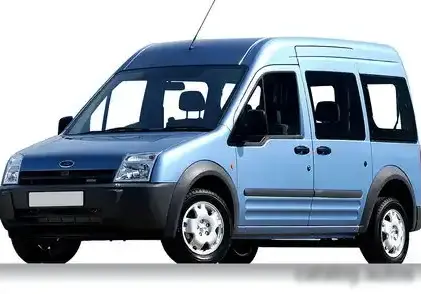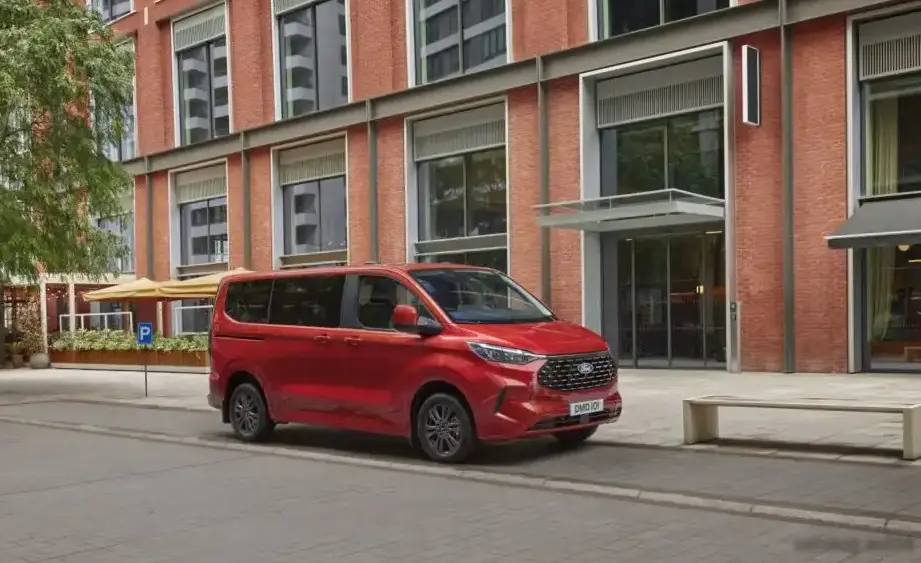
The Ford Tourneo Custom II L1 2.0 EcoBlue (170 Hp) AWD Automatic represents Ford’s entry into the modern, versatile passenger van segment, launched in July 2023. Positioned as a mid-range offering within the Tourneo Custom II lineup, this variant balances practicality, fuel efficiency, and all-weather capability. It builds upon the foundation of the first-generation Tourneo Custom, offering increased space, improved technology, and a more refined driving experience. The L1 designation indicates the short wheelbase version, making it particularly suitable for urban environments and tighter parking situations. This model is primarily targeted towards families, shuttle services, and businesses requiring a flexible and comfortable transportation solution in the European market, though it is increasingly available in other regions.
Technical Specifications
| Brand | Ford |
| Model | Tourneo Custom |
| Generation | Tourneo Custom II L1 |
| Type (Engine) | 2.0 EcoBlue (170 Hp) AWD Automatic |
| Start of production | July, 2023 |
| Powertrain Architecture | Internal Combustion engine |
| Body type | Van |
| Seats | 8-9 |
| Doors | 4-5 |
| Fuel consumption at Low speed (WLTP) | 11.1-12.2 l/100 km (21.2 – 19.3 US mpg) |
| Fuel consumption at Medium speed (WLTP) | 8.1-9.8 l/100 km (29 – 24 US mpg) |
| Fuel consumption at high speed (WLTP) | 7.2-9.6 l/100 km (32.7 – 24.5 US mpg) |
| Fuel consumption at very high speed (WLTP) | 9.2-13.3 l/100 km (25.6 – 17.7 US mpg) |
| Combined fuel consumption (WLTP) | 8.6-11.3 l/100 km (27.4 – 20.8 US mpg) |
| CO2 emissions (WLTP) | 225-296 g/km |
| Fuel Type | Diesel |
| Emission standard | Euro 6.2 |
| Weight-to-power ratio | 13.7 kg/Hp, 72.9 Hp/tonne |
| Weight-to-torque ratio | 6 kg/Nm, 167.2 Nm/tonne |
| Power | 170 Hp |
| Power per litre | 85.2 Hp/l |
| Torque | 390 Nm (287.65 lb.-ft.) |
| Engine layout | Front, Transverse |
| Engine Model/Code | BKAA |
| Engine displacement | 1996 cm3 (121.8 cu. in.) |
| Number of cylinders | 4 |
| Engine configuration | Inline |
| Cylinder Bore | 84.01 mm (3.31 in.) |
| Piston Stroke | 90.03 mm (3.54 in.) |
| Compression ratio | 16.5:1 |
| Number of valves per cylinder | 4 |
| Fuel injection system | Diesel Commonrail |
| Engine aspiration | Turbocharger, Intercooler |
| Valvetrain | DOHC |
| Engine oil capacity | 9.6 l (10.14 US qt | 8.45 UK qt) |
| Coolant | 12.7 l (13.42 US qt | 11.17 UK qt) |
| Kerb Weight | 2332-2356 kg (5141.18 – 5194.09 lbs.) |
| Max. weight | 3275-3300 kg (7220.14 – 7275.25 lbs.) |
| Max load | 943-944 kg (2078.96 – 2081.16 lbs.) |
| Trunk (boot) space – minimum | 672 l (23.73 cu. ft.) |
| Trunk (boot) space – maximum | 4683 l (165.38 cu. ft.) |
| Fuel tank capacity | 55 l (14.53 US gal | 12.1 UK gal) |
| AdBlue tank | 20 l (5.28 US gal | 4.4 UK gal) |
| Permitted trailer load with brakes (12%) | 2400 kg (5291.09 lbs.) |
| Permitted trailer load without brakes | 750 kg (1653.47 lbs.) |
| Length | 5050 mm (198.82 in.) |
| Width | 2032 mm (80 in.) |
| Width with mirrors folded | 2148 mm (84.57 in.) |
| Width including mirrors | 2275 mm (89.57 in.) |
| Height | 1959-2040 mm (77.13 – 80.31 in.) |
| Wheelbase | 3100 mm (122.05 in.) |
| Front track | 1730 mm (68.11 in.) |
| Rear (Back) track | 1721 mm (67.76 in.) |
| Front overhang | 958 mm (37.72 in.) |
| Rear overhang | 992 mm (39.06 in.) |
| Ride height (ground clearance) | 140 mm (5.51 in.) |
| Minimum turning circle (turning diameter) | 11.6-12.3 m (38.06 – 40.35 ft.) |
| Approach angle | 16.5° |
| Departure angle | 16.4° |
| Drivetrain Architecture | The Internal combustion engine (ICE) drives the front wheels permanently, and the rear wheels are driven through an electrically or mechanically operated clutch if necessary. |
| Drive wheel | All wheel drive (4×4) |
| Number of gears and type of gearbox | 8 gears, automatic transmission |
| Front suspension | Independent, type McPherson with coil spring and anti-roll bar |
| Rear suspension | Independent coil spring, Trailing arm |
| Front brakes | Ventilated discs, 308 mm |
| Rear brakes | Ventilated discs, 304 mm |
| Assisting systems | ABS (Anti-lock braking system) |
| Steering type | Steering rack and pinion |
| Power steering | Electric Steering |
| Tires size | 215/60 R17; 235/50 R19 |
| Wheel rims size | 6.5J x 17; 7.5J x 19 |
Powertrain & Engine Architecture
At the heart of the Tourneo Custom II L1 2.0 EcoBlue AWD Automatic lies the Ford BKAA engine, a 1996cc inline four-cylinder diesel. This engine is part of Ford’s EcoBlue family, known for its focus on efficiency and reduced emissions. The BKAA utilizes a common-rail direct fuel injection system, delivering fuel at extremely high pressure for optimized combustion. A turbocharger with intercooling further enhances performance by forcing more air into the cylinders. The engine features a double overhead camshaft (DOHC) valvetrain with four valves per cylinder, contributing to improved breathing and power output. The 170 horsepower and 390 Nm (287.65 lb-ft) of torque are respectable figures for this class of vehicle. Paired with this engine is an eight-speed automatic transmission, providing smooth and efficient gear changes. This transmission is crucial for managing the engine’s torque and delivering a comfortable driving experience, especially when fully loaded or navigating hilly terrain.
Driving Characteristics
The 2.0 EcoBlue 170 hp engine, coupled with the eight-speed automatic transmission and all-wheel drive, delivers a competent, if not exhilarating, driving experience. Acceleration is adequate for everyday driving, but the van’s weight is noticeable, particularly when overtaking. The automatic transmission is well-tuned, providing smooth shifts and keeping the engine within its optimal power band. The all-wheel-drive system enhances traction, particularly on slippery surfaces, making it a safer option in inclement weather. Compared to the higher-output 185 hp version, this variant offers slightly less performance, but the difference is not dramatic. Compared to manual transmission versions, the automatic prioritizes convenience over driver engagement. The gear ratios are optimized for fuel efficiency and comfortable cruising, rather than outright speed.
Equipment & Trim Levels
The Tourneo Custom II L1 2.0 EcoBlue (170 Hp) AWD Automatic typically comes equipped with a solid array of standard features. These include air conditioning, power windows, central locking, and a basic audio system with Bluetooth connectivity. Safety features such as ABS, Electronic Stability Control (ESC), and multiple airbags are also standard. Higher trim levels offer upgrades such as a touchscreen infotainment system with navigation, parking sensors, a rearview camera, and more luxurious interior upholstery. Optional extras include a panoramic sunroof, leather seats, and advanced driver-assistance systems (ADAS) like adaptive cruise control and lane-keeping assist.
Chassis & Braking
The Tourneo Custom II L1 utilizes an independent suspension setup, with McPherson struts at the front and a trailing arm configuration at the rear. This provides a comfortable ride quality, even when the van is loaded. The chassis is reinforced to handle the increased weight and demands of commercial use. Braking duties are handled by ventilated discs on all four wheels, providing ample stopping power. The ABS system prevents wheel lockup during hard braking, enhancing safety. Stabilizer bars are fitted to both the front and rear axles to reduce body roll during cornering.
Market Reception & Comparison
The Ford Tourneo Custom II L1 2.0 EcoBlue (170 Hp) AWD Automatic has been generally well-received by critics and consumers alike. It’s praised for its practicality, spacious interior, and comfortable ride. The fuel economy, while not exceptional, is competitive within its segment. Compared to other vans in its class, such as the Volkswagen Multivan and Mercedes-Benz Vito, the Tourneo Custom offers a compelling value proposition, often undercutting its rivals in price. The 170 hp engine strikes a good balance between performance and fuel efficiency, making it a popular choice for those who prioritize practicality over outright speed. Reliability reports suggest that the EcoBlue engine is generally robust, but regular maintenance is crucial to ensure long-term durability.
Legacy
The Ford Tourneo Custom II L1 2.0 EcoBlue (170 Hp) AWD Automatic is poised to become a reliable and popular choice in the used car market. The EcoBlue engine, when properly maintained, is known for its longevity. The eight-speed automatic transmission is also generally considered to be durable. As with any diesel vehicle, it’s important to pay attention to the condition of the particulate filter and ensure that it’s regularly serviced. The all-wheel-drive system adds to the van’s appeal, particularly in regions with harsh winters or challenging road conditions. Overall, this variant represents a well-rounded and practical option for those seeking a versatile and comfortable passenger van.