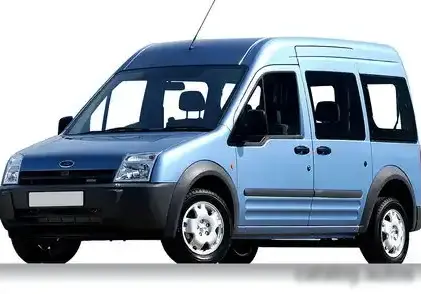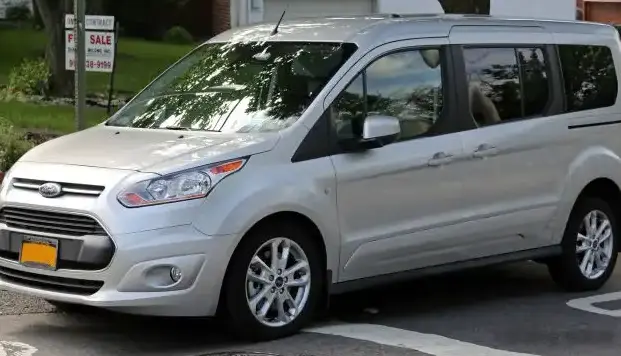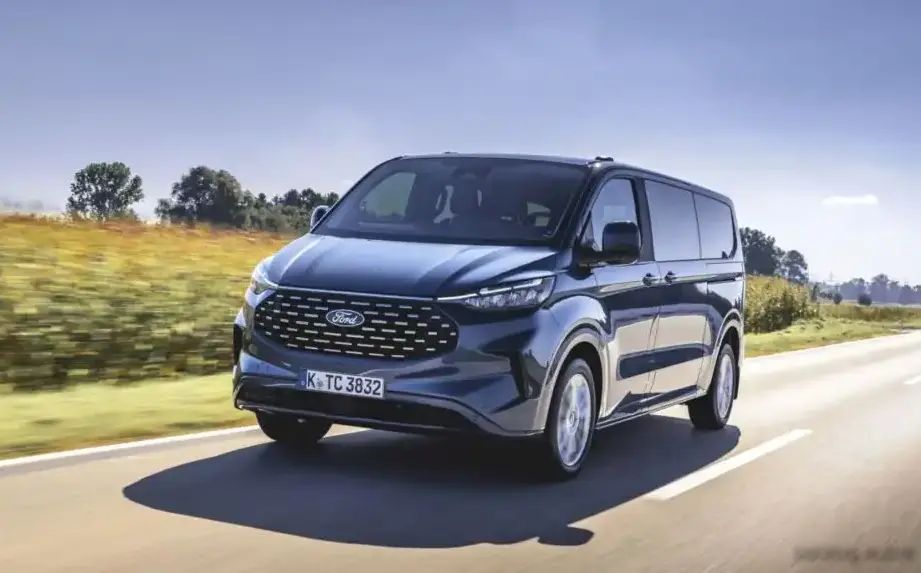
The Ford Tourneo Custom II L2 2.0 EcoBlue (170 Hp) Automatic represents a significant iteration in Ford’s European van lineup, introduced in July 2023. Positioned as a versatile passenger vehicle, the Tourneo Custom II L2 caters to both commercial and family needs, offering seating for eight to nine passengers. This specific variant, equipped with the 2.0-liter EcoBlue diesel engine and an eight-speed automatic transmission, occupies a mid-range position within the Tourneo Custom II L2 series, balancing performance, fuel efficiency, and convenience. It builds upon the foundation of the first-generation Tourneo Custom, offering improved technology, safety features, and a more refined driving experience. The “L2” designation indicates a long wheelbase, providing increased interior space and cargo capacity.
Technical Specifications
| Brand | Ford |
| Model | Tourneo Custom |
| Generation | Tourneo Custom II L2 |
| Type (Engine) | 2.0 EcoBlue (170 Hp) Automatic |
| Start of production | July, 2023 |
| Powertrain Architecture | Internal Combustion engine |
| Body type | Van |
| Seats | 8-9 |
| Doors | 4-5 |
| Fuel consumption at Low speed (WLTP) | 10.6-11.2 l/100 km (22.2 – 21 US mpg, 26.6 – 25.2 UK mpg, 9.4 – 8.9 km/l) |
| Fuel consumption at Medium speed (WLTP) | 7.6-8.2 l/100 km (30.9 – 28.7 US mpg, 37.2 – 34.4 UK mpg, 13.2 – 12.2 km/l) |
| Fuel consumption at high speed (WLTP) | 6.7-7.3 l/100 km (35.1 – 32.2 US mpg, 42.2 – 38.7 UK mpg, 14.9 – 13.7 km/l) |
| Fuel consumption at very high speed (WLTP) | 8.3-9 l/100 km (28.3 – 26.1 US mpg, 34 – 31.4 UK mpg, 12 – 11.1 km/l) |
| Combined fuel consumption (WLTP) | 8-8.6 l/100 km (29.4 – 27.4 US mpg, 35.3 – 32.8 UK mpg, 12.5 – 11.6 km/l) |
| CO2 emissions (WLTP) | 209-225 g/km |
| Fuel Type | Diesel |
| Emission standard | Euro 6.2 |
| Weight-to-power ratio | 13.4 kg/Hp, 74.8 Hp/tonne |
| Weight-to-torque ratio | 5.8 kg/Nm, 171.5 Nm/tonne |
| Power | 170 Hp |
| Power per litre | 85.2 Hp/l |
| Torque | 390 Nm (287.65 lb.-ft.) |
| Engine layout | Front, Transverse |
| Engine Model/Code | BKFA |
| Engine displacement | 1996 cm3 (121.8 cu. in.) |
| Number of cylinders | 4 |
| Engine configuration | Inline |
| Cylinder Bore | 84.01 mm (3.31 in.) |
| Piston Stroke | 90.03 mm (3.54 in.) |
| Compression ratio | 16.5:1 |
| Number of valves per cylinder | 4 |
| Fuel injection system | Diesel Commonrail |
| Engine aspiration | Turbocharger, Intercooler |
| Valvetrain | DOHC |
| Engine oil capacity | 9.6 l (10.14 US qt, 8.45 UK qt) |
| Coolant | 12.4 l (13.1 US qt, 10.91 UK qt) |
| Kerb Weight | 2274-2302 kg (5013.31 – 5075.04 lbs.) |
| Max. weight | 3225 kg (7109.91 lbs.) |
| Max load | 923-951 kg (2034.87 – 2096.6 lbs.) |
| Trunk (boot) space – minimum | 819 l (28.92 cu. ft.) |
| Trunk (boot) space – maximum | 5472 l (193.24 cu. ft.) |
| Fuel tank capacity | 55 l (14.53 US gal, 12.1 UK gal) |
| AdBlue tank | 20 l (5.28 US gal, 4.4 UK gal) |
| Permitted trailer load with brakes (12%) | 2500 kg (5511.56 lbs.) |
| Permitted trailer load without brakes | 750 kg (1653.47 lbs.) |
| Length | 5450 mm (214.57 in.) |
| Width | 2032 mm (80 in.) |
| Width with mirrors folded | 2148 mm (84.57 in.) |
| Width including mirrors | 2275 mm (89.57 in.) |
| Height | 1963-2031 mm (77.28 – 79.96 in.) |
| Wheelbase | 3500 mm (137.8 in.) |
| Front track | 1730 mm (68.11 in.) |
| Rear (Back) track | 1721 mm (67.76 in.) |
| Front overhang | 958 mm (37.72 in.) |
| Rear overhang | 992 mm (39.06 in.) |
| Ride height (ground clearance) | 140 mm (5.51 in.) |
| Minimum turning circle (turning diameter) | 12.8-13.6 m (41.99 – 44.62 ft.) |
| Front brakes | Ventilated discs, 308 mm |
| Rear brakes | Ventilated discs, 304 mm |
| Number of gears and type of gearbox | 8 gears, automatic transmission |
Powertrain & Engine Architecture
The heart of this Tourneo Custom variant is the 2.0-liter EcoBlue diesel engine, specifically the BKFA code. This engine is part of Ford’s EcoBlue family, known for its focus on efficiency and reduced emissions. The engine utilizes a cast iron block and aluminum cylinder head, incorporating a turbocharger with intercooling to boost power output. The diesel commonrail fuel injection system delivers fuel directly into the cylinders at high pressure, optimizing combustion. The engine features a double overhead camshaft (DOHC) valvetrain with four valves per cylinder, enhancing breathing and contributing to improved performance. The eight-speed automatic transmission, a key component of this variant, provides smooth and efficient gear changes. This transmission is designed to work seamlessly with the engine’s torque curve, offering optimal acceleration and fuel economy. The inclusion of a Start & Stop system further enhances fuel efficiency by automatically shutting off the engine when the vehicle is stationary.
Driving Characteristics
The 170 horsepower and 390 Nm (287.65 lb.-ft.) of torque delivered by the 2.0 EcoBlue engine, coupled with the eight-speed automatic transmission, provide a comfortable and capable driving experience. While not the most powerful configuration available in the Tourneo Custom II L2 range, it offers sufficient performance for everyday driving and carrying a full load of passengers. The automatic transmission’s gear ratios are tuned for both fuel efficiency and responsiveness. Compared to the manual transmission versions, the automatic prioritizes ease of use and convenience, particularly in urban environments. Acceleration is adequate, but noticeably slower than the higher-output engine options. The long wheelbase contributes to a stable ride, even when fully loaded, but can make maneuvering in tight spaces slightly more challenging.
Equipment & Trim Levels
The Tourneo Custom II L2 2.0 EcoBlue (170 Hp) Automatic typically comes equipped with a range of standard features designed for comfort and convenience. These include air conditioning, power windows, power mirrors, a basic audio system with Bluetooth connectivity, and a driver information display. Safety features such as ABS, Electronic Stability Control (ESC), and multiple airbags are also standard. Higher trim levels offer additional features such as a touchscreen infotainment system with navigation, parking sensors, a rearview camera, and upgraded interior upholstery. Optional extras could include alloy wheels, a panoramic sunroof, and advanced driver-assistance systems (ADAS) like adaptive cruise control and lane-keeping assist.
Chassis & Braking
The Tourneo Custom II L2 utilizes an independent front suspension with McPherson struts and a coil spring and anti-roll bar setup. The rear suspension employs an independent coil spring, trailing arm configuration. This suspension setup is designed to provide a comfortable ride while maintaining good handling characteristics. The braking system consists of ventilated discs on all four wheels, providing ample stopping power. The inclusion of ABS (Anti-lock Braking System) enhances safety by preventing wheel lockup during emergency braking. Electric power steering provides a light and responsive steering feel.
Market Reception & Comparison
The Tourneo Custom II L2 2.0 EcoBlue (170 Hp) Automatic was generally well-received by automotive critics as a practical and versatile people carrier. Its fuel economy, particularly on longer journeys, was praised. Compared to the higher-powered versions, this variant offered a more affordable entry point into the Tourneo Custom II L2 range, making it attractive to budget-conscious buyers. However, some reviewers noted that the performance could feel strained when the vehicle was fully loaded or traveling uphill. Compared to competitors like the Volkswagen Multivan and Mercedes-Benz Vito, the Tourneo Custom offered a competitive combination of price, space, and features.
Legacy
The 2.0 EcoBlue engine has proven to be a relatively reliable powertrain in the Ford lineup. While long-term durability will continue to be assessed, early reports suggest that the engine is robust and capable of handling high mileage. The eight-speed automatic transmission has also demonstrated good reliability. On the used car market, the Tourneo Custom II L2 2.0 EcoBlue (170 Hp) Automatic represents a good value proposition for those seeking a spacious and practical people carrier. Its fuel efficiency and relatively low running costs make it an attractive option for families and businesses alike. Regular maintenance, including oil changes and adherence to Ford’s recommended service intervals, is crucial for ensuring the longevity of this powertrain.