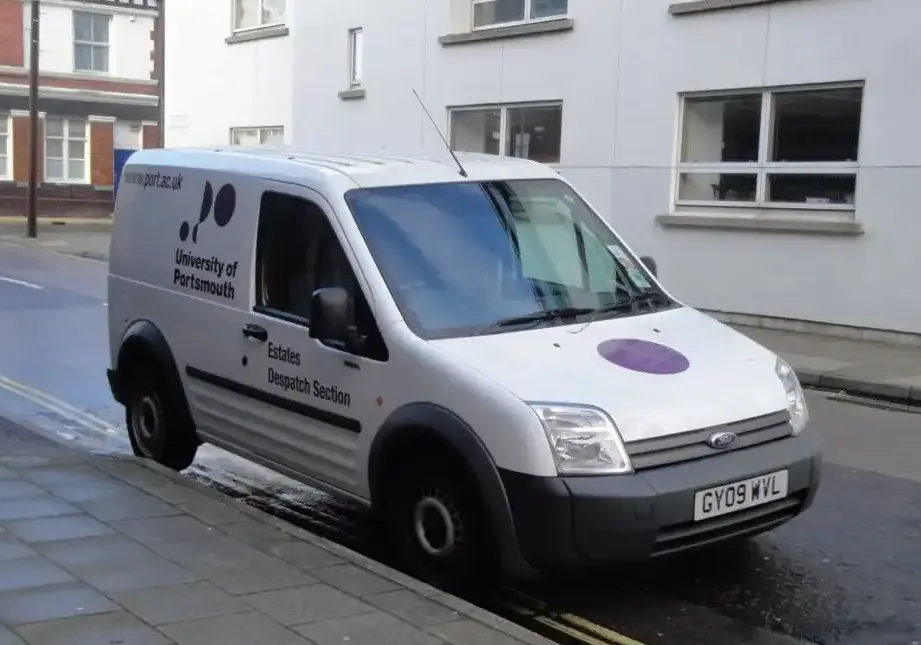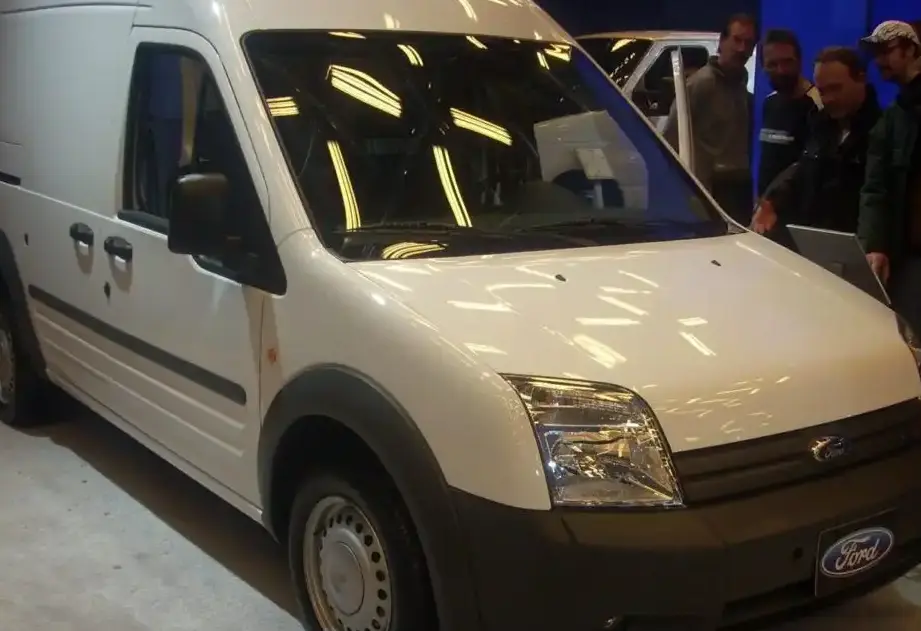
The Ford Transit Connect, introduced in 2002, represented Ford’s entry into the compact commercial van segment in Europe. Designed and initially built in Turkey, it quickly gained popularity for its car-like handling, fuel efficiency, and versatility. The first generation, and specifically the facelifted version launched in 2009, offered a range of engine and body configurations. This article focuses on the Ford Transit Connect I (facelift 2009) Crew Van L1H1 powered by the 1.8 TDCi engine producing 110 horsepower. This variant was positioned as a mid-range offering, balancing affordability with practicality for businesses and families needing both passenger and cargo space.
Technical Specifications
| Brand | Ford |
| Model | Transit Connect |
| Generation | Transit Connect I (facelift 2009) Crew Van L1H1 |
| Type (Engine) | 1.8 TDCi (110 Hp) |
| Start of production | 2009 |
| End of production | September, 2011 |
| Powertrain Architecture | Internal Combustion engine |
| Body type | Minivan |
| Seats | 5 |
| Doors | 5 |
| Fuel Type | Diesel |
| Emission standard | Euro 4 |
| Weight-to-power ratio | 13.8 kg/Hp, 72.5 Hp/tonne |
| Weight-to-torque ratio | 5.4 kg/Nm, 184.6 Nm/tonne |
| Power | 110 Hp @ 3500 rpm |
| Power per litre | 62.7 Hp/l |
| Torque | 280 Nm @ 1500-3200 rpm (206.52 lb.-ft. @ 1500-3200 rpm) |
| Engine layout | Front, Transverse |
| Engine Model/Code | Duratorq / RWPA, RWPB, RWPC, RWPD |
| Engine displacement | 1753 cm3 (106.97 cu. in.) |
| Number of cylinders | 4 |
| Engine configuration | Inline |
| Cylinder Bore | 82.5 mm (3.25 in.) |
| Piston Stroke | 82 mm (3.23 in.) |
| Compression ratio | 17.1:1 |
| Number of valves per cylinder | 2 |
| Fuel injection system | Diesel Commonrail |
| Engine aspiration | Turbocharger, Intercooler |
| Valvetrain | SOHC |
| Engine oil capacity | 5.6 l (5.92 US qt | 4.93 UK qt) |
| Coolant | 7 l (7.4 US qt | 6.16 UK qt) |
| Kerb Weight | 1517-1532 kg (3344.41 – 3377.48 lbs.) |
| Max. weight | 2240 kg (4938.35 lbs.) |
| Max load | 708-723 kg (1560.87 – 1593.94 lbs.) |
| Trunk (boot) space – minimum | 1400 l (49.44 cu. ft.) |
| Trunk (boot) space – maximum | 2600 l (91.82 cu. ft.) |
| Fuel tank capacity | 60 l (15.85 US gal | 13.2 UK gal) |
| Length | 4275 mm (168.31 in.) |
| Width | 1795 mm (70.67 in.) |
| Width including mirrors | 2044 mm (80.47 in.) |
| Height | 1815 mm (71.46 in.) |
| Wheelbase | 2664 mm (104.88 in.) |
| Front track | 1505 mm (59.25 in.) |
| Rear (Back) track | 1552 mm (61.1 in.) |
| Front overhang | 861 mm (33.9 in.) |
| Rear overhang | 749 mm (29.49 in.) |
| Ride height (ground clearance) | 166 mm (6.54 in.) |
| Minimum turning circle (turning diameter) | 11 m (36.09 ft.) |
| Drivetrain Architecture | The Internal combustion engine (ICE) drives the front wheels of the vehicle. |
| Drive wheel | Front wheel drive |
| Number of gears and type of gearbox | 5 gears, manual transmission |
| Front suspension | Independent, type McPherson with coil spring and anti-roll bar |
| Rear suspension | Transverse stabilizer, Leaf spring |
| Front brakes | Ventilated discs |
| Rear brakes | Disc |
| Assisting systems | ABS (Anti-lock braking system) |
| Steering type | Steering rack and pinion |
| Power steering | Hydraulic Steering |
| Tires size | 195/65 R15 |
| Wheel rims size | 6J x 15 |
INTRODUCTION
The 2009 facelift of the first-generation Ford Transit Connect brought subtle styling updates and, crucially, revised engine options. The 1.8 TDCi engine, in its 110 horsepower guise, was a popular choice for those seeking a balance between fuel economy and usable performance. Built on the Ford’s global C170 platform (also known as the 1HX0/A3 platform), the Transit Connect aimed to provide a more comfortable and refined experience than traditional commercial vans. The Crew Van L1H1 configuration, denoting a short wheelbase (L1) and low roof height (H1), combined with the five-seat layout, made it particularly appealing to small businesses and families needing a versatile vehicle capable of carrying both passengers and goods.
Powertrain & Engine Architecture
The heart of this Transit Connect variant is the Ford Duratorq 1.8 TDCi engine, identified by engine codes RWPA, RWPB, RWPC, and RWPD. This engine is a four-cylinder, inline diesel utilizing a common rail direct injection system. The common rail system, operating at very high pressures, allows for precise fuel delivery, contributing to improved combustion efficiency and reduced emissions. The engine features a single overhead camshaft (SOHC) valvetrain operating two valves per cylinder. A turbocharger with an intercooler is employed to increase power output by forcing more air into the cylinders. The 1.8L engine produces 110 horsepower at 3500 rpm and 280 Nm (206.52 lb-ft) of torque between 1500 and 3200 rpm. This torque curve provides good low-end grunt, making it suitable for carrying loads. The engine is paired with a five-speed manual transmission, which was the standard offering for this configuration. While an automatic transmission was available on some Transit Connect models, it was not typically paired with the 110 hp 1.8 TDCi engine.
Driving Characteristics
The 110 hp 1.8 TDCi engine, coupled with the five-speed manual transmission, delivers adequate performance for everyday driving. Acceleration is not brisk, but the readily available torque makes it easy to maintain speed on highways and navigate city streets. The gear ratios are well-suited for maximizing fuel efficiency, but this comes at the expense of outright performance. Compared to the higher-output 1.8 TDCi (125 hp) or the 2.0-liter petrol variants, the 110 hp version feels noticeably less powerful, especially when fully loaded. However, the lower power output also contributes to better fuel economy. The Transit Connect’s car-like handling, thanks to its independent front suspension and relatively compact size, makes it surprisingly enjoyable to drive. The hydraulic power steering provides a direct and responsive feel.
Equipment & Trim Levels
The 2009 facelifted Transit Connect Crew Van L1H1 1.8 TDCi typically came equipped with features such as power windows, central locking, and an adjustable steering column. Safety features included ABS (Anti-lock Braking System) and driver and passenger airbags. Interior upholstery was typically cloth, with a durable and practical design. Optional extras included air conditioning, a CD player, and alloy wheels. The Crew Van configuration featured a second row of seats, allowing for the transport of up to five passengers. The rear seats could be folded or removed to create additional cargo space. The dashboard layout was functional and straightforward, prioritizing usability over aesthetics.
Chassis & Braking
The Transit Connect utilizes an independent McPherson strut suspension system at the front, providing a comfortable ride and good handling characteristics. The rear suspension employs a transverse stabilizer and leaf springs, a more cost-effective solution that prioritizes load-carrying capacity. The braking system consists of ventilated discs at the front and solid discs at the rear. The ABS system helps to prevent wheel lockup during hard braking, enhancing safety. The vehicle’s relatively light weight, compared to larger vans, contributes to its nimble handling and reasonable braking performance.
Market Reception & Comparison
The Ford Transit Connect 1.8 TDCi (110 hp) was generally well-received by critics for its practicality, fuel efficiency, and car-like driving experience. However, some reviewers noted that the engine could feel underpowered when fully loaded or when driving on steep inclines. Compared to the 125 hp version of the same engine, the 110 hp variant offered slightly better fuel economy but at the cost of performance. The 2.0-liter petrol engine provided more power but was less fuel-efficient. The Transit Connect competed with other compact vans such as the Volkswagen Caddy, Citroën Berlingo, and Renault Kangoo. The Ford offered a compelling combination of features and value, making it a popular choice in its segment.
Legacy
The Duratorq 1.8 TDCi engine, while not known for being exceptionally refined, proved to be relatively reliable. Common issues include turbocharger wear and potential problems with the fuel injection system, but these are generally manageable with regular maintenance. Today, used Ford Transit Connects from this era are still relatively common and offer an affordable and practical transportation solution. The 1.8 TDCi (110 hp) variant remains a popular choice for those seeking a fuel-efficient and dependable van for light commercial or family use. Its simple mechanical design and readily available parts contribute to its continued appeal in the used car market.