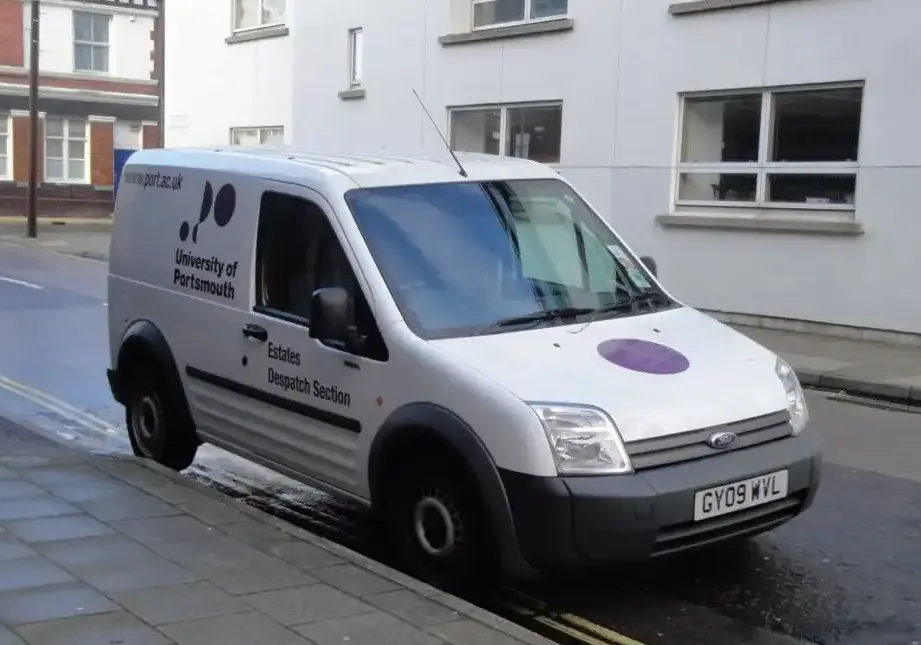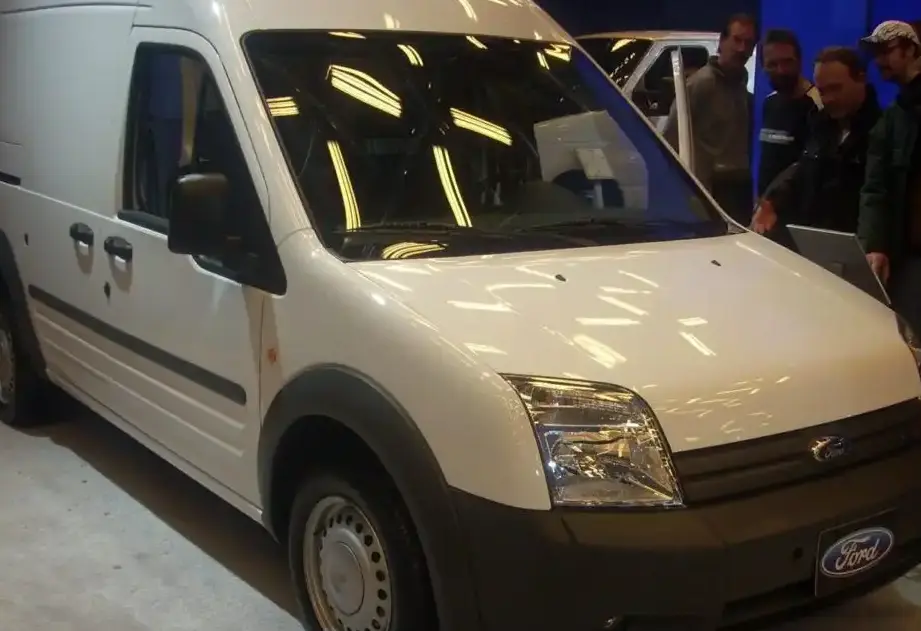
The Ford Transit Connect, introduced in 2002, represented Ford’s entry into the compact commercial van segment in Europe. Designed and initially built in Turkey, it quickly gained popularity for its car-like handling, fuel efficiency, and versatility. The first generation, and specifically the facelifted version launched in 2009, was offered in a variety of configurations, including cargo vans, passenger vans (Wagon), and the Crew Van variant. This article focuses on the Ford Transit Connect I (facelift 2009) Crew Van L1H1 powered by the 1.8 TDCi engine producing 110 horsepower, a configuration sold primarily in Europe from 2011 to 2013. This variant occupied a mid-range position in the lineup, offering a balance between affordability, practicality, and reasonable performance.
Technical Specifications
| Brand | Ford |
| Model | Transit Connect |
| Generation | Transit Connect I (facelift 2009) Crew Van L1H1 |
| Type (Engine) | 1.8 TDCi (110 Hp) DPF |
| Start of production | September, 2011 |
| End of production | 2013 |
| Powertrain Architecture | Internal Combustion engine |
| Body type | Minivan |
| Seats | 5 |
| Doors | 5 |
| Fuel Type | Diesel |
| Emission standard | Euro 5 |
| Weight-to-power ratio | 13.7 kg/Hp, 73 Hp/tonne |
| Weight-to-torque ratio | 5.4 kg/Nm, 185.9 Nm/tonne |
| Power | 110 Hp @ 3700 rpm |
| Power per litre | 62.7 Hp/l |
| Torque | 280 Nm @ 1500-3200 rpm (206.52 lb.-ft. @ 1500-3200 rpm) |
| Engine layout | Front, Transverse |
| Engine Model/Code | Duratorq / RWPA, RWPB, RWPC, RWPD |
| Engine displacement | 1753 cm3 (106.97 cu. in.) |
| Number of cylinders | 4 |
| Engine configuration | Inline |
| Cylinder Bore | 82.5 mm (3.25 in.) |
| Piston Stroke | 82 mm (3.23 in.) |
| Compression ratio | 17.1:1 |
| Number of valves per cylinder | 2 |
| Fuel injection system | Diesel Commonrail |
| Engine aspiration | Turbocharger, Intercooler |
| Valvetrain | SOHC |
| Engine oil capacity | 5.6 l (5.92 US qt | 4.93 UK qt) |
| Coolant | 7 l (7.4 US qt | 6.16 UK qt) |
| Kerb Weight | 1506 kg (3320.16 lbs.) |
| Max. weight | 2240 kg (4938.35 lbs.) |
| Max load | 734 kg (1618.19 lbs.) |
| Trunk (boot) space – minimum | 1400 l (49.44 cu. ft.) |
| Trunk (boot) space – maximum | 2600 l (91.82 cu. ft.) |
| Fuel tank capacity | 60 l (15.85 US gal | 13.2 UK gal) |
| Length | 4275 mm (168.31 in.) |
| Width | 1795 mm (70.67 in.) |
| Width including mirrors | 2044 mm (80.47 in.) |
| Height | 1815 mm (71.46 in.) |
| Wheelbase | 2664 mm (104.88 in.) |
| Front track | 1505 mm (59.25 in.) |
| Rear (Back) track | 1552 mm (61.1 in.) |
| Front overhang | 861 mm (33.9 in.) |
| Rear overhang | 749 mm (29.49 in.) |
| Ride height (ground clearance) | 166 mm (6.54 in.) |
| Minimum turning circle (turning diameter) | 11 m (36.09 ft.) |
| Drivetrain Architecture | The Internal combustion engine (ICE) drives the front wheels of the vehicle. |
| Drive wheel | Front wheel drive |
| Number of gears and type of gearbox | 5 gears, manual transmission |
| Front suspension | Independent, type McPherson with coil spring and anti-roll bar |
| Rear suspension | Transverse stabilizer, Leaf spring |
| Front brakes | Ventilated discs |
| Rear brakes | Disc |
| Assisting systems | ABS (Anti-lock braking system) |
| Steering type | Steering rack and pinion |
| Power steering | Hydraulic Steering |
| Tires size | 195/65 R15 |
| Wheel rims size | 6J x 15 |
INTRODUCTION
The 1.8 TDCi 110 hp variant of the Ford Transit Connect I (facelift 2009) Crew Van L1H1 was a popular choice for businesses and families needing a versatile and economical vehicle. Introduced in 2011, it sat within the first generation’s updated range, benefitting from styling revisions and improved equipment levels. The “L1H1” designation indicates a short wheelbase and standard roof height, making it relatively compact and easy to maneuver in urban environments. The Crew Van configuration offered seating for five, with a flexible cargo area behind the rear seats, making it suitable for both passenger and light commercial duties. This model was primarily aimed at the European market, where compact vans were, and continue to be, in high demand.
Powertrain & Engine Architecture
At the heart of this Transit Connect variant lies Ford’s 1.8-liter Duratorq TDCi diesel engine. This engine, identified by codes such as RWPA, RWPB, RWPC, and RWPD, is a four-cylinder, inline configuration. It utilizes a common rail direct injection system, delivering fuel at high pressure for improved combustion efficiency and reduced emissions. The engine is turbocharged and intercooled, enhancing power output and torque. The 110 horsepower peak is achieved at 3700 rpm, while the maximum torque of 280 Nm (206.52 lb-ft) is available between 1500 and 3200 rpm, providing good low-end grunt for everyday driving and load carrying. The engine features a single overhead camshaft (SOHC) valvetrain with two valves per cylinder. The engine is paired with a five-speed manual transmission, chosen for its simplicity and fuel efficiency. While an automatic transmission was offered on some Transit Connect models, it was not typically paired with this specific 110 hp engine.
Driving Characteristics
The 1.8 TDCi 110 hp engine, coupled with the five-speed manual gearbox, provides adequate performance for typical commercial and family use. Acceleration is not brisk, but the readily available torque makes it easy to maintain speed on inclines and when carrying a load. The gear ratios are well-suited to maximizing fuel economy, with fifth gear acting as an overdrive for relaxed cruising. Compared to the higher-output 125 hp version of the same engine, the 110 hp variant feels noticeably less powerful, particularly when fully loaded. However, it offers a more relaxed driving experience and potentially better fuel consumption. The manual transmission allows for greater driver control, but requires more driver involvement than an automatic. The handling is generally considered car-like, thanks to the McPherson strut front suspension and leaf spring rear suspension, offering a reasonable balance between comfort and stability.
Equipment & Trim Levels
The Crew Van L1H1 1.8 TDCi 110 hp typically came with a reasonable level of standard equipment. This included power steering, ABS, driver and passenger airbags, and a basic audio system. Interior upholstery was typically durable cloth. The Crew Van configuration featured a second row of seats, often with a 60/40 split-folding arrangement to maximize cargo space. Optional extras included air conditioning, electric windows, and upgraded audio systems. Higher trim levels, if selected, might have added features such as alloy wheels, body-colored bumpers, and more sophisticated interior trim.
Chassis & Braking
The Transit Connect utilizes a front-wheel-drive layout. The front suspension employs independent McPherson struts with coil springs and an anti-roll bar, providing a comfortable ride and predictable handling. The rear suspension uses a transverse stabilizer and leaf springs, a cost-effective solution for load-carrying capacity. The braking system consists of ventilated discs on the front wheels and solid discs on the rear, providing adequate stopping power for the vehicle’s weight. ABS (Anti-lock Braking System) is standard, enhancing safety during emergency braking situations.
Market Reception & Comparison
The 1.8 TDCi 110 hp Transit Connect was generally well-received by critics as a practical and economical choice. It was praised for its car-like handling, fuel efficiency, and versatile interior. However, some reviewers noted that the engine could feel underpowered when fully loaded or on steep inclines. Compared to the 125 hp version, the 110 hp model offered a lower purchase price and potentially better fuel economy, making it attractive to budget-conscious buyers. Compared to petrol-powered alternatives, the diesel engine provided significantly better fuel economy, a key selling point in Europe where diesel fuel was often cheaper than gasoline.
Legacy
The Ford Transit Connect I, and specifically the 1.8 TDCi 110 hp variant, has proven to be a relatively reliable vehicle. The Duratorq engine is known for its durability, although regular maintenance is crucial. Common issues include injector problems and wear on the turbocharger. On the used car market, these Transit Connects are still relatively common and affordable. They represent a good value for buyers needing a practical and economical van. The first-generation Transit Connect laid the foundation for the continued success of the model, establishing it as a popular choice in the compact commercial van segment.