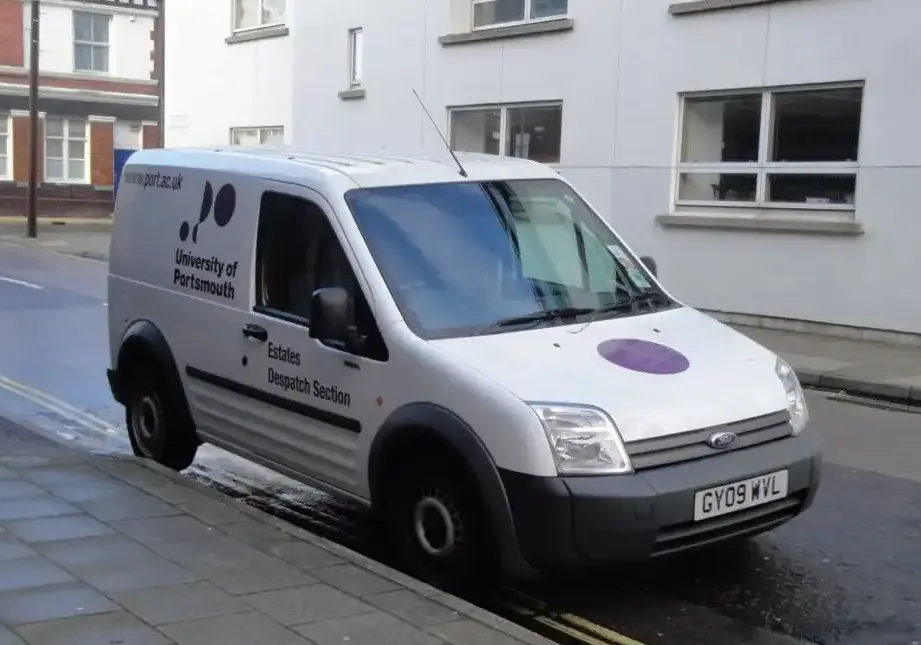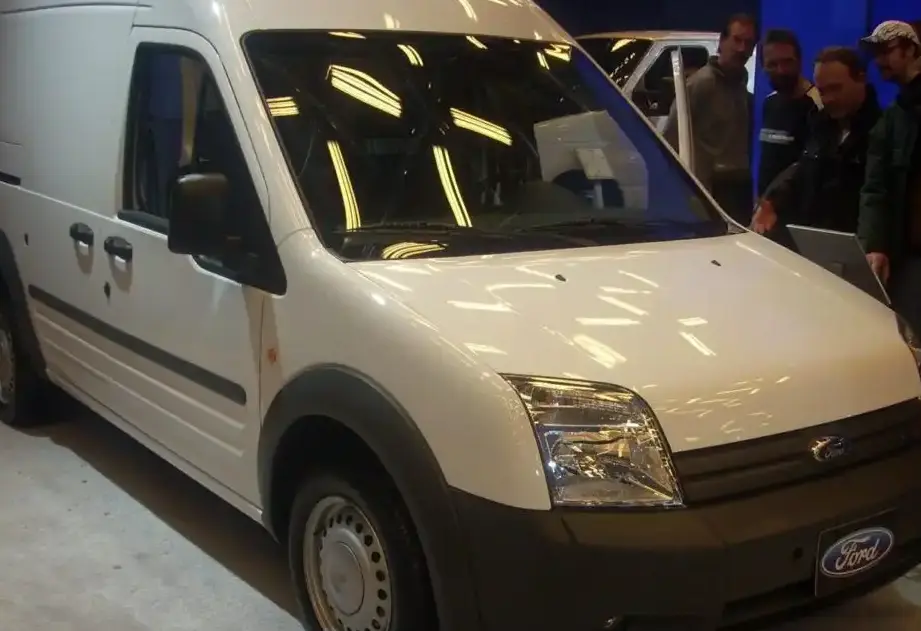
The Ford Transit Connect, introduced in Europe in 2002 and arriving in North America in 2009, quickly became a popular choice for small businesses and families needing a versatile and economical vehicle. The first generation, and specifically the facelifted version launched in 2009, offered a range of engine and body configurations. This article focuses on the Crew Van L1H1 variant equipped with the 1.8 TDCi diesel engine producing 75 horsepower, a configuration sold primarily in Europe from September 2011 to 2013. This model represented an entry-level option within the Transit Connect lineup, prioritizing fuel efficiency and practicality over outright performance.
Technical Specifications
| Brand | Ford |
| Model | Transit Connect |
| Generation | Transit Connect I (facelift 2009) Crew Van L1H1 |
| Type (Engine) | 1.8 TDCi (75 Hp) DPF |
| Start of production | September, 2011 |
| End of production | 2013 |
| Powertrain Architecture | Internal Combustion engine |
| Body type | Minivan |
| Seats | 5 |
| Doors | 5 |
| Fuel Type | Diesel |
| Emission standard | Euro 5 |
| Weight-to-power ratio | 20.1 kg/Hp, 49.8 Hp/tonne |
| Weight-to-torque ratio | 6.8 kg/Nm, 146.1 Nm/tonne |
| Power | 75 Hp @ 4000 rpm |
| Power per litre | 42.8 Hp/l |
| Torque | 220 Nm @ 1900 rpm (162.26 lb.-ft. @ 1900 rpm) |
| Engine layout | Front, Transverse |
| Engine Model/Code | Duratorq / BHPA, P7PA, R2PA |
| Engine displacement | 1753 cm3 (106.97 cu. in.) |
| Number of cylinders | 4 |
| Engine configuration | Inline |
| Cylinder Bore | 82.5 mm (3.25 in.) |
| Piston Stroke | 82 mm (3.23 in.) |
| Compression ratio | 19.4:1 |
| Number of valves per cylinder | 2 |
| Fuel injection system | Diesel Commonrail |
| Engine aspiration | Turbocharger, Intercooler |
| Valvetrain | SOHC |
| Engine oil capacity | 5.6 l (5.92 US qt | 4.93 UK qt) |
| Coolant | 7 l (7.4 US qt | 6.16 UK qt) |
| Kerb Weight | 1506 kg (3320.16 lbs.) |
| Max. weight | 2240 kg (4938.35 lbs.) |
| Max load | 734 kg (1618.19 lbs.) |
| Trunk (boot) space – minimum | 1400 l (49.44 cu. ft.) |
| Trunk (boot) space – maximum | 2600 l (91.82 cu. ft.) |
| Fuel tank capacity | 60 l (15.85 US gal | 13.2 UK gal) |
| Length | 4275 mm (168.31 in.) |
| Width | 1795 mm (70.67 in.) |
| Width including mirrors | 2044 mm (80.47 in.) |
| Height | 1815 mm (71.46 in.) |
| Wheelbase | 2664 mm (104.88 in.) |
| Front track | 1505 mm (59.25 in.) |
| Rear (Back) track | 1552 mm (61.1 in.) |
| Front overhang | 861 mm (33.9 in.) |
| Rear overhang | 749 mm (29.49 in.) |
| Ride height (ground clearance) | 166 mm (6.54 in.) |
| Minimum turning circle (turning diameter) | 11 m (36.09 ft.) |
| Drivetrain Architecture | The Internal combustion engine (ICE) drives the front wheels of the vehicle. |
| Drive wheel | Front wheel drive |
| Number of gears and type of gearbox | 5 gears, manual transmission |
| Front suspension | Independent, type McPherson with coil spring and anti-roll bar |
| Rear suspension | Transverse stabilizer, Leaf spring |
| Front brakes | Ventilated discs |
| Rear brakes | Disc |
| Assisting systems | ABS (Anti-lock braking system) |
| Steering type | Steering rack and pinion |
| Power steering | Hydraulic Steering |
| Tires size | 195/65 R15 |
| Wheel rims size | 6J x 15 |
INTRODUCTION
The Ford Transit Connect I (facelift 2009) Crew Van L1H1 1.8 TDCi (75 Hp) DPF, produced from 2011 to 2013, was a compact commercial vehicle designed to bridge the gap between passenger cars and larger vans. Built on the Ford’s global C/C+ platform (1HX0/A3), it offered a unique combination of car-like handling, van-like practicality, and relatively low running costs. The “L1H1” designation indicates a short wheelbase (L1) and low roof height (H1). The Crew Van configuration provided seating for five passengers, making it suitable for small businesses requiring both cargo space and personnel transport. This 75 horsepower variant served as the entry point to the Transit Connect range, appealing to budget-conscious buyers.
Powertrain & Engine Architecture
At the heart of this Transit Connect variant lies the Ford Duratorq 1.8 TDCi diesel engine, specifically coded BHPA, P7PA, or R2PA depending on the specific market and emissions regulations. This engine is a four-cylinder, inline configuration, displacing 1753cc. It features a single overhead camshaft (SOHC) and utilizes a turbocharger with an intercooler to boost power and efficiency. The engine employs a Diesel Commonrail fuel injection system, delivering fuel directly into the cylinders at high pressure for optimized combustion. The 75 horsepower output is achieved at 4000 rpm, while peak torque of 220 Nm (162.26 lb-ft) is available from 1900 rpm. This relatively low peak torque figure is a defining characteristic of this engine. The engine’s high compression ratio of 19.4:1 is typical for diesel engines, contributing to their thermal efficiency. The engine is paired with a five-speed manual transmission, chosen for its simplicity and cost-effectiveness. While an automatic transmission was offered on some Transit Connect models, it was not available with this specific 75 hp engine.
Driving Characteristics
The 1.8 TDCi 75 hp engine, coupled with the five-speed manual transmission, provided adequate, but not exhilarating, performance. Acceleration was modest, and overtaking required careful planning. The engine’s torque curve meant that most of its usable power was available at lower engine speeds, making it suitable for urban driving and light-duty hauling. The gear ratios were optimized for fuel economy rather than outright speed. Compared to the more powerful 1.6-liter EcoBoost petrol engine or the higher-output diesel variants, this 1.8 TDCi felt noticeably slower. However, its lower power output also translated to improved fuel economy and reduced wear and tear on the drivetrain. The suspension, tuned for comfort and practicality, provided a reasonably smooth ride, even when fully loaded. The steering was light and precise, making it easy to maneuver in tight spaces.
Equipment & Trim Levels
The Crew Van L1H1 1.8 TDCi (75 Hp) DPF typically came with a basic level of equipment, reflecting its position as an entry-level model. Standard features generally included power steering, ABS, driver and passenger airbags, and a basic audio system. The interior was functional and durable, with hard-wearing cloth upholstery. The rear seats were typically configured as a 60/40 split-folding bench, allowing for flexible cargo configurations. Optional extras included air conditioning, electric windows, and upgraded audio systems. The dashboard layout was straightforward and easy to use, prioritizing functionality over aesthetics. The inclusion of a diesel particulate filter (DPF) was a key feature, ensuring compliance with Euro 5 emissions standards.
Chassis & Braking
The Transit Connect’s chassis featured an independent McPherson strut suspension at the front, providing good handling and ride comfort. The rear suspension utilized a transverse stabilizer and leaf springs, a cost-effective solution that offered adequate load-carrying capacity. The front brakes were ventilated discs, providing good stopping power, while the rear brakes were solid discs. The hydraulic power steering provided light and precise steering control. The vehicle’s relatively low weight (1506 kg / 3320.16 lbs) helped to compensate for the engine’s modest power output. The tires were typically 195/65 R15, offering a good balance of grip and fuel efficiency.
Market Reception & Comparison
The 1.8 TDCi 75 hp Transit Connect was generally well-received by critics as a practical and economical workhorse. However, its lack of power was often noted. Compared to the more powerful diesel variants, such as the 1.6 TDCi, it felt sluggish, especially when fully loaded. However, its superior fuel economy and lower purchase price made it an attractive option for businesses and individuals prioritizing cost-effectiveness. The manual transmission was praised for its smooth operation and precise shift quality. The spacious interior and flexible cargo configurations were also highlighted as key strengths. In terms of reliability, the Duratorq engine proved to be generally robust, although the DPF system could be prone to issues if not properly maintained.
Legacy
The Ford Transit Connect I, and specifically the 1.8 TDCi 75 hp variant, established a strong reputation for reliability and practicality. While not known for its performance, this engine proved to be durable and relatively inexpensive to maintain. In the used car market, these models remain popular choices for small businesses and individuals seeking an affordable and versatile vehicle. The Duratorq engine’s longevity means that many examples are still on the road today, testament to its robust design. However, potential buyers should be aware of the potential for DPF-related issues and ensure that the vehicle has been properly serviced throughout its life.