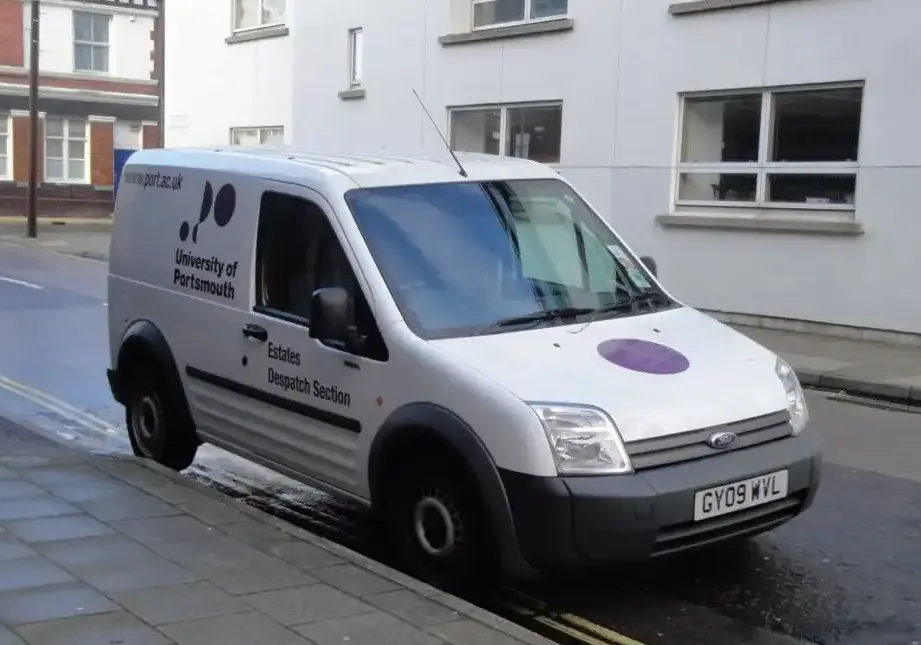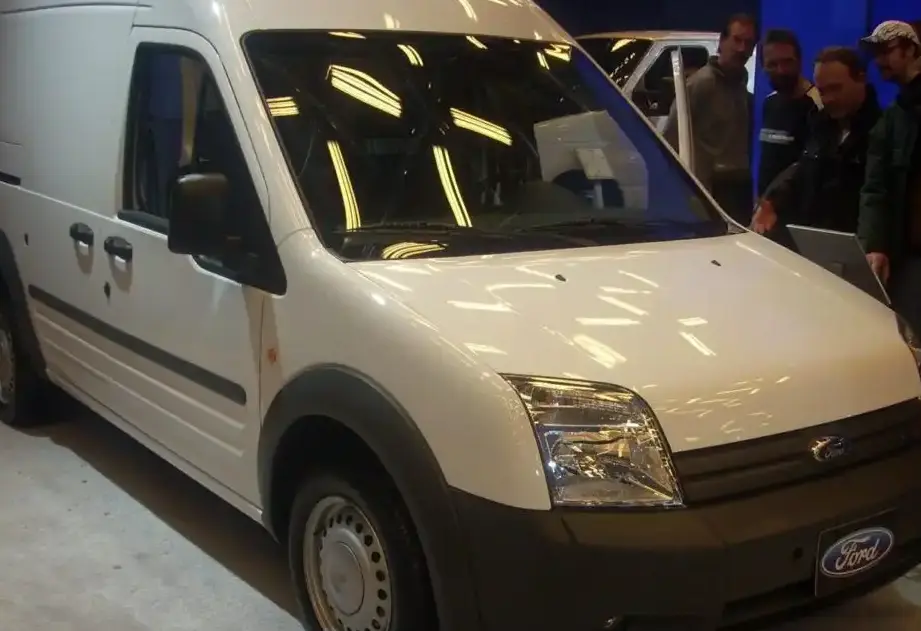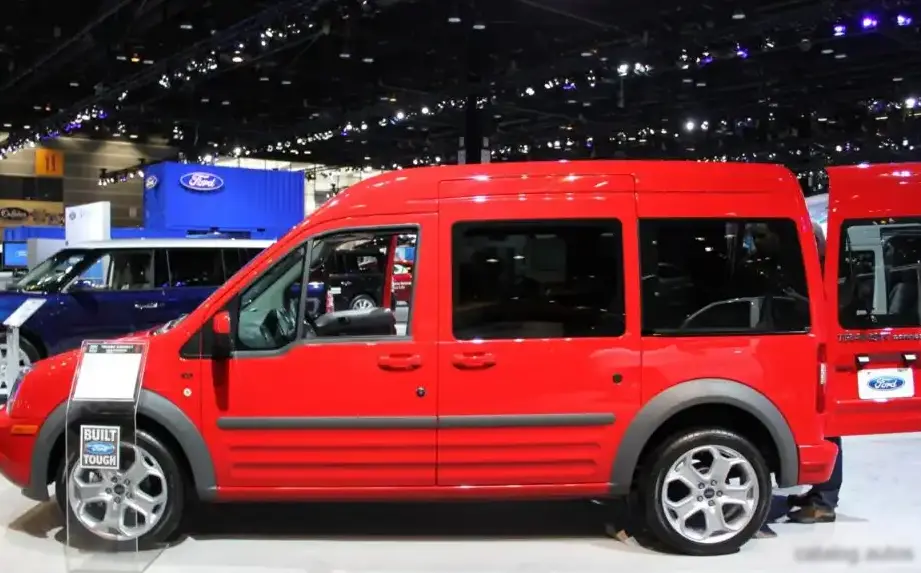
The Ford Transit Connect, introduced in 2002, represented Ford’s entry into the compact commercial van segment in Europe. Designed and initially built in Turkey, it was based on the Ford Focus platform, offering a more car-like driving experience than traditional vans. The first generation, and specifically the facelifted version launched in 2009, gained popularity for its versatility and fuel efficiency. This article focuses on the 2009-2011 facelifted Transit Connect Crew Van L2H2 variant equipped with the 1.8 TDCi engine producing 110 horsepower, a configuration aimed at balancing practicality with affordability. Production of this specific variant concluded in September 2011.
Technical Specifications
| Brand | Ford |
| Model | Transit Connect |
| Generation | Transit Connect I (facelift 2009) Crew Van L2H2 |
| Type (Engine) | 1.8 TDCi (110 Hp) |
| Start of production | 2009 |
| End of production | September, 2011 |
| Powertrain Architecture | Internal Combustion engine |
| Body type | Minivan |
| Seats | 5 |
| Doors | 5 |
| Fuel Type | Diesel |
| Emission standard | Euro 4 |
| Weight-to-power ratio | 14.3 kg/Hp, 69.9 Hp/tonne |
| Weight-to-torque ratio | 5.6 kg/Nm, 178 Nm/tonne |
| Power | 110 Hp @ 3500 rpm |
| Power per litre | 62.7 Hp/l |
| Torque | 280 Nm @ 1500-3200 rpm (206.52 lb.-ft. @ 1500-3200 rpm) |
| Engine layout | Front, Transverse |
| Engine Model/Code | Duratorq / RWPA, RWPB, RWPC, RWPD |
| Engine displacement | 1753 cm3 (106.97 cu. in.) |
| Number of cylinders | 4 |
| Engine configuration | Inline |
| Cylinder Bore | 82.5 mm (3.25 in.) |
| Piston Stroke | 82 mm (3.23 in.) |
| Compression ratio | 17.1:1 |
| Number of valves per cylinder | 2 |
| Fuel injection system | Diesel Commonrail |
| Engine aspiration | Turbocharger, Intercooler |
| Valvetrain | SOHC |
| Engine oil capacity | 5.6 l (5.92 US qt | 4.93 UK qt) |
| Coolant | 7 l (7.4 US qt | 6.16 UK qt) |
| Kerb Weight | 1573-1589 kg (3467.87 – 3503.15 lbs.) |
| Max. weight | 2340 kg (5158.82 lbs.) |
| Max load | 751-767 kg (1655.67 – 1690.95 lbs.) |
| Trunk (boot) space – minimum | 2100 l (74.16 cu. ft.) |
| Trunk (boot) space – maximum | 3400 l (120.07 cu. ft.) |
| Fuel tank capacity | 60 l (15.85 US gal | 13.2 UK gal) |
| Length | 4525 mm (178.15 in.) |
| Width | 1795 mm (70.67 in.) |
| Width including mirrors | 2044 mm (80.47 in.) |
| Height | 1980 mm (77.95 in.) |
| Wheelbase | 2912 mm (114.65 in.) |
| Front track | 1505 mm (59.25 in.) |
| Rear (Back) track | 1552 mm (61.1 in.) |
| Front overhang | 861 mm (33.9 in.) |
| Rear overhang | 751 mm (29.57 in.) |
| Ride height (ground clearance) | 166 mm (6.54 in.) |
| Minimum turning circle (turning diameter) | 11.9 m (39.04 ft.) |
| Drivetrain Architecture | The Internal combustion engine (ICE) drives the front wheels of the vehicle. |
| Drive wheel | Front wheel drive |
| Number of gears and type of gearbox | 5 gears, manual transmission |
| Front suspension | Independent, type McPherson with coil spring and anti-roll bar |
| Rear suspension | Transverse stabilizer, Leaf spring |
| Front brakes | Ventilated discs |
| Rear brakes | Disc |
| Assisting systems | ABS (Anti-lock braking system) |
| Steering type | Steering rack and pinion |
| Power steering | Hydraulic Steering |
| Tires size | 195/65 R15 |
| Wheel rims size | 6J x 15 |
INTRODUCTION
The 2009 facelift of the Ford Transit Connect brought subtle styling updates and improvements to the interior. The Crew Van L2H2 configuration, denoting a long wheelbase and high roof, offered increased cargo capacity and passenger space, making it suitable for small businesses or families needing a versatile vehicle. The 1.8 TDCi engine with 110 horsepower represented a mid-range offering in the Transit Connect lineup, positioned between the base 75 hp engine and the more powerful 125 hp variant. This configuration aimed to provide a balance between fuel economy, performance, and cost, appealing to buyers prioritizing practicality over outright speed.
Powertrain & Engine Architecture
The heart of this Transit Connect variant is the Ford Duratorq 1.8 TDCi engine, specifically coded RWPA, RWPB, RWPC, or RWPD depending on the specific calibration and market. This engine is a four-cylinder, inline diesel utilizing a common rail direct injection system. The common rail system, operating at very high pressures, allows for precise fuel delivery, optimizing combustion and reducing emissions. The engine features a single overhead camshaft (SOHC) valvetrain operating two valves per cylinder. A turbocharger with an intercooler is employed to increase power output by forcing more air into the cylinders. The intercooler cools the compressed air, further enhancing efficiency. The 110 horsepower and 280 Nm (206.52 lb-ft) of torque are respectable figures for a vehicle of this size and class. The engine is transversely mounted at the front of the vehicle. The transmission is a five-speed manual gearbox, chosen for its simplicity and efficiency.
Driving Characteristics
The 1.8 TDCi 110 hp engine, paired with the five-speed manual transmission, provides adequate performance for everyday driving. Acceleration is not brisk, but sufficient for merging onto highways and maintaining cruising speeds. The engine’s torque peak, available from 1500-3200 rpm, provides good pulling power, making it suitable for carrying loads. The gear ratios are well-spaced, allowing the engine to operate efficiently at various speeds. Compared to the lower-powered 75 hp version, the 110 hp model offers a noticeable improvement in responsiveness, particularly when loaded. However, it lacks the extra punch of the 125 hp variant. The suspension, tuned for comfort and load-carrying capability, provides a reasonably smooth ride, although it can feel somewhat bouncy when unladen. Steering is light and precise, making it easy to maneuver in urban environments.
Equipment & Trim Levels
The Crew Van L2H2 1.8 TDCi typically came with a reasonable level of standard equipment. This included power steering, ABS, a driver’s airbag, and basic audio system. The “Crew Van” designation indicates the presence of a second row of seats, increasing passenger capacity to five. Interior trim was functional and durable, with hard-wearing plastics dominating the cabin. Optional extras included air conditioning, electric windows, and upgraded audio systems. Higher trim levels offered features such as alloy wheels, body-colored bumpers, and more comfortable seating. The L2H2 configuration provided a generous cargo area behind the second row of seats, making it ideal for carrying tools, equipment, or luggage.
Chassis & Braking
The Transit Connect utilizes a front-wheel-drive layout. The front suspension consists of independent McPherson struts with coil springs and an anti-roll bar, providing a good balance of comfort and handling. The rear suspension employs a transverse stabilizer and leaf springs, designed to handle heavier loads. The braking system features ventilated discs on the front wheels and solid discs on the rear wheels. ABS (Anti-lock Braking System) is standard, enhancing safety during emergency braking. The steering system is a rack and pinion type with hydraulic power assistance, providing light and precise steering feel. The vehicle rides on 195/65 R15 tires mounted on 6J x 15 inch steel wheels.
Market Reception & Comparison
The Ford Transit Connect was generally well-received by critics for its practicality, fuel efficiency, and car-like driving experience. The 1.8 TDCi 110 hp engine was considered a good compromise between performance and economy. Compared to the base 75 hp model, the 110 hp version offered a noticeable improvement in drivability, making it a more appealing option for those who frequently carry loads or drive on highways. However, the 125 hp variant provided even more power, albeit at a higher price point. Fuel economy was a strong point for the 1.8 TDCi engine, typically achieving around 40-45 mpg on the combined cycle. Reliability was generally good, although some owners reported issues with the diesel particulate filter (DPF) and the fuel injection system.
Legacy
The first-generation Ford Transit Connect, including the 1.8 TDCi 110 hp variant, established a strong reputation for reliability and practicality. These vehicles remain relatively common on used car markets today, often sought after by small businesses and tradespeople. The Duratorq engine, while not without its quirks, is generally considered durable and relatively easy to maintain. The availability of spare parts is good, and the relatively simple mechanical design makes it accessible to independent mechanics. While newer generations of the Transit Connect offer more advanced features and improved performance, the first-generation model remains a viable and affordable option for those seeking a versatile and dependable commercial vehicle.