Technical Specifications
| Brand | Ford |
| Model | Transit Connect |
| Generation | Transit Connect I (facelift 2009) Crew Van L2H2 |
| Type (Engine) | 1.8 TDCi (110 Hp) DPF |
| Start of production | September, 2011 |
| End of production | 2013 |
| Powertrain Architecture | Internal Combustion engine |
| Body type | Minivan |
| Seats | 5 |
| Doors | 5 |
| Fuel Type | Diesel |
| Emission standard | Euro 5 |
| Weight-to-power ratio | 14.2 kg/Hp, 70.6 Hp/tonne |
| Weight-to-torque ratio | 5.6 kg/Nm, 179.8 Nm/tonne |
| Power | 110 Hp @ 3700 rpm |
| Power per litre | 62.7 Hp/l |
| Torque | 280 Nm @ 1500-3200 rpm (206.52 lb.-ft. @ 1500-3200 rpm) |
| Engine layout | Front, Transverse |
| Engine Model/Code | Duratorq / RWPA, RWPB, RWPC, RWPD |
| Engine displacement | 1753 cm3 (106.97 cu. in.) |
| Number of cylinders | 4 |
| Engine configuration | Inline |
| Cylinder Bore | 82.5 mm (3.25 in.) |
| Piston Stroke | 82 mm (3.23 in.) |
| Compression ratio | 17.1:1 |
| Number of valves per cylinder | 2 |
| Fuel injection system | Diesel Commonrail |
| Engine aspiration | Turbocharger, Intercooler |
| Valvetrain | SOHC |
| Engine oil capacity | 5.6 l (5.92 US qt | 4.93 UK qt) |
| Coolant | 7 l (7.4 US qt | 6.16 UK qt) |
| Kerb Weight | 1557 kg (3432.6 lbs.) |
| Max. weight | 2340 kg (5158.82 lbs.) |
| Max load | 783 kg (1726.22 lbs.) |
| Trunk (boot) space – minimum | 2100 l (74.16 cu. ft.) |
| Trunk (boot) space – maximum | 3400 l (120.07 cu. ft.) |
| Fuel tank capacity | 60 l (15.85 US gal | 13.2 UK gal) |
| Length | 4525 mm (178.15 in.) |
| Width | 1795 mm (70.67 in.) |
| Width including mirrors | 2044 mm (80.47 in.) |
| Height | 1980 mm (77.95 in.) |
| Wheelbase | 2912 mm (114.65 in.) |
| Front track | 1505 mm (59.25 in.) |
| Rear (Back) track | 1552 mm (61.1 in.) |
| Front overhang | 861 mm (33.9 in.) |
| Rear overhang | 751 mm (29.57 in.) |
| Ride height (ground clearance) | 166 mm (6.54 in.) |
| Minimum turning circle (turning diameter) | 11.9 m (39.04 ft.) |
| Drivetrain Architecture | The Internal combustion engine (ICE) drives the front wheels of the vehicle. |
| Drive wheel | Front wheel drive |
| Number of gears and type of gearbox | 5 gears, manual transmission |
| Front suspension | Independent, type McPherson with coil spring and anti-roll bar |
| Rear suspension | Transverse stabilizer, Leaf spring |
| Front brakes | Ventilated discs |
| Rear brakes | Disc |
| Assisting systems | ABS (Anti-lock braking system) |
| Steering type | Steering rack and pinion |
| Power steering | Hydraulic Steering |
| Tires size | 195/65 R15 |
| Wheel rims size | 6J x 15 |
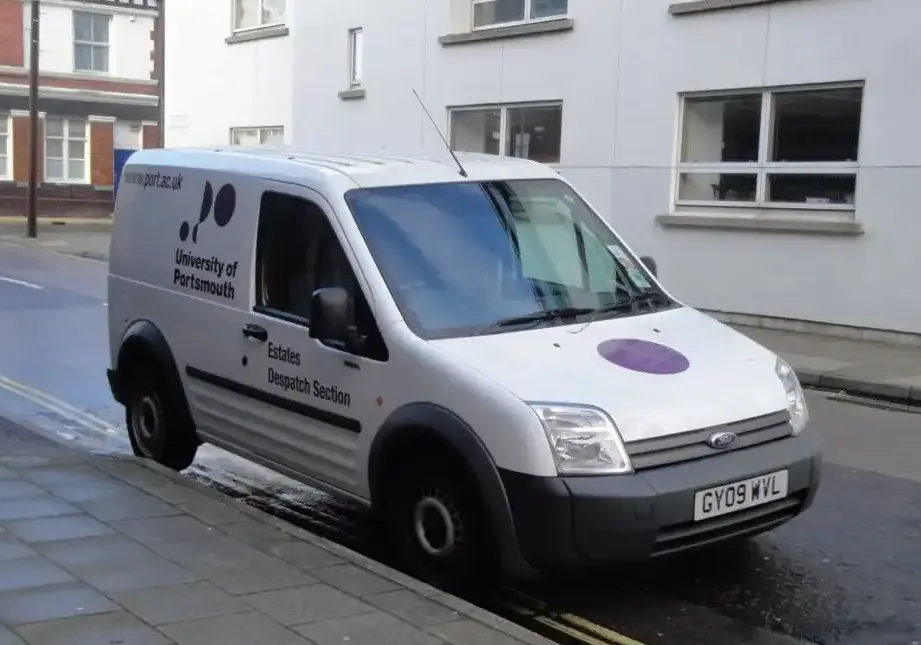
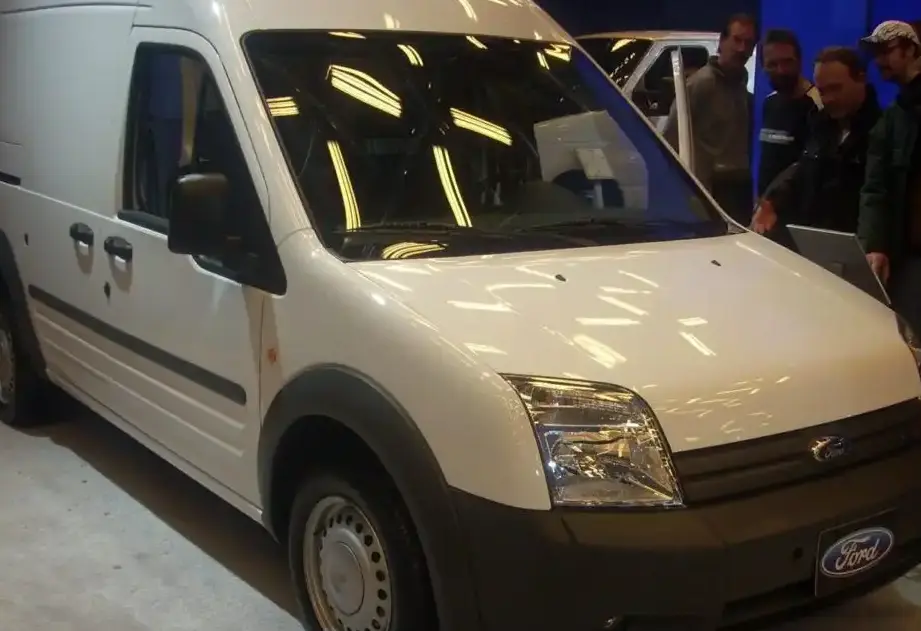
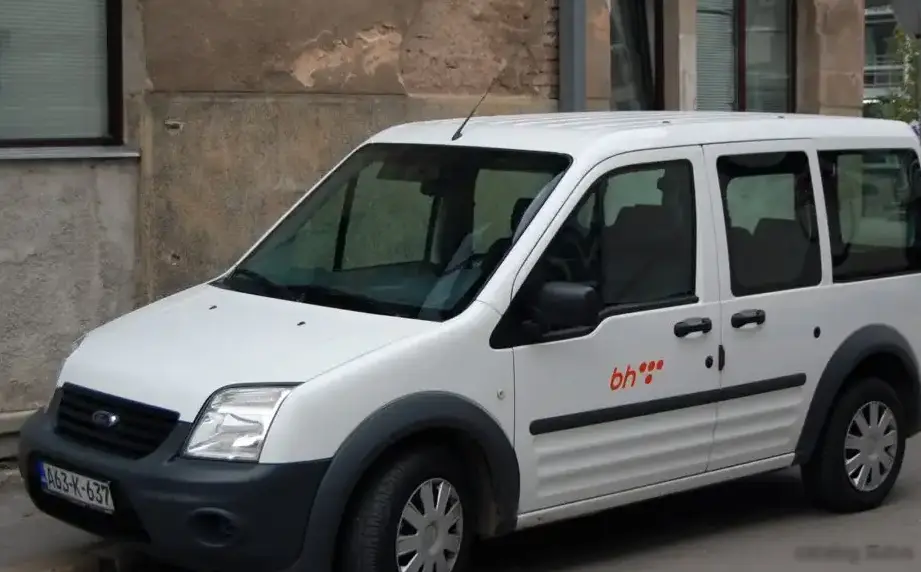
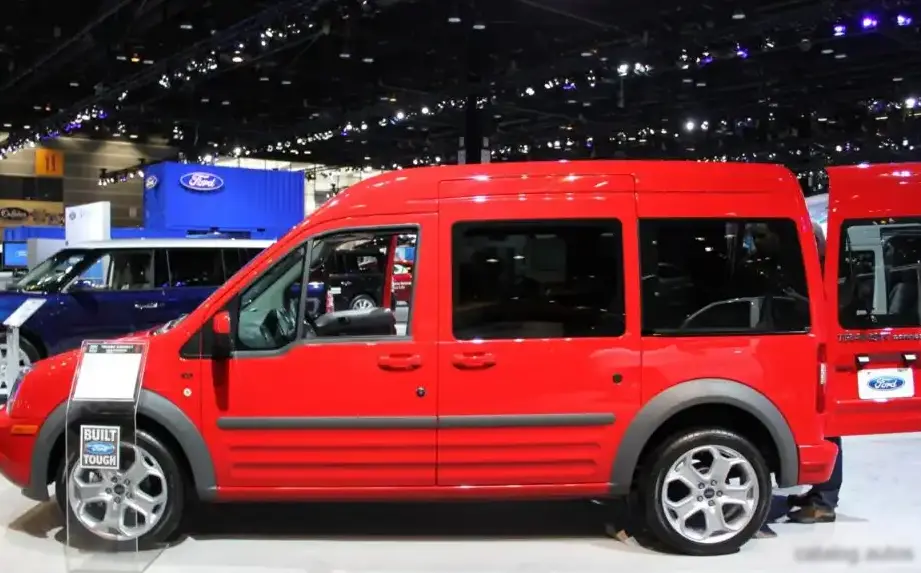
The Ford Transit Connect, launched in Europe in 2002 and arriving in North America in 2009, quickly gained popularity as a compact, fuel-efficient commercial and passenger vehicle. The first generation, internally designated as the 1HX0/A3 platform, offered a unique blend of car-like handling and van-like practicality. The 2009 facelift brought updated styling, improved safety features, and refinements to the powertrain. The Crew Van L2H2 variant, denoting a long wheelbase (L2) and high roof (H2), provided increased cargo and passenger space. The 1.8 TDCi engine with 110 horsepower, coupled with a manual transmission, was a common configuration, particularly in European markets, offering a balance between economy and usability.
Powertrain & Engine Architecture
The heart of this Transit Connect variant is the Ford Duratorq 1.8 TDCi diesel engine, identified by engine codes RWPA, RWPB, RWPC, and RWPD. This engine is a four-cylinder, inline configuration, utilizing a common rail direct injection system for optimized fuel delivery and combustion. The engine features a single overhead camshaft (SOHC) valvetrain operating two valves per cylinder. A turbocharger with an intercooler is employed to boost power and torque, mitigating turbo lag and improving overall efficiency. The 1.8L engine produces 110 horsepower at 3700 rpm and 280 Nm (206.52 lb-ft) of torque between 1500 and 3200 rpm. The engine’s relatively high compression ratio of 17.1:1 contributes to its efficiency. The 5-speed manual transmission was the standard offering for this variant, providing a balance between fuel economy and drivability. The transmission’s gear ratios were tuned to maximize the engine’s torque output, prioritizing low-end pulling power over high-speed acceleration.
Driving Characteristics
The 1.8 TDCi 110 hp Transit Connect Crew Van L2H2, with its manual transmission, offered a practical, if not particularly sporty, driving experience. Acceleration was adequate for everyday driving, but the van wasn’t designed for rapid speeds. The engine’s torque band provided sufficient power for hauling moderate loads and navigating city streets. The manual transmission allowed for greater driver control and contributed to improved fuel economy compared to an automatic. Compared to the higher-output 1.6-liter EcoBoost gasoline engine or the more powerful diesel options, this variant prioritized fuel efficiency and lower running costs. The longer wheelbase and higher roof of the L2H2 configuration did impact handling somewhat, making it less nimble than shorter wheelbase models, but the trade-off was significantly increased cargo capacity.
Equipment & Trim Levels
The Transit Connect Crew Van L2H2 1.8 TDCi (110 Hp) typically came with a reasonable level of standard equipment. This included power windows, power door locks, and a basic audio system. Safety features such as ABS (Anti-lock Braking System) and driver and passenger airbags were standard. The interior featured durable, cloth upholstery. Optional extras included air conditioning, a CD player, and upgraded trim levels with additional features like alloy wheels and body-colored bumpers. The Crew Van configuration specifically featured seating for five passengers, with a rear bench seat that could be folded or removed to maximize cargo space.
Chassis & Braking
The Transit Connect utilized a front-wheel-drive layout with an independent McPherson strut suspension in the front and a transverse stabilizer and leaf spring setup in the rear. This suspension configuration provided a comfortable ride, particularly when lightly loaded. The front brakes were ventilated discs, offering good stopping power, while the rear brakes were discs. The hydraulic power steering provided relatively light and precise steering feel. The tires were typically 195/65 R15 size, offering a good balance between ride comfort and handling.
Market Reception & Comparison
The Ford Transit Connect, and specifically the 1.8 TDCi variant, was generally well-received by critics for its practicality, fuel efficiency, and car-like driving dynamics. It was often praised as a versatile vehicle suitable for both commercial and personal use. Compared to other compact vans in its class, such as the Volkswagen Caddy or the Citroën Berlingo, the Transit Connect offered a competitive price point and a spacious interior. The 1.8 TDCi engine, while not the most powerful option, provided good fuel economy and acceptable performance for most applications. Reliability was generally considered good, although some owners reported issues with the diesel particulate filter (DPF) system, a common concern with modern diesel engines.
Legacy
The first-generation Ford Transit Connect established a strong foothold for Ford in the compact van segment. The 1.8 TDCi engine, while eventually superseded by more modern powertrains, proved to be a reliable and durable unit. In the used car market, these Transit Connects remain popular due to their affordability, practicality, and relatively low running costs. The Duratorq engine, when properly maintained, can provide many years of service. However, potential buyers should be aware of the potential for DPF issues and ensure that the vehicle has been regularly serviced. The Transit Connect’s success paved the way for the second-generation model, which further refined the formula and cemented its position as a leading compact van.