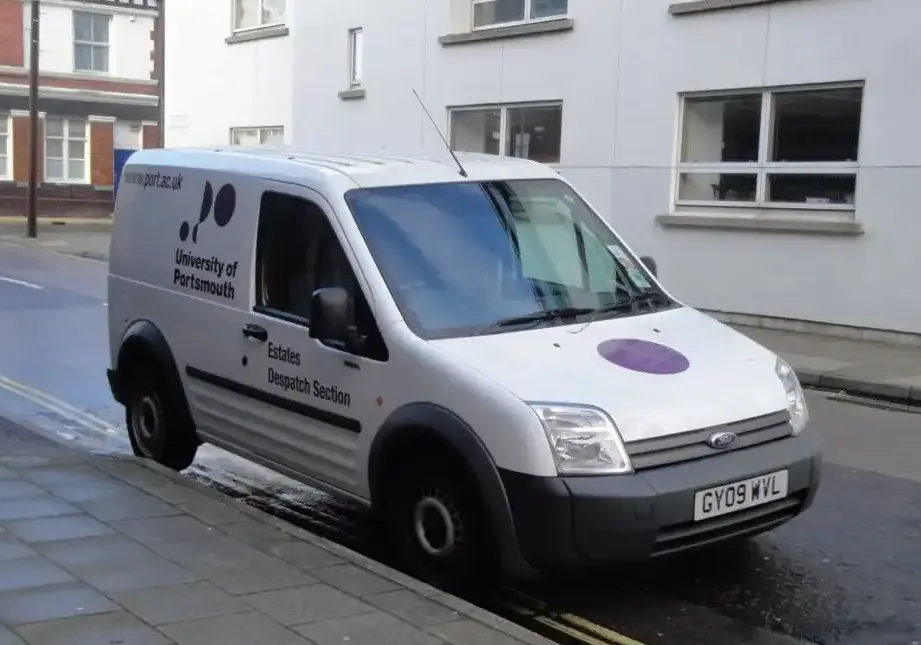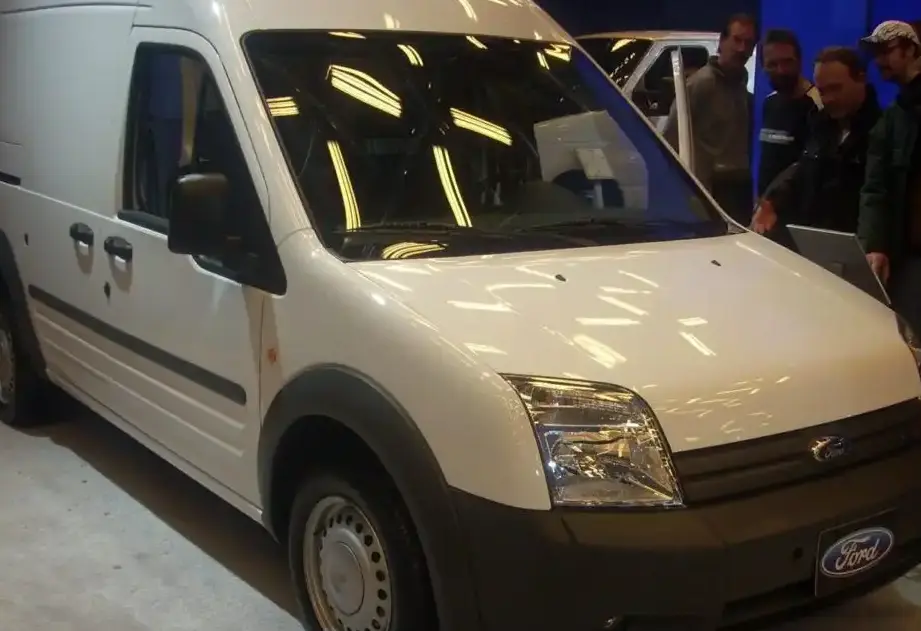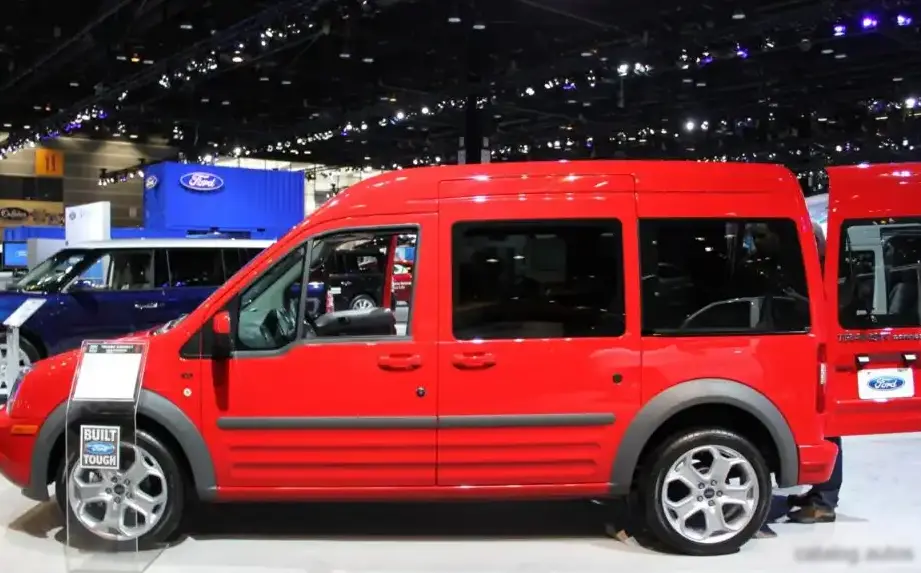
The Ford Transit Connect, introduced in 2002, represented Ford’s entry into the compact commercial van segment in Europe. Designed and initially built in Turkey, it quickly gained popularity for its car-like handling, fuel efficiency, and versatility. The first generation, and specifically the facelifted version launched in 2009, offered a range of engine and body configurations. This article focuses on the 2009-2011 Ford Transit Connect I Crew Van L2H2 powered by the 1.8 TDCi engine producing 90 horsepower, a configuration positioned as an entry-level option for businesses and families needing a practical and economical vehicle. Production of this specific variant continued until September 2011, when it was superseded by updated models.
Technical Specifications
| Brand | Ford |
| Model | Transit Connect |
| Generation | Transit Connect I (facelift 2009) Crew Van L2H2 |
| Type (Engine) | 1.8 TDCi (90 Hp) |
| Start of production | 2009 |
| End of production | September, 2011 |
| Powertrain Architecture | Internal Combustion engine |
| Body type | Minivan |
| Seats | 5 |
| Doors | 5 |
| Fuel Type | Diesel |
| Emission standard | Euro 4 |
| Weight-to-power ratio | 17.4 kg/Hp, 57.4 Hp/tonne |
| Weight-to-torque ratio | 6.5 kg/Nm, 153.1 Nm/tonne |
| Power | 90 Hp @ 4000 rpm |
| Power per litre | 51.3 Hp/l |
| Torque | 240 Nm @ 1750 rpm (177.01 lb.-ft. @ 1750 rpm) |
| Engine layout | Front, Transverse |
| Engine Model/Code | Duratorq / HCPA, P9PA, R3PA |
| Engine displacement | 1753 cm3 (106.97 cu. in.) |
| Number of cylinders | 4 |
| Engine configuration | Inline |
| Cylinder Bore | 82.5 mm (3.25 in.) |
| Piston Stroke | 82 mm (3.23 in.) |
| Compression ratio | 19.4:1 |
| Number of valves per cylinder | 2 |
| Fuel injection system | Diesel Commonrail |
| Engine aspiration | Turbocharger, Intercooler |
| Valvetrain | SOHC |
| Engine oil capacity | 5.6 l (5.92 US qt | 4.93 UK qt) |
| Coolant | 7 l (7.4 US qt | 6.16 UK qt) |
| Kerb Weight | 1568-1585 kg (3456.85 – 3494.33 lbs.) |
| Max. weight | 2340 kg (5158.82 lbs.) |
| Max load | 755-772 kg (1664.49 – 1701.97 lbs.) |
| Trunk (boot) space – minimum | 2100 l (74.16 cu. ft.) |
| Trunk (boot) space – maximum | 3400 l (120.07 cu. ft.) |
| Fuel tank capacity | 60 l (15.85 US gal | 13.2 UK gal) |
| Length | 4525 mm (178.15 in.) |
| Width | 1795 mm (70.67 in.) |
| Width including mirrors | 2044 mm (80.47 in.) |
| Height | 1980 mm (77.95 in.) |
| Wheelbase | 2912 mm (114.65 in.) |
| Front track | 1505 mm (59.25 in.) |
| Rear (Back) track | 1552 mm (61.1 in.) |
| Front overhang | 861 mm (33.9 in.) |
| Rear overhang | 751 mm (29.57 in.) |
| Ride height (ground clearance) | 166 mm (6.54 in.) |
| Minimum turning circle (turning diameter) | 11.9 m (39.04 ft.) |
| Drivetrain Architecture | The Internal combustion engine (ICE) drives the front wheels of the vehicle. |
| Drive wheel | Front wheel drive |
| Number of gears and type of gearbox | 5 gears, manual transmission |
| Front suspension | Independent, type McPherson with coil spring and anti-roll bar |
| Rear suspension | Transverse stabilizer, Leaf spring |
| Front brakes | Ventilated discs |
| Rear brakes | Disc |
| Assisting systems | ABS (Anti-lock braking system) |
| Steering type | Steering rack and pinion |
| Power steering | Hydraulic Steering |
| Tires size | 195/65 R15 |
| Wheel rims size | 6J x 15 |
INTRODUCTION
The 2009 facelift of the first-generation Ford Transit Connect brought subtle styling updates and improvements to the interior. The Crew Van L2H2 configuration, denoting a long wheelbase and high roof, offered increased cargo capacity and passenger space, making it suitable for both commercial and family use. The 1.8 TDCi 90 hp engine was a key component of the Transit Connect’s appeal, offering a balance between fuel economy and usability. This variant served as the entry point to the Transit Connect range, appealing to budget-conscious buyers and those who didn’t require the higher performance of the more powerful engine options.
Powertrain & Engine Architecture
The heart of this Transit Connect variant is the Ford Duratorq 1.8 TDCi engine, identified by engine codes HCPA, P9PA, or R3PA. This engine is a four-cylinder, inline diesel utilizing a common rail direct injection system. The common rail system, operating at very high pressures, allows for precise fuel delivery, improving combustion efficiency and reducing emissions. A turbocharger with an intercooler further enhances performance by forcing more air into the cylinders. The engine features a single overhead camshaft (SOHC) valvetrain, operating two valves per cylinder. The 1.8L engine produced 90 horsepower at 4000 rpm and 240 Nm (177 lb-ft) of torque at 1750 rpm. This torque output, available at relatively low engine speeds, provided good drivability in everyday conditions. The engine was paired with a five-speed manual transmission, chosen for its simplicity and efficiency. While an automatic transmission was offered in some markets, it was not commonly paired with the 90 hp engine.
Driving Characteristics
The 1.8 TDCi 90 hp Transit Connect offered a practical, if not particularly exciting, driving experience. The engine’s torque delivery made it reasonably capable for hauling loads and navigating urban environments. However, acceleration was modest, and overtaking required careful planning. Compared to the higher-output 1.8 TDCi (110 hp) or the 2.0-liter petrol engine options, the 90 hp version felt noticeably slower. The five-speed manual transmission was well-matched to the engine’s characteristics, providing adequate gear spacing for both fuel efficiency and usability. The gear ratios were optimized for low-speed torque, making it easy to get the van moving from a standstill, even when loaded. The suspension, tuned for comfort and practicality, provided a reasonably smooth ride, although it could feel somewhat bouncy when carrying a heavy load.
Equipment & Trim Levels
The 1.8 TDCi 90 hp Transit Connect Crew Van L2H2 typically came with a basic level of equipment, reflecting its position as an entry-level model. Standard features generally included power steering, ABS brakes, a driver’s airbag, and basic cloth upholstery. The Crew Van configuration featured seating for five, with a second row of seats behind the driver and front passenger. Optional extras included air conditioning, electric windows, a radio/CD player, and upgraded interior trim. Higher trim levels, such as the Limited, offered more luxurious features, but were typically paired with the more powerful engine options.
Chassis & Braking
The Transit Connect utilized a front-wheel-drive layout with an independent McPherson strut suspension at the front and a semi-independent leaf spring suspension at the rear. The front suspension provided good handling and ride comfort, while the leaf spring rear suspension was chosen for its simplicity and load-carrying capacity. The braking system consisted of ventilated discs at the front and solid discs at the rear, providing adequate stopping power for the vehicle’s weight. ABS (Anti-lock Braking System) was standard, enhancing safety by preventing wheel lockup during hard braking.
Market Reception & Comparison
The 1.8 TDCi 90 hp Transit Connect was generally well-received by critics as a practical and economical workhorse. It was praised for its fuel efficiency, car-like handling, and versatile interior. However, some reviewers noted that the engine lacked power, particularly when fully loaded or driving on hilly terrain. Compared to the 110 hp version, the 90 hp model offered lower running costs but compromised on performance. The 1.8 TDCi 90 hp was often seen as a good choice for businesses and individuals who prioritized fuel economy and practicality over outright speed.
Legacy
The Ford Transit Connect, including the 1.8 TDCi 90 hp variant, established itself as a popular choice in the compact commercial van segment. The Duratorq engine proved to be relatively reliable, although regular maintenance is crucial to prevent issues with the fuel injection system and turbocharger. Today, used examples of this Transit Connect are readily available and represent a cost-effective option for those needing a versatile and economical van. While not the fastest or most luxurious option, the 1.8 TDCi 90 hp Transit Connect remains a practical and dependable vehicle, appreciated for its simplicity and functionality.