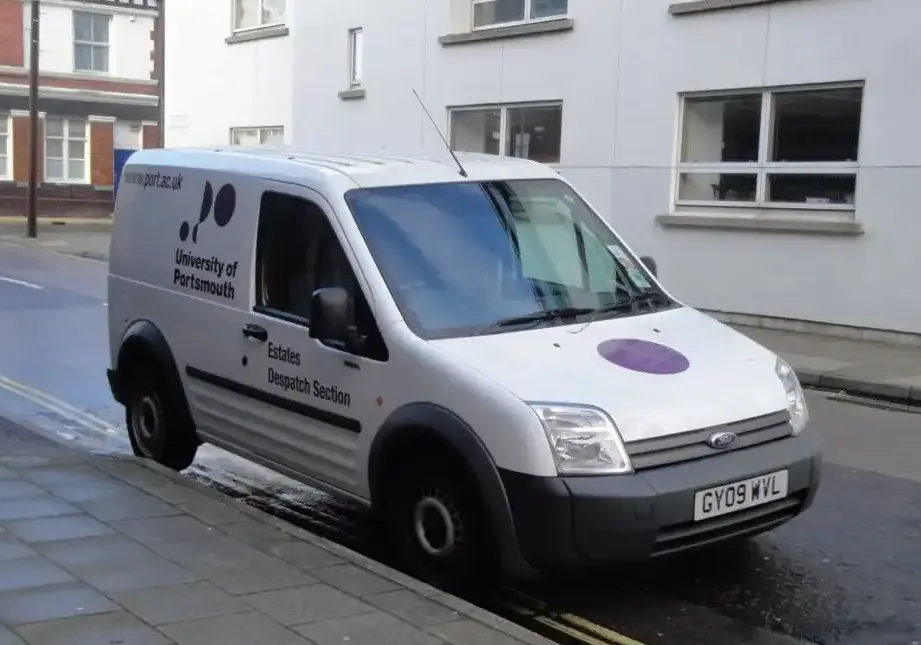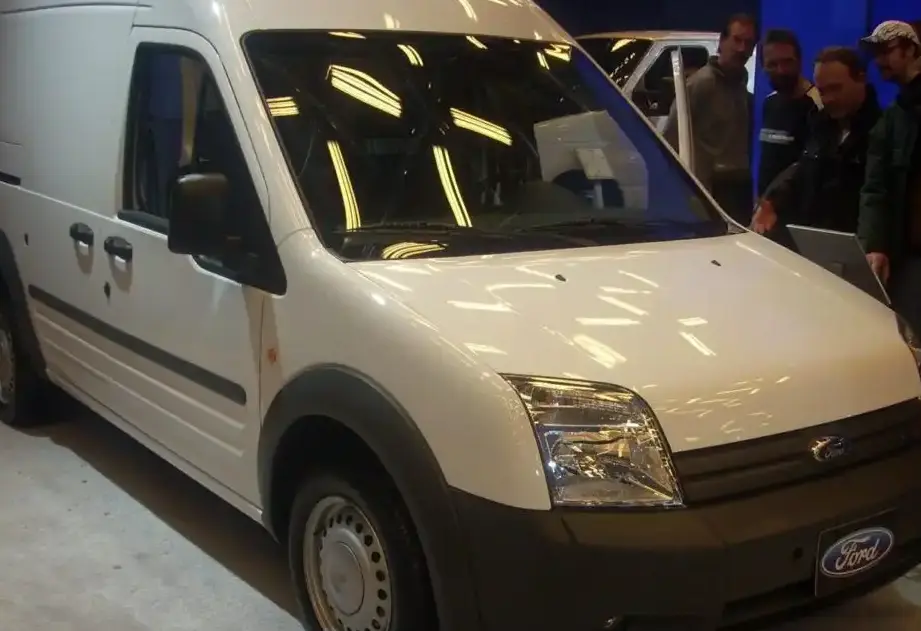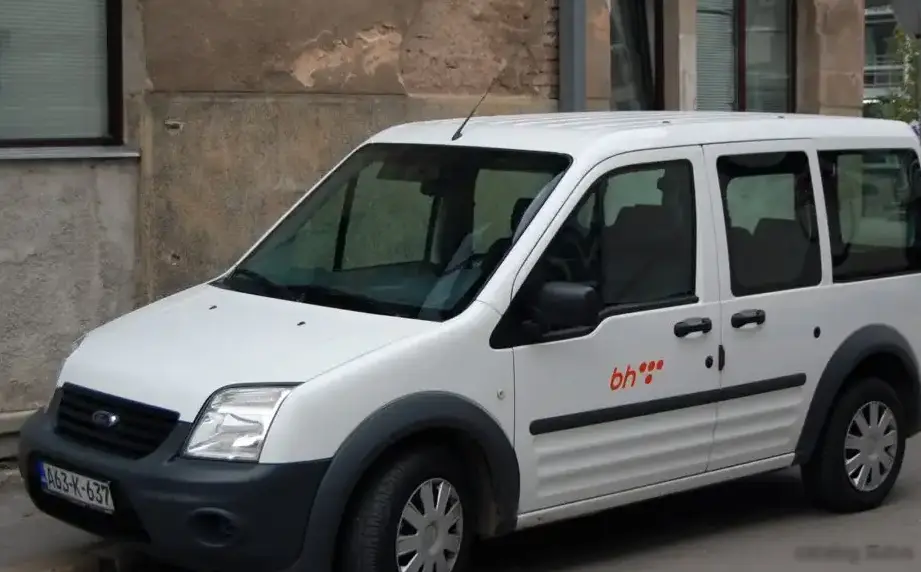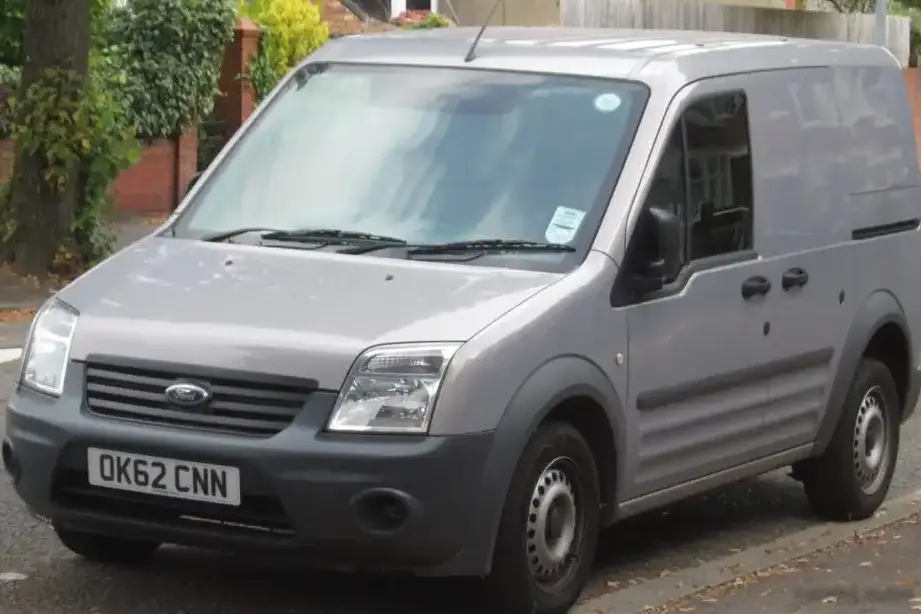
The Ford Transit Connect, particularly the first generation (2002-2013), represented Ford’s entry into the compact commercial van segment in North America and Europe. The facelifted version, introduced in 2009, brought updated styling and improved features. This article focuses on the 2011-2013 Ford Transit Connect I Panel Van L1H1 powered by the 1.8 TDCi engine producing 110 horsepower, equipped with a manual transmission. This configuration was a popular choice for businesses and tradespeople seeking an economical and practical light-duty van. It occupied a mid-range position within the Transit Connect lineup, offering a balance between affordability and capability, sitting below the higher-output diesel variants and above the base, lower-powered options.
Technical Specifications
| Brand | Ford |
| Model | Transit Connect |
| Generation | Transit Connect I (facelift 2009) Panel Van L1H1 |
| Type (Engine) | 1.8 TDCi (110 Hp) DPF |
| Start of production | September, 2011 |
| End of production | 2013 |
| Powertrain Architecture | Internal Combustion engine |
| Body type | Minivan |
| Seats | 2 |
| Doors | 3-5 |
| Fuel consumption (urban) | 7.2 l/100 km (32.7 US mpg, 39.2 UK mpg, 13.9 km/l) |
| Fuel consumption (extra urban) | 5.3 l/100 km (44.4 US mpg, 53.3 UK mpg, 18.9 km/l) |
| Fuel consumption (combined) | 6 l/100 km (39.2 US mpg, 47.1 UK mpg, 16.7 km/l) |
| CO2 emissions | 159 g/km |
| Fuel Type | Diesel |
| Acceleration 0 – 100 km/h | 14.4 sec |
| Acceleration 0 – 62 mph | 14.4 sec |
| Acceleration 0 – 60 mph | 13.7 sec |
| Maximum speed | 167 km/h (103.77 mph) |
| Emission standard | Euro 5 |
| Weight-to-power ratio | 12.6 kg/Hp, 79.3 Hp/tonne |
| Weight-to-torque ratio | 5 kg/Nm, 201.7 Nm/tonne |
| Power | 110 Hp @ 3700 rpm |
| Torque | 280 Nm @ 1500-3200 rpm (206.52 lb.-ft. @ 1500-3200 rpm) |
| Engine layout | Front, Transverse |
| Engine Model/Code | Duratorq / RWPA, RWPB, RWPC, RWPD |
| Engine displacement | 1753 cm3 (106.97 cu. in.) |
| Number of cylinders | 4 |
| Engine configuration | Inline |
| Cylinder Bore | 82.5 mm (3.25 in.) |
| Piston Stroke | 82 mm (3.23 in.) |
| Compression ratio | 17.1:1 |
| Number of valves per cylinder | 2 |
| Fuel injection system | Diesel Commonrail |
| Engine aspiration | Turbocharger, Intercooler |
| Valvetrain | SOHC |
| Engine oil capacity | 5.6 l (5.92 US qt | 4.93 UK qt) |
| Coolant capacity | 7 l (7.4 US qt | 6.16 UK qt) |
| Kerb Weight | 1388-1510 kg (3060.02 – 3328.98 lbs.) |
| Max. weight | 2040-2240 kg (4497.43 – 4938.35 lbs.) |
| Max load | 652-730 kg (1437.41 – 1609.37 lbs.) |
| Trunk (boot) space – minimum | 2800 l (98.88 cu. ft.) |
| Trunk (boot) space – maximum | 3400 l (120.07 cu. ft.) |
| Fuel tank capacity | 60 l (15.85 US gal | 13.2 UK gal) |
| Permitted trailer load with brakes (12%) | 1200 kg (2645.55 lbs.) |
| Permitted trailer load without brakes | 730 kg (1609.37 lbs.) |
| Length | 4275 mm (168.31 in.) |
| Width | 1795 mm (70.67 in.) |
| Width including mirrors | 2044 mm (80.47 in.) |
| Height | 1815 mm (71.46 in.) |
| Wheelbase | 2664 mm (104.88 in.) |
| Front track | 1505 mm (59.25 in.) |
| Rear track | 1552 mm (61.1 in.) |
| Front overhang | 861 mm (33.9 in.) |
| Rear overhang | 749 mm (29.49 in.) |
| Ride height (ground clearance) | 166 mm (6.54 in.) |
| Minimum turning circle | 11 m (36.09 ft.) |
| Drivetrain | Front wheel drive |
| Number of gears | 5 |
| Gearbox type | Manual transmission |
| Front suspension | Independent, type McPherson with coil spring and anti-roll bar |
| Rear suspension | Transverse stabilizer, Leaf spring |
| Front brakes | Ventilated discs |
| Rear brakes | Disc |
| Assisting systems | ABS (Anti-lock braking system) |
| Steering type | Steering rack and pinion |
| Power steering | Hydraulic Steering |
| Tires size | 195/65 R15 |
| Wheel rims size | 6J x 15 |
Powertrain & Engine Architecture
The heart of this Transit Connect variant is the 1.8-liter Duratorq TDCi diesel engine, specifically the RWPA, RWPB, RWPC, or RWPD engine code depending on the specific market and year. This engine is a four-cylinder, inline configuration, utilizing a single overhead camshaft (SOHC) valvetrain with two valves per cylinder. A key feature is its turbocharger with intercooler, which significantly boosts power output and efficiency. The engine employs a Diesel Commonrail direct fuel injection system, delivering precise fuel metering for optimized combustion. The 17.1:1 compression ratio is typical for diesel engines, contributing to their inherent efficiency. The 110 horsepower peak is achieved at 3700 rpm, while the 280 Nm (206.52 lb-ft) of torque is available from a low 1500 rpm, extending to 3200 rpm. This broad torque curve is particularly beneficial for a commercial vehicle, providing strong pulling power and responsiveness at lower speeds. The engine is transversely mounted in the front of the vehicle, driving the front wheels. The five-speed manual transmission provides a relatively direct driving experience, prioritizing fuel economy over outright acceleration.
Driving Characteristics
The 1.8 TDCi 110 hp Transit Connect offers a practical and economical driving experience. While not particularly quick – acceleration from 0-60 mph takes around 13.7 seconds – the engine’s strong low-end torque makes it feel more responsive in everyday driving situations. The manual transmission allows for greater driver control and contributes to better fuel economy compared to an automatic. The gear ratios are tuned for efficiency, with a relatively tall fifth gear for comfortable highway cruising. Compared to the higher-output diesel versions, this variant feels less strained when fully loaded, but lacks the outright performance for rapid acceleration or hauling heavy loads. Compared to gasoline-powered Transit Connects, the diesel offers significantly better fuel economy, making it a more cost-effective choice for high-mileage users.
Equipment & Trim Levels
The 1.8 TDCi 110 hp Transit Connect typically came with a fairly basic level of equipment, reflecting its commercial vehicle focus. Standard features generally included power steering, ABS brakes, a driver’s airbag, and a basic audio system. The interior was functional and durable, with hard-wearing plastics and cloth upholstery. Optional extras included air conditioning, power windows, a passenger airbag, and upgraded audio systems. Trim levels varied by market, but generally offered incremental upgrades in terms of comfort and convenience features. The L1H1 configuration denotes a short wheelbase and standard roof height, providing a good balance between cargo capacity and maneuverability.
Chassis & Braking
The Transit Connect utilizes a McPherson strut independent suspension at the front, providing a comfortable ride and decent handling. The rear suspension employs a leaf spring setup, which is more robust and capable of handling heavier loads, but can result in a slightly less refined ride. Brakes are ventilated discs at the front and solid discs at the rear, providing adequate stopping power for the vehicle’s weight and performance. ABS (Anti-lock Braking System) is standard, enhancing safety during emergency braking situations. The hydraulic power steering provides a reasonable level of assistance, making the van easy to maneuver in tight spaces.
Market Reception & Comparison
The 1.8 TDCi 110 hp Transit Connect was generally well-received by critics and customers alike. It was praised for its fuel efficiency, practicality, and affordability. Compared to other compact vans in its class, such as the Volkswagen Caddy and Fiat Doblo, the Transit Connect offered a competitive combination of features and value. The diesel engine provided a significant advantage in terms of fuel economy, making it a popular choice for businesses. However, some critics noted that the interior was somewhat basic and that the ride could be a bit harsh when the van was unloaded.
Legacy
The 1.8 TDCi Duratorq engine proved to be a reliable and durable powerplant, and many examples of the Transit Connect with this engine are still on the road today. While diesel engines can be more expensive to maintain than gasoline engines due to the complexity of the fuel injection system and the potential for issues with the diesel particulate filter (DPF), the Duratorq engine is generally considered to be relatively robust. On the used car market, the 1.8 TDCi Transit Connect represents a good value proposition for buyers seeking a practical and economical light-duty van. Its fuel efficiency and durability make it a sensible choice for small businesses and tradespeople.