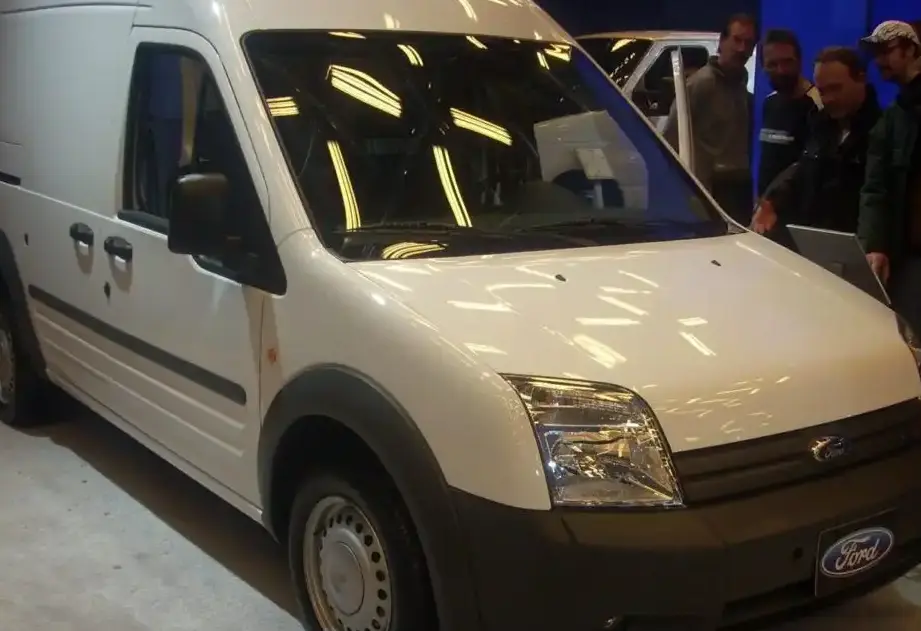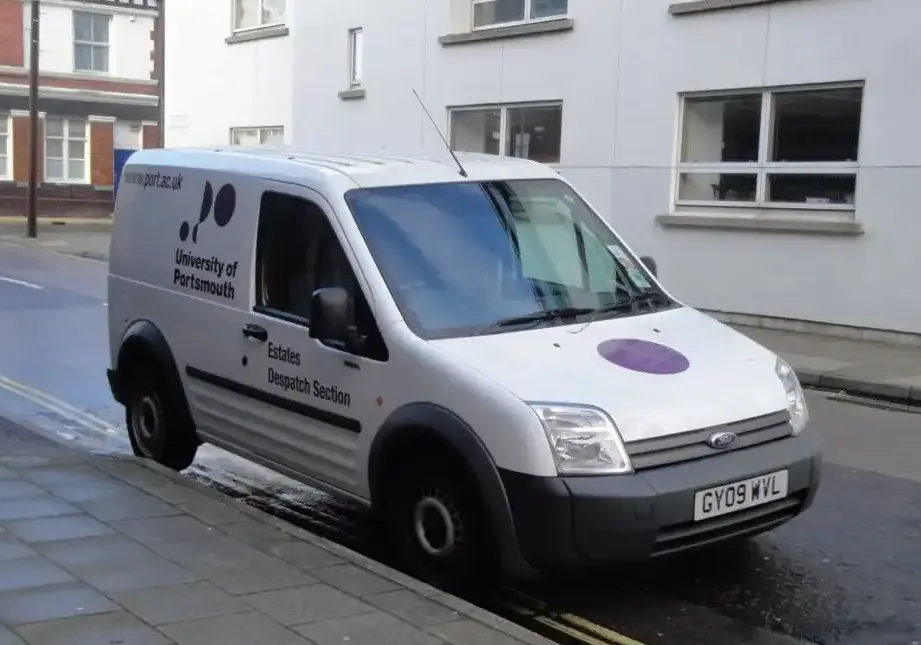
The Ford Transit Connect, introduced in 2002 and facelifted in 2006, represented Ford’s entry into the compact commercial van segment in Europe. Designed as a versatile vehicle for both commercial and private use, it quickly gained popularity due to its car-like handling, fuel efficiency, and practical interior space. The 2006 facelift brought cosmetic updates and refinements to the original design. This article focuses on the first generation (facelift) Transit Connect Panel Van L1H1 equipped with the 1.8 TDCi engine producing 75 horsepower, a configuration sold primarily in Europe and select markets, and its position within the broader Transit Connect lineup. This specific variant served as the entry-level option, appealing to businesses and individuals prioritizing economy and functionality over outright performance.
Technical Specifications
| Brand | Ford |
| Model | Transit Connect |
| Generation | Transit Connect I (facelift 2006) Panel Van L1H1 |
| Type (Engine) | 1.8 TDCi (75 Hp) |
| Start of production | 2006 |
| End of production | 2009 |
| Powertrain Architecture | Internal Combustion engine |
| Body type | Minivan |
| Seats | 2 |
| Doors | 3-5 |
| Fuel Type | Diesel |
| Emission standard | Euro 4 |
| Weight-to-power ratio | 18.6 kg/Hp, 53.9 Hp/tonne |
| Weight-to-torque ratio | 8 kg/Nm, 125.7 Nm/tonne |
| Power | 75 Hp @ 4000 rpm |
| Power per litre | 42.8 Hp/l |
| Torque | 175 Nm @ 1800 rpm (129.07 lb.-ft. @ 1800 rpm) |
| Engine layout | Front, Transverse |
| Engine Model/Code | Duratorq / BHPA, P7PA, R2PA |
| Engine displacement | 1753 cm3 (106.97 cu. in.) |
| Number of cylinders | 4 |
| Engine configuration | Inline |
| Cylinder Bore | 82.5 mm (3.25 in.) |
| Piston Stroke | 82 mm (3.23 in.) |
| Compression ratio | 19.4:1 |
| Number of valves per cylinder | 2 |
| Fuel injection system | Diesel Commonrail |
| Engine aspiration | Turbocharger, Intercooler |
| Valvetrain | SOHC |
| Engine oil capacity | 5.6 l (5.92 US qt | 4.93 UK qt) |
| Coolant | 7 l (7.4 US qt | 6.16 UK qt) |
| Kerb Weight | 1392-1466 kg (3068.83 – 3231.98 lbs.) |
| Max. weight | 2030-2230 kg (4475.38 – 4916.31 lbs.) |
| Max load | 638-764 kg (1406.55 – 1684.33 lbs.) |
| Trunk (boot) space – minimum | 2800 l (98.88 cu. ft.) |
| Trunk (boot) space – maximum | 3400 l (120.07 cu. ft.) |
| Fuel tank capacity | 60 l (15.85 US gal | 13.2 UK gal) |
| Max. roof load | 100 kg (220.46 lbs.) |
| Length | 4308 mm (169.61 in.) |
| Width | 1795 mm (70.67 in.) |
| Width including mirrors | 2044 mm (80.47 in.) |
| Height | 1814 mm (71.42 in.) |
| Wheelbase | 2664 mm (104.88 in.) |
| Front track | 1505 mm (59.25 in.) |
| Rear (Back) track | 1552 mm (61.1 in.) |
| Front overhang | 894 mm (35.2 in.) |
| Rear overhang | 749 mm (29.49 in.) |
| Ride height (ground clearance) | 166 mm (6.54 in.) |
| Minimum turning circle (turning diameter) | 11 m (36.09 ft.) |
| Drivetrain Architecture | The Internal combustion engine (ICE) drives the front wheels of the vehicle. |
| Drive wheel | Front wheel drive |
| Number of gears and type of gearbox | 5 gears, manual transmission |
| Front suspension | Independent, type McPherson with coil spring and anti-roll bar |
| Rear suspension | Leaf spring |
| Front brakes | Disc |
| Rear brakes | Drum |
| Assisting systems | ABS (Anti-lock braking system) |
| Steering type | Steering rack and pinion |
| Power steering | Hydraulic Steering |
| Tires size | 195/65 R15 |
| Wheel rims size | 6J x 15 |
Powertrain & Engine Architecture
The heart of this Transit Connect variant is the 1.8-liter Duratorq TDCi diesel engine, specifically the BHPA, P7PA, or R2PA engine code depending on the exact production date and market. This engine is a four-cylinder, inline configuration, utilizing a single overhead camshaft (SOHC) valvetrain with two valves per cylinder. A key feature is its turbocharger with intercooler, which helps to boost power and improve efficiency. The engine employs a Diesel Commonrail direct fuel injection system, delivering fuel directly into the combustion chamber at high pressure for optimized combustion. The 19.4:1 compression ratio is typical for diesel engines, contributing to their thermal efficiency. The engine was paired with a five-speed manual transmission, chosen for its simplicity and cost-effectiveness in this entry-level model. While an automatic transmission was offered on higher trim levels, it wasn’t available with the 75hp engine.
Driving Characteristics
The 75 horsepower output and 175 Nm (129 lb-ft) of torque provide adequate, but not exhilarating, performance. Acceleration is modest, and the vehicle is best suited for urban and suburban driving rather than high-speed highway work. The five-speed manual transmission is geared to prioritize fuel economy, with relatively tall gear ratios. This means that while highway cruising is possible, it requires downshifting for overtaking maneuvers. Compared to the more powerful 1.8 TDCi variants (90hp and 110hp) and the petrol options, this version feels noticeably slower. However, the lower power output also contributes to better fuel economy and reduced stress on the engine and drivetrain.
Equipment & Trim Levels
The 1.8 TDCi 75hp Transit Connect L1H1, being the base model, typically came with a relatively sparse equipment list. Standard features generally included power steering, ABS brakes, a driver’s airbag, and basic steel wheels. The interior was functional and utilitarian, with durable plastic trim and cloth upholstery. Optional extras included air conditioning, electric windows, a radio/CD player, and upgraded interior trim. The Panel Van configuration featured a basic cargo area with minimal finishing, designed for maximum practicality and load space. The L1H1 designation refers to the short wheelbase and standard roof height, making it a compact and maneuverable van.
Chassis & Braking
The Transit Connect utilizes a front-wheel-drive layout. The front suspension consists of independent McPherson struts with coil springs and an anti-roll bar, providing a comfortable ride and decent handling. The rear suspension employs a simpler leaf spring setup, which is cost-effective but less refined than independent suspension. Brakes are disc brakes at the front and drum brakes at the rear. The ABS system provides enhanced braking control, particularly on slippery surfaces. The steering is a hydraulic rack and pinion system, offering reasonable precision and feedback.
Market Reception & Comparison
The 1.8 TDCi 75hp Transit Connect was generally well-received as a practical and economical workhorse. Critics praised its car-like handling and fuel efficiency, but noted its lack of outright performance. Compared to the higher-output 1.8 TDCi variants, this version offered lower running costs but sacrificed acceleration and towing capacity. The 1.8 petrol engine offered similar power but with significantly worse fuel economy. The 1.9 TDI engine (available in some markets) provided a more refined driving experience and better torque, but at a higher price point.
Legacy
The 1.8 TDCi engine, in its various iterations, proved to be a relatively reliable unit. While not without its potential issues (such as turbocharger wear and injector problems), it is generally considered a durable engine when properly maintained. Today, used examples of the 75hp Transit Connect are readily available and represent an affordable entry point into the compact van market. They are popular with small businesses, tradespeople, and individuals seeking a versatile and economical vehicle. The simplicity of the powertrain and the availability of spare parts contribute to its continued appeal as a practical and cost-effective transportation solution.