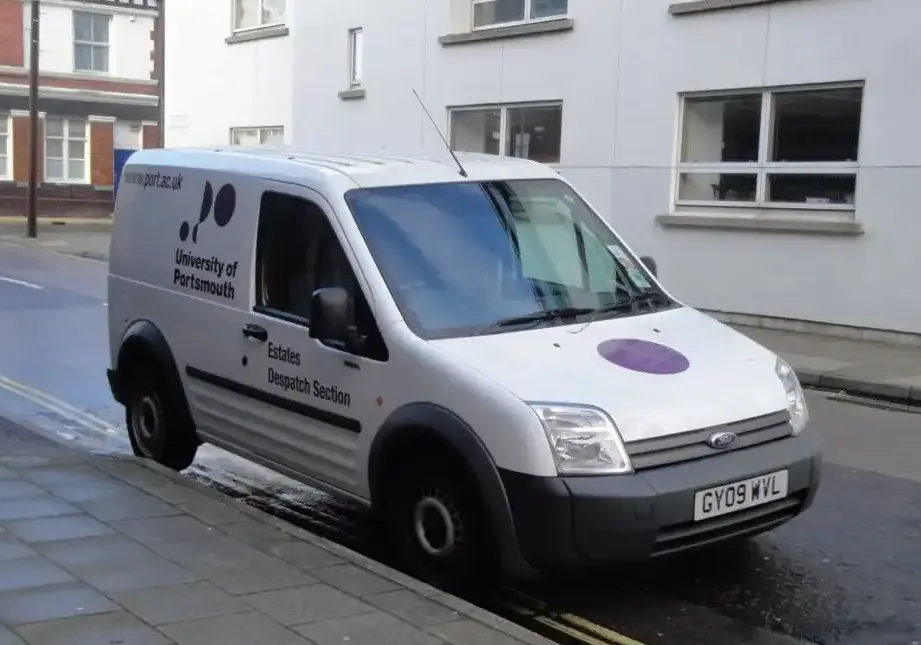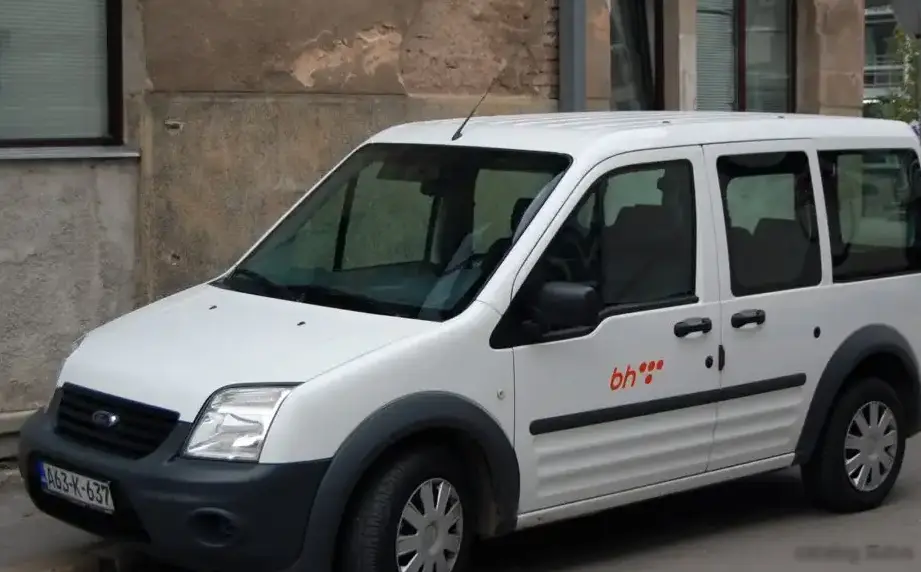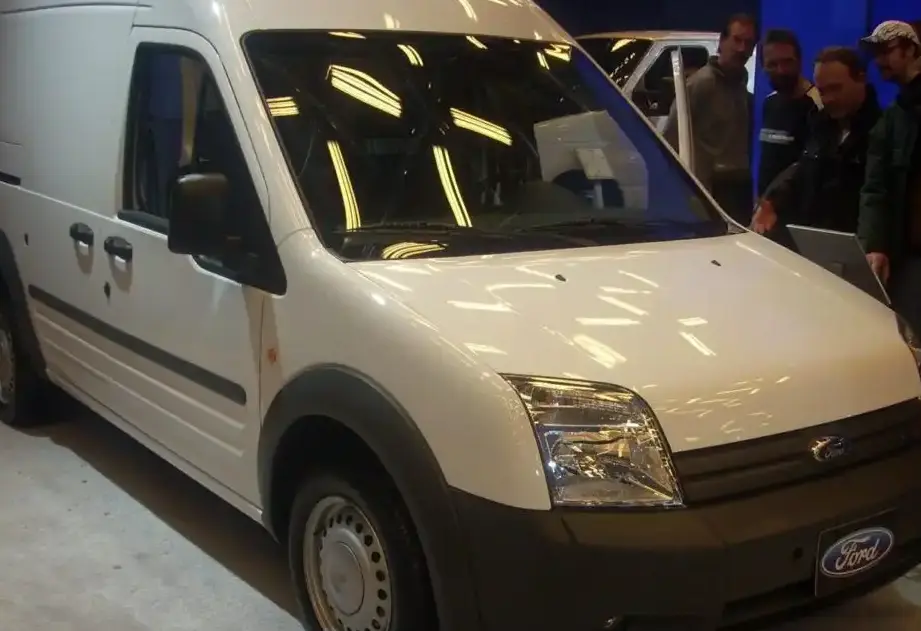
The Ford Transit Connect, introduced in 2002, represented Ford’s entry into the compact commercial van segment in Europe. Designed and initially built in Turkey, it quickly gained popularity for its car-like handling, fuel efficiency, and versatility. The first generation, and specifically the facelifted version launched in 2006, offered a range of engine and body configurations. This article focuses on the 2006-2009 Ford Transit Connect I Panel Van L2H2 powered by the 1.8 TDCi engine producing 110 horsepower, a popular configuration aimed at small businesses and tradespeople. This variant occupied a mid-range position in the lineup, offering a balance between affordability and capability.
Technical Specifications
| Brand | Ford |
| Model | Transit Connect |
| Generation | Transit Connect I (facelift 2006) Panel Van L2H2 |
| Type (Engine) | 1.8 TDCi (110 Hp) |
| Start of production | 2006 |
| End of production | 2009 |
| Powertrain Architecture | Internal Combustion engine |
| Body type | Minivan |
| Seats | 2 |
| Doors | 3-5 |
| Fuel Type | Diesel |
| Emission standard | Euro 4 |
| Weight-to-power ratio | 12.7 kg/Hp, 78.5 Hp/tonne |
| Weight-to-torque ratio | 5 kg/Nm, 199.7 Nm/tonne |
| Power | 110 Hp @ 3500 rpm |
| Power per litre | 62.7 Hp/l |
| Torque | 280 Nm @ 1500-3200 rpm (206.52 lb.-ft. @ 1500-3200 rpm) |
| Engine layout | Front, Transverse |
| Engine Model/Code | Duratorq / RWPA, RWPB, RWPC, RWPD |
| Engine displacement | 1753 cm3 (106.97 cu. in.) |
| Number of cylinders | 4 |
| Engine configuration | Inline |
| Cylinder Bore | 82.5 mm (3.25 in.) |
| Piston Stroke | 82 mm (3.23 in.) |
| Compression ratio | 17.1:1 |
| Number of valves per cylinder | 2 |
| Fuel injection system | Diesel Commonrail |
| Engine aspiration | Turbocharger, Intercooler |
| Valvetrain | SOHC |
| Engine oil capacity | 5.6 l (5.92 US qt | 4.93 UK qt) |
| Coolant | 7 l (7.4 US qt | 6.16 UK qt) |
| Kerb Weight | 1402 kg (3090.88 lbs.) |
| Max. weight | 2340 kg (5158.82 lbs.) |
| Max load | 938 kg (2067.94 lbs.) |
| Trunk (boot) space – minimum | 3700 l (130.66 cu. ft.) |
| Trunk (boot) space – maximum | 4400 l (155.38 cu. ft.) |
| Fuel tank capacity | 60 l (15.85 US gal | 13.2 UK gal) |
| Max. roof load | 100 kg (220.46 lbs.) |
| Length | 4555 mm (179.33 in.) |
| Width | 1795 mm (70.67 in.) |
| Width including mirrors | 2044 mm (80.47 in.) |
| Height | 1981 mm (77.99 in.) |
| Wheelbase | 2912 mm (114.65 in.) |
| Front track | 1505 mm (59.25 in.) |
| Rear (Back) track | 1552 mm (61.1 in.) |
| Front overhang | 894 mm (35.2 in.) |
| Rear overhang | 749 mm (29.49 in.) |
| Ride height (ground clearance) | 166 mm (6.54 in.) |
| Minimum turning circle (turning diameter) | 11.9 m (39.04 ft.) |
| Drivetrain Architecture | The Internal combustion engine (ICE) drives the front wheels of the vehicle. |
| Drive wheel | Front wheel drive |
| Number of gears and type of gearbox | 5 gears, manual transmission |
| Front suspension | Independent, type McPherson with coil spring and anti-roll bar |
| Rear suspension | Transverse stabilizer, Leaf spring |
| Front brakes | Disc |
| Rear brakes | Drum |
| Assisting systems | ABS (Anti-lock braking system) |
| Steering type | Steering rack and pinion |
| Power steering | Hydraulic Steering |
| Tires size | 195/65 R15 |
| Wheel rims size | 6J x 15 |
INTRODUCTION
The 2006-2009 Ford Transit Connect I, particularly the L2H2 Panel Van variant, was a significant vehicle for Ford in the European market. Built on the 1HX0/A3 platform (shared with the Ford Focus), it offered a more comfortable and car-like driving experience compared to traditional commercial vans. The 1.8 TDCi engine with 110 horsepower became a popular choice, balancing fuel economy with adequate performance for urban delivery and light commercial applications. The L2H2 designation refers to the long wheelbase and high roof, maximizing cargo space. This configuration was aimed at businesses needing a practical and efficient van for deliveries, mobile workshops, or small-scale transport.
Powertrain & Engine Architecture
The heart of this Transit Connect variant is the Ford Duratorq 1.8 TDCi engine, specifically the RWPA, RWPB, RWPC, or RWPD engine code depending on the specific market and production date. This engine is a four-cylinder, inline diesel engine utilizing a common rail direct injection system. This system, supplied by Bosch, allowed for precise fuel delivery and optimized combustion, contributing to both power and fuel efficiency. The engine features a single overhead camshaft (SOHC) valvetrain operating two valves per cylinder. A turbocharger with an intercooler is employed to increase power output by forcing more air into the cylinders. The 1.8L engine produces 110 horsepower at 3500 rpm and 280 Nm (206.52 lb-ft) of torque between 1500 and 3200 rpm. The engine is transversely mounted, driving the front wheels. The transmission is a five-speed manual gearbox, chosen for its simplicity and efficiency. While an automatic transmission was offered in some markets, it was less common with this engine configuration.
Driving Characteristics
The 1.8 TDCi 110 hp Transit Connect offered a practical, if not particularly exciting, driving experience. The engine provided sufficient power for typical urban and suburban driving, but acceleration was modest, especially when fully loaded. The five-speed manual transmission was well-matched to the engine’s torque curve, allowing for relatively smooth gear changes. Compared to the higher-output 1.8 TDCi (125 hp) or the 2.0-liter petrol versions, this variant felt less responsive. However, it excelled in fuel economy, achieving around 35-45 mpg in mixed driving conditions. The car-derived chassis provided a comfortable ride and predictable handling, making it easy to maneuver in tight city streets. The relatively light weight of the vehicle helped to offset the modest power output.
Equipment & Trim Levels
The Transit Connect L2H2 1.8 TDCi typically came with a fairly basic level of equipment, reflecting its commercial vehicle focus. Standard features included power steering, ABS brakes, a driver’s airbag, and a basic audio system. The interior was functional and durable, with hard-wearing plastic trim and cloth upholstery. The L2H2 configuration provided a generous cargo area, accessible through rear doors and side sliding doors. Optional extras included air conditioning, electric windows, a passenger airbag, and upgraded audio systems. Higher trim levels, if available, might have added features like alloy wheels and body-colored bumpers.
Chassis & Braking
The Transit Connect’s chassis was based on the Ford Focus, utilizing an independent McPherson strut front suspension with a coil spring and anti-roll bar. The rear suspension employed a transverse stabilizer and leaf springs, a cost-effective solution for a commercial vehicle. This setup provided a reasonable balance between ride comfort and load-carrying capacity. The braking system consisted of disc brakes on the front wheels and drum brakes on the rear. ABS (Anti-lock Braking System) was standard, enhancing safety during emergency braking. The steering was a rack and pinion system with hydraulic power assistance, providing light and precise steering feel.
Market Reception & Comparison
The Ford Transit Connect 1.8 TDCi 110 hp was generally well-received by critics and customers alike. It was praised for its fuel efficiency, practicality, and car-like driving dynamics. Compared to other compact vans in its class, such as the Citroën Berlingo and Renault Kangoo, the Transit Connect offered a more refined driving experience and a larger cargo capacity. The 1.8 TDCi engine was considered a good compromise between performance and economy, although some reviewers noted that it could feel underpowered when fully loaded. The manual transmission was preferred by many drivers for its responsiveness and fuel efficiency. Reliability was generally good, although some owners reported minor issues with the turbocharger and fuel injection system.
Legacy
The Ford Transit Connect, and specifically the 1.8 TDCi variants, proved to be a reliable and popular choice for small businesses and tradespeople. The Duratorq engine, while not without its quirks, is generally considered durable and relatively easy to maintain. Today, used examples of the 2006-2009 Transit Connect are still relatively common and affordable. They represent a practical and economical option for those needing a small commercial van. While newer generations of the Transit Connect offer more advanced features and improved performance, the first generation remains a testament to Ford’s ability to create a versatile and dependable workhorse.