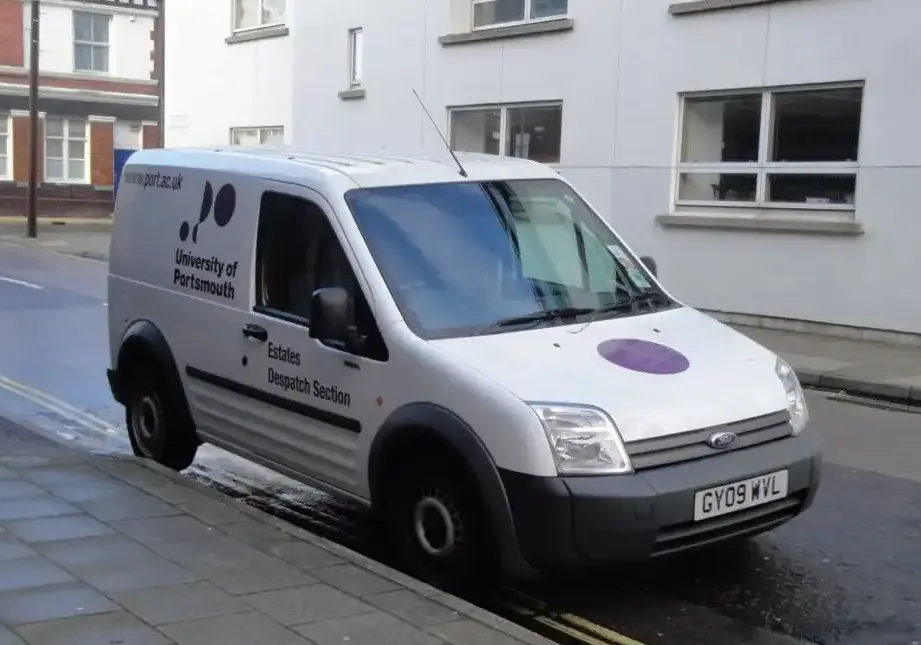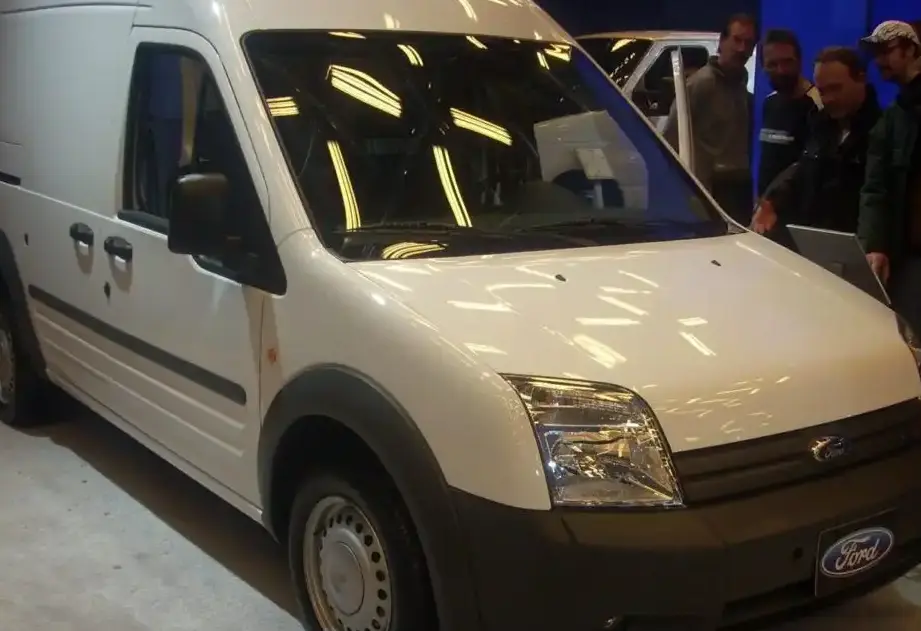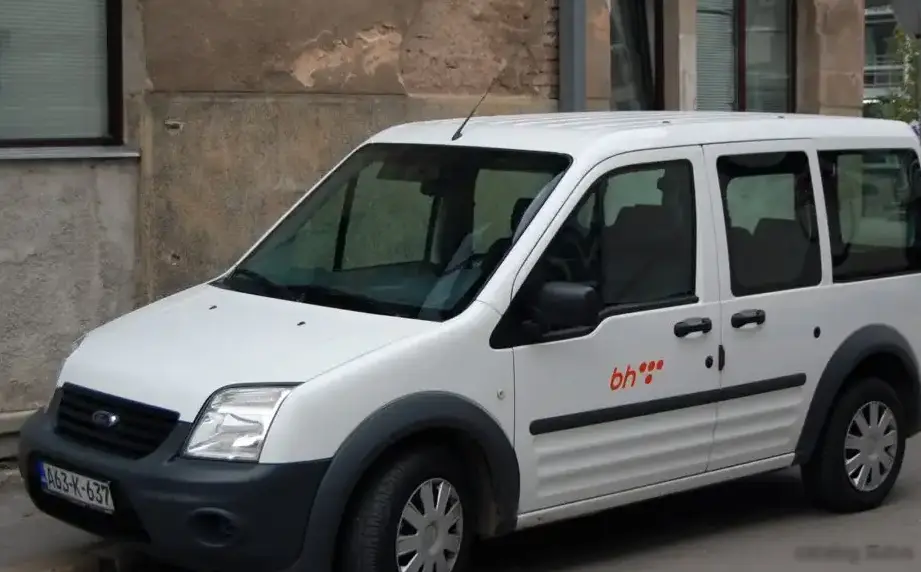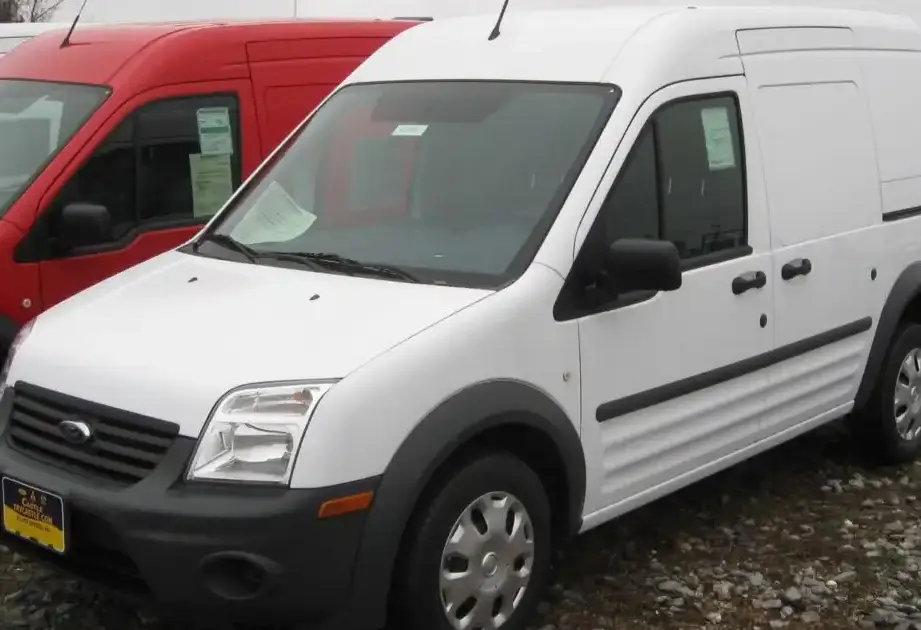
Technical Specifications
| Brand | Ford |
| Model | Transit Connect |
| Generation | Transit Connect I (facelift 2009) Panel Van L2H2 |
| Type (Engine) | 1.8 TDCi (110 Hp) DPF |
| Start of production | September, 2011 |
| End of production | 2013 |
| Powertrain Architecture | Internal Combustion engine |
| Body type | Minivan |
| Seats | 2 |
| Doors | 3-5 |
| Fuel consumption (urban) | 7.3 l/100 km (32.2 US mpg, 38.7 UK mpg, 13.7 km/l) |
| Fuel consumption (extra urban) | 5.4 l/100 km (43.6 US mpg, 52.3 UK mpg, 18.5 km/l) |
| Fuel consumption (combined) | 6.1 l/100 km (38.6 US mpg, 46.3 UK mpg, 16.4 km/l) |
| CO2 emissions | 162 g/km |
| Fuel Type | Diesel |
| Acceleration 0 – 100 km/h | 14.4 sec |
| Acceleration 0 – 62 mph | 14.4 sec |
| Acceleration 0 – 60 mph | 13.7 sec |
| Maximum speed | 165 km/h (102.53 mph) |
| Emission standard | Euro 5 |
| Weight-to-power ratio | 13 kg/Hp, 76.8 Hp/tonne |
| Weight-to-torque ratio | 5.1 kg/Nm, 195.5 Nm/tonne |
| Power | 110 Hp @ 3700 rpm |
| Power per litre | 62.7 Hp/l |
| Torque | 280 Nm @ 1500-3200 rpm (206.52 lb.-ft. @ 1500-3200 rpm) |
| Engine layout | Front, Transverse |
| Engine Model/Code | Duratorq / RWPA, RWPB, RWPC, RWPD |
| Engine displacement | 1753 cm3 (106.97 cu. in.) |
| Number of cylinders | 4 |
| Engine configuration | Inline |
| Cylinder Bore | 82.5 mm (3.25 in.) |
| Piston Stroke | 82 mm (3.23 in.) |
| Compression ratio | 17.1:1 |
| Number of valves per cylinder | 2 |
| Fuel injection system | Diesel Commonrail |
| Engine aspiration | Turbocharger, Intercooler |
| Valvetrain | SOHC |
| Engine oil capacity | 5.6 l (5.92 US qt | 4.93 UK qt) |
| Coolant capacity | 7 l (7.4 US qt | 6.16 UK qt) |
| Kerb Weight | 1432-1560 kg (3157.02 – 3439.21 lbs.) |
| Max. weight | 2340 kg (5158.82 lbs.) |
| Max load | 780-908 kg (1719.61 – 2001.8 lbs.) |
| Trunk (boot) space – minimum | 3700 l (130.66 cu. ft.) |
| Trunk (boot) space – maximum | 4300 l (151.85 cu. ft.) |
| Fuel tank capacity | 60 l (15.85 US gal | 13.2 UK gal) |
| Permitted trailer load (braked) | 1200 kg (2645.55 lbs.) |
| Permitted trailer load (unbraked) | 735 kg (1620.4 lbs.) |
| Length | 4525 mm (178.15 in.) |
| Width | 1795 mm (70.67 in.) |
| Width (including mirrors) | 2044 mm (80.47 in.) |
| Height | 1980 mm (77.95 in.) |
| Wheelbase | 2912 mm (114.65 in.) |
| Front track | 1505 mm (59.25 in.) |
| Rear track | 1552 mm (61.1 in.) |
| Front overhang | 861 mm (33.9 in.) |
| Rear overhang | 751 mm (29.57 in.) |
| Ride height (ground clearance) | 166 mm (6.54 in.) |
| Minimum turning circle | 11.9 m (39.04 ft.) |
| Drivetrain | Front wheel drive |
| Number of gears | 5 |
| Gearbox type | Manual transmission |
| Front suspension | Independent, McPherson with coil spring and anti-roll bar |
| Rear suspension | Transverse stabilizer, Leaf spring |
| Front brakes | Ventilated discs |
| Rear brakes | Disc |
| Assisting systems | ABS (Anti-lock braking system) |
| Steering type | Steering rack and pinion |
| Power steering | Hydraulic |
| Tires size | 195/65 R15 |
| Wheel rims size | 6J x 15 |
The Ford Transit Connect I, launched in 2002 and receiving a significant facelift in 2009, was a crucial model for Ford in Europe, offering a smaller, more efficient alternative to larger, body-on-frame vans. The L2H2 variant, signifying a long wheelbase and high roof, maximized cargo volume, making it ideal for commercial applications. The 1.8 TDCi engine, producing 110 horsepower, was a common choice, particularly in markets where diesel fuel was favored. This configuration, available from 2011-2013, positioned itself as a mid-range offering, balancing affordability with reasonable performance and fuel economy. It was designed to appeal to businesses needing a practical, reliable van for urban deliveries and service calls.
Powertrain & Engine Architecture
The heart of this Transit Connect variant is the Ford Duratorq 1.8 TDCi engine, specifically coded RWPA, RWPB, RWPC, or RWPD depending on the specific calibration and market. This engine is a four-cylinder, inline diesel utilizing a common rail direct injection system. The common rail system, operating at very high pressures, allows for precise fuel metering and optimized combustion. The engine features a single overhead camshaft (SOHC) valvetrain operating two valves per cylinder. A turbocharger with an intercooler is employed to increase power output and improve efficiency by forcing more air into the cylinders. The DPF (Diesel Particulate Filter) is a crucial component for meeting Euro 5 emission standards, trapping soot particles from the exhaust. The engine is transversely mounted in the front of the vehicle. The 110 horsepower is delivered at 3700 rpm, while peak torque of 280 Nm (206.52 lb.-ft.) is available between 1500 and 3200 rpm. This broad torque band is characteristic of diesel engines and contributes to the van’s usability in urban environments. The engine is paired with a five-speed manual transmission, chosen for its simplicity and efficiency.
Driving Characteristics
The 1.8 TDCi 110 hp Transit Connect L2H2, while not a performance vehicle, offered adequate power for its intended purpose. Acceleration from 0-60 mph took around 13.7 seconds, and top speed was limited to 165 km/h (102.53 mph). The five-speed manual transmission was geared to prioritize fuel economy and low-end torque. The gear ratios were relatively tall, meaning the engine didn’t rev particularly high at highway speeds. This contributed to quieter cruising but could require downshifting when overtaking or climbing hills. Compared to higher-output versions of the Transit Connect, such as those with the 1.6-liter EcoBoost petrol engine, the 1.8 TDCi felt noticeably slower. However, the diesel engine’s superior torque made it more capable of carrying heavy loads. The manual transmission provided more driver control than the optional automatic, and generally offered better fuel economy.
Equipment & Trim Levels
The Transit Connect L2H2 1.8 TDCi was typically offered in a basic trim level geared towards commercial users. Standard equipment included power steering, ABS brakes, a driver’s airbag, and a basic audio system. The interior was functional and durable, with hard-wearing plastic trim and cloth upholstery. The driver and passenger seats were typically manually adjustable. Optional extras included air conditioning, electric windows, a passenger airbag, and upgraded audio systems. The L2H2 configuration provided a substantial cargo area, accessible through rear doors and side sliding doors. The floor was typically covered with a durable rubber material. The dashboard layout was straightforward and focused on practicality, with clearly labeled controls.
Chassis & Braking
The Transit Connect utilized a front-wheel-drive layout with an independent McPherson strut suspension at the front and a semi-independent leaf spring suspension at the rear. The leaf spring rear suspension was a cost-effective solution for handling moderate loads. The front suspension incorporated an anti-roll bar to reduce body roll during cornering. Braking duties were handled by ventilated discs at the front and solid discs at the rear. ABS (Anti-lock Braking System) was standard, enhancing safety during emergency braking. The steering system was a hydraulic rack and pinion setup, providing responsive and precise steering feel. The tires were typically 195/65 R15 size, offering a balance between comfort and durability.
Market Reception & Comparison
The Ford Transit Connect 1.8 TDCi L2H2 was generally well-received by critics as a practical and economical commercial vehicle. Its compact size made it easy to maneuver in urban environments, while its generous cargo capacity made it suitable for a wide range of applications. Fuel economy was a key selling point, with combined fuel consumption figures around 6.1 l/100 km (38.6 US mpg). Compared to the petrol-powered versions, the 1.8 TDCi offered significantly better fuel efficiency. However, some critics noted that the engine could be somewhat noisy and lacked the refinement of some competitors. Compared to other vans in its class, such as the Volkswagen Caddy and the Citroën Berlingo, the Transit Connect offered a competitive combination of price, practicality, and fuel economy.
Legacy
The Ford Transit Connect, and specifically the 1.8 TDCi engine, proved to be a reliable and durable powertrain. While diesel particulate filters can require maintenance or eventual replacement, the Duratorq engine itself is known for its longevity. In the used car market, these Transit Connects remain popular choices for small businesses and tradespeople seeking an affordable and practical van. Their relatively simple mechanical design makes them relatively easy and inexpensive to maintain. The 1.8 TDCi engine, while not the most powerful option, provides a good balance of fuel economy and reliability, making it a sensible choice for those prioritizing practicality over performance.