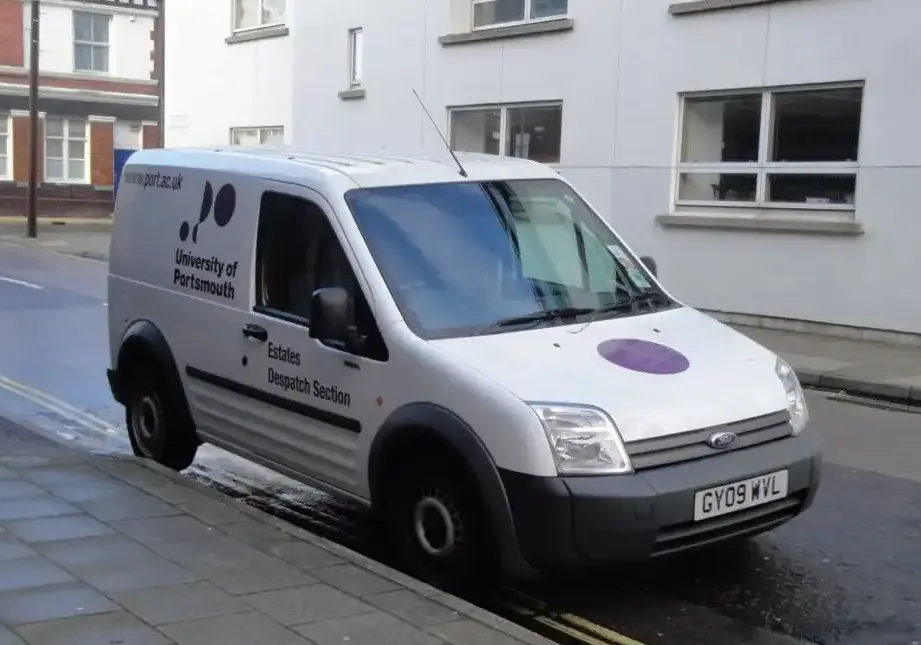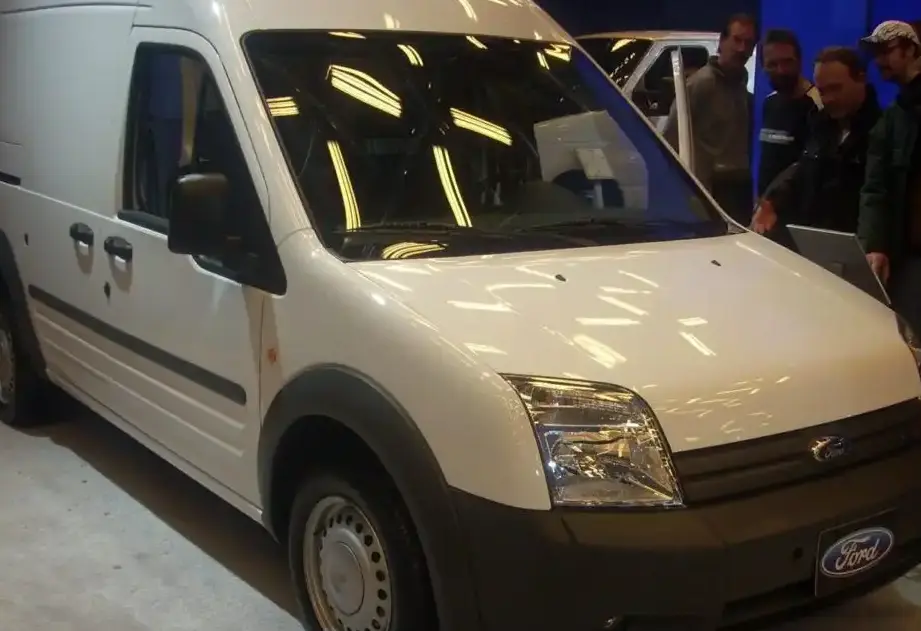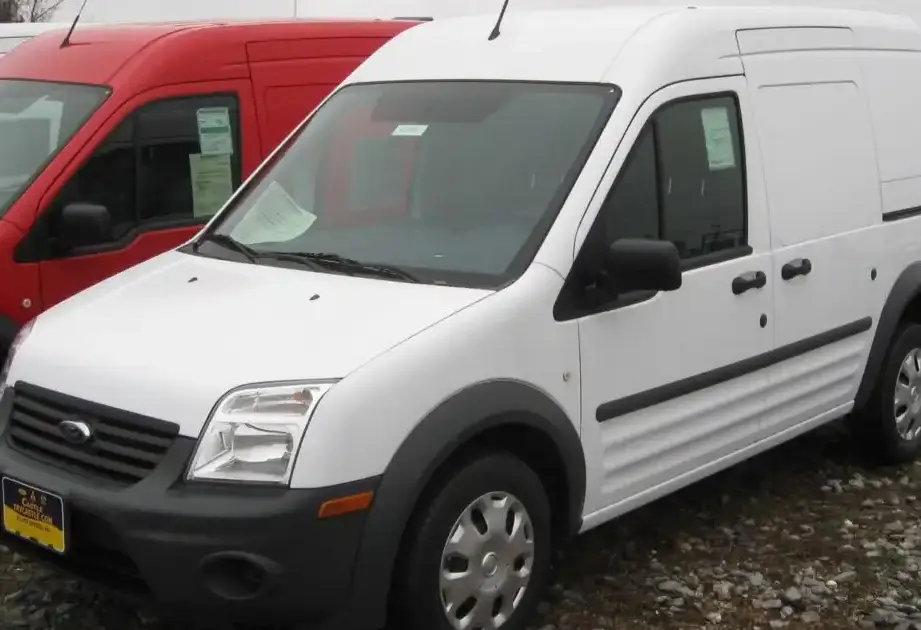
The Ford Transit Connect, particularly the first generation (2002-2013) and its 2009 facelift, represented Ford’s entry into the compact commercial van segment in North America and Europe. The L2H2 Panel Van configuration, paired with the 1.8 TDCi diesel engine producing 75 horsepower, was a common sight in urban delivery and service fleets. Production of this specific variant ran from September 2011 to 2013. Positioned as the entry-level engine option, it prioritized fuel efficiency and affordability over outright performance, making it a practical choice for businesses focused on minimizing operating costs. This model is based on the Ford Focus C-Max platform.
Technical Specifications
| Brand | Ford |
| Model | Transit Connect |
| Generation | Transit Connect I (facelift 2009) Panel Van L2H2 |
| Type (Engine) | 1.8 TDCi (75 Hp) DPF |
| Start of production | September, 2011 |
| End of production | 2013 |
| Powertrain Architecture | Internal Combustion engine |
| Body type | Minivan |
| Seats | 2 |
| Doors | 3-5 |
| Fuel consumption (urban) | 7.3 l/100 km (32.2 US mpg, 38.7 UK mpg, 13.7 km/l) |
| Fuel consumption (extra urban) | 5.4 l/100 km (43.6 US mpg, 52.3 UK mpg, 18.5 km/l) |
| Fuel consumption (combined) | 6.1 l/100 km (38.6 US mpg, 46.3 UK mpg, 16.4 km/l) |
| CO2 emissions | 162 g/km |
| Fuel Type | Diesel |
| Acceleration 0 – 100 km/h | 21 sec |
| Acceleration 0 – 62 mph | 21 sec |
| Acceleration 0 – 60 mph | 20 sec |
| Maximum speed | 142 km/h (88.23 mph) |
| Emission standard | Euro 5 |
| Weight-to-power ratio | 19.1 kg/Hp, 52.4 Hp/tonne |
| Weight-to-torque ratio | 6.5 kg/Nm, 153.6 Nm/tonne |
| Power | 75 Hp @ 4000 rpm |
| Power per litre | 42.8 Hp/l |
| Torque | 220 Nm @ 1900 rpm (162.26 lb.-ft. @ 1900 rpm) |
| Engine layout | Front, Transverse |
| Engine Model/Code | Duratorq / BHPA, P7PA, R2PA |
| Engine displacement | 1753 cm3 (106.97 cu. in.) |
| Number of cylinders | 4 |
| Engine configuration | Inline |
| Cylinder Bore | 82.5 mm (3.25 in.) |
| Piston Stroke | 82 mm (3.23 in.) |
| Compression ratio | 19.4:1 |
| Number of valves per cylinder | 2 |
| Fuel injection system | Diesel Commonrail |
| Engine aspiration | Turbocharger, Intercooler |
| Valvetrain | SOHC |
| Engine oil capacity | 5.6 l (5.92 US qt | 4.93 UK qt) |
| Coolant capacity | 7 l (7.4 US qt | 6.16 UK qt) |
| Kerb Weight | 1432-1560 kg (3157.02 – 3439.21 lbs.) |
| Max. weight | 2260 kg (4982.45 lbs.) |
| Max load | 700-828 kg (1543.24 – 1825.43 lbs.) |
| Trunk (boot) space – minimum | 3700 l (130.66 cu. ft.) |
| Trunk (boot) space – maximum | 4300 l (151.85 cu. ft.) |
| Fuel tank capacity | 60 l (15.85 US gal | 13.2 UK gal) |
| Permitted trailer load (braked) | 1200 kg (2645.55 lbs.) |
| Permitted trailer load (unbraked) | 750 kg (1653.47 lbs.) |
| Length | 4525 mm (178.15 in.) |
| Width | 1795 mm (70.67 in.) |
| Width (including mirrors) | 2044 mm (80.47 in.) |
| Height | 1980 mm (77.95 in.) |
| Wheelbase | 2912 mm (114.65 in.) |
| Front track | 1505 mm (59.25 in.) |
| Rear track | 1552 mm (61.1 in.) |
| Front overhang | 861 mm (33.9 in.) |
| Rear overhang | 751 mm (29.57 in.) |
| Ride height | 166 mm (6.54 in.) |
| Turning circle | 11.9 m (39.04 ft.) |
| Drivetrain | Front wheel drive |
| Number of gears | 5 |
| Gearbox type | Manual transmission |
| Front suspension | Independent, McPherson with coil spring and anti-roll bar |
| Rear suspension | Transverse stabilizer, Leaf spring |
| Front brakes | Ventilated discs |
| Rear brakes | Disc |
| Safety systems | ABS (Anti-lock braking system) |
| Steering type | Steering rack and pinion |
| Power steering | Hydraulic |
| Tires size | 195/65 R15 |
| Wheel rims size | 6J x 15 |
Powertrain & Engine Architecture
The 1.8 TDCi engine, specifically the BHPA, P7PA, or R2PA variants, is a four-cylinder diesel engine belonging to Ford’s Duratorq family. This engine utilizes a common rail direct injection system, delivering fuel at extremely high pressure for improved combustion efficiency and reduced emissions. The engine features a single overhead camshaft (SOHC) valvetrain operating two valves per cylinder. A turbocharger with an intercooler is employed to increase power output and improve torque across a wider RPM range. The particulate filter (DPF) was a crucial component for meeting Euro 5 emission standards. The five-speed manual transmission was the standard offering for this variant, chosen for its simplicity and cost-effectiveness. The transmission’s gear ratios were optimized for fuel economy and urban driving, rather than outright acceleration.
Driving Characteristics
The 75 horsepower output and 220 Nm (162 lb-ft) of torque of the 1.8 TDCi engine in the Transit Connect L2H2 resulted in a utilitarian driving experience. Acceleration was modest, with a 0-60 mph time around 20 seconds. The engine felt strained when fully loaded or climbing hills. However, the engine’s torque delivery at low RPMs made it suitable for city driving and stop-and-go traffic. The manual transmission, while not sporty, offered precise shifts and contributed to the van’s overall fuel efficiency. Compared to higher-output versions of the Transit Connect, such as those with the 1.6-liter EcoBoost gasoline engine, this diesel variant prioritized economy over performance.
Equipment & Trim Levels
The 1.8 TDCi 75hp variant of the Transit Connect L2H2 typically served as the base model. Standard equipment included power steering, driver and passenger airbags, an anti-lock braking system (ABS), and a basic audio system. The interior was functional and durable, with hard-wearing plastic trim and cloth upholstery. Optional extras included air conditioning, power windows, and a more advanced audio system with Bluetooth connectivity. The L2H2 configuration offered a generous cargo capacity of 3700-4300 liters, making it ideal for businesses requiring ample space for goods or equipment.
Chassis & Braking
The Transit Connect utilized a McPherson strut front suspension and a leaf spring rear suspension. This setup provided a reasonable balance between ride comfort and load-carrying capacity. The front brakes were ventilated discs, while the rear brakes were solid discs. The hydraulic power steering offered light and precise steering feel. The van’s relatively lightweight construction helped to compensate for the modest engine power.
Market Reception & Comparison
The 1.8 TDCi 75hp Transit Connect was generally well-received by fleet operators and small business owners who prioritized fuel efficiency and low running costs. Critics noted its modest performance but praised its practicality and affordability. Compared to the gasoline-powered Transit Connect models, the diesel variant offered significantly better fuel economy. However, the diesel engine was more expensive to maintain due to the complexity of the fuel injection system and the potential for DPF issues. Against competitors like the Fiat Doblo and Renault Kangoo, the Transit Connect offered a competitive combination of price, space, and fuel efficiency.
Legacy
The 1.8 TDCi engine, while not known for its longevity in some applications, proved to be reasonably reliable in the Transit Connect, particularly when properly maintained. Common issues included DPF clogging, fuel injector failures, and turbocharger wear. Today, used examples of this variant are readily available and relatively affordable. They remain a popular choice for budget-conscious buyers seeking a practical and economical commercial van. The Transit Connect, in general, established Ford as a significant player in the compact van segment, paving the way for subsequent generations of the vehicle.