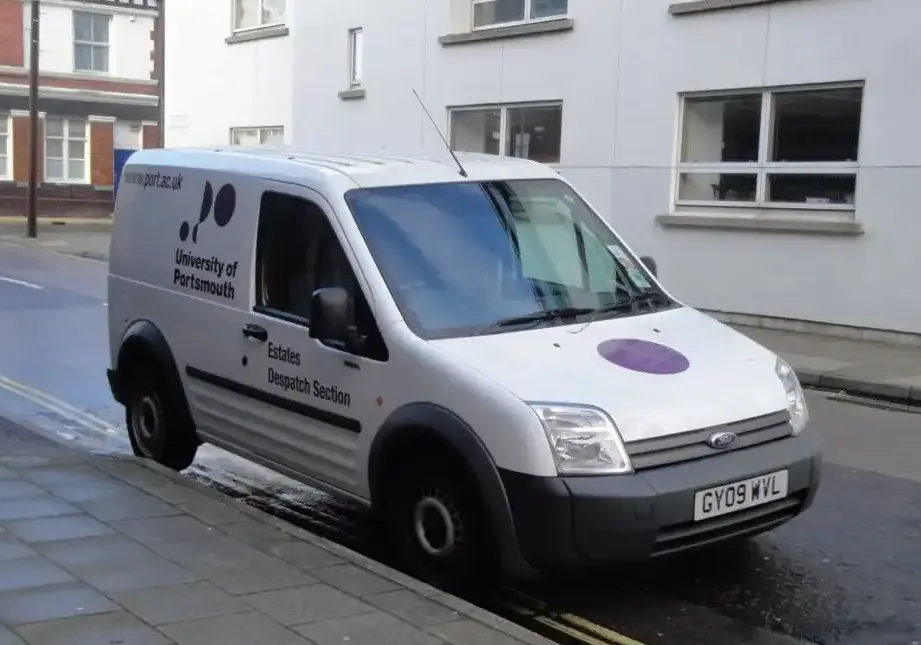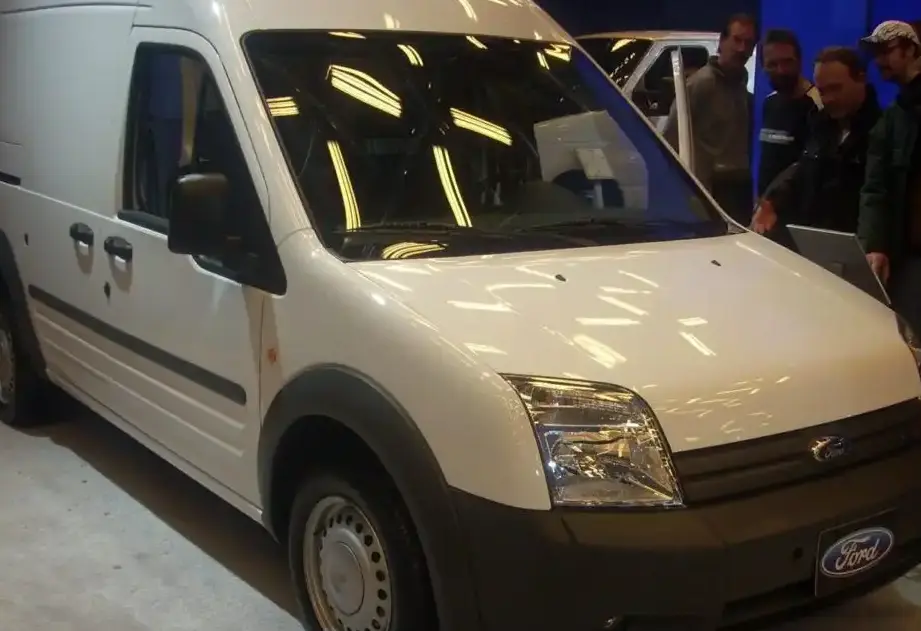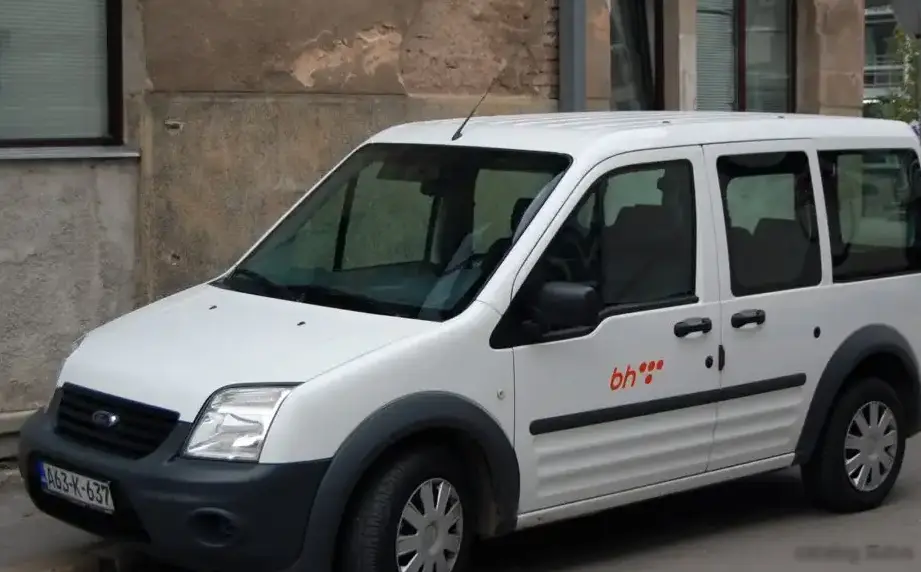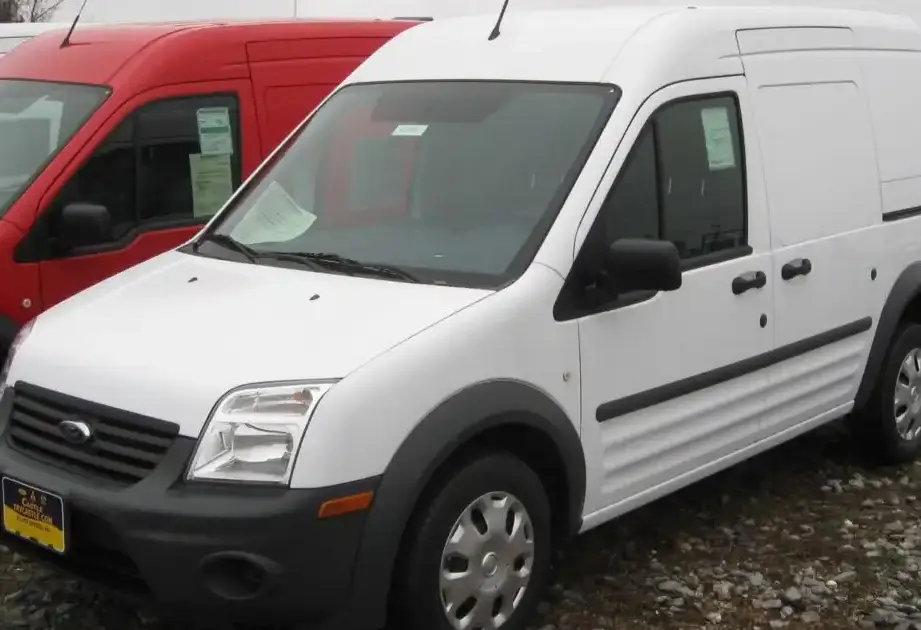
The Ford Transit Connect, introduced for the 2009 model year in North America, represented Ford’s entry into the compact commercial van segment. Based on the European Ford Focus platform (specifically the C170 series), the Transit Connect aimed to provide a more fuel-efficient and maneuverable alternative to larger, body-on-frame vans. The 2009 facelift brought updated styling and, importantly, the introduction of a 2.0-liter Duratec engine paired with a four-speed automatic transmission. This configuration, offered in the L2H2 panel van variant, positioned itself as a practical choice for businesses and individuals needing a versatile cargo solution with the convenience of an automatic gearbox. Production of this specific variant ran from 2009 through 2013.
Technical Specifications
| Brand | Ford |
| Model | Transit Connect |
| Generation | Transit Connect I (facelift 2009) Panel Van L2H2 |
| Type (Engine) | 2.0 (136 Hp) Automatic |
| Start of production | 2009 |
| End of production | 2013 |
| Powertrain Architecture | Internal Combustion engine |
| Body type | Minivan |
| Seats | 2 |
| Doors | 5 |
| Fuel consumption (economy) – urban (EPA) | 11.2 l/100 km (21 US mpg, 25.2 UK mpg) |
| Fuel consumption (economy) – extra urban (EPA) | 8.7-9 l/100 km (27 – 26.1 US mpg, 32.5 – 31.4 UK mpg) |
| Fuel consumption (economy) – combined (EPA) | 10.2 l/100 km (23.1 US mpg, 27.7 UK mpg) |
| Fuel Type | Petrol (Gasoline) |
| Weight-to-power ratio | 11.4 kg/Hp, 88.1 Hp/tonne |
| Weight-to-torque ratio | 8.9 kg/Nm, 112.7 Nm/tonne |
| Power | 136 Hp @ 6300 rpm |
| Power per litre | 68 Hp/l |
| Torque | 174 Nm @ 4750 rpm (128.34 lb.-ft. @ 4750 rpm) |
| Maximum engine speed | 7000 rpm |
| Engine layout | Front, Transverse |
| Engine Model/Code | Duratec |
| Engine displacement | 1999 cm3 (121.99 cu. in.) |
| Number of cylinders | 4 |
| Engine configuration | Inline |
| Cylinder Bore | 87.5 mm (3.44 in.) |
| Piston Stroke | 83.1 mm (3.27 in.) |
| Compression ratio | 10:1 |
| Number of valves per cylinder | 4 |
| Fuel injection system | Multi-port manifold injection |
| Engine aspiration | Naturally aspirated engine |
| Valvetrain | DOHC |
| Engine oil capacity | 4.3 l (4.54 US qt | 3.78 UK qt) |
| Coolant | 5.7 l (6.02 US qt | 5.02 UK qt) |
| Kerb Weight | 1544 kg (3403.94 lbs.) |
| Max. weight | 2270 kg (5004.49 lbs.) |
| Max load | 726 kg (1600.56 lbs.) |
| Trunk (boot) space – minimum | 3670 l (129.6 cu. ft.) |
| Fuel tank capacity | 58 l (15.32 US gal | 12.76 UK gal) |
| Length | 4587 mm (180.59 in.) |
| Width | 1795 mm (70.67 in.) |
| Width including mirrors | 2113 mm (83.19 in.) |
| Height | 2014 mm (79.29 in.) |
| Wheelbase | 2912 mm (114.65 in.) |
| Front track | 1505 mm (59.25 in.) |
| Rear (Back) track | 1552 mm (61.1 in.) |
| Ride height (ground clearance) | 183 mm (7.2 in.) |
| Minimum turning circle (turning diameter) | 11.9 m (39.04 ft.) |
| Drivetrain Architecture | The Internal combustion engine (ICE) drives the front wheels of the vehicle. |
| Drive wheel | Front wheel drive |
| Number of gears and type of gearbox | 4 gears, automatic transmission |
| Front suspension | Independent, type McPherson with coil spring and anti-roll bar |
| Rear suspension | Transverse stabilizer, Leaf spring |
| Front brakes | Disc |
| Rear brakes | Drum |
| Assisting systems | ABS (Anti-lock braking system) |
| Steering type | Steering rack and pinion |
| Power steering | Hydraulic Steering |
| Tires size | 205/65 R15 |
| Wheel rims size | 15 |
Powertrain & Engine Architecture
The heart of this Transit Connect variant is the Ford Duratec 2.0-liter inline-four cylinder engine. This engine, part of the Mazda-Ford joint venture, utilizes a cast iron block with an aluminum cylinder head. The engine employs multi-port fuel injection and a double overhead camshaft (DOHC) valvetrain with four valves per cylinder, contributing to its respectable power output for its displacement. The engine code is generally identified as a variation within the Duratec family. The four-speed automatic transmission, while providing convenience, was a relatively conventional unit for its time. It featured a torque converter and electronically controlled shifts. While not known for its cutting-edge efficiency, it offered smooth operation for everyday driving. The transmission’s gear ratios were optimized for fuel economy and usability rather than outright performance.
Driving Characteristics
The 136 horsepower and 128 lb-ft of torque delivered by the 2.0-liter engine and automatic transmission resulted in adequate, but not exhilarating, performance. Acceleration was best described as steady, with a 0-60 mph time estimated around 11-12 seconds. The automatic transmission, while smooth, did contribute to a noticeable power loss compared to the available manual transmission. The gear ratios were spaced to prioritize fuel efficiency, meaning the engine often felt strained during quick acceleration or when fully loaded. Compared to the higher-output 1.8L versions available in Europe, this 2.0L automatic offered a more relaxed driving experience, sacrificing some performance for ease of use. The front-wheel-drive configuration provided predictable handling, but the relatively soft suspension tuning prioritized ride comfort over sporty handling.
Equipment & Trim Levels
The L2H2 panel van configuration of the Transit Connect was primarily geared towards commercial use, so standard equipment was relatively basic. Typically, it included features like air conditioning, a basic audio system (often with an AM/FM radio and CD player), power windows and locks, and a driver’s airbag. The interior was utilitarian, with durable plastic trim and vinyl upholstery. Optional extras included cruise control, upgraded audio systems, and rear cargo area shelving or partitions. The L2H2 designation refers to the van’s length (L2 – long wheelbase) and height (H2 – high roof), maximizing cargo capacity.
Chassis & Braking
The Transit Connect utilized a McPherson strut front suspension and a leaf spring rear suspension. This setup provided a comfortable ride, particularly when the vehicle was lightly loaded. The rear drum brakes were a cost-saving measure, and while adequate for normal use, they lacked the stopping power of disc brakes. The front brakes were discs. Anti-lock Braking System (ABS) was standard, enhancing safety. The steering was rack-and-pinion with hydraulic power assist, providing light and easy steering feel. The 205/65 R15 tires offered a good balance of ride comfort and handling.
Market Reception & Comparison
The Ford Transit Connect, and specifically the 2.0-liter automatic variant, was generally well-received by critics for its practicality, fuel efficiency, and maneuverability. However, the automatic transmission was sometimes criticized for its lack of responsiveness and contribution to slightly lower fuel economy compared to the manual transmission. Compared to other small vans available at the time, such as the Chevrolet HHR or Dodge Ram C/V, the Transit Connect offered a significantly larger cargo area and a more van-like driving experience. Its fuel economy was competitive, averaging around 23 mpg in combined driving.
Legacy
The first-generation Ford Transit Connect established a strong foothold for Ford in the compact commercial van market. The 2.0-liter Duratec engine paired with the four-speed automatic transmission proved to be reasonably reliable, although regular maintenance was crucial. Common issues included occasional transmission slippage and oil leaks. Today, these vans are often found in the used market as affordable work vehicles. While not known for their performance or luxury, they remain popular for their practicality and cargo capacity. The Transit Connect paved the way for subsequent generations, which incorporated more advanced technology and improved fuel efficiency.