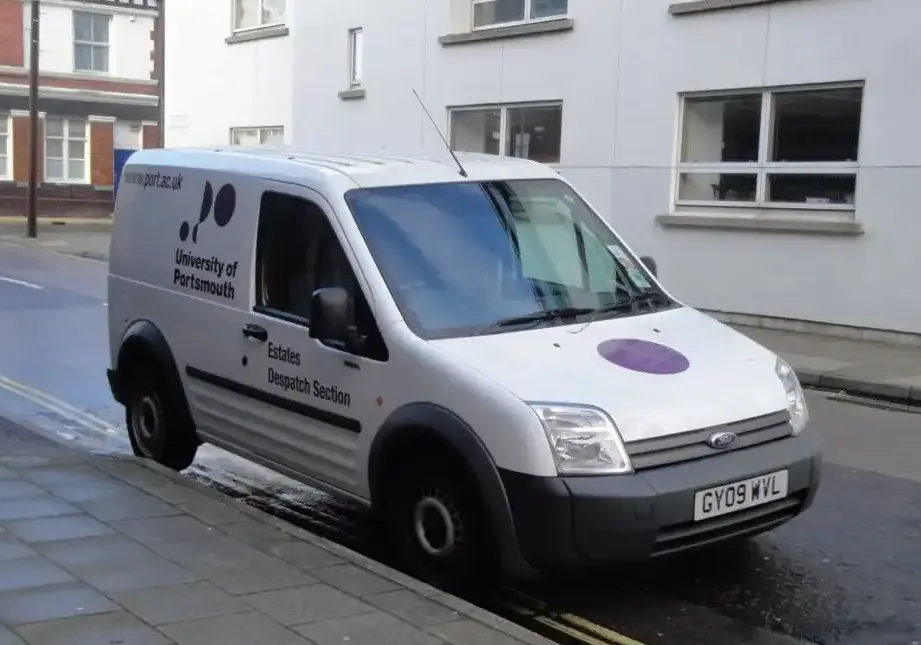
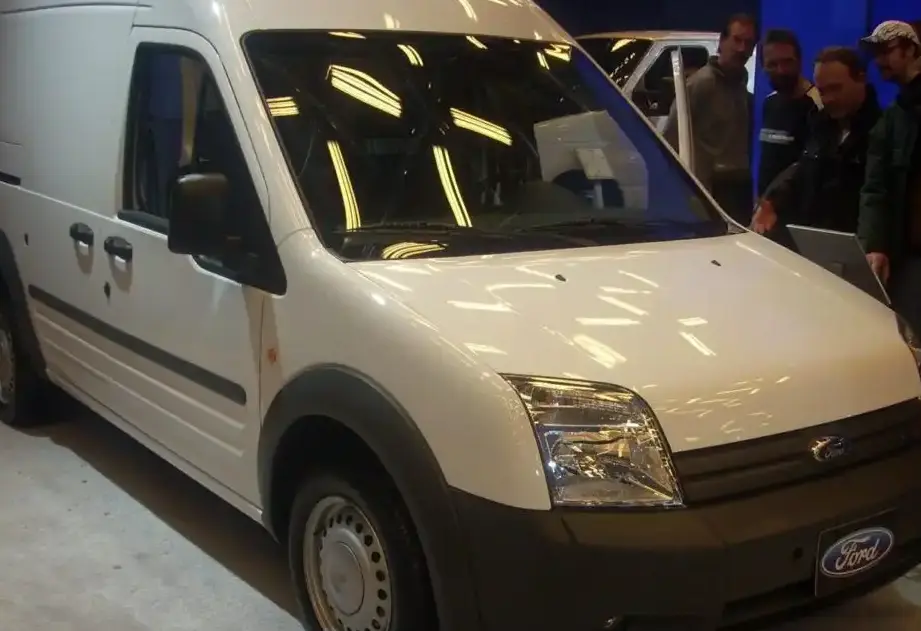
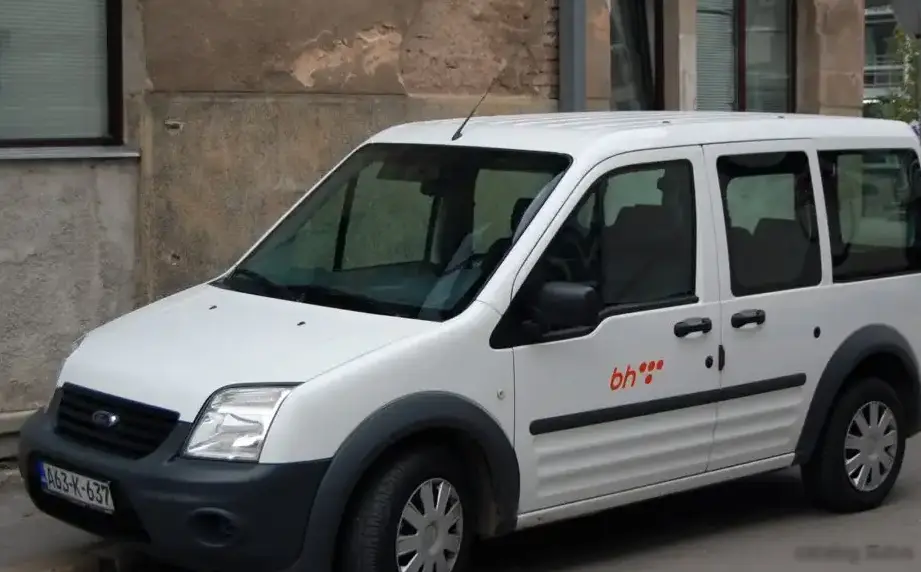
The Ford Transit Connect II Double Cab-in-Van L1 1.5 TDCi (120 hp) PowerShift was a commercially-oriented vehicle produced from 2015 to 2018. Part of the second generation of the Transit Connect, this variant aimed to provide a balance between cargo capacity, passenger comfort, and fuel efficiency for businesses and families needing a versatile vehicle. It occupied a mid-range position within the Transit Connect lineup, offering more power and a more sophisticated transmission than the base models, but remaining more affordable than the higher-output diesel options. The Transit Connect, in general, was primarily marketed in Europe and North America, serving as a popular choice for small businesses, delivery services, and as a family vehicle where practicality was paramount.
Technical Specifications
| Brand | Ford |
| Model | Transit Connect |
| Generation | Transit Connect II Double Cab-in-Van L1 |
| Type (Engine) | 1.5 TDCi (120 Hp) PowerShift |
| Start of production | 2015 |
| End of production | 2018 |
| Powertrain Architecture | Internal Combustion engine |
| Body type | Minivan |
| Seats | 5 |
| Doors | 5 |
| Fuel consumption (economy) – urban (NEDC) | 5.4 l/100 km (43.6 US mpg, 52.3 UK mpg, 18.5 km/l) |
| Fuel consumption (economy) – extra urban (NEDC) | 4.7 l/100 km (50 US mpg, 60.1 UK mpg, 21.3 km/l) |
| Fuel consumption (economy) – combined (NEDC) | 5 l/100 km (47 US mpg, 56.5 UK mpg, 20 km/l) |
| CO2 emissions (NEDC) | 129 g/km |
| Fuel Type | Diesel |
| Emission standard | Euro 6 |
| Weight-to-power ratio | 12.7 kg/Hp, 78.8 Hp/tonne |
| Weight-to-torque ratio | 5.1 kg/Nm, 197 Nm/tonne |
| Power | 120 Hp |
| Power per litre | 80.1 Hp/l |
| Torque | 300 Nm @ 1750-2000 rpm (221.27 lb.-ft. @ 1750-2000 rpm) |
| Engine layout | Front, Transverse |
| Engine Model/Code | Duratorq / XWGB |
| Engine displacement | 1499 cm3 (91.47 cu. in.) |
| Number of cylinders | 4 |
| Engine configuration | Inline |
| Cylinder Bore | 73.5 mm (2.89 in.) |
| Piston Stroke | 88.3 mm (3.48 in.) |
| Number of valves per cylinder | 2 |
| Fuel injection system | Diesel Commonrail |
| Engine aspiration | Turbocharger, Intercooler |
| Valvetrain | SOHC |
| Engine oil capacity | 3.85 l (4.07 US qt, 3.39 UK qt) |
| Coolant | 6 l (6.34 US qt, 5.28 UK qt) |
| Kerb Weight | 1523-1525 kg (3357.64 – 3362.05 lbs.) |
| Max. weight | 2220 kg (4894.26 lbs.) |
| Max load | 695-697 kg (1532.21 – 1536.62 lbs.) |
| Trunk (boot) space – minimum | 1200 l (42.38 cu. ft.) |
| Trunk (boot) space – maximum | 2200 l (77.69 cu. ft.) |
| Fuel tank capacity | 60 l (15.85 US gal, 13.2 UK gal) |
| Permitted trailer load with brakes (12%) | 950 kg (2094.39 lbs.) |
| Permitted trailer load without brakes | 750 kg (1653.47 lbs.) |
| Permitted towbar download | 75 kg (165.35 lbs.) |
| Length | 4418 mm (173.94 in.) |
| Width | 1835 mm (72.24 in.) |
| Width including mirrors | 2137 mm (84.13 in.) |
| Height | 1836-1844 mm (72.28 – 72.6 in.) |
| Wheelbase | 2662 mm (104.8 in.) |
| Front track | 1568 mm (61.73 in.) |
| Rear (Back) track | 1584-1585 mm (62.36 – 62.4 in.) |
| Front overhang | 878 mm (34.57 in.) |
| Rear overhang | 878 mm (34.57 in.) |
| Ride height (ground clearance) | 154 mm (6.06 in.) |
| Minimum turning circle (turning diameter) | 11.7 m (38.39 ft.) |
| Drivetrain Architecture | The Internal combustion engine (ICE) drives the front wheels of the vehicle. |
| Drive wheel | Front wheel drive |
| Number of gears and type of gearbox | 6 gears, automatic transmission PowerShift |
| Front suspension | Independent, type McPherson with coil spring and anti-roll bar |
| Rear suspension | Coil spring, Torsion |
| Front brakes | Ventilated discs, 320×25 mm |
| Rear brakes | Disc, 280×11 mm |
| Assisting systems | ABS (Anti-lock braking system) |
| Steering type | Steering rack and pinion |
| Power steering | Electric Steering |
| Tires size | 205/60 R16 |
| Wheel rims size | 6.5J x 16 |
INTRODUCTION
The Ford Transit Connect II Double Cab-in-Van L1 1.5 TDCi (120 hp) PowerShift, produced between 2015 and 2018, represents a significant iteration of Ford’s popular compact commercial vehicle. Built on the 1HX0/A3 platform, shared with the Ford Focus, this variant aimed to bridge the gap between commercial practicality and passenger comfort. The “Double Cab-in-Van” configuration offered seating for five, while retaining a substantial cargo area, making it suitable for businesses requiring both personnel and equipment transport. The 1.5 TDCi engine, coupled with the six-speed PowerShift dual-clutch transmission, was positioned as a fuel-efficient and relatively refined option within the Transit Connect range.
Powertrain & Engine Architecture
The heart of this Transit Connect variant is the 1.5-liter Duratorq TDCi diesel engine, identified by the code XWGB. This engine is a four-cylinder, inline configuration, utilizing a turbocharger with intercooling to boost power and efficiency. The engine employs a common-rail direct fuel injection system, delivering fuel at high pressure for optimized combustion. The valvetrain features a single overhead camshaft (SOHC) design, operating two valves per cylinder. The PowerShift transmission is a six-speed dual-clutch transmission (DCT), offering quicker and smoother gear changes compared to a traditional automatic. This transmission operates as two separate manual transmissions within one housing, pre-selecting the next gear for seamless shifts. The engine produces 120 horsepower and 300 Nm (221 lb-ft) of torque between 1750 and 2000 rpm. The engine also incorporates a particulate filter to meet stringent Euro 6 emission standards, and a Start & Stop system to further improve fuel economy.
Driving Characteristics
The 120 hp 1.5 TDCi PowerShift combination in the Transit Connect offers a reasonable balance of performance and economy. While not particularly sporty, it provides adequate power for everyday driving and typical commercial tasks. Acceleration is modest, but the PowerShift transmission helps to keep the engine in its optimal torque band. The gear ratios are tuned for fuel efficiency, meaning the engine can feel slightly strained when fully loaded or climbing hills. Compared to the higher-output 1.6-liter TDCi versions, this variant feels less responsive, but it offers significantly better fuel economy. The PowerShift transmission, while generally smooth, can exhibit some hesitation at low speeds or during parking maneuvers, a characteristic sometimes noted in early iterations of this transmission. The front-wheel-drive configuration provides predictable handling, but traction can be limited in slippery conditions.
Equipment & Trim Levels
The Double Cab-in-Van L1 1.5 TDCi (120 hp) PowerShift typically came equipped with a practical, yet functional interior. Standard features included air conditioning, power windows, a basic audio system with USB connectivity, and a driver’s airbag. The interior upholstery was typically durable cloth. The “Double Cab” configuration features a second row of seats capable of accommodating three passengers, although legroom can be limited. Optional extras included upgraded audio systems, navigation, parking sensors, and alloy wheels. Higher trim levels might have added features like cruise control, automatic headlights, and rain-sensing wipers. The dashboard layout is straightforward and designed for ease of use, prioritizing functionality over luxury.
Chassis & Braking
The Transit Connect II utilizes a McPherson strut independent suspension setup at the front, providing a comfortable ride and decent handling. The rear suspension employs a coil spring and torsion beam arrangement, which is a cost-effective solution for load-carrying applications. The braking system consists of ventilated discs on the front wheels (320x25mm) and solid discs on the rear wheels (280x11mm). Anti-lock Braking System (ABS) is standard. The vehicle’s weight-to-power ratio of 12.7 kg/hp and weight-to-torque ratio of 5.1 kg/Nm reflect its focus on practicality rather than outright performance. Stabilizer bars are fitted to both the front and rear axles to reduce body roll during cornering.
Market Reception & Comparison
The Ford Transit Connect II Double Cab-in-Van L1 1.5 TDCi (120 hp) PowerShift was generally well-received by critics as a practical and fuel-efficient option for businesses and families. Its combination of cargo space, passenger capacity, and relatively low running costs made it a compelling choice in its segment. Compared to the higher-powered diesel variants, this version offered better fuel economy, but at the expense of performance. The PowerShift transmission was sometimes criticized for its occasional hesitation, but it was generally considered a step up from traditional automatic transmissions in terms of smoothness and efficiency. Fuel economy figures of around 5.0 l/100 km (47 US mpg) were competitive for its class.
Legacy
The 1.5 TDCi PowerShift powertrain in the Transit Connect II has proven to be reasonably reliable, although the PowerShift transmission has been the subject of some reported issues, particularly in earlier production years. Regular maintenance, including timely transmission fluid changes, is crucial for ensuring longevity. In the used car market, these Transit Connects represent a good value proposition for buyers seeking a versatile and economical vehicle. They are often found in the hands of small businesses and tradespeople, but also appeal to families needing a spacious and practical vehicle. While not the most exciting vehicle to drive, the Transit Connect II Double Cab-in-Van L1 1.5 TDCi (120 hp) PowerShift remains a popular and capable workhorse.