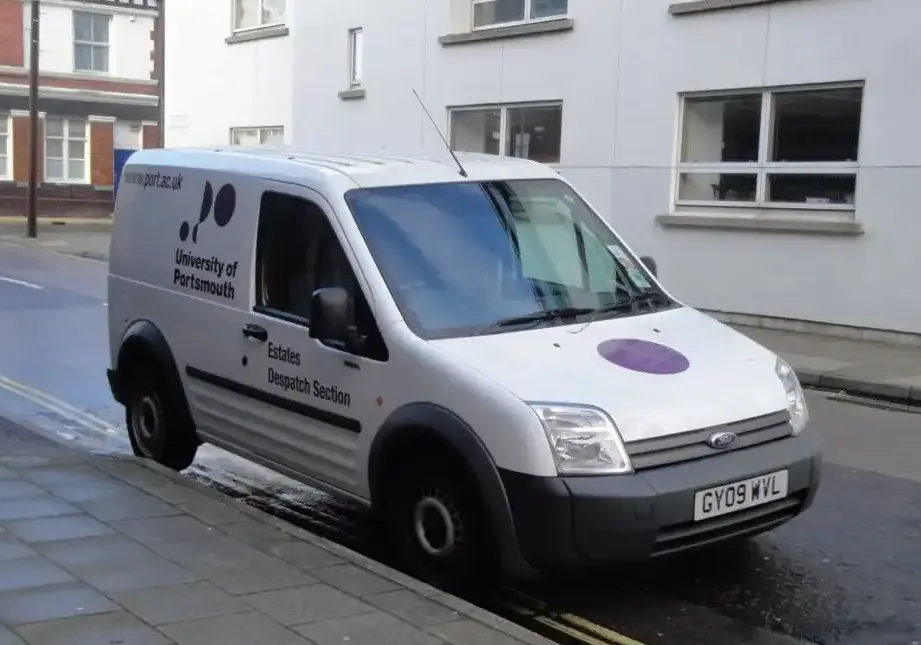
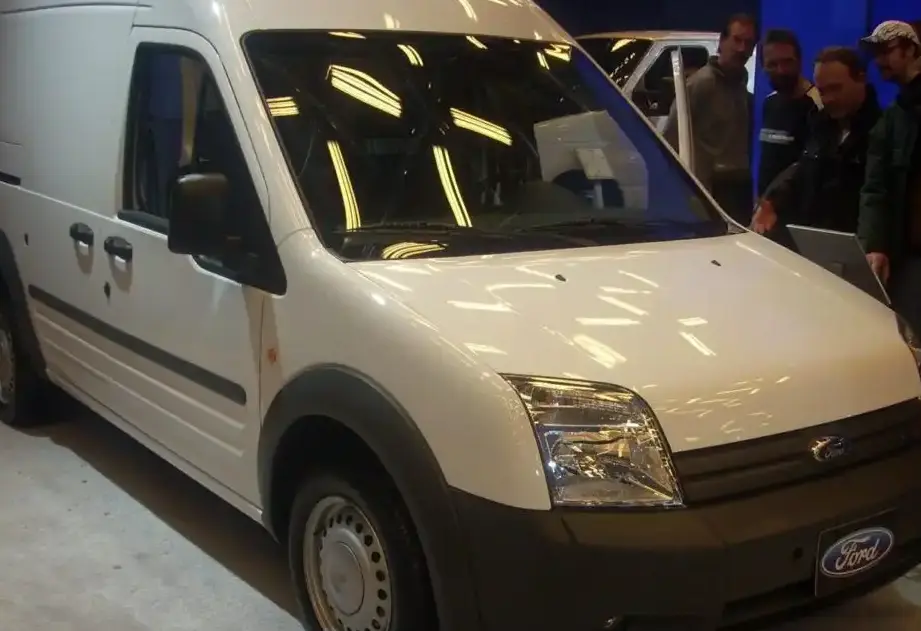
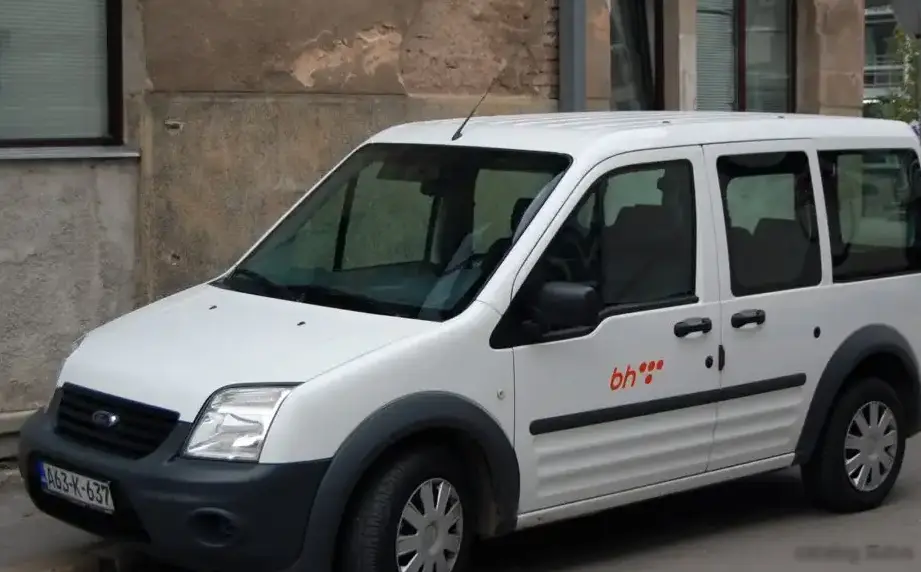
The Ford Transit Connect II Double Cab-in-Van L1 1.6 TDCi (75 hp) Start-Stop is a commercial vehicle produced by Ford between 2013 and 2016. Part of the second generation of the Transit Connect, this variant occupied the entry-level position in the lineup, offering a balance of practicality, fuel efficiency, and affordability. It was primarily marketed towards small businesses and tradespeople requiring a versatile vehicle for both cargo and passenger transport, particularly in European and North American markets. The “Double Cab-in-Van” configuration provided seating for five occupants alongside a useful cargo area, making it a popular choice for those needing to carry both people and equipment.
Technical Specifications
| Brand | Ford |
| Model | Transit Connect |
| Generation | Transit Connect II Double Cab-in-Van L1 |
| Type (Engine) | 1.6 TDCi (75 Hp) Start-Stop |
| Start of production | 2013 |
| End of production | 2016 |
| Powertrain Architecture | Internal Combustion engine |
| Body type | Minivan |
| Seats | 5 |
| Doors | 5 |
| Fuel consumption (urban) | 4.8-5 l/100 km (49-47 US mpg, 58.9-56.5 UK mpg, 20.8-20 km/l) |
| Fuel consumption (extra urban) | 4.2-4.3 l/100 km (56-54.7 US mpg, 67.3-65.7 UK mpg, 23.8-23.3 km/l) |
| Fuel consumption (combined) | 4.4-4.6 l/100 km (53.5-51.1 US mpg, 64.2-61.4 UK mpg, 22.7-21.7 km/l) |
| CO2 emissions | 115-119 g/km |
| Fuel Type | Diesel |
| Emission standard | Euro 5 |
| Weight-to-power ratio | 20.1 kg/Hp, 49.8 Hp/tonne |
| Weight-to-torque ratio | 6.8 kg/Nm, 146.2 Nm/tonne |
| Power | 75 Hp @ 3500 rpm |
| Power per litre | 48.1 Hp/l |
| Torque | 220 Nm @ 1500 rpm (162.26 lb.-ft. @ 1500 rpm) |
| Engine layout | Front, Transverse |
| Engine Model/Code | Duratorq / UBGA |
| Engine displacement | 1560 cm3 (95.2 cu. in.) |
| Number of cylinders | 4 |
| Engine configuration | Inline |
| Cylinder Bore | 75 mm (2.95 in.) |
| Piston Stroke | 88.3 mm (3.48 in.) |
| Compression ratio | 16:1 |
| Number of valves per cylinder | 2 |
| Fuel injection system | Diesel Commonrail |
| Engine aspiration | Turbocharger, Intercooler |
| Valvetrain | SOHC |
| Engine oil capacity | 6.2 l (6.55 US qt | 5.46 UK qt) |
| Coolant capacity | 7.3 l (7.71 US qt | 6.42 UK qt) |
| Kerb Weight | 1505-1519 kg (3317.96 – 3348.82 lbs.) |
| Max. weight | 2230 kg (4916.31 lbs.) |
| Max load | 711-725 kg (1567.49 – 1598.35 lbs.) |
| Trunk (boot) space – minimum | 1200 l (42.38 cu. ft.) |
| Trunk (boot) space – maximum | 2200 l (77.69 cu. ft.) |
| Fuel tank capacity | 60 l (15.85 US gal | 13.2 UK gal) |
| Permitted trailer load (braked) | 1200 kg (2645.55 lbs.) |
| Permitted trailer load (unbraked) | 750 kg (1653.47 lbs.) |
| Permitted towbar download | 75 kg (165.35 lbs.) |
| Length | 4418 mm (173.94 in.) |
| Width | 1835 mm (72.24 in.) |
| Width (including mirrors) | 2137 mm (84.13 in.) |
| Height | 1836 mm (72.28 in.) |
| Wheelbase | 2662 mm (104.8 in.) |
| Front track | 1568 mm (61.73 in.) |
| Rear track | 1584 mm (62.36 in.) |
| Front overhang | 878 mm (34.57 in.) |
| Rear overhang | 878 mm (34.57 in.) |
| Ride height (ground clearance) | 154 mm (6.06 in.) |
| Minimum turning circle | 11.7 m (38.39 ft.) |
| Drivetrain | Front wheel drive |
| Number of gears | 5 |
| Gearbox type | Manual transmission |
| Front suspension | Independent, McPherson with coil spring and anti-roll bar |
| Rear suspension | Coil spring, Torsion |
| Front brakes | Ventilated discs, 320×25 mm |
| Rear brakes | Disc, 280×11 mm |
| Assisting systems | ABS (Anti-lock braking system) |
| Steering type | Steering rack and pinion |
| Power steering | Electric |
| Tires size | 205/60 R16 |
| Wheel rims size | 6.5J x 16 |
Powertrain & Engine Architecture
The 1.6 TDCi engine, identified by the UBGA engine code, is a four-cylinder, inline diesel engine. It utilizes a turbocharger with an intercooler to enhance power output and efficiency. The engine employs a diesel common rail direct injection system, delivering fuel directly into the combustion chamber at high pressure for optimized combustion. The valvetrain features a single overhead camshaft (SOHC) operating two valves per cylinder. The Start-Stop system, a key feature of this variant, automatically shuts off the engine when the vehicle is stationary (e.g., at traffic lights) to reduce fuel consumption and emissions. This engine is coupled with a five-speed manual transmission, chosen for its simplicity and cost-effectiveness. The transmission’s gear ratios are geared towards fuel economy rather than outright performance.
Driving Characteristics
The 75 hp output and 220 Nm of torque provide adequate, but not exhilarating, performance. Acceleration is modest, and the vehicle is best suited for urban and suburban driving. The manual transmission allows for some driver control, but the engine’s limited power means frequent downshifts are necessary when overtaking or climbing hills. Compared to higher-powered versions of the Transit Connect, such as those equipped with the 1.6-liter TDCi producing 95 or 115 hp, this variant feels noticeably slower. However, the lower power output contributes to improved fuel economy. The gear ratios are optimized for maximizing fuel efficiency at cruising speeds, resulting in a relatively relaxed driving experience on the highway.
Equipment & Trim Levels
The 1.6 TDCi (75 hp) Start-Stop variant typically came with a basic level of equipment, reflecting its position as the entry-level model. Standard features generally included power steering, ABS, a driver’s airbag, and basic audio system. The Double Cab-in-Van configuration offered seating for five, with a rear bench seat that could be folded to increase cargo space. Optional extras included air conditioning, electric windows, and upgraded audio systems. Interior upholstery was typically cloth, and the dashboard featured a functional, but relatively basic, design. The focus was on practicality and durability rather than luxury.
Chassis & Braking
The Transit Connect II utilizes a front-wheel-drive layout. The front suspension consists of independent McPherson struts with coil springs and an anti-roll bar, providing a comfortable ride and decent handling. The rear suspension employs a coil spring and torsion beam setup, which is cost-effective and space-efficient. The braking system features ventilated discs on the front wheels and solid discs on the rear wheels. ABS (Anti-lock Braking System) is standard, enhancing safety during emergency braking situations.
Market Reception & Comparison
The 1.6 TDCi (75 hp) Start-Stop variant was generally well-received as a practical and economical choice for businesses and tradespeople. Critics praised its fuel efficiency and versatility, but noted its limited power output. Compared to the more powerful versions of the Transit Connect, this variant offered a lower purchase price but compromised on performance. Its fuel economy was a key selling point, making it an attractive option for those covering high mileage. Reliability was generally good, with the Duratorq engine proving to be a robust and dependable unit.
Legacy
The 1.6 TDCi (75 hp) engine, while not the most powerful option in the Transit Connect II range, has proven to be a relatively reliable powertrain. In the used car market, these models are often sought after by budget-conscious buyers looking for a practical and economical van. Maintenance costs are generally reasonable, and parts availability is good. While not known for its speed or refinement, this variant remains a viable option for those prioritizing fuel efficiency and affordability.