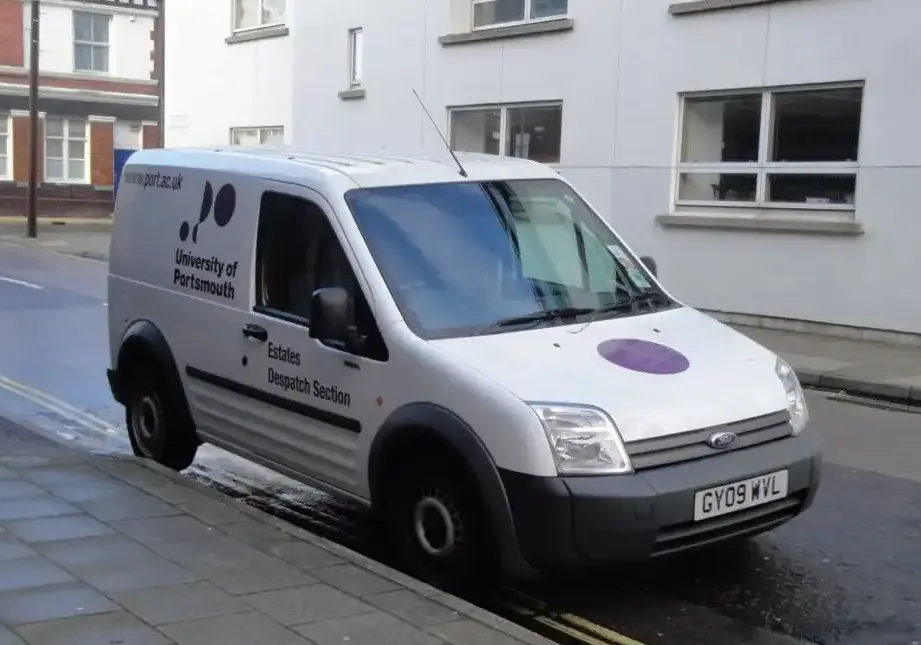
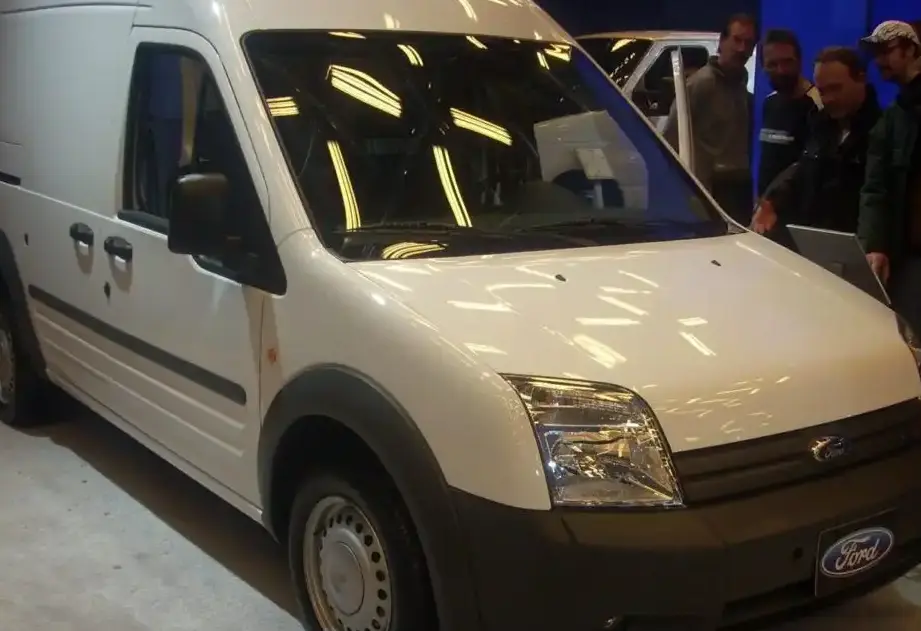
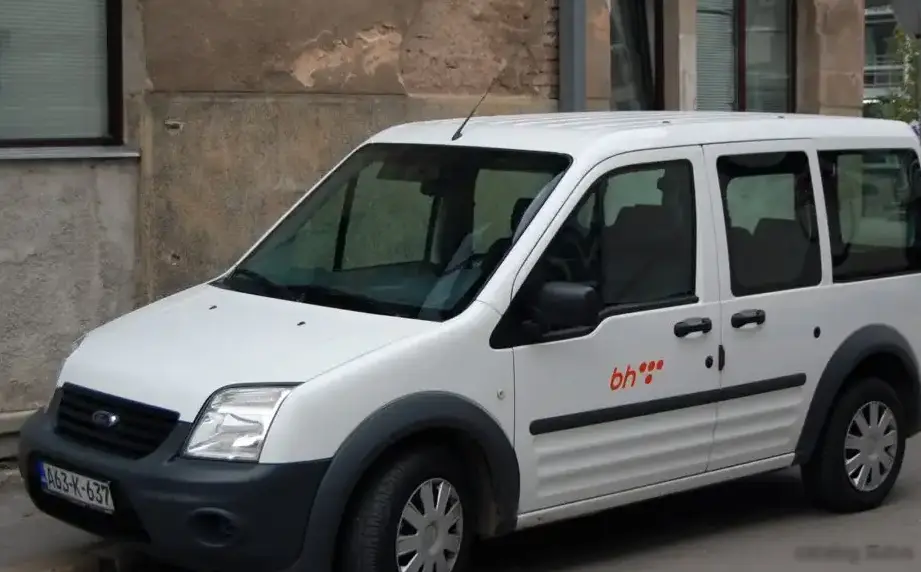
The Ford Transit Connect II Double Cab-in-Van L2 1.5 TDCi (75 hp) Start-Stop represents a specific configuration within the second generation of Ford’s popular compact commercial vehicle, produced from 2015 to 2018. Positioned as an entry-level offering in the Transit Connect lineup, this variant catered to businesses and families needing a versatile, fuel-efficient vehicle capable of both cargo and passenger transport. The “L2” designation indicates the long wheelbase version, offering increased cargo capacity compared to the standard length model. This model was primarily sold in the European market, where compact vans and crew vans are highly popular, but also saw limited sales in North America.
Technical Specifications
| Brand | Ford |
| Model | Transit Connect |
| Generation | Transit Connect II Double Cab-in-Van L2 |
| Type (Engine) | 1.5 TDCi (75 Hp) Start-Stop |
| Start of production | 2015 |
| End of production | 2018 |
| Powertrain Architecture | Internal Combustion engine |
| Body type | Minivan |
| Seats | 5 |
| Doors | 5 |
| Fuel consumption (economy) – urban (NEDC) | 4.8 l/100 km (49 US mpg, 58.9 UK mpg, 20.8 km/l) |
| Fuel consumption (economy) – extra urban (NEDC) | 4.3 l/100 km (54.7 US mpg, 65.7 UK mpg, 23.3 km/l) |
| Fuel consumption (economy) – combined (NEDC) | 4.4 l/100 km (53.5 US mpg, 64.2 UK mpg, 22.7 km/l) |
| CO2 emissions (NEDC) | 115 g/km |
| Fuel Type | Diesel |
| Emission standard | Euro 6 |
| Weight-to-power ratio | 20.9 kg/Hp, 47.9 Hp/tonne |
| Weight-to-torque ratio | 7.1 kg/Nm, 140.6 Nm/tonne |
| Power | 75 Hp |
| Power per litre | 50 Hp/l |
| Torque | 220 Nm @ 1750-2000 rpm (162.26 lb.-ft. @ 1750-2000 rpm) |
| Engine layout | Front, Transverse |
| Engine Model/Code | Duratorq / XUGA |
| Engine displacement | 1499 cm3 (91.47 cu. in.) |
| Number of cylinders | 4 |
| Engine configuration | Inline |
| Cylinder Bore | 73.5 mm (2.89 in.) |
| Piston Stroke | 88.3 mm (3.48 in.) |
| Number of valves per cylinder | 2 |
| Fuel injection system | Diesel Commonrail |
| Engine aspiration | Turbocharger, Intercooler |
| Valvetrain | SOHC |
| Engine oil capacity | 6.2 l (6.55 US qt | 5.46 UK qt) |
| Coolant | 6 l (6.34 US qt | 5.28 UK qt) |
| Kerb Weight | 1565-1567 kg (3450.23 – 3454.64 lbs.) |
| Max. weight | 2270 kg (5004.49 lbs.) |
| Max load | 703-705 kg (1549.85 – 1554.26 lbs.) |
| Trunk (boot) space – minimum | 1600 l (56.5 cu. ft.) |
| Trunk (boot) space – maximum | 2800 l (98.88 cu. ft.) |
| Fuel tank capacity | 60 l (15.85 US gal | 13.2 UK gal) |
| Permitted trailer load with brakes (12%) | 898 kg (1979.75 lbs.) |
| Permitted trailer load without brakes | 750 kg (1653.47 lbs.) |
| Permitted towbar download | 75 kg (165.35 lbs.) |
| Length | 4818 mm (189.69 in.) |
| Width | 1835 mm (72.24 in.) |
| Width including mirrors | 2137 mm (84.13 in.) |
| Height | 1828-1839 mm (71.97 – 72.4 in.) |
| Wheelbase | 3062 mm (120.55 in.) |
| Front track | 1568 mm (61.73 in.) |
| Rear (Back) track | 1584-1585 mm (62.36 – 62.4 in.) |
| Front overhang | 878 mm (34.57 in.) |
| Rear overhang | 878 mm (34.57 in.) |
| Ride height (ground clearance) | 165 mm (6.5 in.) |
| Minimum turning circle (turning diameter) | 12.5 m (41.01 ft.) |
| Drivetrain Architecture | The Internal combustion engine (ICE) drives the front wheels of the vehicle. |
| Drive wheel | Front wheel drive |
| Number of gears and type of gearbox | 5 gears, manual transmission |
| Front suspension | Independent, type McPherson with coil spring and anti-roll bar |
| Rear suspension | Coil spring, Torsion |
| Front brakes | Ventilated discs, 320×25 mm |
| Rear brakes | Disc, 280×11 mm |
| Assisting systems | ABS (Anti-lock braking system) |
| Steering type | Steering rack and pinion |
| Power steering | Electric Steering |
| Tires size | 205/60 R16 |
| Wheel rims size | 6.5J x 16 |
Powertrain & Engine Architecture
The heart of this Transit Connect variant is the 1.5-liter Duratorq TDCi diesel engine, identified by the XUGA engine code. This engine is a four-cylinder, inline configuration, utilizing a turbocharger with intercooling to boost power and efficiency. The engine employs a diesel common rail direct injection system, delivering fuel directly into the cylinders at high pressure for optimized combustion. The single overhead camshaft (SOHC) valvetrain operates two valves per cylinder. The Start-Stop system, a standard feature, automatically shuts off the engine when the vehicle is stationary (e.g., at traffic lights) to reduce fuel consumption and emissions. The engine is transversely mounted in the front of the vehicle. The 5-speed manual transmission was the only transmission option available with this engine configuration.
Driving Characteristics
The 75 horsepower output and 220 Nm (162 lb-ft) of torque, available from 1750-2000 rpm, positioned this Transit Connect as a workhorse rather than a performance vehicle. Acceleration was modest, prioritizing fuel economy over rapid speed. The 5-speed manual transmission provided adequate gear spacing for everyday driving, but required frequent shifting when fully loaded or tackling inclines. Compared to higher-output versions of the Transit Connect, such as those equipped with the 1.6-liter EcoBoost gasoline engine, this diesel variant offered significantly less power but superior fuel efficiency and low-end torque. The gear ratios were tuned for maximizing fuel economy, resulting in a slightly less responsive feel compared to sportier configurations.
Equipment & Trim Levels
The 1.5 TDCi 75 hp variant typically came with a basic level of equipment, reflecting its position as an entry-level model. Standard features generally included power steering, ABS, a driver’s airbag, and basic steel wheels. The Double Cab-in-Van configuration offered seating for five passengers, with a rear bench seat and a flexible cargo area. Optional extras included air conditioning, a radio/CD player, electric windows, and upgraded interior trim. Interior upholstery was typically a durable cloth material. The dashboard layout was functional and straightforward, prioritizing practicality over luxury.
Chassis & Braking
The Transit Connect II utilized a McPherson strut independent suspension at the front and a coil spring torsion beam suspension at the rear. This setup provided a reasonable balance between ride comfort and handling. The front brakes were ventilated discs, while the rear brakes were solid discs. ABS (Anti-lock Braking System) was standard. The suspension was tuned for carrying loads, resulting in a slightly firmer ride when unladen. Stabilizer bars were fitted to both the front and rear axles to reduce body roll during cornering.
Market Reception & Comparison
The 1.5 TDCi 75 hp Transit Connect was generally well-received for its fuel efficiency and practicality. Critics praised its versatility and low running costs, making it an attractive option for small businesses and families. However, some reviewers noted the engine’s lack of power, particularly when fully loaded. Compared to the 1.0-liter EcoBoost gasoline engine, the diesel offered better fuel economy and torque, but less overall power. Against other diesel-powered compact vans in the European market, the Transit Connect offered a competitive combination of price, fuel efficiency, and cargo capacity.
Legacy
The 1.5 TDCi engine, in general, has proven to be a relatively reliable powertrain, although like all diesel engines, it is susceptible to issues related to the diesel particulate filter (DPF) if not properly maintained. Regular servicing and the use of high-quality diesel fuel are crucial for ensuring long-term reliability. On the used car market, this variant of the Transit Connect represents a cost-effective option for those seeking a practical and fuel-efficient van. Its simplicity and relatively low maintenance costs contribute to its continued appeal. However, potential buyers should be aware of the potential for DPF-related issues and ensure a thorough inspection before purchase.