Technical Specifications
| Brand | Ford |
| Model | Transit Connect |
| Generation | Transit Connect II Double Cab-in-Van L2 |
| Type (Engine) | 1.6 TDCi (115 Hp) |
| Start of production | 2013 |
| End of production | 2016 |
| Powertrain Architecture | Internal Combustion engine |
| Body type | Minivan |
| Seats | 5 |
| Doors | 5 |
| Fuel consumption (economy) – urban (NEDC) | 5.7 l/100 km (41.3 US mpg, 49.6 UK mpg, 17.5 km/l) |
| Fuel consumption (economy) – extra urban (NEDC) | 4.4 l/100 km (53.5 US mpg, 64.2 UK mpg, 22.7 km/l) |
| Fuel consumption (economy) – combined (NEDC) | 4.9 l/100 km (48 US mpg, 57.6 UK mpg, 20.4 km/l) |
| CO2 emissions (NEDC) | 128 g/km |
| Fuel Type | Diesel |
| Emission standard | Euro 5 |
| Weight-to-power ratio | 13.7 kg/Hp, 73.1 Hp/tonne |
| Weight-to-torque ratio | 5.8 kg/Nm, 171.6 Nm/tonne |
| Power | 115 Hp @ 3600 rpm |
| Power per litre | 73.7 Hp/l |
| Torque | 270 Nm @ 1750-2500 rpm (199.14 lb.-ft. @ 1750-2500 rpm) |
| Engine layout | Front, Transverse |
| Engine Model/Code | Duratorq / T1GA |
| Engine displacement | 1560 cm3 (95.2 cu. in.) |
| Number of cylinders | 4 |
| Engine configuration | Inline |
| Cylinder Bore | 75 mm (2.95 in.) |
| Piston Stroke | 88.3 mm (3.48 in.) |
| Compression ratio | 16:1 |
| Number of valves per cylinder | 2 |
| Fuel injection system | Diesel Commonrail |
| Engine aspiration | Turbocharger, Intercooler |
| Valvetrain | SOHC |
| Engine oil capacity | 6.2 l (6.55 US qt | 5.46 UK qt) |
| Coolant | 7.3 l (7.71 US qt | 6.42 UK qt) |
| Kerb Weight | 1573 kg (3467.87 lbs.) |
| Max. weight | 2270 kg (5004.49 lbs.) |
| Max load | 697 kg (1536.62 lbs.) |
| Trunk (boot) space – minimum | 1600 l (56.5 cu. ft.) |
| Trunk (boot) space – maximum | 2800 l (98.88 cu. ft.) |
| Fuel tank capacity | 60 l (15.85 US gal | 13.2 UK gal) |
| Permitted trailer load with brakes (12%) | 1200 kg (2645.55 lbs.) |
| Permitted trailer load without brakes | 750 kg (1653.47 lbs.) |
| Permitted towbar download | 75 kg (165.35 lbs.) |
| Length | 4818 mm (189.69 in.) |
| Width | 1835 mm (72.24 in.) |
| Width including mirrors | 2137 mm (84.13 in.) |
| Height | 1839 mm (72.4 in.) |
| Wheelbase | 3062 mm (120.55 in.) |
| Front track | 1568 mm (61.73 in.) |
| Rear (Back) track | 1584 mm (62.36 in.) |
| Front overhang | 878 mm (34.57 in.) |
| Rear overhang | 878 mm (34.57 in.) |
| Ride height (ground clearance) | 165 mm (6.5 in.) |
| Minimum turning circle (turning diameter) | 12.5 m (41.01 ft.) |
| Drivetrain Architecture | The Internal combustion engine (ICE) drives the front wheels of the vehicle. |
| Drive wheel | Front wheel drive |
| Number of gears and type of gearbox | 6 gears, manual transmission |
| Front suspension | Independent, type McPherson with coil spring and anti-roll bar |
| Rear suspension | Coil spring, Torsion |
| Front brakes | Ventilated discs, 320×25 mm |
| Rear brakes | Disc, 280×11 mm |
| Assisting systems | ABS (Anti-lock braking system) |
| Steering type | Steering rack and pinion |
| Power steering | Electric Steering |
| Tires size | 205/60 R16 |
| Wheel rims size | 6.5J x 16 |
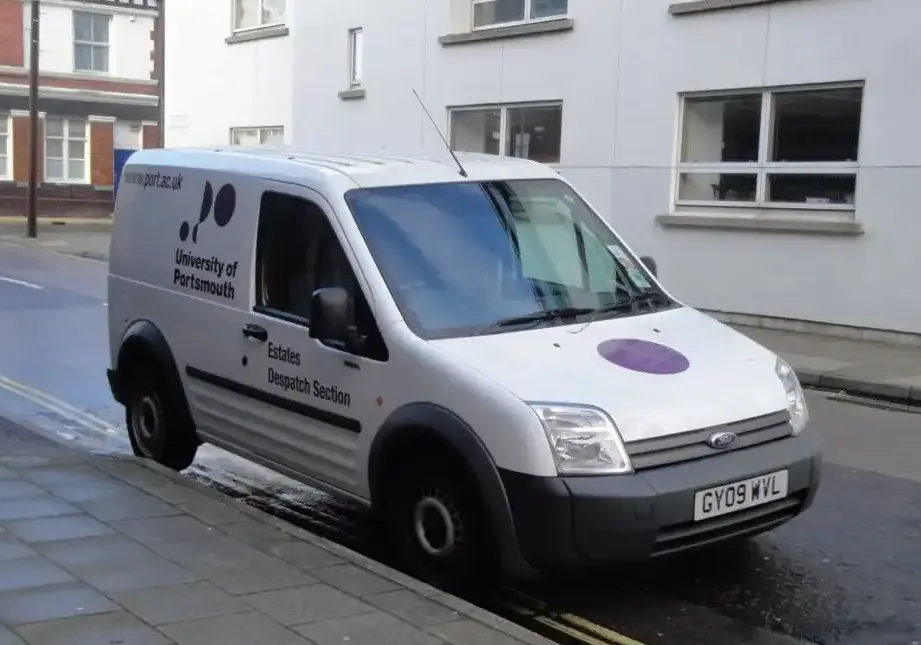
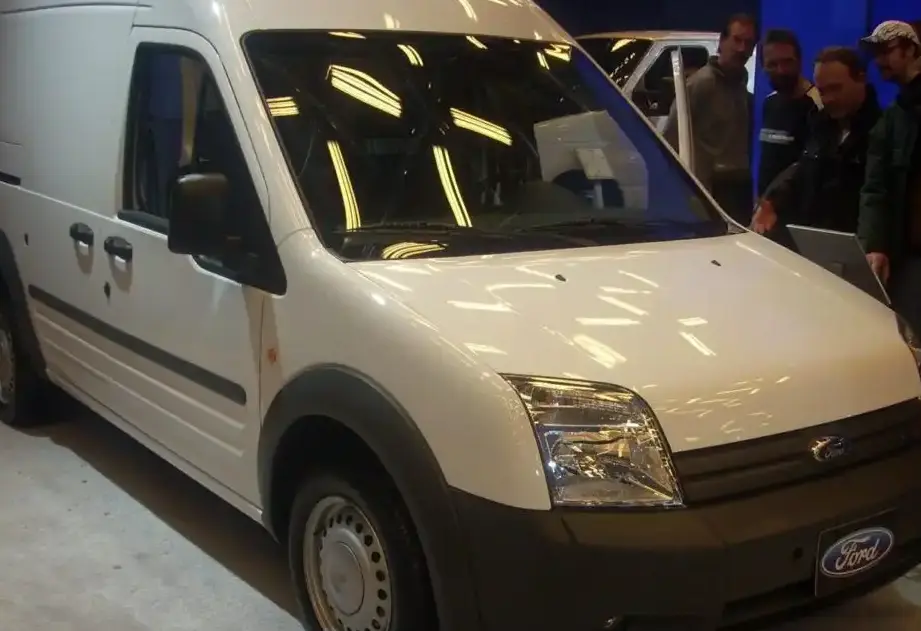
The Ford Transit Connect II Double Cab-in-Van L2 1.6 TDCi, produced from 2013 to 2016, represents a significant iteration of Ford’s compact commercial vehicle line, designed to cater to both commercial and family needs. This specific variant, equipped with the 1.6-liter Duratorq turbodiesel engine producing 115 horsepower, occupied a middle ground within the Transit Connect II range, offering a balance between fuel efficiency, practicality, and affordability. It was primarily marketed in Europe and other global markets, with a similar version also available in North America. The “L2” designation signifies the long wheelbase version, providing increased cargo space behind the second-row seating. This model is built on the Ford C170 platform, shared with the Ford Focus, and targeted at businesses and families requiring a versatile vehicle capable of transporting both passengers and goods.
Powertrain & Engine Architecture
The core of this Transit Connect variant is the 1.6-liter Duratorq TDCi engine, a member of Ford’s Duratorq diesel engine family. This engine, identified by the code T1GA, is a four-cylinder, inline configuration with a displacement of 1560cc. It features a single overhead camshaft (SOHC) and two valves per cylinder. The engine utilizes a common rail direct fuel injection system, delivering fuel at high pressure for optimized combustion. A turbocharger with an intercooler is employed to boost power and torque, resulting in 115 horsepower at 3600 rpm and 270 Nm (199 lb-ft) of torque between 1750 and 2500 rpm. The engine’s 16:1 compression ratio is typical for a diesel engine, contributing to its efficiency. The engine is transversely mounted in the front of the vehicle. A 6-speed manual transmission was the standard offering, providing a good balance of fuel economy and drivability.
Driving Characteristics
The 1.6 TDCi engine, coupled with the 6-speed manual transmission, delivers adequate performance for everyday driving and light commercial tasks. While not particularly sporty, the engine provides sufficient torque for hauling loads and navigating urban environments. The gear ratios are tuned for fuel efficiency, with taller gearing in the upper gears for relaxed highway cruising. Acceleration is modest, but the engine feels responsive within its peak torque band. Compared to higher-output versions of the Transit Connect, this variant offers less outright performance. However, it compensates with improved fuel economy and lower running costs. The manual transmission provides a more engaging driving experience than an automatic, allowing for greater control over gear selection and engine speed.
Equipment & Trim Levels
The Double Cab-in-Van L2 1.6 TDCi typically came with a reasonable level of standard equipment. This included power windows, central locking, an adjustable steering column, and a basic audio system. Safety features such as ABS, driver and passenger airbags, and electronic stability control were also standard. Interior upholstery was typically durable cloth. Optional extras included air conditioning, alloy wheels, parking sensors, and a more advanced audio system with Bluetooth connectivity. Trim levels varied depending on the market, but generally offered progressively more features and comfort options.
Chassis & Braking
The Transit Connect II utilizes a McPherson strut independent suspension at the front and a semi-independent torsion beam suspension at the rear. This setup provides a comfortable ride quality, particularly when unladen. The front brakes are ventilated discs, providing good stopping power, while the rear brakes are solid discs. The electric power steering offers light and precise steering feel. The vehicle’s relatively low weight contributes to its agility and handling. Stabilizer bars are fitted to both the front and rear axles to reduce body roll during cornering.
Market Reception & Comparison
The Ford Transit Connect II 1.6 TDCi was generally well-received by critics for its practicality, fuel efficiency, and competitive pricing. It was often praised for its spacious interior and versatile cargo-carrying capabilities. Compared to other small vans and MPVs in its class, the Transit Connect offered a compelling combination of features and value. The 1.6 TDCi engine was considered a good compromise between performance and economy, although some reviewers noted that it could feel strained when fully loaded. The manual transmission was preferred by many drivers for its greater control and engagement.
Legacy
The 1.6 TDCi Duratorq engine proved to be a relatively reliable powertrain, although, like all diesel engines, it is susceptible to issues related to the diesel particulate filter (DPF) if not properly maintained. Regular servicing and the use of high-quality diesel fuel are essential for ensuring long-term reliability. On the used car market, the Transit Connect II 1.6 TDCi remains a popular choice for businesses and families seeking a practical and affordable vehicle. Its reputation for durability and low running costs continues to make it a desirable option.