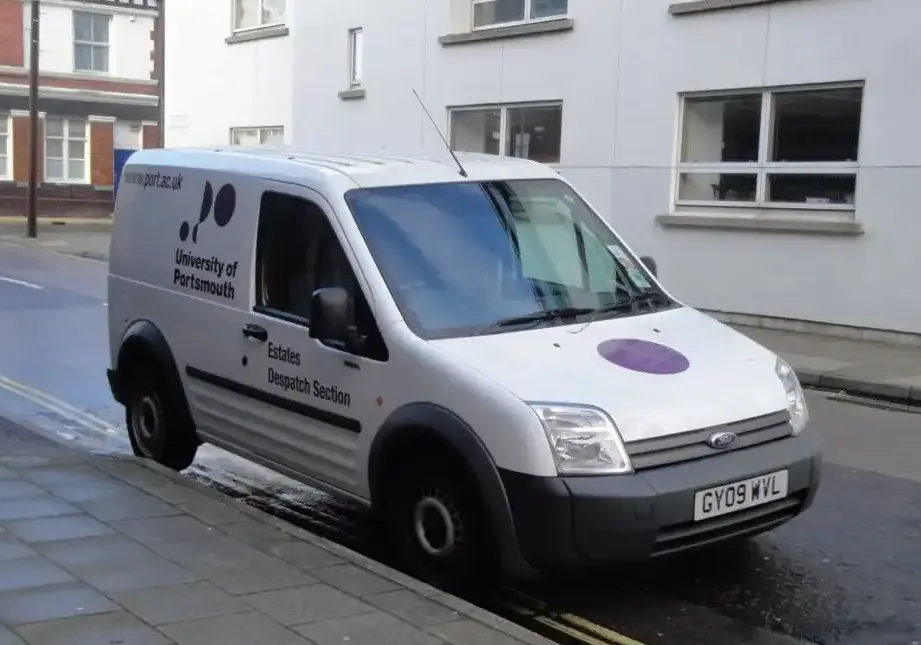
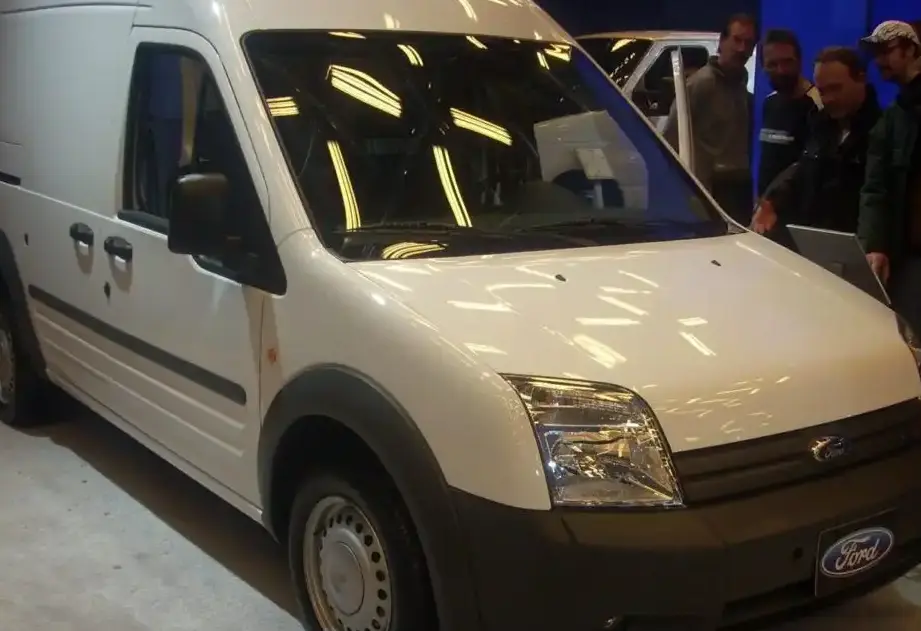
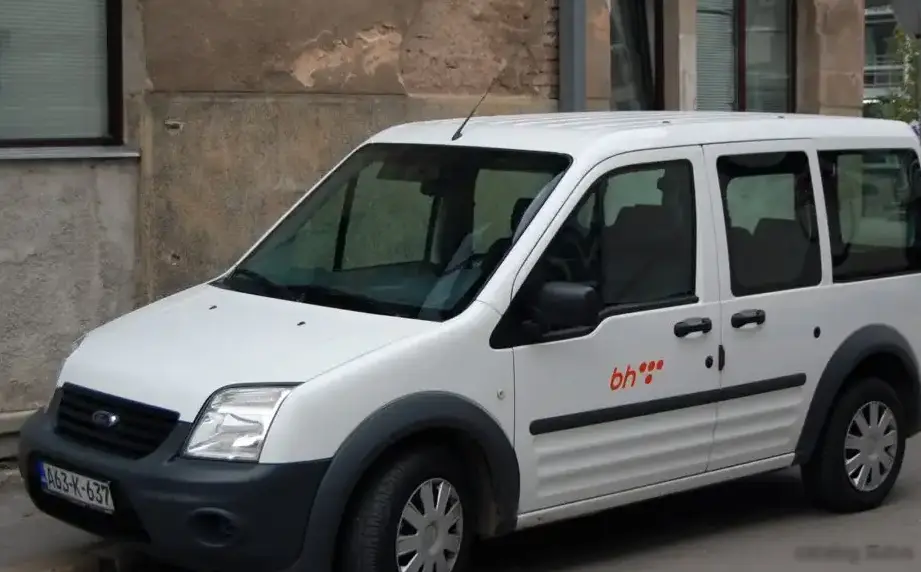
The Ford Transit Connect II Double Cab-in-Van L2 1.6 TDCi (75 hp) represents a practical and economical offering within the second generation of Ford’s popular compact commercial vehicle. Produced from 2013 to 2016, this variant was specifically designed for businesses and families needing a versatile vehicle capable of carrying both passengers and cargo. Positioned as an entry-level option in the Transit Connect lineup, it prioritized fuel efficiency and affordability over outright performance. The L2 designation indicates the long wheelbase version, offering increased cargo capacity compared to the standard length model. This model played a significant role in the European and North American light commercial vehicle markets, offering a compelling alternative to larger vans and pickup trucks.
Technical Specifications
| Brand | Ford |
| Model | Transit Connect |
| Generation | Transit Connect II Double Cab-in-Van L2 |
| Type (Engine) | 1.6 TDCi (75 Hp) |
| Start of production | 2013 |
| End of production | 2016 |
| Powertrain Architecture | Internal Combustion engine |
| Body type | Minivan |
| Seats | 5 |
| Doors | 5 |
| Fuel consumption (economy) – urban (NEDC) | 5.5 l/100 km (42.8 US mpg, 51.4 UK mpg, 18.2 km/l) |
| Fuel consumption (economy) – extra urban (NEDC) | 4.5 l/100 km (52.3 US mpg, 62.8 UK mpg, 22.2 km/l) |
| Fuel consumption (economy) – combined (NEDC) | 4.9 l/100 km (48 US mpg, 57.6 UK mpg, 20.4 km/l) |
| CO2 emissions (NEDC) | 128 g/km |
| Fuel Type | Diesel |
| Emission standard | Euro 5 |
| Weight-to-power ratio | 20.7 kg/Hp, 48.3 Hp/tonne |
| Weight-to-torque ratio | 7.1 kg/Nm, 141.6 Nm/tonne |
| Power | 75 Hp @ 3500 rpm |
| Power per litre | 48.1 Hp/l |
| Torque | 220 Nm @ 1500 rpm (162.26 lb.-ft. @ 1500 rpm) |
| Engine layout | Front, Transverse |
| Engine Model/Code | Duratorq / UBGA |
| Engine displacement | 1560 cm3 (95.2 cu. in.) |
| Number of cylinders | 4 |
| Engine configuration | Inline |
| Cylinder Bore | 75 mm (2.95 in.) |
| Piston Stroke | 88.3 mm (3.48 in.) |
| Compression ratio | 16:1 |
| Number of valves per cylinder | 2 |
| Fuel injection system | Diesel Commonrail |
| Engine aspiration | Turbocharger, Intercooler |
| Valvetrain | SOHC |
| Engine oil capacity | 6.2 l (6.55 US qt | 5.46 UK qt) |
| Coolant | 7.3 l (7.71 US qt | 6.42 UK qt) |
| Kerb Weight | 1554 kg (3425.98 lbs.) |
| Max. weight | 2270 kg (5004.49 lbs.) |
| Max load | 716 kg (1578.51 lbs.) |
| Trunk (boot) space – minimum | 1600 l (56.5 cu. ft.) |
| Trunk (boot) space – maximum | 2800 l (98.88 cu. ft.) |
| Fuel tank capacity | 60 l (15.85 US gal | 13.2 UK gal) |
| Permitted trailer load with brakes (12%) | 1150 kg (2535.32 lbs.) |
| Permitted trailer load without brakes | 750 kg (1653.47 lbs.) |
| Permitted towbar download | 75 kg (165.35 lbs.) |
| Length | 4818 mm (189.69 in.) |
| Width | 1835 mm (72.24 in.) |
| Width including mirrors | 2137 mm (84.13 in.) |
| Height | 1839 mm (72.4 in.) |
| Wheelbase | 3062 mm (120.55 in.) |
| Front track | 1568 mm (61.73 in.) |
| Rear (Back) track | 1584 mm (62.36 in.) |
| Front overhang | 878 mm (34.57 in.) |
| Rear overhang | 878 mm (34.57 in.) |
| Ride height (ground clearance) | 165 mm (6.5 in.) |
| Minimum turning circle (turning diameter) | 12.5 m (41.01 ft.) |
| Drivetrain Architecture | Front wheel drive |
| Number of gears and type of gearbox | 5 gears, manual transmission |
| Front suspension | Independent, type McPherson with coil spring and anti-roll bar |
| Rear suspension | Coil spring, Torsion |
| Front brakes | Ventilated discs, 320×25 mm |
| Rear brakes | Disc, 280×11 mm |
| Assisting systems | ABS (Anti-lock braking system) |
| Steering type | Steering rack and pinion |
| Power steering | Electric Steering |
| Tires size | 205/60 R16 |
| Wheel rims size | 6.5J x 16 |
Powertrain & Engine Architecture
The heart of this Transit Connect variant is the 1.6-liter Duratorq UBGA diesel engine. This engine, part of Ford’s Duratorq family, is a four-cylinder, inline configuration with a displacement of 1560cc. It utilizes a single overhead camshaft (SOHC) valvetrain with two valves per cylinder. A turbocharger with an intercooler is employed to boost power and efficiency, delivering 75 horsepower at 3500 rpm and 220 Nm (162 lb-ft) of torque at a low 1500 rpm. The engine features a diesel common rail direct injection system, contributing to improved fuel atomization and combustion efficiency. The 5-speed manual transmission was standard, chosen for its simplicity and cost-effectiveness. While an automatic transmission was offered on other Transit Connect trims, it wasn’t available with this specific 75hp engine.
Driving Characteristics
The 1.6 TDCi 75 hp engine, paired with the 5-speed manual gearbox, provided adequate, but not exhilarating, performance. Acceleration was modest, geared towards practicality rather than speed. The engine’s peak torque, available from 1500 rpm, made it reasonably drivable in urban environments and when carrying moderate loads. However, overtaking maneuvers on highways required careful planning. The gear ratios were optimized for fuel economy, resulting in a higher fifth gear for relaxed cruising. Compared to the more powerful 1.6-liter TDCi variants (95 hp and 115 hp) or the 1.0 EcoBoost petrol engine, this version felt noticeably slower. The manual transmission offered a more engaging driving experience than an automatic would have, but also demanded more driver involvement.
Equipment & Trim Levels
The 75 hp 1.6 TDCi Double Cab-in-Van L2 typically came with a basic, yet functional, equipment level. Standard features included power steering, ABS, driver and passenger airbags, and a basic audio system. The interior was primarily focused on durability and practicality, with hard-wearing cloth upholstery and a straightforward dashboard layout. Optional extras included air conditioning, electric windows, and a more advanced audio system with Bluetooth connectivity. The Double Cab configuration offered seating for five passengers, with a rear bench seat that could be folded or removed to maximize cargo space. The L2 long wheelbase provided a substantial cargo area behind the rear seats, making it suitable for carrying tools, equipment, or luggage.
Chassis & Braking
The Transit Connect II utilized a front-wheel-drive layout with an independent McPherson strut suspension at the front and a semi-independent torsion beam suspension at the rear. This setup provided a reasonable balance between ride comfort and handling. The front brakes were ventilated discs, while the rear brakes were solid discs. ABS (Anti-lock Braking System) was standard, enhancing braking performance and stability. The steering was electrically assisted, providing light and precise control. The suspension was tuned to prioritize load-carrying capability, resulting in a slightly firmer ride compared to passenger cars.
Market Reception & Comparison
The Ford Transit Connect II 1.6 TDCi 75 hp was generally well-received as a cost-effective and fuel-efficient commercial vehicle. Critics praised its practicality, versatility, and low running costs. However, the engine’s limited power output was a common criticism, particularly when the vehicle was fully loaded. Compared to the higher-powered versions, this variant offered significantly lower performance but also lower purchase price and potentially better fuel economy. The 1.0 EcoBoost petrol engine offered a more refined driving experience, but at the expense of fuel efficiency and torque. The 1.6 TDCi 95 hp provided a good compromise between performance and economy, making it a popular choice for those needing more power.
Legacy
The 1.6 TDCi Duratorq engine, in its various iterations, proved to be a relatively reliable powertrain. While not without its issues (such as potential problems with the diesel particulate filter and turbocharger), it generally offered good longevity with proper maintenance. In the used car market, the 75 hp version of the Transit Connect II remains an affordable option for businesses and individuals needing a practical and economical van. Its simplicity and relatively low running costs make it an attractive choice for those prioritizing value over performance. However, potential buyers should be aware of the engine’s limitations and ensure that the vehicle has been well-maintained.