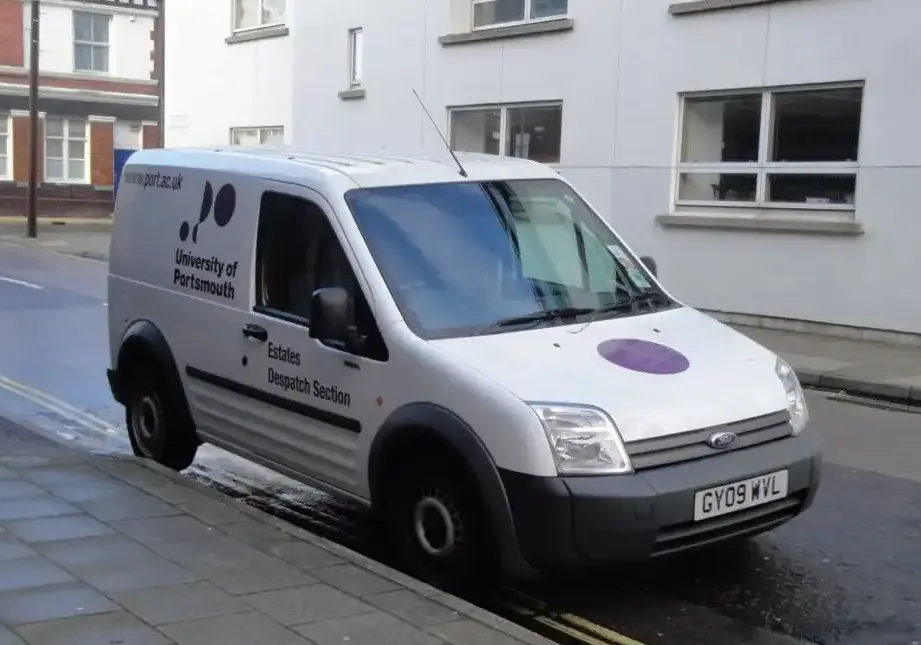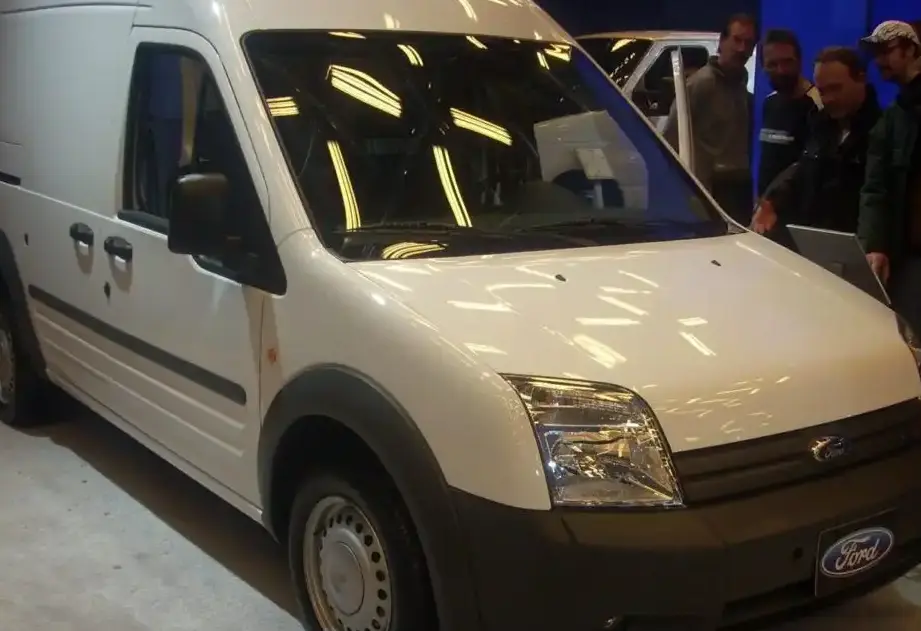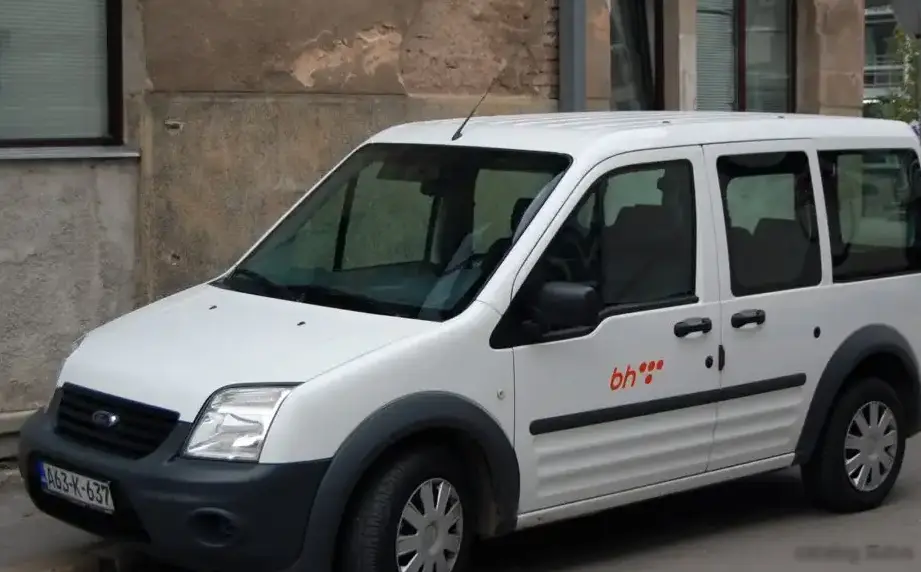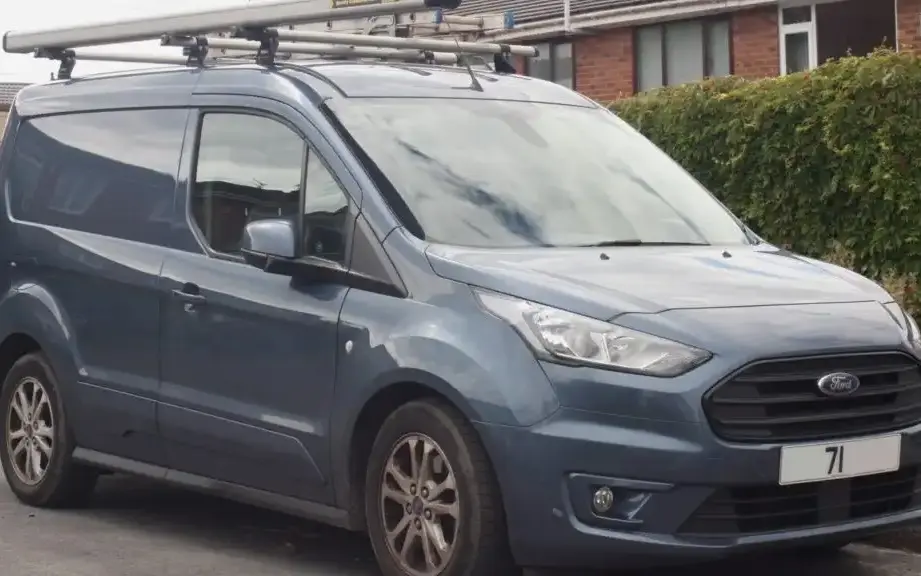
The Ford Transit Connect II, specifically the facelifted version introduced in 2018, represented a significant update to Ford’s compact commercial van offering in the European and North American markets. This generation, built on the Ford C2 platform (shared with the Focus), aimed to provide a versatile and efficient solution for small businesses and tradespeople. The Panel Van L1 configuration, denoting the short wheelbase variant, was a popular choice. Among the engine options available, the 1.5 EcoBlue diesel engine producing 100 horsepower paired with an automatic transmission became a notable offering, positioned as a balance between affordability, fuel economy, and ease of use. Production of this specific variant ran from 2018 through 2024.
Technical Specifications
| Brand | Ford |
| Model | Transit Connect |
| Generation | Transit Connect II (facelift 2018) Panel Van L1 |
| Type (Engine) | 1.5 EcoBlue (100 Hp) Automatic |
| Start of production | 2018 |
| End of production | 2024 |
| Powertrain Architecture | Internal Combustion engine |
| Body type | Minivan |
| Seats | 2-3 |
| Doors | 4-5 |
| Fuel consumption at Low speed (WLTP) | 6.5-6.9 l/100 km (36.2 – 34.1 US mpg, 43.5 – 40.9 UK mpg, 15.4 – 14.5 km/l) |
| Fuel consumption at high speed (WLTP) | 5-5.3 l/100 km (47 – 44.4 US mpg, 56.5 – 53.3 UK mpg, 20 – 18.9 km/l) |
| Combined fuel consumption (WLTP) | 5.8-6.2 l/100 km (40.6 – 37.9 US mpg, 48.7 – 45.6 UK mpg, 17.2 – 16.1 km/l) |
| CO2 emissions (WLTP) | 153-161 g/km |
| Fuel consumption (economy) – urban (NEDC) | 5.2-5.7 l/100 km (45.2 – 41.3 US mpg, 54.3 – 49.6 UK mpg, 19.2 – 17.5 km/l) |
| Fuel consumption (economy) – extra urban (NEDC) | 4.8-5 l/100 km (49 – 47 US mpg, 58.9 – 56.5 UK mpg, 20.8 – 20 km/l) |
| Fuel consumption (economy) – combined (NEDC) | 5.1 l/100 km (46.1 US mpg, 55.4 UK mpg, 19.6 km/l) |
| CO2 emissions (NEDC) | 133-135 g/km |
| Fuel Type | Diesel |
| Emission standard | Euro 6d-TEMP-EVAP-ISC |
| Weight-to-power ratio | 14.9 kg/Hp, 67.1 Hp/tonne |
| Weight-to-torque ratio | 6.2 kg/Nm, 161.1 Nm/tonne |
| Power | 100 Hp |
| Power per litre | 66.8 Hp/l |
| Torque | 240 Nm (177.01 lb.-ft.) |
| Engine layout | Front, Transverse |
| Engine Model/Code | Z2GA |
| Engine displacement | 1498 cm3 (91.41 cu. in.) |
| Number of cylinders | 4 |
| Engine configuration | Inline |
| Cylinder Bore | 75 mm (2.95 in.) |
| Piston Stroke | 84.8 mm (3.34 in.) |
| Number of valves per cylinder | 4 |
| Fuel injection system | Diesel Commonrail |
| Engine aspiration | Turbocharger, Intercooler |
| Valvetrain | DOHC |
| Engine oil capacity | 6 l (6.34 US qt | 5.28 UK qt) |
| Coolant | 7 l (7.4 US qt | 6.16 UK qt) |
| Kerb Weight | 1490-1558 kg (3284.89 – 3434.8 lbs.) |
| Max. weight | 2170-2501 kg (4784.03 – 5513.76 lbs.) |
| Max load | 680-943 kg (1499.14 – 2078.96 lbs.) |
| Trunk (boot) space – minimum | 2600 l (91.82 cu. ft.) |
| Trunk (boot) space – maximum | 3700 l (130.66 cu. ft.) |
| Fuel tank capacity | 60 l (15.85 US gal | 13.2 UK gal) |
| AdBlue tank | 17 l (4.49 US gal | 3.74 UK gal) |
| Permitted trailer load with brakes (12%) | 1445 kg (3185.68 lbs.) |
| Permitted trailer load without brakes | 750 kg (1653.47 lbs.) |
| Length | 4425 mm (174.21 in.) |
| Width | 1835 mm (72.24 in.) |
| Width with mirrors folded | 1967 mm (77.44 in.) |
| Width including mirrors | 2137 mm (84.13 in.) |
| Height | 1830-1859 mm (72.05 – 73.19 in.) |
| Wheelbase | 2662 mm (104.8 in.) |
| Front track | 1568 mm (61.73 in.) |
| Rear (Back) track | 1582 mm (62.28 in.) |
| Front overhang | 885 mm (34.84 in.) |
| Rear overhang | 878 mm (34.57 in.) |
| Ride height (ground clearance) | 148-153 mm (5.83 – 6.02 in.) |
| Minimum turning circle (turning diameter) | 11.7 m (38.39 ft.) |
| Drivetrain Architecture | The Internal combustion engine (ICE) drives the front wheels of the vehicle. |
| Drive wheel | Front wheel drive |
| Number of gears and type of gearbox | 8 gears, automatic transmission |
| Front suspension | Independent, type McPherson with coil spring and anti-roll bar |
| Rear suspension | Semi-dependent beam with stabilizer lateral stability |
| Front brakes | Ventilated discs |
| Rear brakes | Disc |
| Assisting systems | ABS (Anti-lock braking system) |
| Steering type | Steering rack and pinion |
| Power steering | Electric Steering |
| Tires size | 205/60 R16; 215/55 R16; 215/55 R17 |
| Wheel rims size | 6.5J x 16; 6.5J x 17 |
Powertrain & Engine Architecture
The heart of this Transit Connect variant is the 1.5-liter EcoBlue diesel engine, identified by the engine code Z2GA. This engine is a member of Ford’s EcoBlue family, designed for improved efficiency and reduced emissions. It features a transverse inline-four cylinder configuration with a displacement of 1498 cc. The engine utilizes a diesel commonrail direct fuel injection system, delivering fuel directly into the combustion chamber at high pressure for optimized combustion. A turbocharger with an intercooler is employed to increase power output and improve torque delivery. The engine also incorporates a Dual Overhead Camshaft (DOHC) valvetrain with four valves per cylinder, enhancing breathing and overall performance. The automatic transmission is a sophisticated 8-speed unit, providing smooth gear changes and contributing to fuel efficiency. This transmission was chosen to offer a more comfortable driving experience compared to the manual options, particularly in urban environments.
Driving Characteristics
The 100 horsepower and 240 Nm (177 lb-ft) of torque produced by the 1.5 EcoBlue engine, when coupled with the 8-speed automatic transmission, resulted in a practical, if not particularly sporty, driving experience. Acceleration was adequate for everyday driving, but noticeably slower than the higher-powered versions of the Transit Connect. The automatic transmission was tuned for fuel economy, meaning gear changes were often prioritized over aggressive acceleration. The gear ratios were optimized to keep the engine within its peak torque band as much as possible, providing reasonable pulling power for carrying loads. Compared to the manual transmission versions, the automatic offered greater convenience, especially in stop-and-go traffic. However, drivers seeking a more engaging driving experience often preferred the control offered by the manual gearbox.
Equipment & Trim Levels
The 1.5 EcoBlue 100 hp Automatic trim typically fell into the mid-range of the Transit Connect lineup. Standard equipment generally included air conditioning, a basic audio system with USB connectivity, power windows, and central locking. Safety features such as ABS, Electronic Stability Control (ESC), and driver/passenger airbags were also standard. Higher trim levels offered options like a touchscreen infotainment system with navigation, rear parking sensors, cruise control, and upgraded interior trim. Interior upholstery was typically durable cloth, designed for commercial use. The dashboard layout was functional and straightforward, prioritizing practicality over aesthetics.
Chassis & Braking
The Transit Connect II utilized an independent McPherson strut suspension setup at the front, providing a comfortable ride and decent handling. The rear suspension employed a semi-dependent beam axle with a stabilizer bar, offering a good balance between load-carrying capacity and stability. Braking duties were handled by ventilated discs at the front and solid discs at the rear. The electric power steering provided light and easy steering, making maneuvering in tight spaces simple. The suspension was tuned to prioritize ride comfort and load-carrying capability over sporty handling.
Market Reception & Comparison
The 1.5 EcoBlue 100 hp Automatic variant of the Transit Connect was generally well-received by critics as a sensible and economical choice for businesses needing a compact van. Its fuel economy figures, ranging from 5.8-6.2 l/100 km (40.6-37.9 US mpg), were competitive within its class. Compared to the higher-powered 1.5 EcoBlue variants, this version offered lower running costs but sacrificed some performance. The automatic transmission was praised for its smoothness and convenience, but some reviewers noted that it could feel sluggish at times. Compared to the 1.0 EcoBoost petrol engine option, the diesel offered significantly better fuel economy, particularly on longer journeys.
Legacy
The 1.5 EcoBlue engine, in general, has proven to be a relatively reliable powertrain. However, like all diesel engines, it’s important to ensure regular maintenance, including oil changes and diesel particulate filter (DPF) regeneration. The 8-speed automatic transmission has also demonstrated good durability. In the used car market, this specific Transit Connect variant represents a good value proposition for buyers seeking a practical and fuel-efficient commercial vehicle. Its relatively low running costs and proven reliability make it a popular choice for small businesses and tradespeople. The availability of spare parts and servicing is also good, ensuring long-term ownership costs remain manageable.