Technical Specifications
| Brand | Ford |
| Model | Transit Connect |
| Generation | Transit Connect II Panel Van L1 |
| Type (Engine) | 1.6 EcoBoost (150 Hp) Automatic |
| Start of production | 2013 |
| End of production | 2015 |
| Powertrain Architecture | Internal Combustion engine |
| Body type | Minivan |
| Seats | 2-3 |
| Doors | 4-5 |
| Fuel consumption (economy) – urban (NEDC) | 10.8 l/100 km (21.8 US mpg, 26.2 UK mpg, 9.3 km/l) |
| Fuel consumption (economy) – extra urban (NEDC) | 5.9 l/100 km (39.9 US mpg, 47.9 UK mpg, 16.9 km/l) |
| Fuel consumption (economy) – combined (NEDC) | 7.7 l/100 km (30.5 US mpg, 36.7 UK mpg, 13 km/l) |
| CO2 emissions (NEDC) | 179 g/km |
| Fuel Type | Petrol (Gasoline) |
| Emission standard | Euro 5 |
| Weight-to-power ratio | 9.3 kg/Hp, 107.8 Hp/tonne |
| Weight-to-torque ratio | 5.8 kg/Nm, 172.5 Nm/tonne |
| Power | 150 Hp @ 5700 rpm |
| Power per litre | 93.9 Hp/l |
| Torque | 240 Nm @ 1600-4000 rpm (177.01 lb.-ft. @ 1600-4000 rpm) |
| Engine layout | Front, Transverse |
| Engine Model/Code | EcoBoost / JQGA |
| Engine displacement | 1597 cm3 (97.45 cu. in.) |
| Number of cylinders | 4 |
| Engine configuration | Inline |
| Cylinder Bore | 79 mm (3.11 in.) |
| Piston Stroke | 81.4 mm (3.2 in.) |
| Compression ratio | 10:1 |
| Number of valves per cylinder | 4 |
| Fuel injection system | Direct injection |
| Engine aspiration | Turbocharger, Intercooler |
| Valvetrain | DOHC |
| Engine oil capacity | 4.1 l (4.33 US qt | 3.61 UK qt) |
| Coolant | 9.1 l (9.62 US qt | 8.01 UK qt) |
| Kerb Weight | 1391 kg (3066.63 lbs.) |
| Max. weight | 2025 kg (4464.36 lbs.) |
| Max load | 634 kg (1397.73 lbs.) |
| Trunk (boot) space – minimum | 2630 l (92.88 cu. ft.) |
| Trunk (boot) space – maximum | 3700 l (130.66 cu. ft.) |
| Fuel tank capacity | 60 l (15.85 US gal | 13.2 UK gal) |
| Permitted trailer load with brakes (12%) | 1200 kg (2645.55 lbs.) |
| Permitted trailer load without brakes | 730 kg (1609.37 lbs.) |
| Length | 4418 mm (173.94 in.) |
| Width | 1835 mm (72.24 in.) |
| Width including mirrors | 2137 mm (84.13 in.) |
| Height | 1861 mm (73.27 in.) |
| Wheelbase | 2662 mm (104.8 in.) |
| Front track | 1568 mm (61.73 in.) |
| Rear (Back) track | 1584-1585 mm (62.36 – 62.4 in.) |
| Front overhang | 878 mm (34.57 in.) |
| Rear overhang | 878 mm (34.57 in.) |
| Ride height (ground clearance) | 152 mm (5.98 in.) |
| Minimum turning circle (turning diameter) | 11.7 m (38.39 ft.) |
| Drivetrain Architecture | The Internal combustion engine (ICE) drives the front wheels of the vehicle. |
| Drive wheel | Front wheel drive |
| Number of gears and type of gearbox | 6 gears, automatic transmission |
| Front suspension | Independent, type McPherson with coil spring and anti-roll bar |
| Rear suspension | Coil spring, Torsion |
| Front brakes | Ventilated discs, 300 mm |
| Rear brakes | Disc, 280 mm |
| Assisting systems | ABS (Anti-lock braking system) |
| Steering type | Steering rack and pinion |
| Power steering | Electric Steering |
| Tires size | 205/60 R16 |
| Wheel rims size | 6.5J x 16 |
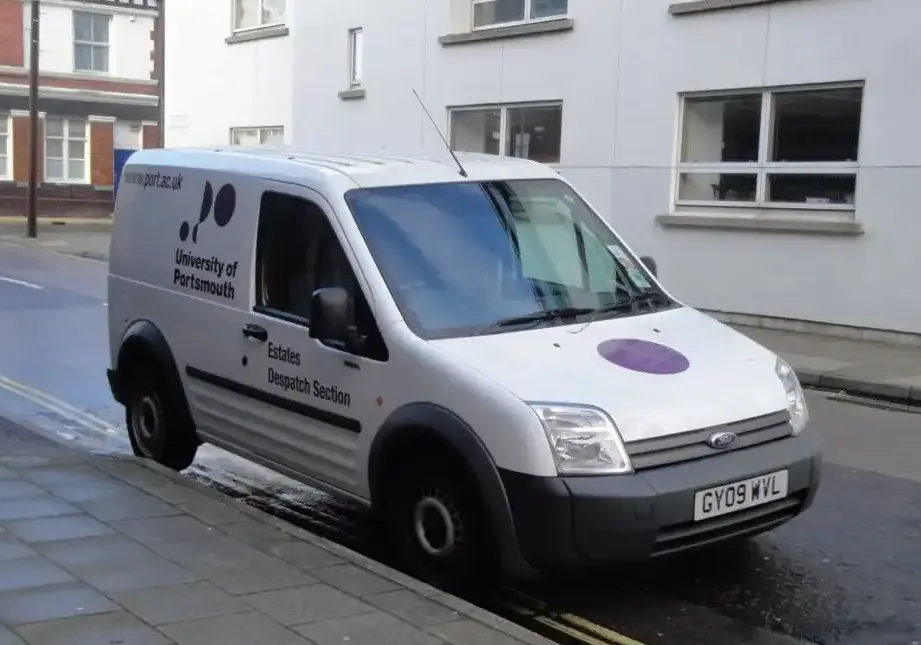
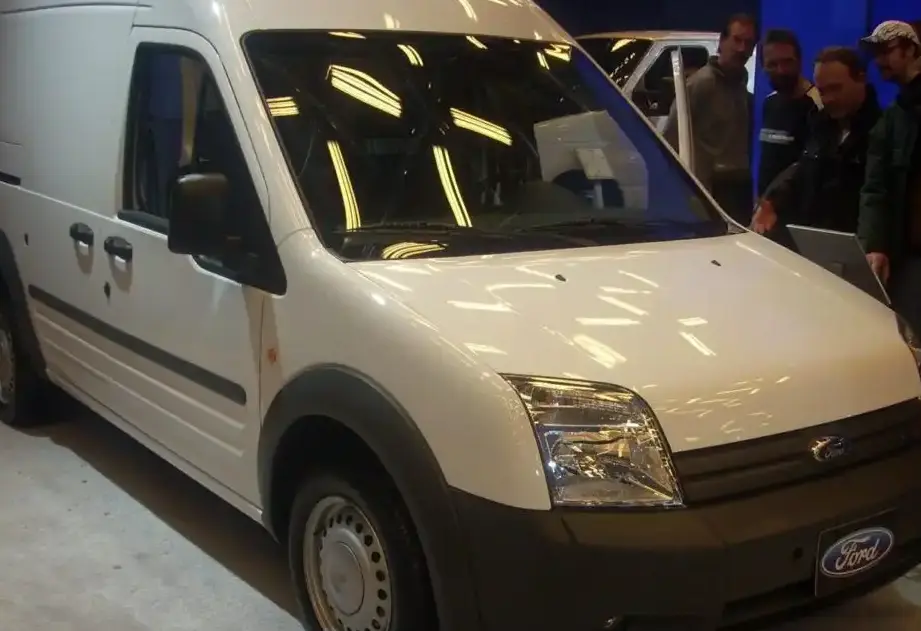
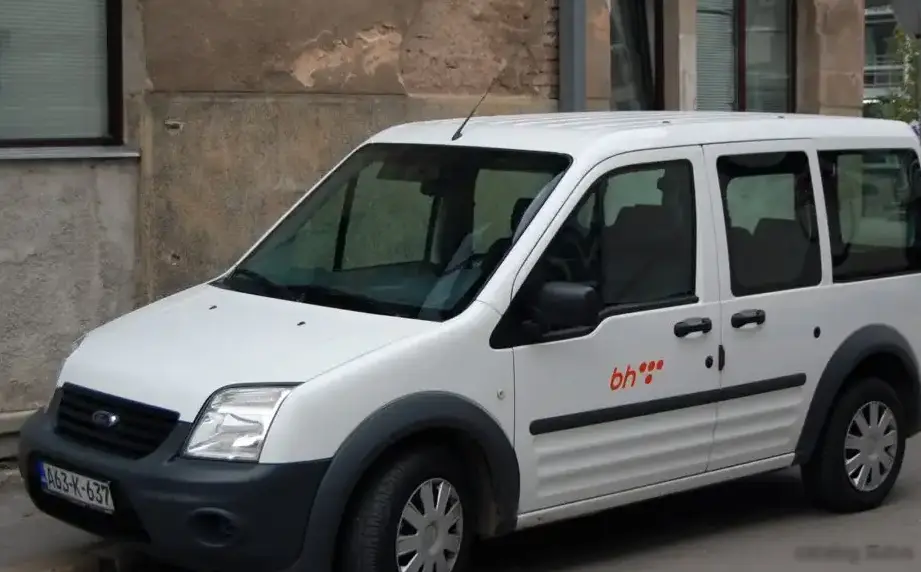
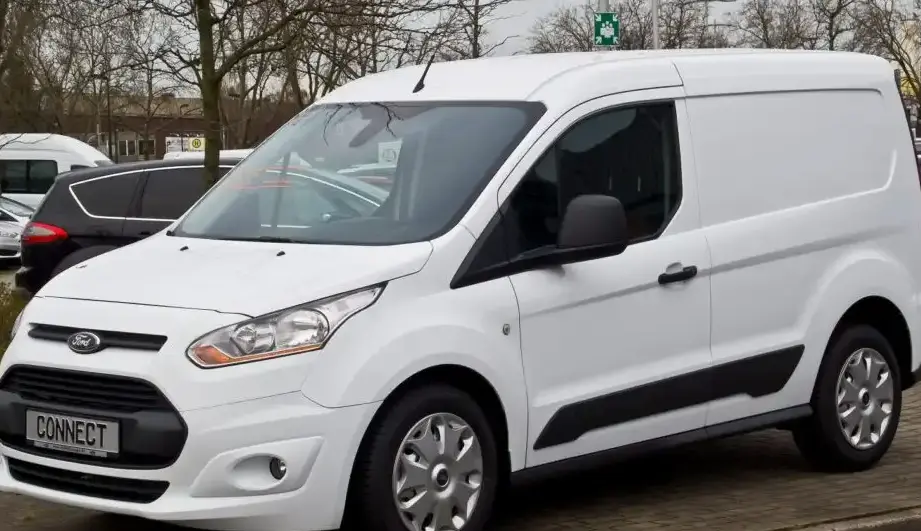
The Ford Transit Connect II Panel Van L1 1.6 EcoBoost (150 hp) Automatic, produced from 2013 to 2015, represents a significant iteration of Ford’s compact commercial vehicle offering in the North American and European markets. Positioned as a mid-range option within the second-generation Transit Connect lineup, this variant aimed to balance fuel efficiency with adequate power for light-duty commercial applications and small business owners. It was built on the Ford C2 platform, shared with the Focus, providing a car-like driving experience uncommon in the small van segment. This particular configuration – the 1.6-liter EcoBoost engine paired with a six-speed automatic transmission – was designed to appeal to customers who preferred the convenience of an automatic over a manual gearbox.
Powertrain & Engine Architecture
The heart of this Transit Connect variant is the 1.6-liter EcoBoost inline-four cylinder engine, designated with the code JQGA. This engine is a key example of Ford’s EcoBoost technology, combining direct fuel injection, turbocharging, and variable valve timing to deliver a balance of power and fuel efficiency. The direct injection system precisely meters fuel into the cylinders, improving combustion efficiency and reducing emissions. The single scroll turbocharger, coupled with an intercooler, boosts power output by forcing more air into the engine. The engine utilizes a double overhead camshaft (DOHC) valvetrain with four valves per cylinder, optimizing airflow for enhanced performance. The six-speed automatic transmission, a crucial component of this trim, was chosen for its smooth shifting and ease of use, catering to drivers who preferred not to operate a manual gearbox. This transmission features a torque converter and electronically controlled shifting, adapting to driving conditions for optimal performance.
Driving Characteristics
The 150 hp EcoBoost engine, when paired with the six-speed automatic, provided adequate, though not exhilarating, performance for the Transit Connect. Acceleration was sufficient for typical urban and highway driving, but fully loaded with cargo, the van’s performance was noticeably diminished. The automatic transmission’s gear ratios were tuned for fuel economy, resulting in a slightly less responsive feel compared to the manual transmission options. The power delivery was relatively linear, with peak torque available from 1600-4000 rpm, making it suitable for hauling moderate loads. Compared to the higher-output 1.0L EcoBoost or diesel variants available in other markets, this 1.6L automatic offered a more relaxed driving experience, prioritizing comfort and convenience over outright performance.
Equipment & Trim Levels
The 1.6 EcoBoost Automatic trim typically included standard features such as air conditioning, power windows and locks, a basic audio system with AM/FM radio and auxiliary input, and steel wheels with wheel covers. Safety features included anti-lock brakes (ABS) and front airbags. Optional extras included alloy wheels, a more advanced audio system with Bluetooth connectivity, rear parking sensors, and cruise control. Interior upholstery was typically a durable cloth material, designed for commercial use. The dashboard layout was functional and straightforward, prioritizing practicality over luxury.
Chassis & Braking
The Transit Connect II utilized an independent McPherson strut front suspension and a semi-independent torsion beam rear suspension. This setup provided a reasonable balance of ride comfort and handling. The front brakes were ventilated discs, offering good stopping power, while the rear brakes were solid discs. The electric power steering provided light and easy steering, making it maneuverable in tight spaces. The relatively lightweight construction of the van contributed to its agility and fuel efficiency.
Market Reception & Comparison
The 1.6 EcoBoost Automatic Transit Connect was generally well-received by critics as a practical and fuel-efficient commercial vehicle. However, some reviewers noted that the engine lacked the punch of the diesel options available in Europe. Fuel economy was a strong point, achieving around 30.5 US mpg in combined driving, making it competitive with other small vans in its class. Reliability was generally good, although some owners reported minor issues with the automatic transmission. Compared to the base 1.6L naturally aspirated engine, the EcoBoost offered a significant performance upgrade, while remaining more affordable than the diesel alternatives.
Legacy
The 1.6 EcoBoost engine proved to be a relatively reliable powertrain when properly maintained. In the used car market, these Transit Connects are often sought after by small businesses and tradespeople looking for an affordable and practical work vehicle. While not known for blistering performance, the combination of the EcoBoost engine and automatic transmission provides a comfortable and convenient driving experience. The Transit Connect II, in general, established Ford as a major player in the compact van segment, and this 1.6L Automatic variant played a key role in its success.