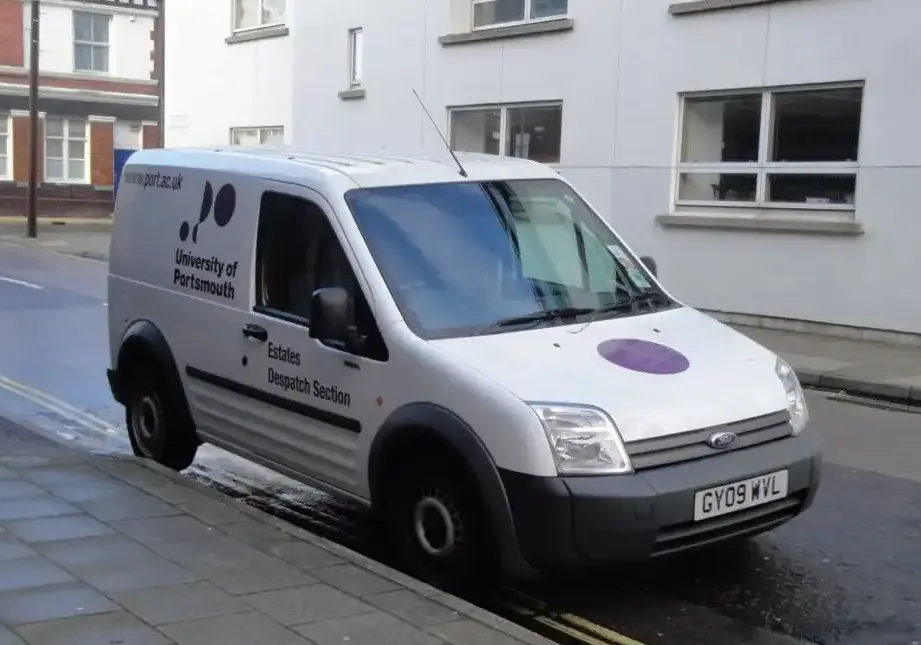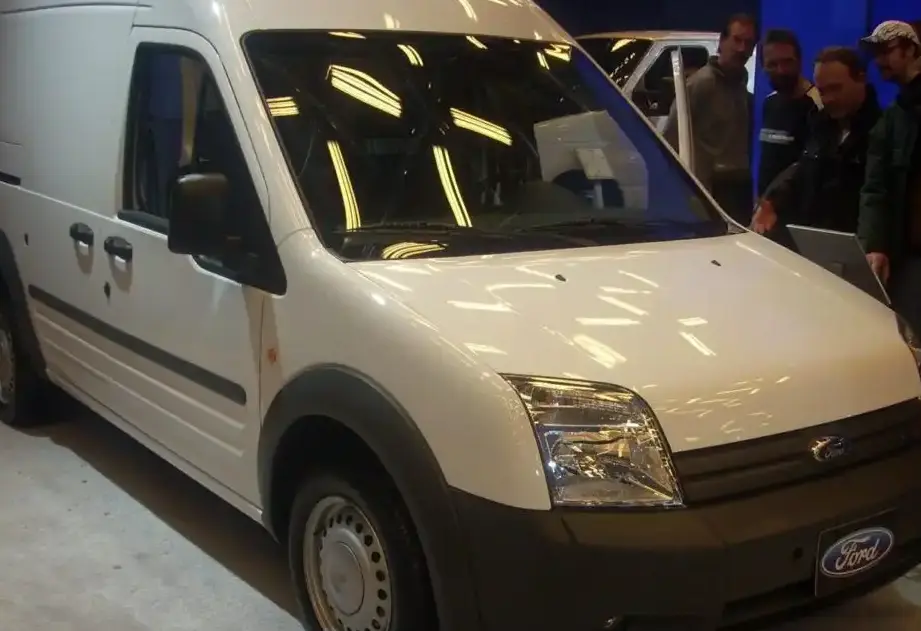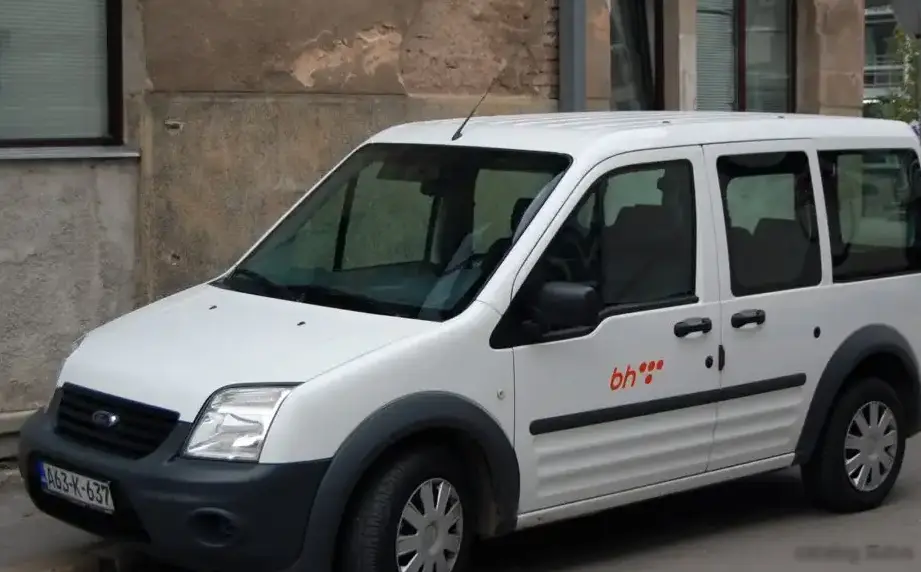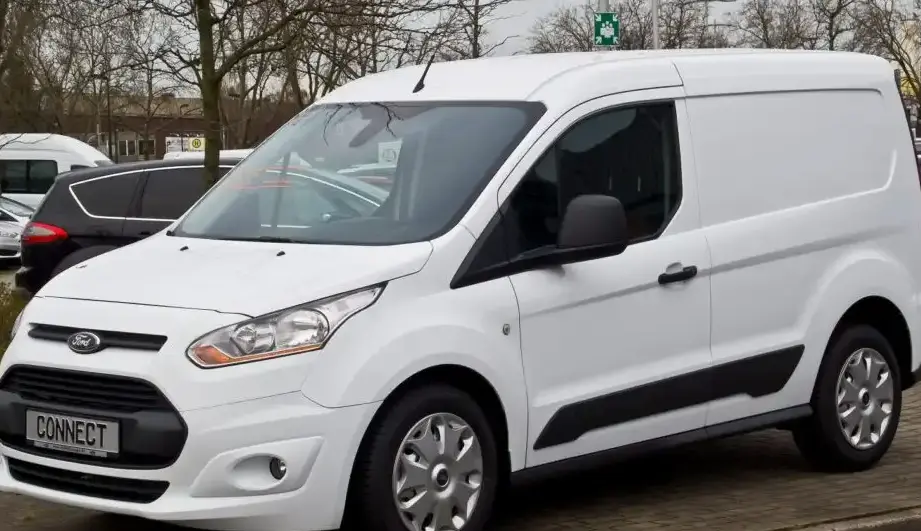
The Ford Transit Connect II Panel Van L1 1.6 TDCi (95 hp) represents a significant entry point into the second generation of Ford’s popular compact commercial vehicle, produced from 2013 to 2016. Positioned as a versatile and economical option for businesses and tradespeople, this variant offered a balance between practicality, fuel efficiency, and affordability. It was a key model in the European and North American markets, where the Transit Connect gained recognition for its car-like handling and relatively compact footprint, making it suitable for urban environments. This specific configuration, with the 1.6-liter Duratorq diesel engine and a five-speed manual transmission, was designed to appeal to buyers prioritizing low running costs over outright performance.
Technical Specifications
| Brand | Ford |
| Model | Transit Connect |
| Generation | Transit Connect II Panel Van L1 |
| Type (Engine) | 1.6 TDCi (95 Hp) |
| Start of production | 2013 |
| End of production | 2016 |
| Powertrain Architecture | Internal Combustion engine |
| Body type | Minivan |
| Seats | 2-3 |
| Doors | 4-5 |
| Fuel consumption (economy) – urban (NEDC) | 5.5 l/100 km (42.8 US mpg, 51.4 UK mpg, 18.2 km/l) |
| Fuel consumption (economy) – extra urban (NEDC) | 4.3 l/100 km (54.7 US mpg, 65.7 UK mpg, 23.3 km/l) |
| Fuel consumption (economy) – combined (NEDC) | 4.8 l/100 km (49 US mpg, 58.9 UK mpg, 20.8 km/l) |
| CO2 emissions (NEDC) | 124 g/km |
| Fuel Type | Diesel |
| Emission standard | Euro 5 |
| Weight-to-power ratio | 14.5 kg/Hp, 68.8 Hp/tonne |
| Weight-to-torque ratio | 6 kg/Nm, 166.7 Nm/tonne |
| Power | 95 Hp @ 3600 rpm |
| Power per litre | 60.9 Hp/l |
| Torque | 230 Nm @ 1500-2000 rpm (169.64 lb.-ft. @ 1500-2000 rpm) |
| Engine layout | Front, Transverse |
| Engine Model/Code | Duratorq / TZGA, TZGB |
| Engine displacement | 1560 cm3 (95.2 cu. in.) |
| Number of cylinders | 4 |
| Engine configuration | Inline |
| Cylinder Bore | 75 mm (2.95 in.) |
| Piston Stroke | 88.3 mm (3.48 in.) |
| Compression ratio | 16:1 |
| Number of valves per cylinder | 2 |
| Fuel injection system | Diesel Commonrail |
| Engine aspiration | Turbocharger, Intercooler |
| Valvetrain | SOHC |
| Engine oil capacity | 6.2 l (6.55 US qt | 5.46 UK qt) |
| Coolant | 7.3 l (7.71 US qt | 6.42 UK qt) |
| Kerb Weight | 1380-1417 kg (3042.38 – 3123.95 lbs.) |
| Max. weight | 2005-2215 kg (4420.27 – 4883.24 lbs.) |
| Max load | 625-798 kg (1377.89 – 1759.29 lbs.) |
| Trunk (boot) space – minimum | 2630 l (92.88 cu. ft.) |
| Trunk (boot) space – maximum | 3700 l (130.66 cu. ft.) |
| Fuel tank capacity | 60 l (15.85 US gal | 13.2 UK gal) |
| Permitted trailer load with brakes (12%) | 1200 kg (2645.55 lbs.) |
| Permitted trailer load without brakes | 730 kg (1609.37 lbs.) |
| Length | 4418 mm (173.94 in.) |
| Width | 1835 mm (72.24 in.) |
| Width including mirrors | 2137 mm (84.13 in.) |
| Height | 1861 mm (73.27 in.) |
| Wheelbase | 2662 mm (104.8 in.) |
| Front track | 1568 mm (61.73 in.) |
| Rear (Back) track | 1584-1585 mm (62.36 – 62.4 in.) |
| Front overhang | 878 mm (34.57 in.) |
| Rear overhang | 878 mm (34.57 in.) |
| Ride height (ground clearance) | 152 mm (5.98 in.) |
| Minimum turning circle (turning diameter) | 11.7 m (38.39 ft.) |
| Drivetrain Architecture | The Internal combustion engine (ICE) drives the front wheels of the vehicle. |
| Drive wheel | Front wheel drive |
| Number of gears and type of gearbox | 5 gears, manual transmission |
| Front suspension | Independent, type McPherson with coil spring and anti-roll bar |
| Rear suspension | Coil spring, Torsion |
| Front brakes | Ventilated discs, 300 mm |
| Rear brakes | Disc, 280 mm |
| Assisting systems | ABS (Anti-lock braking system) |
| Steering type | Steering rack and pinion |
| Power steering | Electric Steering |
| Tires size | 205/60 R16 |
| Wheel rims size | 6.5J x 16 |
Powertrain & Engine Architecture
The heart of this Transit Connect variant is the 1.6-liter Duratorq TDCi diesel engine, specifically the TZGA or TZGB engine code. This engine is a four-cylinder, inline configuration, utilizing a single overhead camshaft (SOHC) valvetrain with two valves per cylinder. A key feature is its turbocharger with intercooler, which enhances power output and efficiency by forcing more air into the cylinders. The engine employs a Diesel Commonrail direct fuel injection system, delivering precise fuel metering for optimized combustion. The 16:1 compression ratio is typical for diesel engines, contributing to their inherent efficiency. The engine produces 95 horsepower at 3600 rpm and 230 Nm (169.64 lb-ft) of torque between 1500-2000 rpm. This torque curve is particularly beneficial for commercial applications, providing strong pulling power at lower engine speeds. The engine is transversely mounted, driving the front wheels through a five-speed manual transmission.
Driving Characteristics
The 95 hp 1.6 TDCi engine, paired with the five-speed manual gearbox, delivers adequate performance for typical commercial duties. Acceleration is not brisk, but the engine provides sufficient power for highway cruising and city driving, even when moderately loaded. The gear ratios are tuned for economy, with a relatively tall fifth gear to reduce engine speed at cruising speeds. Compared to higher-output versions of the Transit Connect, such as those with the 1.6-liter engine in a higher state of tune or the 2.0-liter options, this variant feels noticeably less powerful. However, it compensates with superior fuel economy. The manual transmission provides drivers with greater control over gear selection, allowing them to optimize performance or efficiency based on driving conditions. The relatively low weight of the L1 short-wheelbase model helps to mitigate the effects of the modest horsepower.
Equipment & Trim Levels
The 1.6 TDCi 95 hp variant of the Transit Connect L1 typically served as the entry-level or near-base trim. Standard equipment generally included power steering, ABS brakes, a driver’s airbag, and basic steel wheels. The interior was functional and durable, with hard-wearing plastics and cloth upholstery. Features like air conditioning, power windows, and a radio/CD player were often optional extras. The van’s primary focus was on practicality, so luxury features were kept to a minimum. The L1 designation indicates the short wheelbase, providing a more compact overall length, making it easier to maneuver in tight spaces. Options often included upgraded audio systems, parking sensors, and various storage solutions for the cargo area.
Chassis & Braking
The Transit Connect II utilizes an independent McPherson strut front suspension with a coil spring and anti-roll bar, providing a comfortable ride and predictable handling. The rear suspension employs a coil spring and torsion beam setup, which is cost-effective and provides adequate load-carrying capacity. Braking duties are handled by ventilated discs at the front and solid discs at the rear. ABS (Anti-lock Braking System) is standard, enhancing safety during emergency braking situations. The steering is rack and pinion with electric power assistance, offering light and precise steering feel. The tires are typically 205/60 R16, providing a good balance between grip and rolling resistance.
Market Reception & Comparison
The Ford Transit Connect II 1.6 TDCi (95 hp) was generally well-received by critics as a practical and economical workhorse. Its fuel efficiency was a major selling point, particularly in Europe where diesel fuel is more prevalent and often cheaper than gasoline. Compared to other trims in the lineup, this variant offered the lowest purchase price but sacrificed some performance. The higher-powered versions were favored by those who frequently carried heavy loads or drove long distances. However, the 95 hp model proved popular with businesses that prioritized running costs and operated primarily in urban environments. Reliability was generally good, with the Duratorq engine proving to be a robust and durable unit.
Legacy
The 1.6 TDCi Duratorq engine, in its various iterations, has proven to be a reliable and long-lasting powertrain. The Transit Connect II, and specifically this 95 hp variant, remains a popular choice in the used commercial vehicle market. While not the fastest or most luxurious option, its affordability, fuel efficiency, and practicality continue to appeal to small businesses and tradespeople. Common maintenance issues are relatively minor, typically involving routine servicing items such as oil changes, filters, and brake pads. The availability of spare parts is good, and the engine is generally considered to be relatively easy to repair. The Transit Connect II cemented the model’s reputation as a versatile and dependable compact van, and this 1.6 TDCi variant played a significant role in its success.