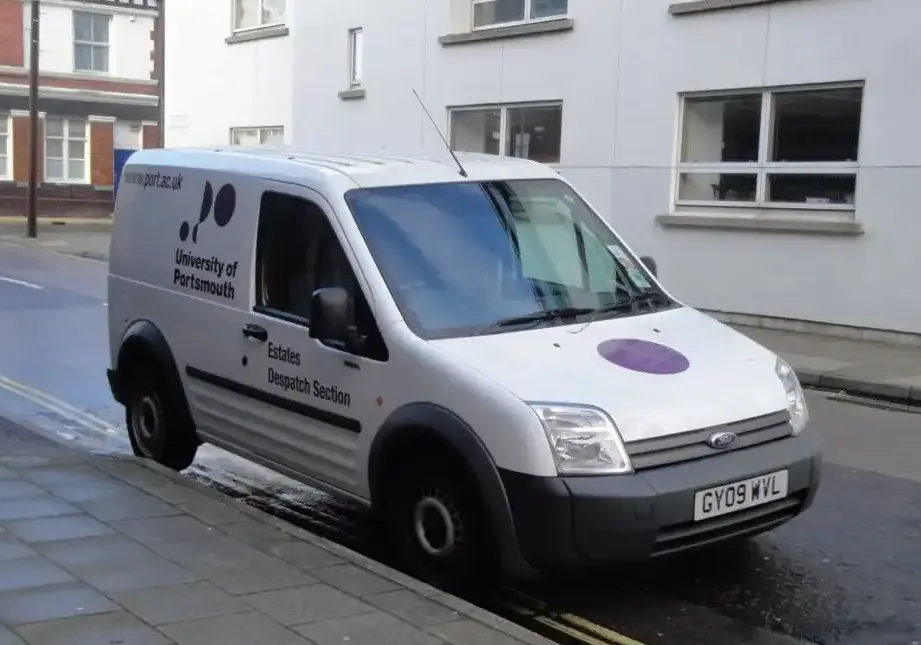
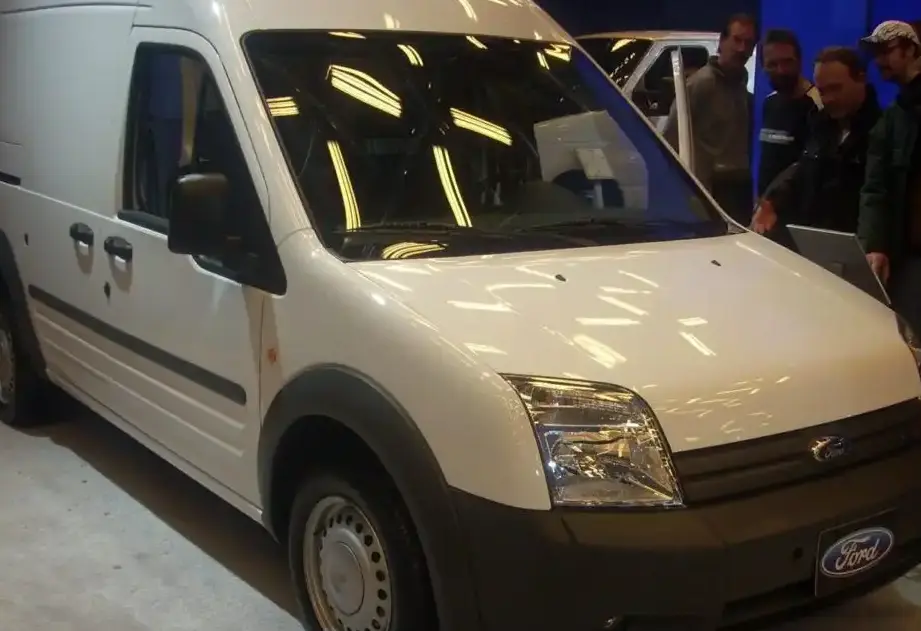
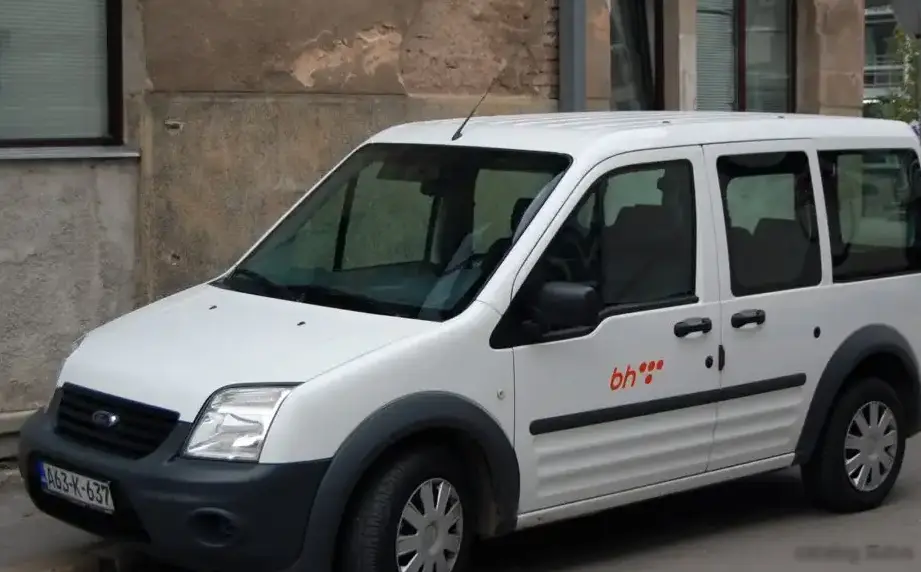
The Ford Transit Connect II Wagon L1 1.5 TDCi (120 hp) PowerShift represents a significant iteration in Ford’s compact commercial and passenger vehicle lineup. Produced from 2015 to 2018, this variant occupied a middle ground within the second-generation Transit Connect range, offering a balance between fuel efficiency, practicality, and affordability. It was primarily marketed in Europe, where compact vans and wagons are highly popular, but also saw limited sales in North America. The L1 designation indicates the short wheelbase version, making it particularly suited for urban environments.
Technical Specifications
| Brand | Ford |
| Model | Transit Connect |
| Generation | Transit Connect II Wagon L1 |
| Type (Engine) | 1.5 TDCi (120 Hp) PowerShift |
| Start of production | 2015 |
| End of production | 2018 |
| Powertrain Architecture | Internal Combustion engine |
| Body type | Minivan |
| Seats | 5 |
| Doors | 5 |
| Fuel consumption (economy) – urban (NEDC) | 5.4 l/100 km (43.6 US mpg, 52.3 UK mpg, 18.5 km/l) |
| Fuel consumption (economy) – extra urban (NEDC) | 4.7 l/100 km (50 US mpg, 60.1 UK mpg, 21.3 km/l) |
| Fuel consumption (economy) – combined (NEDC) | 5 l/100 km (47 US mpg, 56.5 UK mpg, 20 km/l) |
| CO2 emissions (NEDC) | 129 g/km |
| Fuel Type | Diesel |
| Emission standard | Euro 6 |
| Weight-to-power ratio | 12.8 kg/Hp, 78.4 Hp/tonne |
| Weight-to-torque ratio | 5.1 kg/Nm, 196 Nm/tonne |
| Power | 120 Hp |
| Power per litre | 80.1 Hp/l |
| Torque | 300 Nm @ 1750-2000 rpm (221.27 lb.-ft. @ 1750-2000 rpm) |
| Engine layout | Front, Transverse |
| Engine Model/Code | Duratorq / XWGB |
| Engine displacement | 1499 cm3 (91.47 cu. in.) |
| Number of cylinders | 4 |
| Engine configuration | Inline |
| Cylinder Bore | 73.5 mm (2.89 in.) |
| Piston Stroke | 88.3 mm (3.48 in.) |
| Number of valves per cylinder | 2 |
| Fuel injection system | Diesel Commonrail |
| Engine aspiration | Turbocharger, Intercooler |
| Valvetrain | SOHC |
| Engine oil capacity | 3.85 l (4.07 US qt, 3.39 UK qt) |
| Coolant | 6 l (6.34 US qt, 5.28 UK qt) |
| Kerb Weight | 1531 kg (3375.28 lbs.) |
| Max. weight | 2220 kg (4894.26 lbs.) |
| Max load | 689 kg (1518.98 lbs.) |
| Trunk (boot) space – minimum | 1029 l (36.34 cu. ft.) |
| Trunk (boot) space – maximum | 2003 l (70.74 cu. ft.) |
| Fuel tank capacity | 60 l (15.85 US gal, 13.2 UK gal) |
| Permitted trailer load with brakes (12%) | 1300 kg (2866.01 lbs.) |
| Permitted trailer load without brakes | 750 kg (1653.47 lbs.) |
| Permitted towbar download | 75 kg (165.35 lbs.) |
| Length | 4418 mm (173.94 in.) |
| Width | 1835 mm (72.24 in.) |
| Width including mirrors | 2137 mm (84.13 in.) |
| Height | 1844-1852 mm (72.6 – 72.91 in.) |
| Wheelbase | 2662 mm (104.8 in.) |
| Front track | 1568 mm (61.73 in.) |
| Rear (Back) track | 1584 mm (62.36 in.) |
| Front overhang | 878 mm (34.57 in.) |
| Rear overhang | 878 mm (34.57 in.) |
| Ride height (ground clearance) | 140-153 mm (5.51 – 6.02 in.) |
| Minimum turning circle (turning diameter) | 11.7 m (38.39 ft.) |
| Drivetrain Architecture | The Internal combustion engine (ICE) drives the front wheels of the vehicle. |
| Drive wheel | Front wheel drive |
| Number of gears and type of gearbox | 6 gears, automatic transmission PowerShift |
| Front suspension | Independent, type McPherson with coil spring and anti-roll bar |
| Rear suspension | Coil spring, Torsion |
| Front brakes | Ventilated discs, 320×25 mm |
| Rear brakes | Disc, 280×11 mm |
| Assisting systems | ABS (Anti-lock braking system) |
| Steering type | Steering rack and pinion |
| Power steering | Electric Steering |
| Tires size | 205/60 R16 |
| Wheel rims size | 6.5J x 16 |
INTRODUCTION
The Ford Transit Connect II Wagon L1 1.5 TDCi (120 hp) PowerShift, launched in 2015, was a key component of Ford’s strategy to offer a versatile and efficient vehicle for both commercial and family use. Built on the 1HX0/A3 platform, shared with the Ford Focus, it benefited from advancements in automotive engineering and technology. This particular variant aimed to provide a more accessible entry point into the Transit Connect range, appealing to buyers who prioritized fuel economy and ease of driving over outright performance. It served as a practical option for small businesses, families, and individuals needing a flexible vehicle for various tasks.
Powertrain & Engine Architecture
At the heart of the Transit Connect L1 1.5 TDCi (120 hp) lies the Duratorq 1.5-liter inline-four diesel engine, identified by the code XWGB. This engine is a turbocharged common-rail diesel, meaning it utilizes direct fuel injection at very high pressure to optimize combustion. The turbocharger, coupled with an intercooler, enhances power output by forcing more air into the cylinders. The engine produces 120 horsepower and 300 Nm (221 lb-ft) of torque between 1750 and 2000 rpm. The PowerShift transmission is a dual-clutch transmission (DCT) with six forward gears. This type of transmission offers quicker and smoother gear changes compared to a traditional automatic, contributing to improved fuel efficiency and a more engaging driving experience. The PowerShift utilizes two separate clutches, one for odd-numbered gears and one for even-numbered gears, allowing for pre-selection of the next gear.
Driving Characteristics
The 1.5 TDCi 120 hp PowerShift configuration delivers adequate performance for everyday driving. While not particularly sporty, it provides sufficient power for navigating urban streets and maintaining comfortable cruising speeds on highways. The PowerShift transmission contributes to a relatively smooth driving experience, although some drivers have reported occasional hesitation at low speeds. Compared to the higher-output 1.6-liter EcoBoost petrol engine or even the more powerful diesel options, the 1.5 TDCi feels less responsive. However, its strength lies in its fuel efficiency. The gear ratios are tuned for economy, prioritizing lower engine speeds at cruising speeds. The relatively low weight of the L1 wheelbase model helps mitigate the impact of the modest horsepower figure.
Equipment & Trim Levels
The Transit Connect L1 1.5 TDCi (120 hp) PowerShift typically came equipped with a reasonable level of standard features. These included air conditioning, power windows, a basic audio system with USB connectivity, and ABS brakes. Higher trim levels, such as the Limited, added features like alloy wheels, upgraded upholstery, a touchscreen infotainment system, and parking sensors. Interior upholstery was generally cloth, with options for more durable materials for commercial applications. Optional extras included navigation systems, rear parking cameras, and various driver-assistance technologies.
Chassis & Braking
The Transit Connect L1 utilizes a McPherson strut front suspension and a torsion beam rear suspension. This setup provides a good balance between ride comfort and handling. The front suspension incorporates a coil spring and anti-roll bar to reduce body roll during cornering. The braking system consists of ventilated discs on the front wheels and solid discs on the rear. ABS (Anti-lock Braking System) is standard, enhancing safety by preventing wheel lockup during emergency braking. The relatively lightweight nature of the L1 model contributes to its manageable braking performance.
Market Reception & Comparison
The Transit Connect L1 1.5 TDCi (120 hp) PowerShift was generally well-received by critics for its practicality, fuel efficiency, and competitive pricing. However, the PowerShift transmission received some criticism due to reports of reliability issues and occasional jerky shifts. Compared to the petrol-powered versions, the diesel offered significantly better fuel economy, making it a popular choice for high-mileage drivers. Against other compact vans and wagons in the European market, such as the Volkswagen Caddy and Citroën Berlingo, the Transit Connect offered a compelling combination of features and value.
Legacy
The Ford Transit Connect II Wagon L1 1.5 TDCi (120 hp) PowerShift remains a relatively common sight on used car markets. The Duratorq 1.5-liter diesel engine is generally considered reliable, although regular maintenance is crucial. The PowerShift transmission remains the biggest potential concern, and prospective buyers should carefully inspect its operation and check for any signs of issues. Overall, this variant represents a practical and economical choice for those seeking a versatile compact van or wagon, offering a good balance of fuel efficiency, space, and affordability.